Inspired by olden days ice houses, this underground fridge uses the earth’s stable temperature to keep food cool – with little need for mains electricity
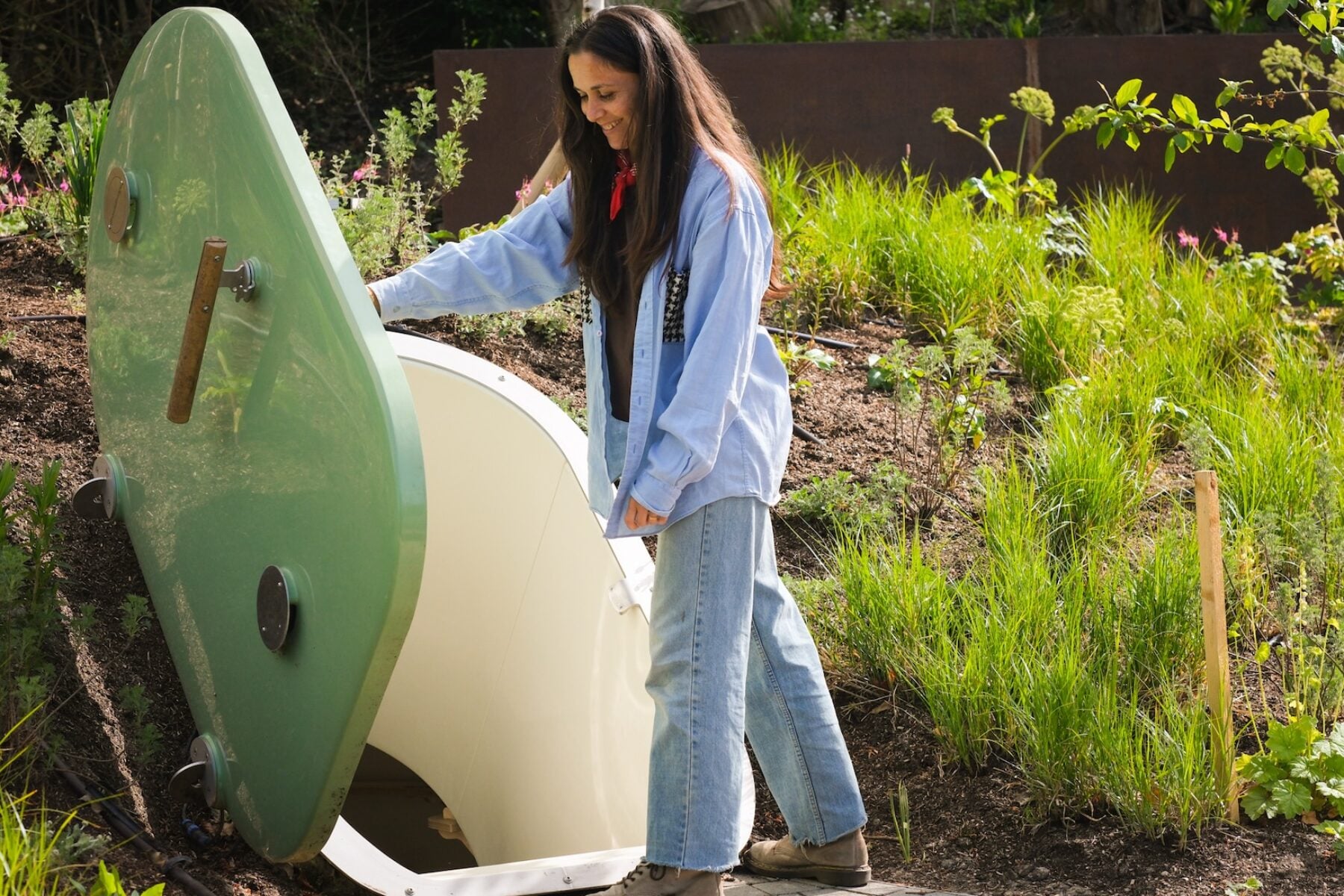
High on a hill in north London, there’s a fridge in a flowerbed.
Seen from a distance, it looks utterly incongruous – lying on its side, apparently half-buried in soil. Another case of ugly urban fly-tipping? Not a bit of it. Rather, it offers a way to keep food and produce cool without using the large quantities of electricity on which ordinary fridges depend.
Come closer and you’re struck by its size – the door as tall as a man and half as broad. Open it and you descend, step by step, into the earth and a small, round room lined with shelves, the whole space blissfully cool on the hot summer’s day when I visited. On those shelves sits an array of food, sheltered from light and heat and kept at a steady, cool temperature. A solar-powered ventilation system lets cool air in at night, replacing the warmer air of the day.

This is a Ground Fridge – an ingenious modern take on a very old idea. Long before artificial refrigeration, people kept food and drink cool by storing it in thick-walled larders or, better still, below ground in earth cellars. These exploited the fact that, several feet below the surface and insulated by the soil and plants above, temperatures remain lower and more stable than they are above ground.
Stately homes used a similar principle in their ice houses, where vast blocks of ice melted only slowly through the summer, ensuring there was little risk of guests having to endure a less than ice-cold G&T.
The modern version was designed by Dutch inventor Floris Schoonderbeek and, until now, has been installed only in a handful of locations in continental Europe. Its first UK installation can be found, appropriately enough, in an extraordinary reimagining of urban gardening.
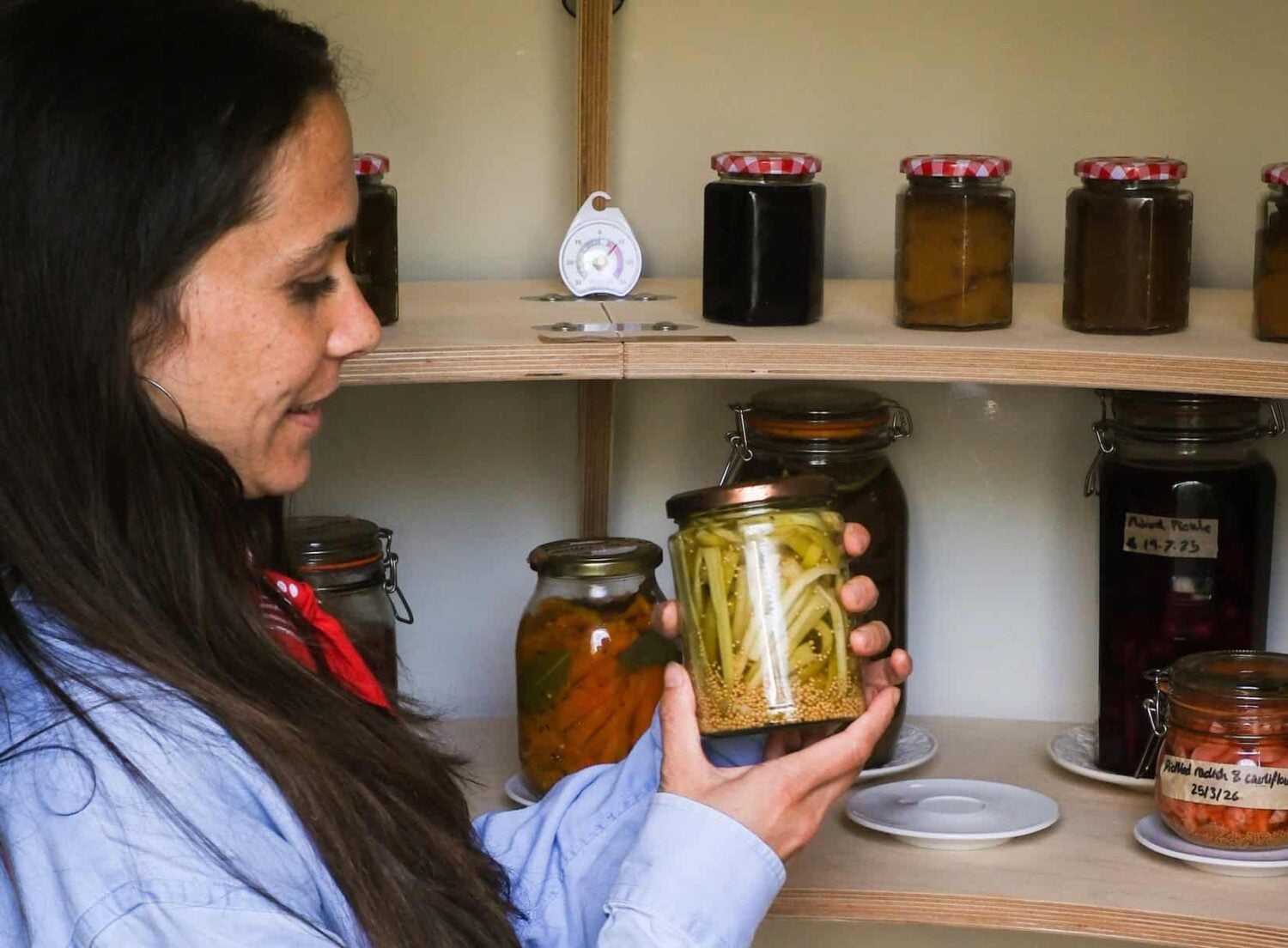
Before artificial refrigeration, people kept food and drink cool in earth cellars. Image: Elsa Pearl
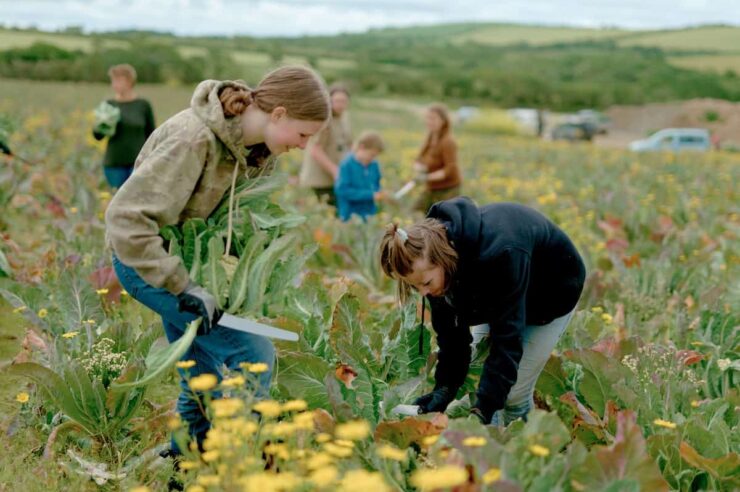
OmVed Gardens, as they are known, comprise two acres of verdant, tumbling terraces just off Highgate Hill. They are a haven for wildlife and a source of a huge range of vegetables and herbs, both culinary and medicinal, grown according to permaculture principles. Kites and sparrowhawks arc over the slopes, while dragonflies dart across ponds fed by hillside springs.
Created from the relics and rubble of an old garden centre, OmVed includes a collection of elegant, ecologically designed buildings housing an exhibition centre, a kitchen, a seed library and more besides. Run as a community interest company, it is the brainchild of social entrepreneur Karen Leason, whose vision is to “re-establish the connection between the urban population, food and nature”.
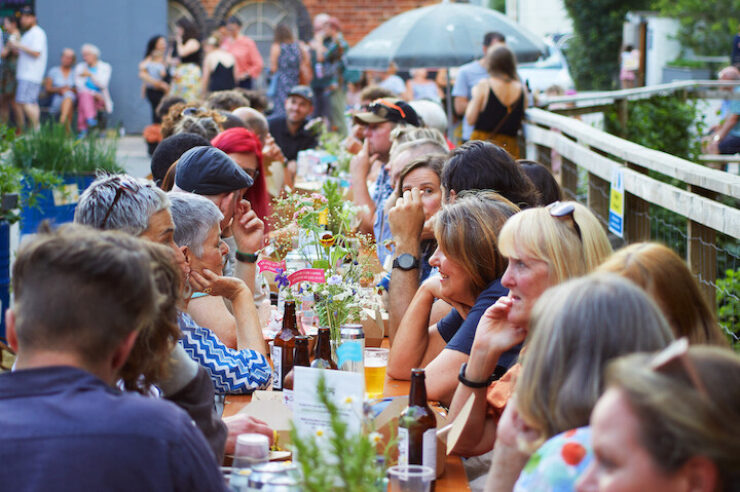
It stages workshops, performances and school visits, and plays host to an array of artists, horticulturists and chefs, among them fermentation specialist Josefine Marchandise. She heads the “regenerative and creative” kitchen, which makes full use of the gardens’ bounty. Never mind five a day – I counted about 20 varieties of veg on my lunch plate there alone.
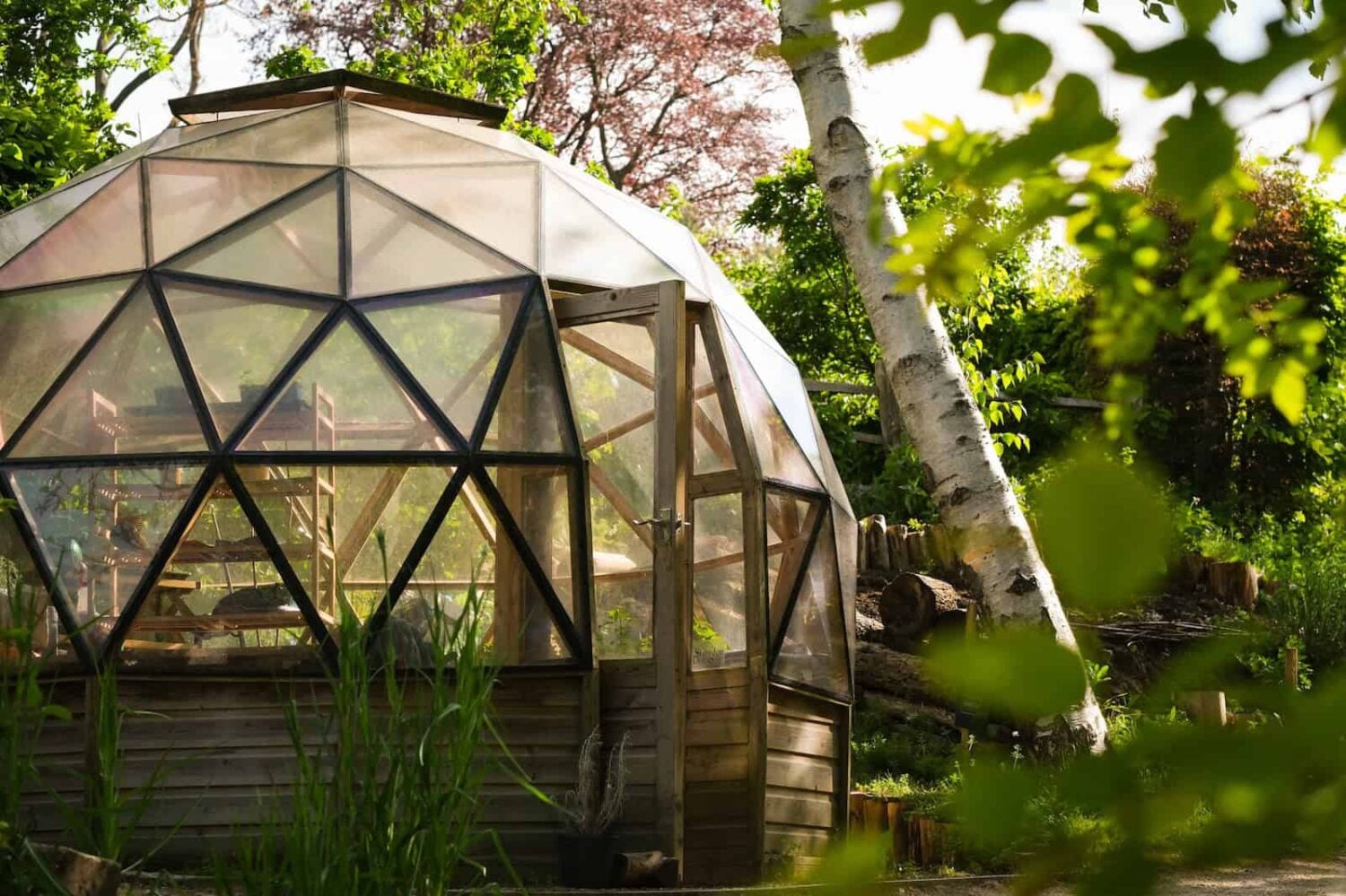
OmVed Gardebs aims to ‘re-establish the connection between the urban population, food and nature’. Image: Elsa Pearl
Marchandise is a huge fan of the Ground Fridge. “The temperature seems to stay at between 8 and 15 degrees, even during heatwaves, which is ideal,” she says. “We’re always in need of more storage space, not just for the produce but for everything we preserve too. And this meets that need in a way that is both very useful and practical, but also beautiful.
“It’s lovely to come out into the garden to fetch something from the fridge, rather than just staying in the kitchen the whole time.”
Overall, she says, the fridge means “more space, with less stress”.
It offers a way to keep produce cool without using large quantities of electricity
It doesn’t come cheap. A new Ground Fridge costs around £12,000, plus VAT, which represents a hefty capital outlay. Set against that, however, it has roughly the same storage capacity as a dozen full-size family fridges and uses almost no mains electricity, making its running costs minimal. Costs may also come down if it becomes more popular and economies of scale begin to take effect.
Set within OmVed’s wider experiments in sustainability, it is also an effective conversation starter.
“It’s really funny,” says Marchandise. “When we’re showing people around, schoolkids or whoever, everyone has the same reaction. It’s like: ‘Wow! I’ve never seen that before. We should have this in our school, or on our campus, or in our community garden,’ or wherever.
“They just ask: ‘Why isn’t this everywhere?’”
Main image: Elsa Pearl
Be part of the solution
At Positive News, we’re not chasing clicks or profits for media moguls – we’re here to serve you and have a positive social impact. We can’t do this unless enough people like you choose to support our journalism.
Give once from just £1, or join 1,800+ others who contribute an average of £3 or more per month. Together, we can build a healthier form of media – one that focuses on solutions, progress and possibilities, and empowers people to create positive change.