
Most people seeking asylum in the UK are not allowed to work and receive as little as £9.95 per week to live on. Transport poverty is a growing concern, with people lacking funds to get to appointments. The Bike Project provides a solution – and you can help
Two wheels. A frame. Cables, brakes and pedals. There’s no earthly reason to get emotional over a jumble of metal and rubber – however artfully it’s put together – but that’s the magic of bicycles. They’re so much more than the sum of their parts. To many, they’re the ultimate expression of freewheeling independence, and to refugees and people seeking asylum they can be a literal lifeline.
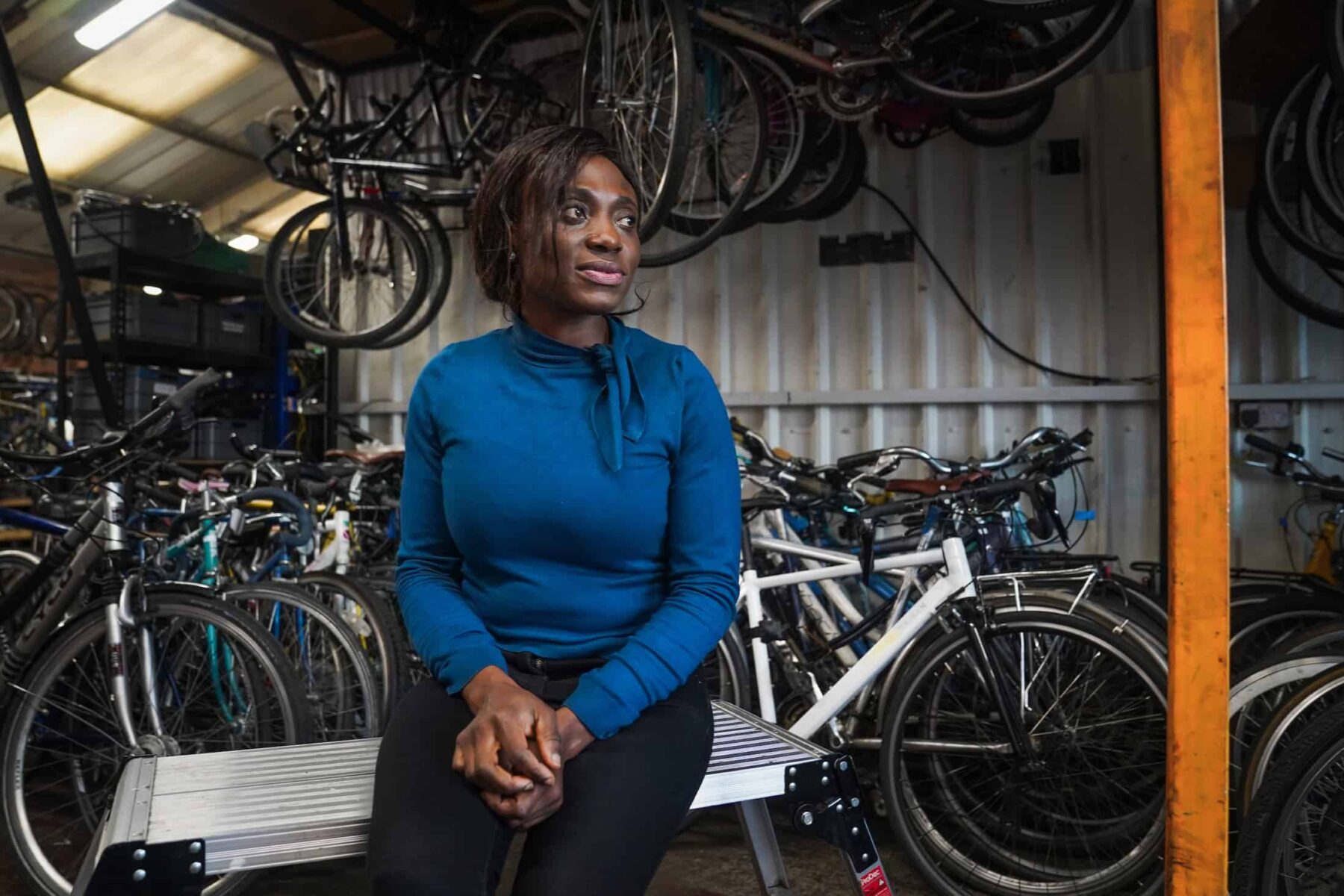
“For me, getting a bike was a resurrection, a second chance at life. It wasn’t just a means of transport, it was a means of finding myself and starting all over again,” says Comfort Adeyemi, one of the refugees supported by UK-based charity The Bike Project.
The charity has been refurbishing unwanted and donated bikes, and gifting them to refugees and people seeking asylum since 2013. What began as a a tiny project, has now grown into a much larger affair, with repair workshops in the capital and Birmingham. More than 16,000 bikes, along with safety kits, have been distributed in almost 40 cities and regions across the UK.
“Demand is huge, we cannot keep up. There are always more people who could benefit from receiving a bike,” says chief executive Lizzie Kenyon, who hopes to alleviate some of that pressure through the project’s winter appeal. Members of the public can buy a gift for a refugee, such as bikes, accessories and lessons for as little as £12.
On a practical level, the charity is responding to some depressing economic realities: people seeking asylum are not allowed to work and instead must make ends meet on just £49.18 a week in government support, falling to a mere £9.95 if they’re housed in accommodation where meals are provided.
“Four out of five people tell us they are regularly choosing between transport and covering basic essentials, such as clothing and toiletries,” says Kenyon. “But people need to travel to Home Office and solicitors’ appointments. They might use our bikes to access support from other organisations like food banks. As one of our recipients said, ‘when you have to go from charity to charity to feed yourself, a bike becomes very important to your life’”.
Getting a bike wasn’t just a means of transport, it was a means of finding myself and starting all over again
Beyond savings in transport costs, Kenyon says that owning a bike also brings transformative social, physical and emotional benefits. For example, “Being able to do things that would otherwise feel like a luxury – visiting friends, going to church, or riding a bike to school,” she says.
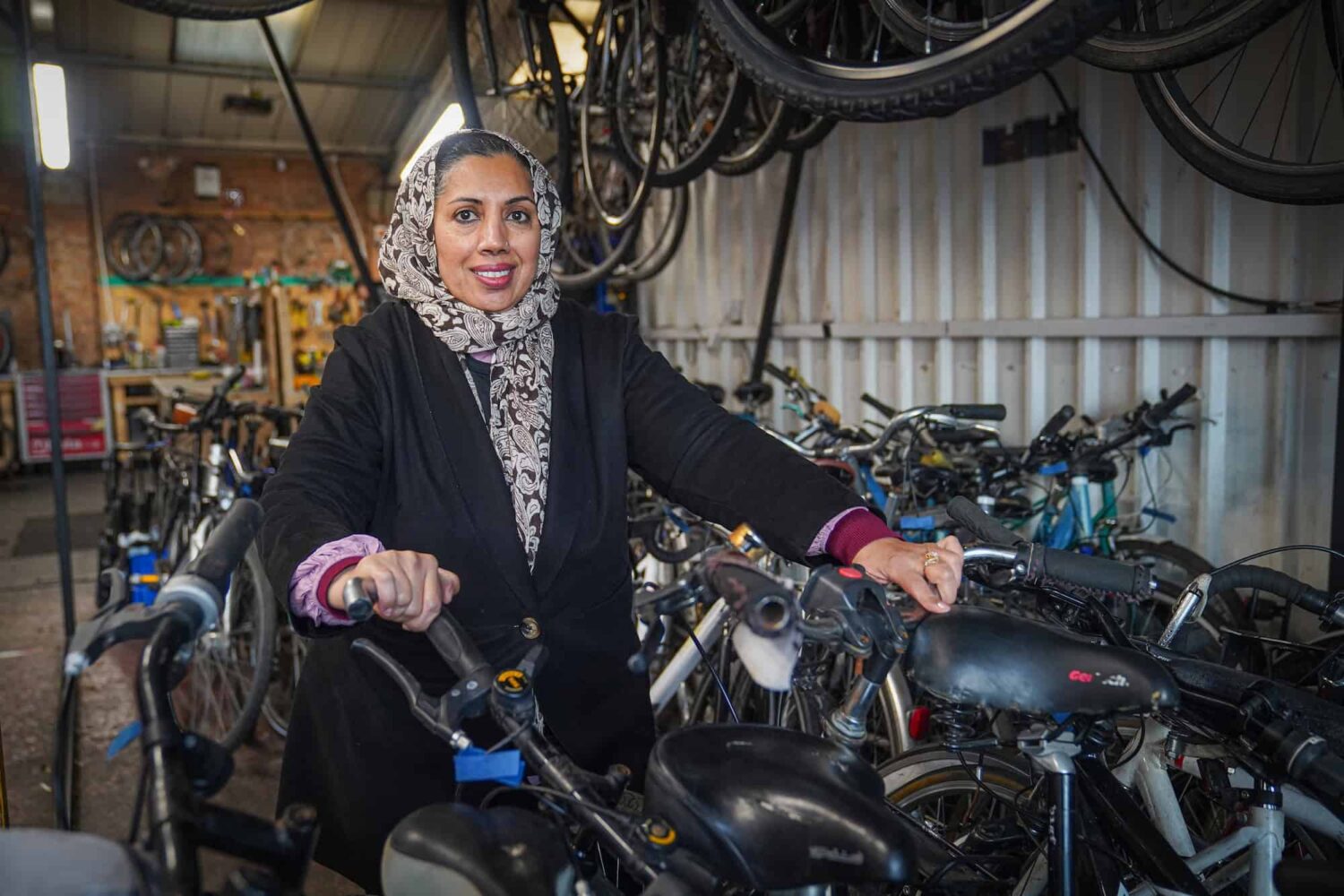
Unwanted bicycles are given a new lease of life in one of The Bike Project’s workshops. Image: Daniel Loveday/Comic Relief
“Our bike recipients say that it’s really helped them connect in their community in a way they hadn’t done previously.”
For Adeyemi, during her early days in an asylum hostel, her bike was something like treasure, a fiercely-guarded token of her independence. “When you’re in a hostel you don’t have a say about what you eat, what sanitary products you use, or even if you’re still going to be there tomorrow,” she recalls.
“But I did have a say on my bike. Nobody could tell me to throw it away. I was ready to fight anybody just to keep it.”
Another recipient, Karim, who arrived in the UK from Afghanistan with his wife Maryam and their two year-old son Jamal, explains how his young family use their bikes for escape and recreation. “Receiving my bike felt like a key to unlock the city, like someone saying: ‘We see you and believe in you’” he says.
Maryam adds: “Cycling has transformed our daily life! We travel so easily, affordably and happily. Parks and riversides are our favourite places to be.”
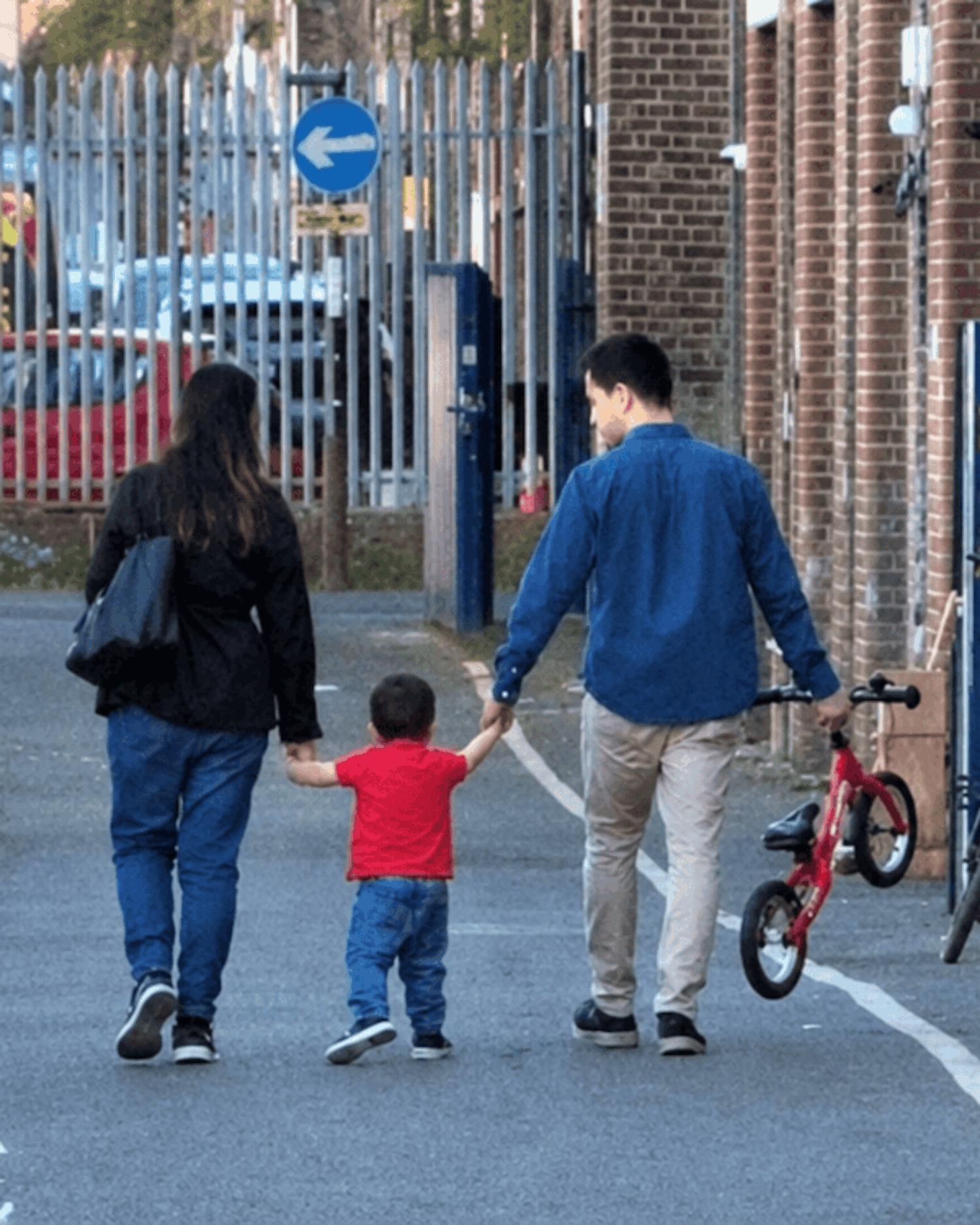
Afghan refugees Karim and Maryam, pictured with their son Jamal, after he collected his balance bike from the charity. Image: The Bike Project
“A bike is more than transport, it’s confidence, freedom and a sense of belonging,” continues Maryam. “We got a balance bike for our two-year-old son, Jamal. Seeing him excited and eager to learn brings tears of pure joy.”
Bikes arrive at the project from members of the public and unwanted steeds that might otherwise have been scrapped are given a new lease of life in one of The Bike Project’s workshops, located in Deptford, South London, or Birmingham. If they’re beyond repair, they’re stripped for parts. High end, high value bikes are sold on to raise funds. All told, the charity donates around 1,500 per year.
Recipients also get a set of accessories, including a helmet and lock. There are cycling lessons for women, run by women such as Adeyemi, who besides working with the charity as an instructor now sits on its board of trustees. A befriending programme, Bike Buddies, matches volunteers to refugee cyclists.
A bike is more than transport, it’s confidence, freedom and a sense of belonging
Over the next year, The Bike Project will work with partners to scale its activities more widely across the UK, with the aim of reaching more refugees and people seeking asylum, and finding new homes for some of the estimated 38m bikes lying unused across the country.
Adeyemi, meanwhile, continues to find support and community in her Bike Project family. “It’s a community of its own,” she says. “One you can be part of, where you can grow, where you can learn and where you can flourish.”
If you live in London or the West Midlands, you can donate your unwanted bike to The Bike Project for a refugee to use, or to be sold on to support the charity’s work. Find your nearest drop-off point using the interactive map on The Bike Project’s website
Main image: Daniel Loveday/Comic Relief