At Groundswell, the UK’s annual regenerative farming festival, experts debated how to get more nature-friendly products on supermarket shelves. Here’s three key takeaways
The regenerative agriculture movement is gathering pace – and there is no better place to witness that than at Groundswell. Held last month under sunny skies in the English countryside, the UK’s annual regenerative farming festival – sometimes called the Glastonbury of farming – is a forum for farmers and anyone interested in food production, to learn about this approach.
The method, which prioritises restoring the health of soils and farming with nature, while moving away from chemical-heavy, industrial farming, is now being cited as a priority by the UK government. Household brands such as Waitrose, Yeo Valley Organic and Unilever are also getting on board, but the concept remains low in the public consciousness. One study by thinktank Demos, for example, found that 70% of the UK public is not familiar with the term. This is despite evidence that suggests that the proportion of farmers integrating it is high: one survey by Barclays, for instance, found that 80% of farmers have adopted or are planning to adopt regenerative farming methods.
So, what is happening behind the scenes to bring regeneratively grown food to more mouths? And what do experts see as key pain points to address as the movement scales?
Here are three things we learned at Groundswell.
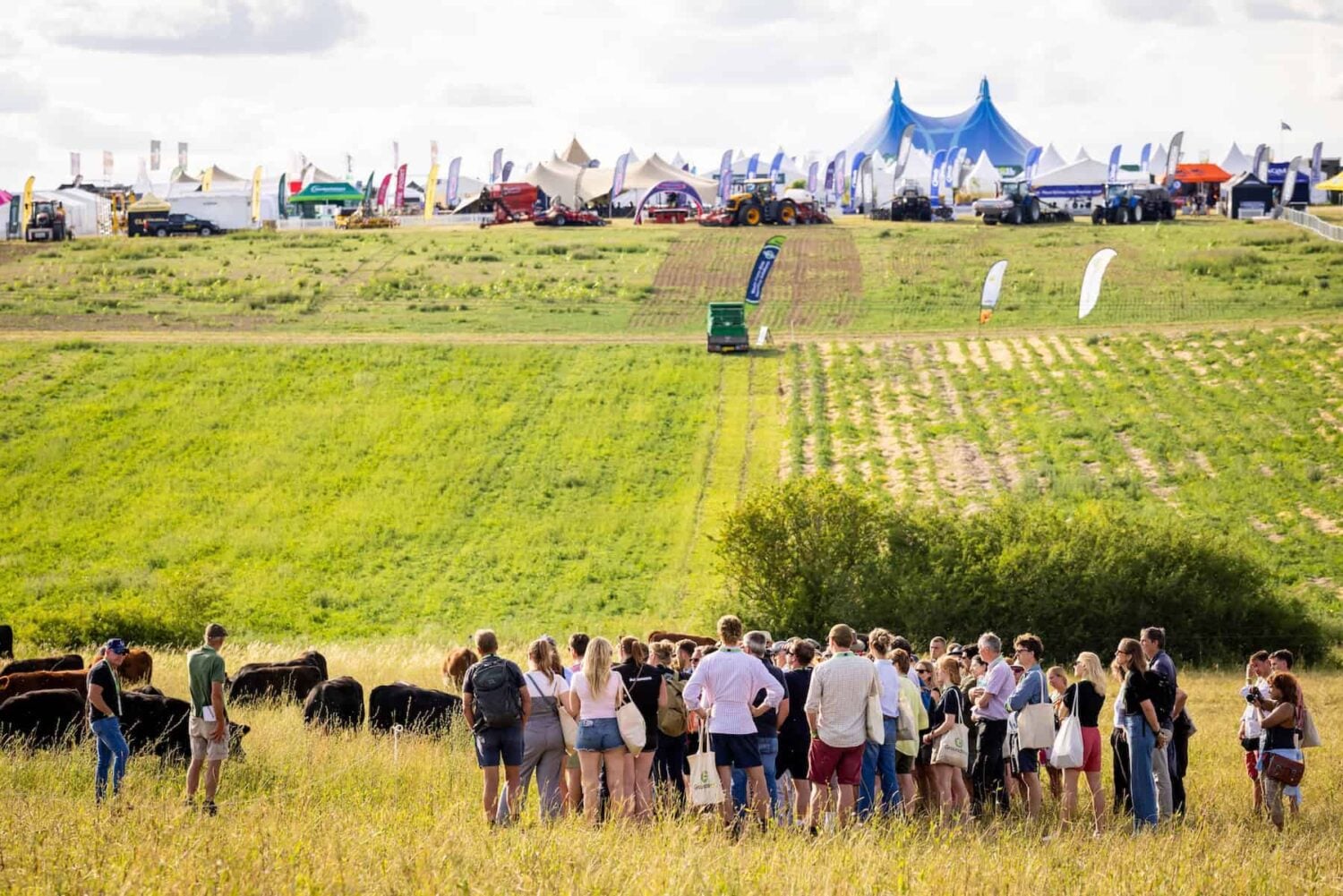
Groundswell is held every year at Lannock Farm in Hertfordshire, UK. Image: courtesy of Groundswell
1. The government is backing regenerative agriculture
The Farming Roadmap 2050, the UK’s first long-term strategy for agriculture, was released at the end of June, and cites many of the key principles of regenerative agriculture as focus areas. These include restoring the health of soils, reducing reliance on synthetic inputs, and prioritising biodiversity and nature-friendly methods. Emma Reynolds, who was until recently environment secretary, was at Groundswell to discuss the roadmap: “nature and regenerative farming runs right through it”, she says. “I see nature-friendly farming not as an alternative to productive farming, but as its foundation”.
Fay Cooke, chief impact and financial officer at Yeo Valley, spoke on a panel discussion at the festival, which centred around how policy and food businesses can more accurately reflect regenerative farming’s real worth. She praised the roadmap for its ambition but commented that more detail is needed about its application. “How does that detail flow through in real policy intervention and support?” she asks.
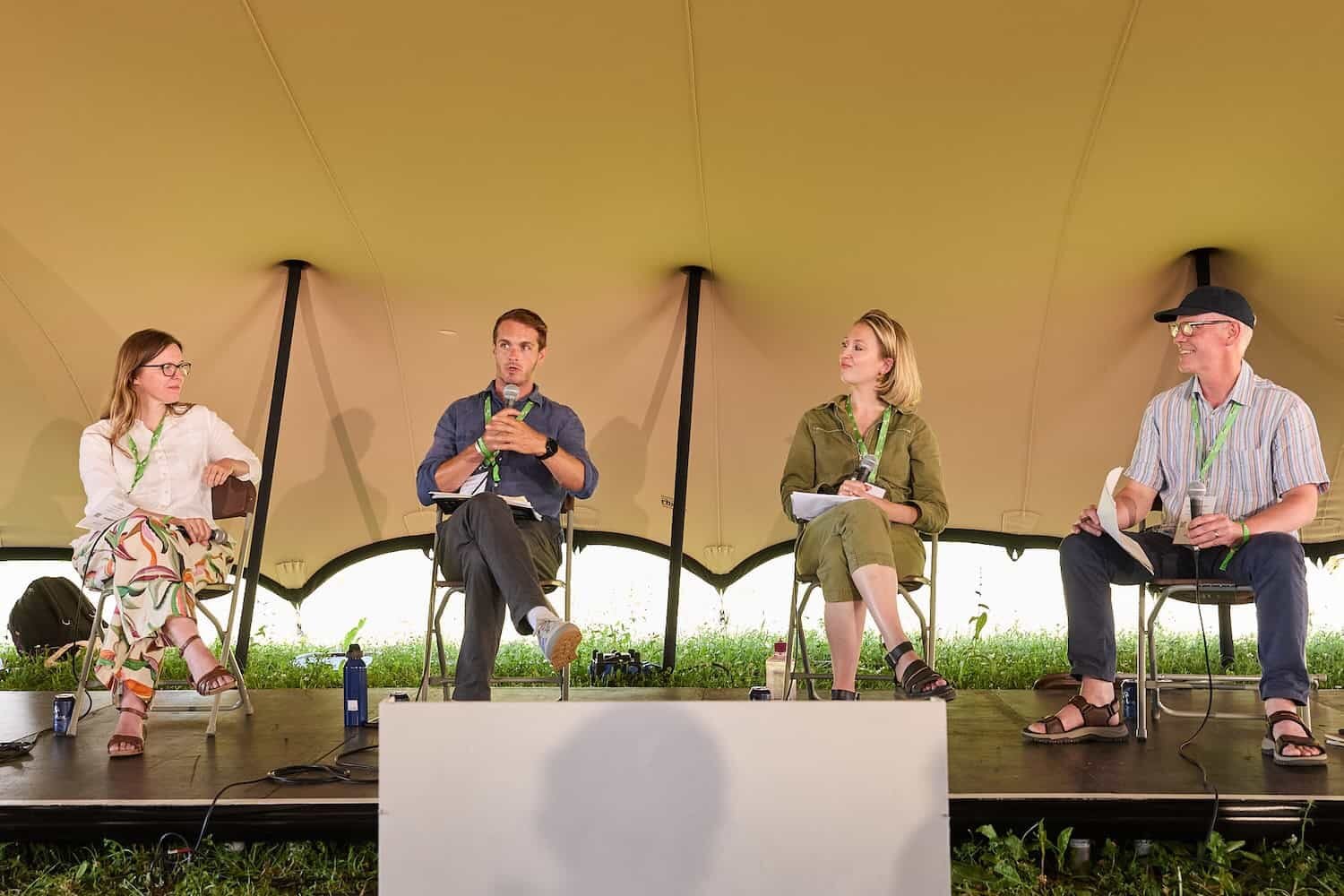
Experts discussed the barriers and opportunities around scaling up regeneratively grown food. From left, Fay Cooke, chief impact and financial officer, Yeo Valley; Ed Horton, director, natural capital investment, Savills UK; Dolly van Tulleken, policy consultant; and moderator, Tony Greenham, chief impact officer, Food, Farming and Countryside Commission. Image: courtesy of Groundswell
2. Nature-friendly food is emerging as an alternative to ultra-processed food
If growing regeneratively means to produce food in harmony with nature and use minimal inputs in the process, at the opposite end of the spectrum is ultra-processed food (UPF). This type of food is made using chemically modified ingredients and artificial additives. It usually also relies on industrially produced mono-crops.
As concern grows around the environmental and health effects of UPFs – which are linked to increased risks around obesity and cardiovascular disease, as well as ecosystem destruction – regeneratively grown food could rise in popularity as an alternative. Research by Euromonitor International, for instance, has found that more than 25% of people globally now limit their intake of processed foods, due to concerns related to UPFs.
Some experts at Groundswell had concerns, however, about regeneratively grown ingredients being used in UPFs. Nestle, for example, is using regeneratively grown wheat in its KitKats; opinion was divided as to whether this was a boon for the regenerative farming movement, or not. Is using regeneratively farmed ingredients in UPFs such as KitKats, which have emulsifiers in them – emulsifiers are linked to problems in the microbiome – a net gain? Or will this cause net harm to our health? asks Dolly van Tulleken, policy consultant and visiting researcher at the University of Cambridge. It’s an argument to monitor as regenerative agriculture scales.
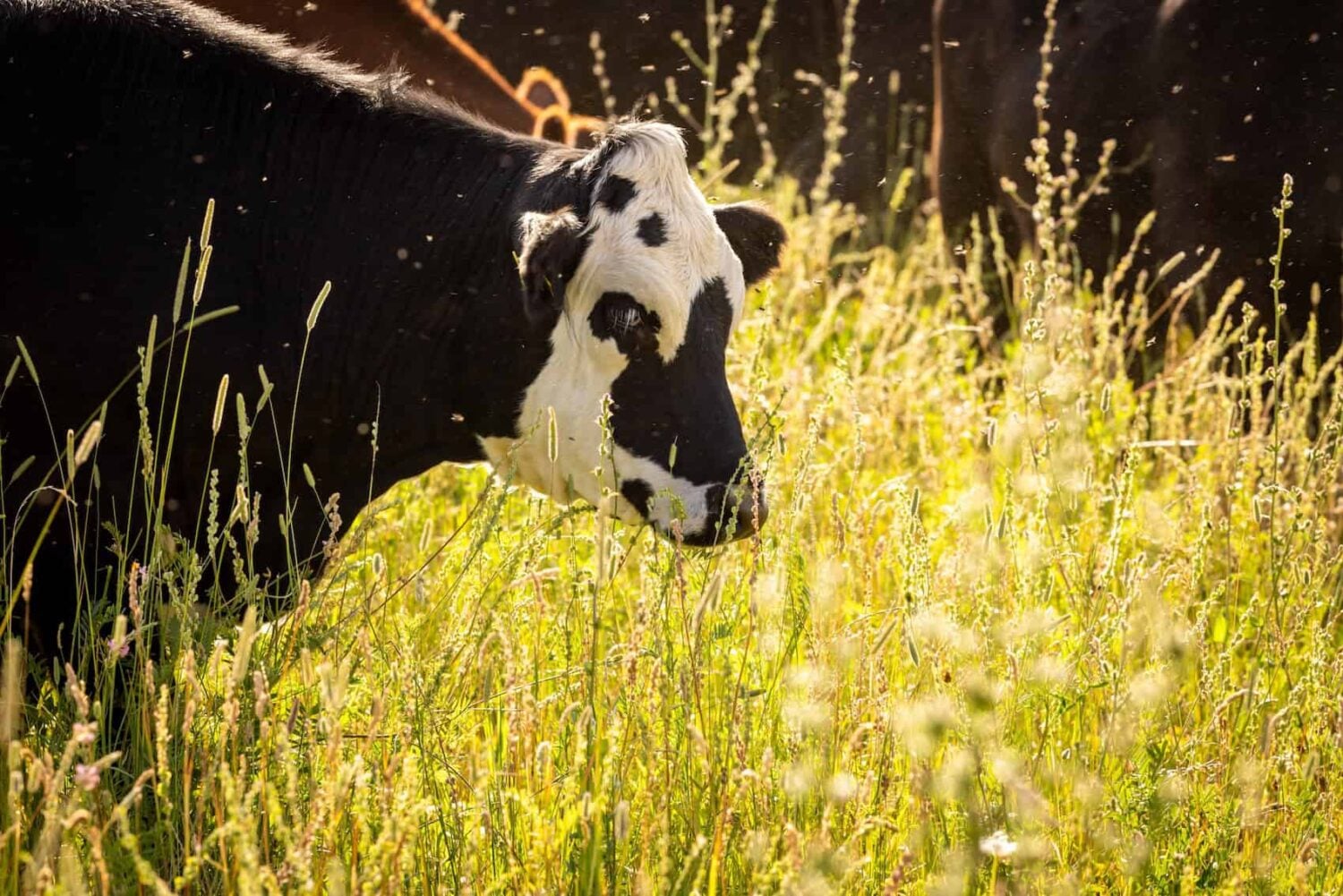
Funds to support regenerative agriculture – from both private and public sources – are increasing. Image: Courtesy of Groundswell
3. Private funds are flowing into regenerative agriculture
Funding from government programmes such as the Sustainable Farming Incentive (SFI), is expanding this year, and further private investment is also being added to the pot. Regenerative agriculture pioneer Wildfarmed, which produces flour, bread and grains, has teamed up with Lloyds Banking Group to launch a £1.3m fund. It’s designed to tackle one of the biggest barriers to implementing regenerative farming practices: financial viability.
Speaking at Groundswell, Andy Cato, co-founder of Wildfarmed (and also one half of band Groove Armada) says: “We’ve worked with farmers up and down the country on identifying where the sweet spot is between nature recovery and farmer outcomes. [This fund] is the culmination of years of work – of trying to measure outcomes and put value on them.”
Private funding is also flowing with the help of institutions such as Savills, Triodos Bank and other high street chains including HSBC UK, which has recently widened access to its Sustainable Farming Pathway programme.
Yeo Valley’s Cooke was emphatic about the need for all actors in the system to support farmers – financially and otherwise – as they move towards regenerative practices. “There is an unfair, inequitable burden of responsibility on farmers,” she says. “But there are loads of things that businesses can do to even up that balance: things like long-term contracts, financial incentives, engagement programmes – those are all positive things that help to share the risks and rewards more equitably across the value chain.”
Main image: courtesy of Groundswell