A ‘historic’ fall in US violent crime, Europe’s right to repair law, and a conservation triumph for Kazakhstan, plus more good news
This week’s good news roundup

The US saw its sharpest ever fall in violent crime – including murder – in 2025, new figures from the Federal Bureau of Investigation (FBI) show.
The FBI’s latest data suggest that homicide and non-negligent manslaughter was down 18.1%, robbery down 18.5%, rape down 7.6%, and aggravated assault down 7.2%.
Crime has been plummeting in the US for years. The same data released this time last year showed a 14.9% fall in the US murder rate in 2024 – a significant improvement on 2023’s also substantial 11.6% decline.
It’s a welcome trend that appears to be continuing. Recent figures from the Council on Criminal Justice suggests that the US recorded another sharp fall in its murder rate in the first six months of 2026.
Plummeting crime rates are not unique to the US. Many developed nations have seen significant declines in criminality since the mid-1990s – despite many citizens feeling that offences are on the rise.
Related: The shifting reality of knife crime in the UK
Image: Deberarr

Lebanon looks set to become the first country in the Middle East to abolish the death penalty after its parliament voted to end capital punishment.
Although no executions have taken place in the country since 2004, the death penalty is still handed out as punishment. According to Together Against the Death Penalty (ESPM), a local NGO, 84 people are currently on death row in Lebanon.
But not for much longer, perhaps, after a majority of members in the country’s 128-seat parliament voted in favour of the legislation. All that’s needed now is the signature of Lebanese president Joseph Aoun, whose government has expressed support for its passage, for it to become law.
Raphaël Chenuil-Hazan, director of ECPM, said the legislation was a “historic breakthrough” for Lebanon. “This is a decision that brings hope and paves the way for a fairer and safer society,” he added.
Image: Nathan McBride

From this week, people in Ireland should find it easier to have their phones, washing machines and other household items fixed, thanks to right-to-repair legislation that entered force on Monday.
Launched by the European Union (EU), the directive is being rolled out across member states with the aim of tackling Europe’s growing waste mountain.
Under the new rules, manufacturers of certain products must offer a repair service for their goods. Household and electronic items such as washing machines, vacuum cleaners and mobile phones are among those covered.
Ireland’s minister for enterprise, Peter Burke, said the move would “make it easier for consumers to choose repair over replacement, while also creating opportunities for Irish businesses operating in the repair and refurbishment sector”.
The EU expects the new rules to give a €4.8bn (£4.1bn) boost to the bloc’s economy. A European repair directory, set to go online in 2027, will allow people to find repairers in each EU nation.
Image: Brizmaker
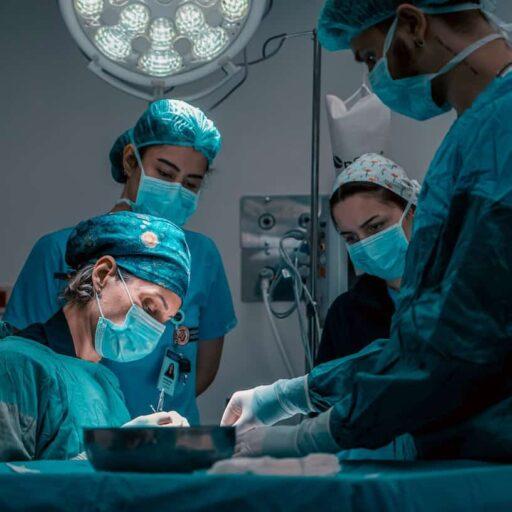
Neurosurgeons have performed the first successful AI-assisted operation to remove a brain tumour, claiming the technology helped them to save a patient’s eye.
Rhys Hibbert from Bedfordshire, England, is the first person to have surgery in this way. The AI system was trained on videos of previous operations and helped the surgical team to identify risky areas to avoid while they removed as much of his tumour as possible.
The operation was carried out at London’s National Hospital for Neurology and Neurosurgery as part of a clinical trial using AI technology developed in-house at University College London.
Hibbert said he was “humbled” to have been asked to take part in the research, which experts say could improve patient outcomes.
James Frith, health innovation minister, added: “This is an example of AI at its best: patients getting care previously deemed unimaginable thanks to the latest groundbreaking technology.”
Image: Husien Bisky

Norwegian politicians have pledged to crackdown on smart glasses amid a growing global backlash against the “creepy” devices.
The recent launch of AI-powered smart glasses, which can surreptitiously record video and audio, has raised concerns around privacy and surveillance.
Those concerns prompted a criminal complaint against Meta and Ray-Ban, which developed the eyewear, in Germany. A petition calling for a ban on the devices has also launched in the UK and is open for signatures until December.
Norway, however, looks set to be the first nation to crackdown on the devices after digitalisation minister Karianne Tung pledged action this week.
“We can see that people’s private lives and privacy are coming under pressure from new technology, and I therefore want to regulate smart glasses and similar devices more strictly than today,” she said.
Image: Marvin Meyer

Women who take hormone replacement therapy (HRT) have a lower risk of developing Alzheimer’s disease than those who don’t, according to a new study.
Academics followed more than 180,000 postmenopausal women in the UK over 13 years. They found that those who had taken HRT had a 10% lower risk of developing dementia and a 16% lower risk of getting Alzheimer’s disease.
HRT adds female hormones back into the body when levels drop during the menopause. An estimated 2.8 million women are prescribed it in England alone.
The study opens up a new avenue of research into dementia, which disproportionately affects women, who make up around two-thirds of cases. One reason for that is believed to be because of the effect of the menopause on brain metabolism.
“While HRT has long been prescribed primarily to relieve menopausal symptoms such as hot flushes and night sweats, this work suggests it may also play a role in long‑term cognitive health for some women,” said study lead Prof Anne-Marie Minihane from the Norwich Institute of Healthy Ageing, England.
Image: Davide Aracri
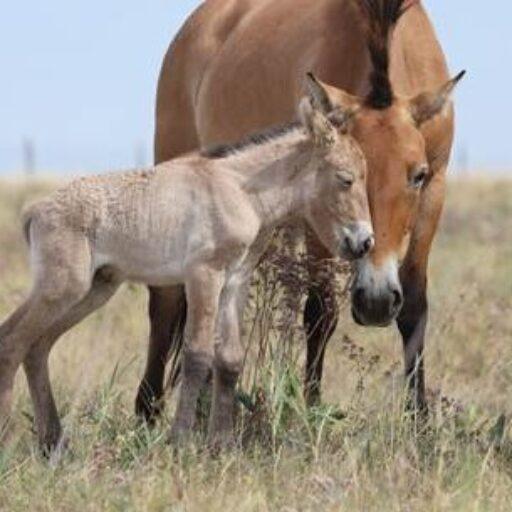
For the first time in 200 years, a Przewalski’s horse has been born on the steppes of central Kazakhstan.
Przewalski’s horses are considered to be the last truly wild horses on Earth. Most of the population lives in Mongolia and China, but last year the species was reintroduced to Kazakhstan through the Altyn Dala Conservation Initiative.
Now, the first foal from those reintroduced animals has been born (pictured). The young male’s arrival is a triumph for the conservation initiative, which also reintroduced the saiga antelope to the Kazakh steppes, winning an Earthshot prize for its efforts in 2024.
“This is much more than the birth of one foal,” said project coordinator Albert Salemgareyev. “It is the first new generation of Przewalski’s horses born in the steppes of central Kazakhstan, and a very important milestone for the whole reintroduction programme.”
Image: Altyn Dala Conservation Initiative

The UK’s rarest bird of prey has bred chicks for the second consecutive year at a secret location in England.
Six Montagu’s harrier chicks were raised at two separate nests this summer, according to the Royal Society for the Protection of Birds (RSPB). It compares to the four raised in 2025.
Montagu’s harriers failed to breed in the UK between 2020 and 2024, and were added to the country’s ‘red list’ of at-risk birds in 2021.
“We are doing our absolute utmost to save this iconic species in the UK and are delighted with six flying juveniles this year,” said the RSPB’s Mark Thomas. “The satellite-tagging of juveniles for the first ever time should give us a direct insight into their migration, survival and when and where they return to the UK.”
Image: Tisha Mukherjee

Aerial imagery of a restored wetland in England “shows what climate resilience could look like across the UK”, a leading conservation charity has said.
From above, the Holnicote Estate in Somerset (pictured) appears lush and green, in stark contrast to the parched landscape around it.
According to the National Trust, that’s because ecologists at the estate have reconnected rivers, restored wetlands and reintroduced beavers in a bid to retain water. At the end of what is expected to be the hottest summer on record in the UK, the approach appears to have worked.
“For generations, as a nation we’ve drained wetlands, straightened rivers and moved water off the land as quickly as possible – here we’ve reversed that approach and the results are remarkable,” said Ben Eardley, project manager at the National Trust, which runs the estate.
The UK has lost around 90% of its wetlands over the last century. Restoring them could help it to become more climate resilient, the trust argues.
“Evidence shows that nature-based solutions can reduce flood risk, improve water quality, increase biodiversity and build resilience to drought,” said Eardley. “Nature shouldn’t be viewed as a cost of climate adaptation. It should be seen as one of our greatest allies.”
Related: How rewilding could help stop the spread of wildfires
Image: National Trust/Steve Sayers
Main image: iStock/NicolasMcComber
Get your weekly fix of good news delivered to your inbox every Saturday, by signing up to the Positive News email newsletter
Be part of the solution
At Positive News, we’re not chasing clicks or profits for media moguls – we’re here to serve you and have a positive social impact. We can’t do this unless enough people like you choose to support our journalism.
Give once from just £1, or join 1,800+ others who contribute an average of £3 or more per month. Together, we can build a healthier form of media – one that focuses on solutions, progress and possibilities, and empowers people to create positive change.