
Plummeting deforestation in Brazil’s Amazon, hurricane-predicting sharks and a courtroom reckoning on the cards for tech giants, plus more
This week’s good news roundup
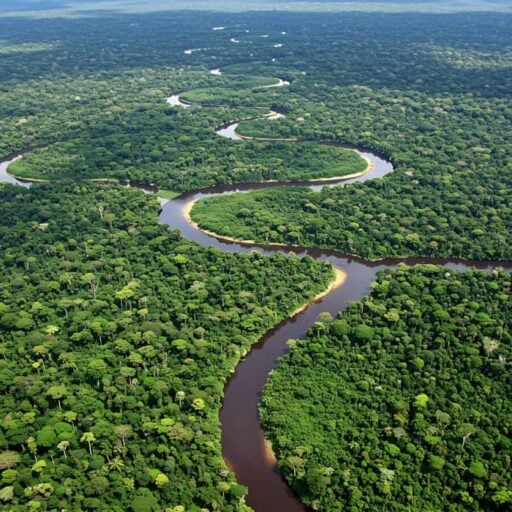
Deforestation alerts in the Brazilian Amazon have fallen to their lowest level in 13 years, according to new satellite data.
INPE, Brazil’s National Institute for Space Research, detected alerts covering 2,874 sq km (1,110 square miles) in the 12 months to 31 July this year.
That’s down by more than a third compared with the previous 12 months, and 55.6% below the average for the last decade.
The figures come from Brazil’s DETER satellite monitoring system, which provides rapid alerts about areas where forest loss is taking place. The country’s definitive annual deforestation figures, calculated using a separate system called PRODES, are due later in the year.
If that data follows the same trend, Brazil could record its lowest annual Amazon deforestation rate since monitoring began in 1988.
The news follows determined efforts by Brazilian president Luiz Inácio Lula da Silva to crack down on illegal rainforest clearance through improved enforcement and monitoring.
Lula’s government has also moved to protect swathes of Indigenous lands, seen as a key measure for tackling illegal mining and logging.
Brazil is aiming for zero deforestation by 2030, a target that campaigners increasingly believe is within reach.
Marcio Astrini, executive secretary of Brazil’s Observatório do Clima, a coalition of climate action stakeholders, said: “The numbers presented today are historic, the result of serious environmental protection policies, and prove that it is entirely possible to fulfill the commitment made by the country to zero and reverse deforestation by 2030.”
Image: rahimajan
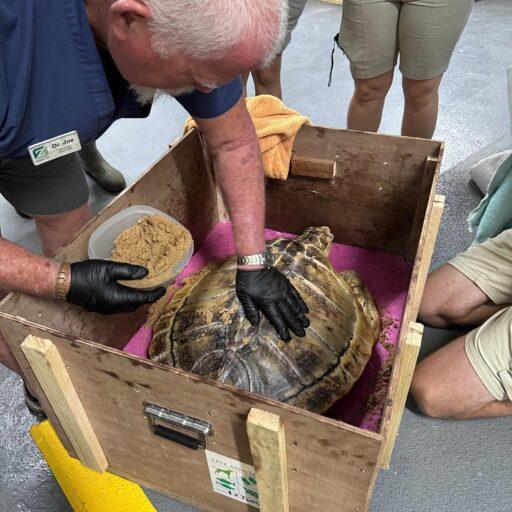
A critically endangered turtle found washed up on a Welsh beach has been flown 5,000 miles (8,047km) home ahead of his planned return to the warmer waters of the Gulf of Mexico.
Rhossi the Kemp’s ridley sea turtle was discovered by a dog walker on Rhosneigr beach in Anglesey, north Wales, in December 2023.
Barely alive, weighing less than 1kg (2.2 lb) and measuring just 25cm (10 inches), he was nursed back to health by staff from Anglesey Sea Zoo (ASZ).
This week he was flown by private helicopter in a bespoke, temperature-controlled crate to catch a British Airways cargo flight to Texas, US, but not before his shell and skin were slathered in Vaseline and KY Jelly to stop them drying out during the voyage.
Rhossi is now undergoing checks at Houston Zoo and, if all goes to plan, is expected to be released on Tuesday 18 August in the area around Padre Island National Seashore.
Kemp’s ridleys are considered the world’s rarest sea turtle, with the species still critically endangered despite decades of conservation work.
ASZ owner Frankie Hobro said Rhossi had probably hatched around Padre Island before getting lost at sea. She has overseen the castaway’s return to the US.
“It’s very emotional, but in a wonderful way – because from the very first minute we found Rhossi, that was the plan.” Hobro told LBC News. “He’s so ready to be back out in the wild.”
Follow Rhossi’s journey here.
Image: Bronwen Armor

The UK’s postal service, Royal Mail, has had a very special delivery: its 9,000th electric van.
It joins more than 120 already operating from the company’s delivery office in Colchester, southern England.
The milestone means almost a third of Royal Mail’s delivery routes now use zero-emission vehicles. Some 44 delivery offices are fully electric and the firm is aiming to reach net zero by 2040, a decade ahead of the UK’s current 2050 target.
As part of its plans, more than 100 micro EVs are being rolled out in locations including London, Bristol and the Scilly Isles, while 20 e-cargo bikes have hit the tarmac in key urban locations.
“This shift is helping us cut emissions while delivering a better service for our customers, with quieter, cleaner deliveries in communities across the UK,” said Stuart Murphy, Royal Mail’s head of fleet transformation.
Meanwhile, leasing of used EVs has surged by 170% in the last year as drivers look for ways to swerve rising fossil fuel prices.
The figures come from the British Vehicle Rental and Leasing Association (BVRLA), which also reported that the number of used EVs leased through salary-sacrifice schemes, where monthly costs are deducted from wages before tax, has increased fivefold in the last 12 months.
BVRLA chief executive Toby Poston commented: “Used leasing is giving consumers real choice: access to a well-maintained electric car with the latest technology, at a range of price points without taking on the financial risk.”
Image: Royal Mail
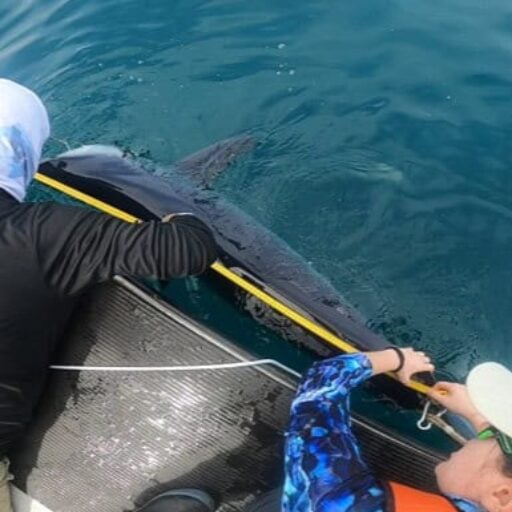
A year after successfully transmitting ocean data from a shark for the first time, scientists are pushing ahead with an unusual experiment that could eventually help predict the strength of hurricanes.
Researchers from the University of Delaware, US, first revealed the project last summer after fitting sharks with sensors that measure conductivity, temperature and depth as they swim through the Atlantic.
The researchers are continuing to test whether sharks could become roving, near-real-time ocean observers, gathering information from parts of the Atlantic that are difficult and expensive to monitor.
Of particular interest is the heat content of the ocean’s upper layer, which can influence how powerful a hurricane becomes before it reaches land.
Until now, researchers have relied partly on robotic ‘gliders’ – mini submarines that gather similar measurements – but the machines are expensive, relatively slow-moving and cover limited areas.
Sharks, by comparison, can travel vast distances. Researchers have identified shortfin makos, blue sharks, smooth hammerheads and juvenile great whites as promising candidates because they regularly surface, allowing sensors on their fins to transmit data to satellites.
The researchers stress that the idea is still being tested, but hope shark-gathered data could eventually supplement existing observing systems and help forecasters better predict hurricane intensity.
“They are amazing animals perfectly adapted to the ocean, and we can learn a huge amount from them,” principal investigator, prof Aaron Carlisle, told Reuters. “If we can show that sharks can help people, it’s a win-win situation.”
Image: University of Delaware

Thousands of lawsuits accusing some of the world’s biggest social media companies of harming children are set to move forward after a US appeals court rejected attempts by Meta and TikTok to halt the cases.
Claims have been filed by state and local governments, as well as individual families, alleging platforms including Facebook, Instagram, TikTok and Snapchat were designed to encourage compulsive use, exposed children to harmful content and failed to adequately verify users’ ages.
The allegations have not yet been tested at trial and are denied or contested by the companies involved.
Meta and TikTok had sought to appeal earlier rulings allowing claims against them to proceed, arguing that Section 230, US legislation that largely protects internet companies from liability for content posted by users, gave them immunity from being sued over some of the allegations.
However, the 9th US Circuit Court of Appeals ruled that Section 230 can provide a defence against liability, but does not automatically prevent a case from being heard in the first place.
The decision clears the way for thousands of lawsuits to continue through the courts.
In a separate strand of the litigation, four state attorneys general are seeking around $1.4tn (£1.04tn) in penalties from Meta.
“Meta’s concern over the potential size of the requested remedies rings hollow in light of the evidence the AGs will present at trial,” they said in a recent court filing.
“The AGs will prove that Meta deceived the public about the safety of its platforms while deliberately designing them to induce compulsive use and increase revenue.”
Image: fizkes

Ever had a dog greet your smile with a wagging tail? There could be a reason why, scientists have discovered: happy human faces appear to trigger a distinct response in their brains.
Researchers from the University of Vienna scanned dogs’ brains while showing them pictures of strangers with happy or neutral expressions.
Happy faces triggered increased activity in parts of the temporal cortex extending into the caudate nucleus, a region associated with reward processing. In further experiments using photos displaying fear, anger and sadness, only happy images elicited the same response, suggesting dogs can distinguish smiles from negative expressions.
Whole-brain scans also showed patterns of activity suggesting dogs can distinguish fear from anger and sadness, the researchers found.
Senior author Laura Cuaya said the research provides the first brain-scan evidence that happy human faces hold “emotional significance” for dogs.
The team plans to expand on the work to compare how human and canine brains respond to the same emotional signals.
“I would like people to see dogs as emotional beings,” says Cuaya. “They have evolved with us to understand our expressions and cooperate with us, and recognising that can change how we communicate with and care for them.”
Image: Laura Cuaya

Ospreys have bred on an RSPB reserve in England for the first time since the Victorian period.
Persecution and egg collecting eventually drove the species to extinction as a breeding bird in the UK in the early 20th century, before ospreys returned naturally to Scotland in the 1950s.
There are now an estimated 316 breeding pairs across the UK, and one of them is rearing three chicks at the Royal Society for the Protection of Birds’ Campfield Marsh reserve in Cumbria, northern England.
The adult birds paired up after arriving at Campfield Marsh in April and are believed to be first-time parents. Staff at the reserve said they had been on tenterhooks since the eggs were laid in early May.
The chicks, named Ash, Bowness Bobbi and Beau by local schoolchildren, hatched in mid-June and are expected to fledge this month before beginning their migration towards Africa in September.
“Ospreys are frequently site and partner faithful, so we’re hoping to see more of them and their offspring in the future,” said site manager Mhairi Maclauchlan.
“It will be exciting to know when and where the chicks are next seen and find out where they choose to breed in a few years’ time.”
Image: KaroGraphix Photography

Europe’s rail revival continues apace as a new cross-border passenger train departed Finland for Sweden this week, restoring a link between the Nordic neighbours after 38 years.
The new twice-daily service between the Finnish coastal city of Oulu and Haparanda in Sweden takes around one hour and 40 minutes.
Passenger services across the border ended in 1988, with differences between the two countries’ rail networks among the complications. Finland’s railway gauge is around 90mm wider than the European standard used in Sweden, but a dual-gauge track in the border area allows trains built for both systems to use the route.
The return of passenger trains also creates a new overland connection between Finland and the wider European rail network.
With several changes, it is now possible to travel from Helsinki to Stockholm by rail in just over 24 hours.
More adventurous passengers could, in principle, keep going much further. The restored link makes it possible to travel around 5,000km (3,107 miles) by train, with multiple connections, between Kolari in northern Finland and the Algarve in Portugal, a journey that has been touted as one of Europe’s longest possible rail trips.
Finland’s national rail operator, VR, is running the new service, while onward connections at Haparanda are expected to improve further in December.
Juho Hannukainen, VR’s Director of new business, said: “It is wonderful to see this route return to service after decades. The connection is an important gateway from Finland to the rest of Europe.”
Image: VR

Previously stubborn plastics can be broken down into material that soil microbes consume, according to research reporting the first published evidence of its kind.
Polyethylene (PE) and polypropylene (PP) are among the world’s most widely used plastics, found in everything from packaging and drinking straws to bottle caps and car parts.
Their durability is also their downfall: once they escape waste systems, conventional PE and PP can persist in the environment for decades or even centuries.
British firm Polymateria has developed an additive called Biotransformation Masterbatch that is incorporated into the plastics during manufacturing. After sufficient environmental weathering, the treated plastic breaks down into a low-molecular-weight wax that can be consumed by naturally occurring soil microbes.
Polymateria researchers teamed up with Imperial College London and Malaysia’s standards and testing body SIRIM to put the technology through laboratory weathering, biodegradation and ecotoxicity testing. Several of the study’s authors work for Polymateria, which developed the technology.
In tests published this week in the peer-reviewed journal npj Materials Degradation, treated PE and PP samples achieved more than 90% biodegradation in soil after between 269 and 292 days, meeting the threshold used by recognised standards for complete biodegradability. Conventional PP tested alongside them did not.
Researchers also found no adverse effects in the earthworms, plants and aquatic organisms used in ecotoxicity tests, while analysis suggested the wax was being processed by microbes through metabolic pathways similar to those used for natural fats.
Imperial College London’s Dr Jose Jimenez Zarco hailed the discovery as “remarkable” and added: “We now know how plastic materials previously thought to be almost indestructible can safely return to nature. We are excited to be seeing this approach having real world impact on tackling plastic pollution.”
Polymateria said its technology is already being used for products in UK stadiums, while more than 300 brands across Asia are adopting it.
“The research will give policymakers and industry renewed confidence that scalable solutions do exist for the 32% of plastic packaging waste that leaks into the environment each year globally,” said Dr Florence Huynh, Polymateria’s VP of innovations.
Image: Polymateria
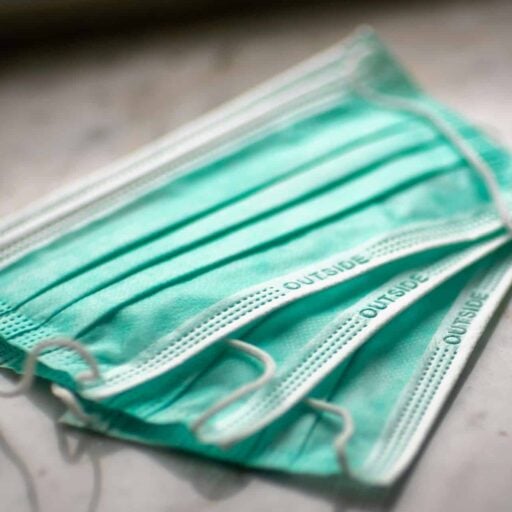
As wildfires continue to burn across the UK, mainland Europe and the US, the creator of the world’s first ‘Clean Air Club’ has shared a Google document detailing how to replicate the model and mitigate the health impacts of blazes.
Emily Dupree, from Chicago, dreamt up the concept during the Covid-19 pandemic to loan air purification machines to touring musicians. Over 40 volunteer-led clean air organisations sprang up worldwide as a result.
Now, in regions battling wildfires, they’re mobilising to help their communities stay safe from smoke inhalation by distributing PPE masks and purifiers.
“Covid and climate change are two major pillars of collective denial in the last decade,” Dupree told The Guardian. “So though our lending library was created in response to one kind of public failure – namely a failure of public health, which is still ongoing – it can serve as a solution in response to this second failure, of governments to adequately address the growing threat of climate change, of worsening wildfires and worsening air quality.”
Dupree’s Google doc includes tips on fundraising, sourcing air purifiers, branding and logistics. Read it here.
Image: Mika Baumeister
Main image: FG Trade
Get your weekly fix of good news delivered to your inbox every Saturday, by signing up to the Positive News email newsletter
Be part of the solution
At Positive News, we’re not chasing clicks or profits for media moguls – we’re here to serve you and have a positive social impact. We can’t do this unless enough people like you choose to support our journalism.
Give once from just £1, or join 1,800+ others who contribute an average of £3 or more per month. Together, we can build a healthier form of media – one that focuses on solutions, progress and possibilities, and empowers people to create positive change.