Drug, alcohol and suicide deaths fell in the US, Colombia outlawed FGM and a bird staged a comeback in Asia, plus more good news
This week’s good news roundup

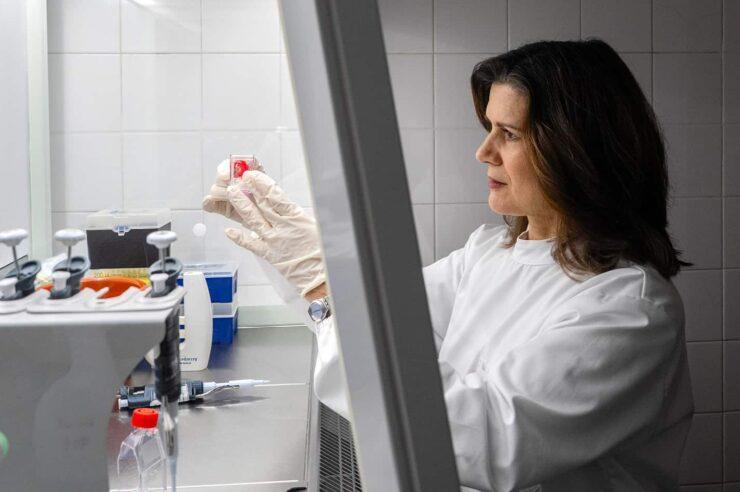
The number of deaths from alcohol, drugs and suicide in the US fell sharply in 2024, led by a huge fall in overdoses, new research shows.
Data from Trust for America’s Health (TFAH), a non-profit public health body, found that alcohol deaths declined by 4%, drug deaths by 26%, and suicides by 3% in 2024 – a positive trend that researchers said had continued into 2025.
Improved access to health services and the rollout of early intervention programmes were among the reasons cited for the decline. But TFAH warned progress risked stalling due to recent cuts to health services, including substance abuse programmes. It also warned that suicide deaths remain high in some demographics, notably among American Indians.
“Sustaining and building on recent progress requires the federal government to invest even more in programs that reduce and prevent harm — not cut them,” said Dr Nadine Gracia, president of TFAH.
“We are also seeing specific groups of people not experiencing the same progress, especially when it comes to deaths from suicide. We need to do even more to build strong policies and programmes that help to improve everyone’s mental health and wellbeing.”
Image: Jack Finnigan

Female genital mutilation (FGM) is set to be outlawed in Colombia after the country’s government passed a bill banning the practice.
Colombia is believed to be the only nation in Latin America where FGM still happens. The practice is widely considered to be a violation of basic human rights, putting women and girls at risk of serious physical, psychological, and sexual complications. However, it persists among the indigenous Embera community in western Colombia.
But not for much longer, perhaps, after lawmakers passed a bill to outlaw the practice. It is now awaiting presidential approval. Enforcing the law could be a challenge, however, given that FGM often happens in secret in remote regions.
It comes as research shows that progress against FGM has accelerated rapidly in the last decade. According to the World Health Organization, the number of girls subjected to FGM has fallen from one in two to one in three over the last 10 years in countries where the practice persists.
“After decades of slow change, progress against female genital mutilation is accelerating,” said the WHO in February. “Half of all gains since 1990 were achieved in the past decade. We need to build on this momentum and speed up progress.”
Related: Life after: FGM
Image: Ayaita

London’s ultra low emissions zone (Ulez) has been credited with a sharp fall in the number of people admitted to hospital for cardiovascular and respiratory diseases.
The Ulez launched in 2019 to cut air pollution in the capital. It imposes a daily fee on vehicles that fail to meet emissions standards and replaced the toxicity charge, which was introduced in 2017.
New research from Imperial College London links the schemes with an 8.1% reduction in yearly trends for cardiovascular disease, 6.2% for respiratory disease and 3.1% for all cause hospital admissions in central London.
“While we need to take caution in how scientific findings for such a complex issue may be interpreted, these results are broadly supportive of the potential for similar interventions in other cities to have positive impacts on health,” said Daniela Fecht, an associate professor at Imperial.
Imperial’s findings come a week after a study suggested that China’s embrace of electric cars has prevented around 262,000 deaths from air pollution.
Image: Shashank Sahay
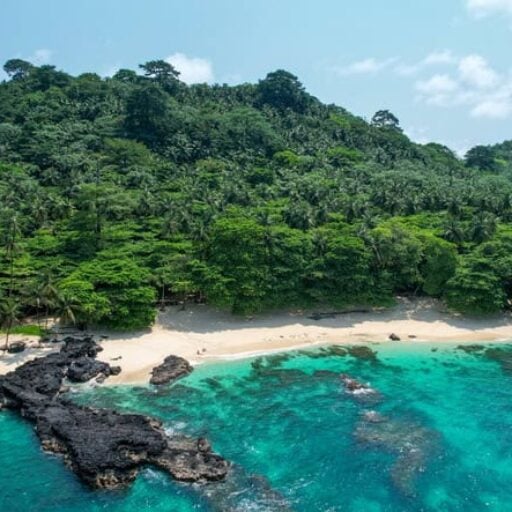
Africa’s second smallest nation got its first marine reserve this week – with a little help from a former turtle poacher.
São Tomé and Príncipe – an island nation in the Gulf of Guinea – approved not one but two marine protected areas on Tuesday. Covering a modest 40 sq miles, the reserves will be off-limits to industrial fishing but will permit sustainable fishing practices.
Turtle poacher turned conservationists Manuel Gomes – the subject of a 2023 documentary – helped to develop the Santana and Ilhéu das Rolas protected areas.
“There will be no more destruction of habitats caused by fishing nets, no more endangered species being caught, no more small fish caught outside the legal limit,” he pledged. “Habitats that have been destroyed will regenerate.”
Pedro Ramos, who works for the conservation charity Fauna & Flora in São Tomé and Príncipe, added: “I’ve lived near the coast my entire life and I’ve never seen our sea under such immense pressure. It’s more important than ever to step up and save our ocean.”
It comes after French Polynesia announced a marine reserve the size of France last week.
Image: Wirestock

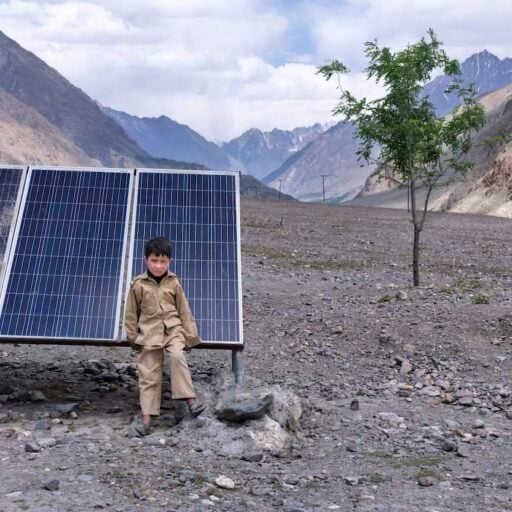
A people-powered “solar revolution” is transforming Pakistan’s power grid, marking what academics believe is the fastest solar rollout in the world.
Pakistan imported more Chinese solar panels than any other country in 2025 (apart from the Netherlands, which distributed its imported panels around the EU). But what’s striking about its solar revolution is that it’s driven by ordinary people eager to producing their own energy in a nation where power outages are common.
“We are used to energy transitions that happen because governments engineer them, with incentives and mandates and targets. Pakistan’s solar boom is the opposite,” commented Jan Rosenow, professor of energy and climate policy at the University of Oxford, England.
“No subsidy programme drove it. No national rooftop scheme. No feed-in tariff. People just did it. It is probably the fastest deployment of distributed solar anywhere in the world, and it happened largely in spite of the state rather than because of it.”
However, it’s not universally good news. There are concerns about the safety of some installations, while poorer households often cannot afford the panels. Still, it’s a testament to solar’s unstoppable rise and increasing affordability.
Image: Pisit Kitireungsang

Having once looked destined for extinction, south Asia’s vultures have staged a remarkable recovery described by a leading bird charity this week as “one of the biggest conservation success stories of our time”.
It’s a story that once seemed unlikely. At the turn of the century, vulture numbers were nosediving across India, Nepal and Pakistan. Among the worst affected was the white-rumped vulture (pictured), which had declined by 99.9% across northern India.
For years, scientists were baffled by the population crash until a drug known as diclofenac, which was given to livestock, was identified as the vulture killer. It was duly banned by India, Nepal and Pakistan (though it is still manufactured illegally in some places), and vulture numbers soon started to rise, thanks partly to breeding programmes.
“Twenty years on from those historic drug bans, the future for Asia’s vultures looks a lot brighter,” said the Royal Society for the Protection of Birds. “This was a monumental step in safeguarding the future of vultures in south Asia, and one that undoubtedly prevented their extinction.”
Image: Mahmudul Bari
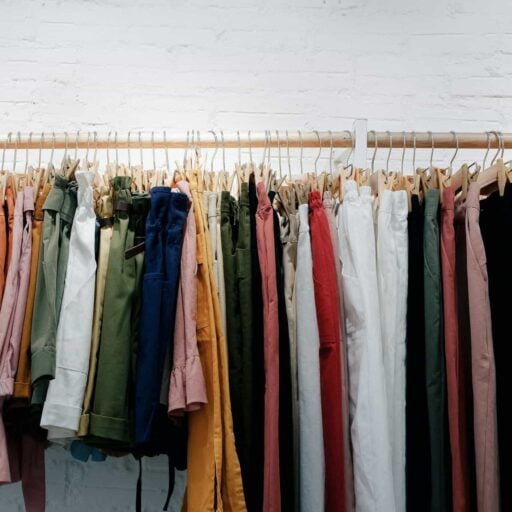
There’s been a “dramatic drop” in the amount of Pfas ‘forever chemicals’ found in clothing products sold in California and New York since the states banned the toxic substances last year.
Pfas chemicals are a group of more than 10,000 synthetic substances used to make products resistant to heat, water and oil. However, they can cause cancer and never fully break down, hence the term ‘forever chemicals’.
Lawmakers in California and New York have pioneered legislation to get Pfas chemicals out of everything from yoga pants to coats – and research suggests it has worked.
The Natural Resources Defense Council (NRDC) tested 115 products purchased in California and New York in 2025. It found that levels of Pfas decreased dramatically from thousands of parts per million (ppm) to less than 10 ppm in a matter of years. Major outdoor brands, it added, reduced the level of Pfas in their raincoats by between 97 to 99.99%.
“Companies complained that they couldn’t get Pfas out of our raincoats, kids’ products, and household textiles, but when states forced their hands, most companies made the change,” said Dr Anna Reade of the NRDC. “Thanks to these two states, we are getting safer clothes and housewares.”
Image: Fujiphilm

The world’s topsoil contains approximately 110 quadrillion km of fungal highways, which is roughly one billion times the distance between the Earth and the Sun.
So finds new research, which has mapped the mycorrhizal fungi networks hidden beneath our feet. Despite helping to sustain ecosystems, food production and carbon removal, mycorrhizal fungi networks remain something of a mystery.
That could be about to change after researchers provided the first global estimate of the scale of these underground fungal networks.
Using data collected from hundreds of sites all over the world, researchers found that grasslands are among the most important hotspots for underground fungal life. This challenges the tendency to focus almost exclusively on trees when discussing carbon storage and ecosystem restoration.
“Our new study provides a crucial baseline: the first global map of where these fungal networks are and how much of them exists,” said study lead Prof Kate Field from the University of Sheffield, England. “To improve soil health, strengthen food security and build resilience to climate change, we need to pay more attention to the life-support system beneath our feet.”
Image: Jesse Bauer

“Children will be given back their childhoods,” said the UK government on Monday, as it announced a social media ban for under-16s – a landmark policy backed by 90% of parents, according to a recent public consultation.
Amid concern about the proliferation of harmful content online and a sense that childhood is being hijacked by algorithms, the UK government said it was “marking a line in the sand and setting a new normal for future generations”.
Not everyone is convinced by social media bans. Many teens have managed to get around the one implemented by Australia last year. Meanwhile, some critics say that bans “punish teenagers for tech platforms’ failures”.
“This social media ban won’t solve every problem overnight, but it is a major step forward because millions of children will now get a few more years to grow up before entering online environments that were never designed with their wellbeing in mind,” said Joe Ryrie, co-founder of the Smartphone Free Childhood movement.
Read the full story here.
Image: PeopleImages
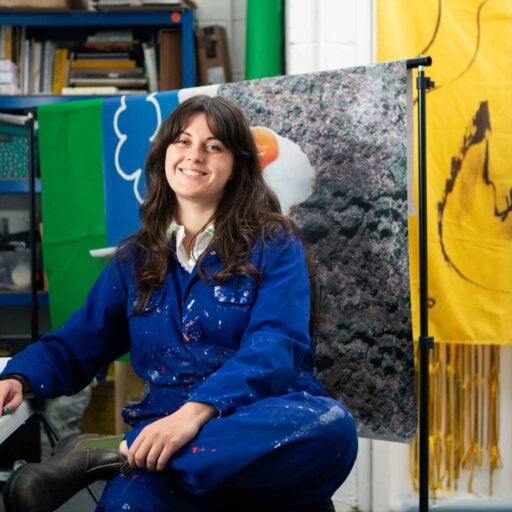
Ireland’s pioneering basic income for artists – introduced as a temporary measure to kickstart culture after Covid – was made permanent recently after research showed that it boosted the economy.
Ireland’s experience has fuelled a growing debate: should other countries follow its lead?
This week, Positive News looked at income schemes for artists across Europe, from Ireland to Norway, to see how they are supporting culture at a time of great precarity for the cultural sector amid budget cuts and the rise of generative AI.
Read the full story here.
Image: Denis Vahey
Main image: RyanJLane/iStock
Get your weekly fix of good news delivered to your inbox every Saturday, by signing up to the Positive News email newsletter
Be part of the solution
At Positive News, we’re not chasing clicks or profits for media moguls – we’re here to serve you and have a positive social impact. We can’t do this unless enough people like you choose to support our journalism.
Give once from just £1, or join 1,800+ others who contribute an average of £3 or more per month. Together, we can build a healthier form of media – one that focuses on solutions, progress and possibilities, and empowers people to create positive change.