New life-changing inventions, a global triumph for renewables, and England’s first Dutch-style ‘cycle street’, plus more good news
This week’s good news roundup
A vaccine for malaria, a “magnetic surfboard” for transporting rail freight, and an antibody that recognises cancer cells with greater precision are among the innovations shortlisted for a major European prize.
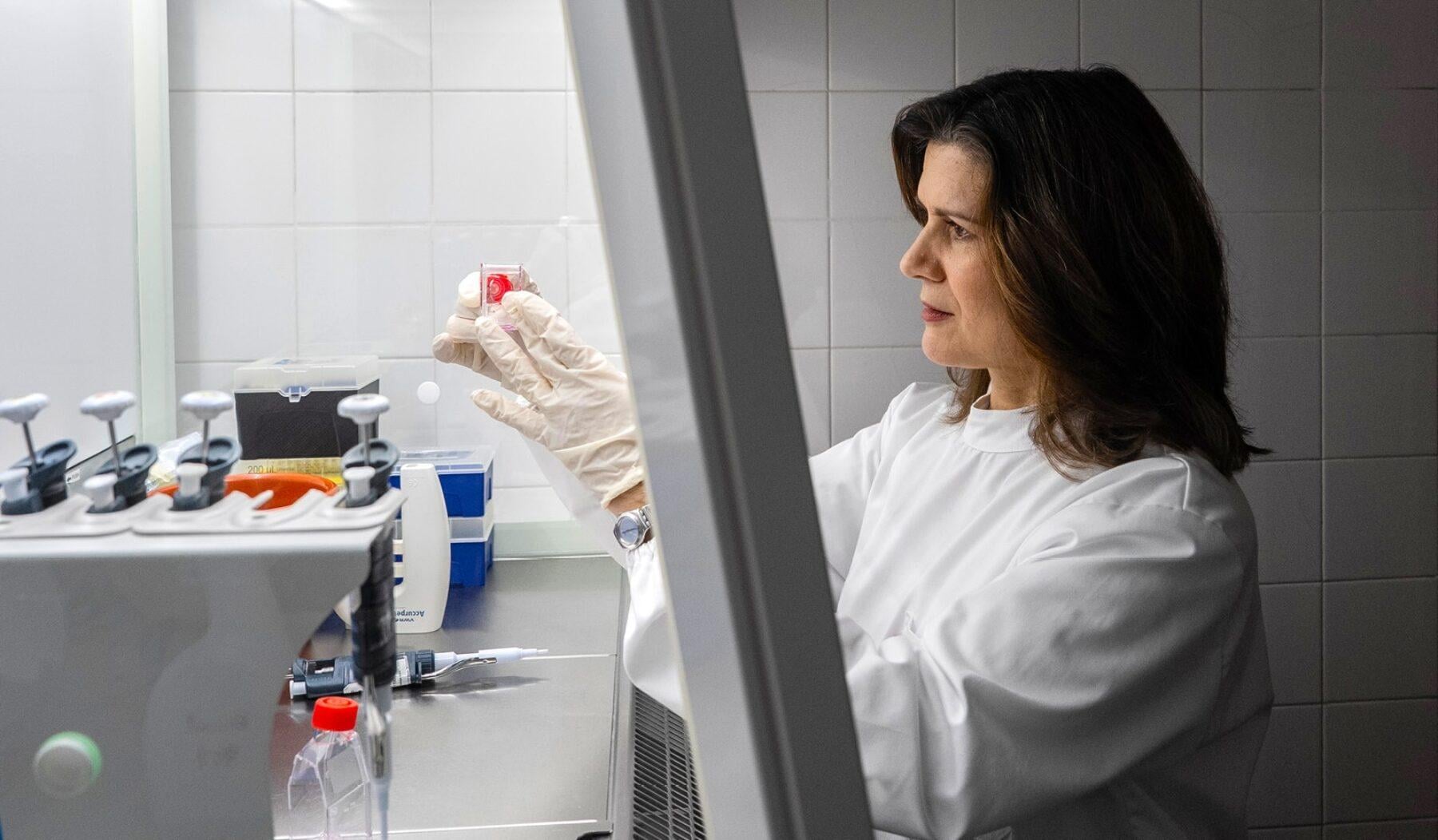
Recognising inventors whose work addresses some of the most critical global challenges, the European Inventor Award has unveiled 12 solutions-seeking finalists. Portuguese oncologist Paula Videira (main picture) is one of them. Her team developed an antibody that targets unique signatures found exclusively on the surface of cancer cells. The advancement paves the way for more targeted therapies.
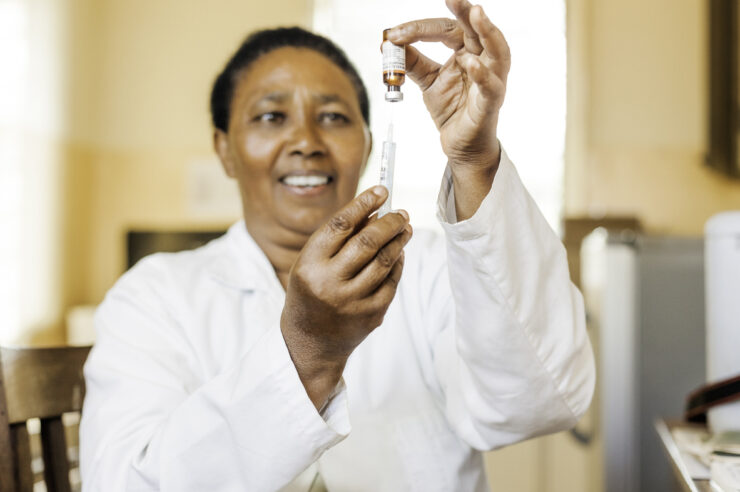
Also shortlisted is Sir Adrian Hill, an Irish-British vaccinologist who led the development of the R21/Matrix-M malaria vaccine, shown to achieve markedly higher protection than other jabs.
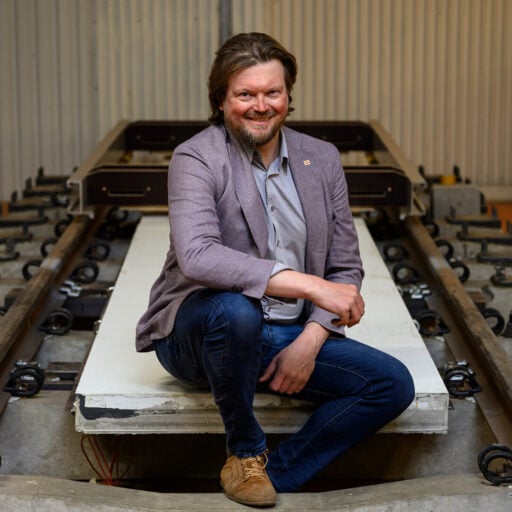
Poland’s Przemek Ben Paczek (pictured) is in the running, too. His team developed a levitation system that can be retrofitted to existing railways. The “magnetic surfboard” allows freight to be moved without locomotives or fossil fuels.
Those behind the awards said the finalists and their inventions “highlight how science, engineering and entrepreneurship can contribute to more sustainable societies, stronger healthcare systems and a more resilient economy”. The winner will be announced on 2 July.
Image: European Inventor Award

For the first time, wind and solar generated more of the world’s electricity than gas in April.
The two renewable sources accounted for 22% of global electricity in the month of April, compared with 20% from gas, according to analysis from the thinktank Ember.
The milestone, it said, was part of a broader trend, rather than a reaction to the current energy crisis, caused by the conflict in the Middle East.
“Countries around the world have been turning to wind and solar because they are cheap, homegrown and secure sources of electricity,” said Ember’s global electricity analyst, Kostantsa Rangelova. “The current energy crisis has further strengthened the economic case for renewables.”
Image: WangAnQi

Fathers in the US are spending more time with their children and less time doing paid work since the pandemic, according to fresh research, which noted a generational shift in how men use their time.
The study, based on the American Time Use Survey, found that since the pandemic, college educated fathers have cut their paid work hours by an average of six per week – while raising housework and childcare hours by more than four.
It’s a significant recalibration, partly explained by the rise in flexible working for white collar employees, said study lead Ariel Binder, a research fellow at the American Institute for Boys and Men in Washington, DC. The data, she added, reflects a societal “reconsideration of contemporary fathers’ household roles”.
However, the research exposed a significant class divide. It found that non-college fathers recorded only a slight fall in their paid hours, but an increase in childcare and housework of 2.7 hours per week – time that mostly came out of rest.
The trend observed is unlike anything preceding it, said Binder, noting that the “gender convergence” between men and women was historically a result of women entering the labour market. Now men are driving it.
Image: Kelly Sikkema

The motor car’s heyday is fast disappearing in the rear view mirror, as data showed that sales of petrol and diesel cars peaked almost a decade ago, in 2017.
With road transport responsible for around 15% of global emissions, phasing out internal combustion engine cars is vital to limit global heating.
According to Our World in Data, global sales of new motor cars have fallen by around a quarter since their 2017 peak, to just over 60m in 2025. Sales of electric cars, meanwhile, more than doubled between 2022 to 2025.
The pace is accelerating. According to E-Mobility Europe, a trade association, the continent’s electric car market grew by 29% in the first quarter of this year. Leading the charge is Germany, Europe’s largest market for electric cars, followed by the UK, France and Turkey.
While electric cars have no tailpipe emissions, they still have a substantial environmental footprint. The rare metals used to make them often sit under ecologically sensitive sites. The best way to decarbonise roads, argue environmentalists, is to boost public transport and active travel.
Related: Four positive tipping points that could trigger unstoppable change
Image: Markus Winkler


In a story rich in symbolism, abandoned oil rigs could become a refuge for marine life, researchers have claimed, while calling for the structures to remain in place once decommissioned.
A new international review of offshore energy infrastructure suggests that oil rigs and wind turbines, though disruptive to marine ecosystems at first, “can evolve into thriving reef-like habitats, boosting biodiversity, attracting marine tourism, supporting fish stocks and improving nutrient cycling”.
The research, led by the University of Aberdeen, Scotland, drew on evidence from 18 countries over 42 years, and offers a potential new roadmap for decommissioning offshore energy structures.
“Our findings show that globally, offshore structures hold a significant role in the marine environment,” said Megan Squire, post graduate researcher at the University of Aberdeen. “The potential value of these structures as artificial reefs should be considered when creating and enacting policy around decommissioning.”
Related: Abandoned oil refineries are becoming unlikely havens for wildlife
Image: iStock
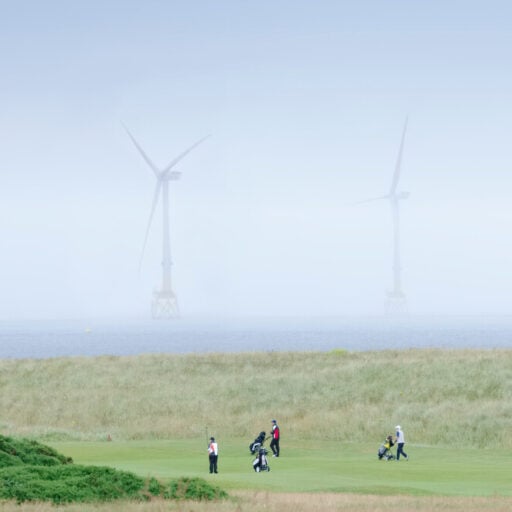
Scotland’s ‘net-zero economy’ now supports twice as many jobs as the country’s oil and gas sector, while contributing £10bn to the national economy.
That’s according to research from the Confederation of British Industry (CBI), which notes that small and medium-sized firms are blazing the trail, accounting for 90% of Scotland’s clean tech companies.
The 105,000 people employed by the sector is roughly double the 53,000 people employed by Scotland’s offshore oil and gas industry, according to figures from 2022. Michelle Ferguson, CBI’s Scotland director, said the stats were “hugely encouraging”. The country’s green economy, she added, represents 4.9% of its economic output.
Scotland has long relied on its fossil fuel industry, which, in 2022, contributed £28bn to the economy. However, with reserves dwindling and the UK banning new drill licenses, it’s now at the forefront of the energy transition.
The research comes amid fracturing political consensus on net zero, with some politicians blaming climate targets for stymying economic growth. The CBI’s findings dispute that.
Instead of scrapping targets, Ferguson called on the UK government to help scale clean tech businesses by investing in skills and streamlining planning. Doing so, she said, was “critical” for energy security and growth.
Image: Richard Johnson

If you’re learning a musical instrument, here’s some news that may encourage you to persevere: doing so could improve your cognitive performance.
Amid concerns that our attention spans are being hijacked by algorithms, music training has emerged as a potential line of defence, with research identifying a link between learning an instrument and improved brain function.
Adding to the evidence is a new study, which tasked 268 musicians and non-musicians aged eight to 34 with completing computer-based assignments designed to challenge their attention spans.
Participants with formal musical training were shown to respond faster with fewer lapses in concentration, compared to non-musicians. The reasons for that are less clear. One theory is that music training promotes effort itself, which is rewarded by the thrill of playing a riff or keeping a beat.
“People with musical training might become more willing to exert effort and approach any demanding tasks with a different motivational state,” noted the study, led by Spain’s Mind, Brain, and Behaviour Research Centre. “In this sense, musical training would improve performance by altering the effort willingness of the musicians, not their cognitive capacities themselves.”
Image: Manas Taneja
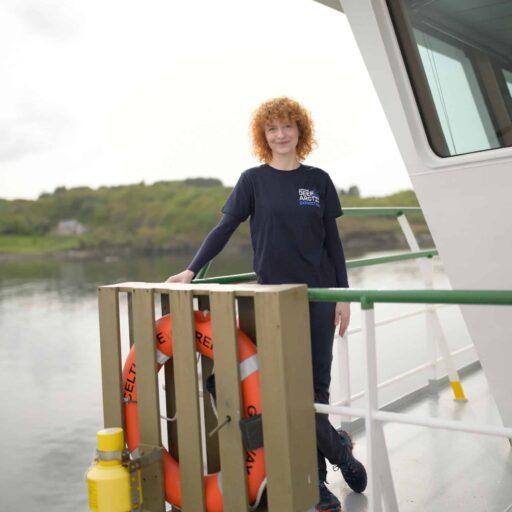
Amid a scramble to mine the ocean floor, scientists have launched a mission to document deep-sea species that could be threatened by such exploitation.
“We cannot protect what we do not know,” said Dr Sandra Schöttner (pictured), chief scientist with Greenpeace International, who is leading the expedition between Iceland and Norway.
The area covered was opened for deep sea mining by the Norwegian government in 2024, but was halted last year after protests from environmental organisations, scientists and green opposition parties in Norway.
“This expedition will gather scientific evidence of the Arctic’s vulnerable deep-sea ecosystems,” said Schöttner, who hopes the findings could spur conservation measures. “By safeguarding these waters in a network of ocean sanctuaries, we can create a resilient safety net for marine life and protect the health of our global oceans for generations to come.”
During the mission, an underwater robot set a record for the world’s deepest protest when it unfurled a banner reading, “listen to the science”, some 1.4 miles below the surface.
The expedition will conclude in early June.
Image: Greenpeace
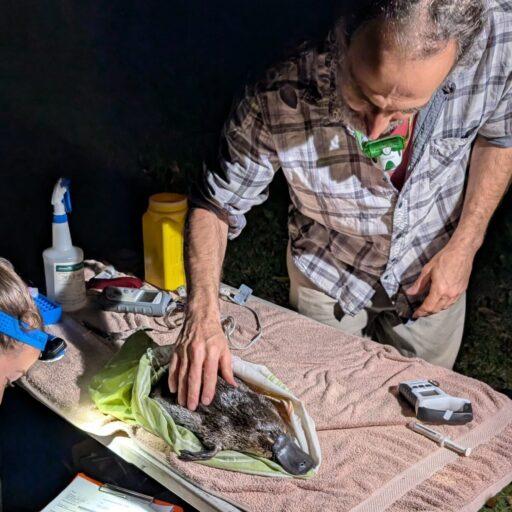
For the first time in generations, duck-billed platypuses are breeding along Australia’s Hacking River, thanks to an ambitious conservation initiative.
The charismatic species was reintroduced to Royal National Park near Sydney three years ago, following an absence of more than half a century. Seventeen animals were reintroduced and, according to scientists, the population has grown to 20, with sightings reported up and down the river.
“This is no longer just a reintroduction – it is a recovering population,” said lead researcher Prof Gilad Bino of the University of New South Wales. “It is a privilege to be part of bringing platypuses back to a part of their former range where they had been missing for generations.”
The platypus is endemic to Australia and listed as near-threatened. Hunting, habitat loss and bycatch have impacted the population, prompting efforts to bring the species back.
Image: Gilad Bino/University of New South Wales
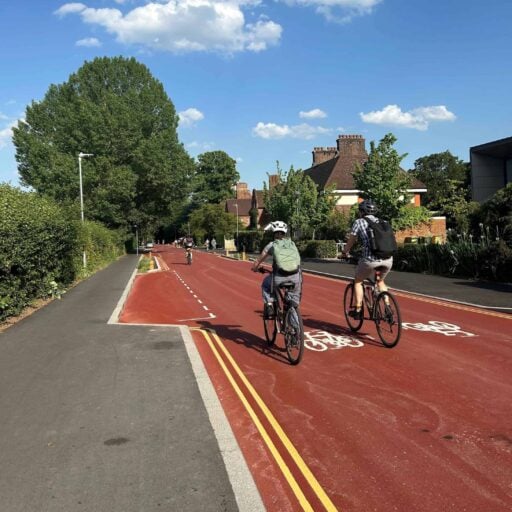
England’s first Dutch-style “cycle street”, which gives cyclists and pedestrians priority over motorists, has opened in Cambridge.
Adams Road, a key route into the city, is painted to look like a bike lane, and treats motorists as “guests”. It is already being used by around 3,000 cyclists a day, officials say – a figure likely to rise as people feel more confident about cycling into the city.
Common in Belgium and the Netherlands, where they are known as a fietsstraats, the roads have started appearing in Germany, Canada and even the US.
While the intervention was welcomed by many in Cambridge, some have scoffed at the £2m price tag, which, councillors pointed out, also covered the construction of rainwater gardens to mitigate flooding.
Anna Williams, head of campaigns at Camcycle, a local charity, said she hoped the cycle street will be “the first of many in the city”.
“Providing more space for people walking, wheeling and cycling will improve safety, encourage more people to choose active travel for their everyday journeys and create a nicer street for everyone who uses it,” she added.
Image: Greater Cambridge Partnership
Main image: European Inventor Award
Get your weekly fix of good news delivered to your inbox every Saturday, by signing up to the Positive News email newsletter
Be part of the solution
At Positive News, we’re not chasing clicks or profits for media moguls – we’re here to serve you and have a positive social impact. We can’t do this unless enough people like you choose to support our journalism.
Give once from just £1, or join 1,800+ others who contribute an average of £3 or more per month. Together, we can build a healthier form of media – one that focuses on solutions, progress and possibilities, and empowers people to create positive change.