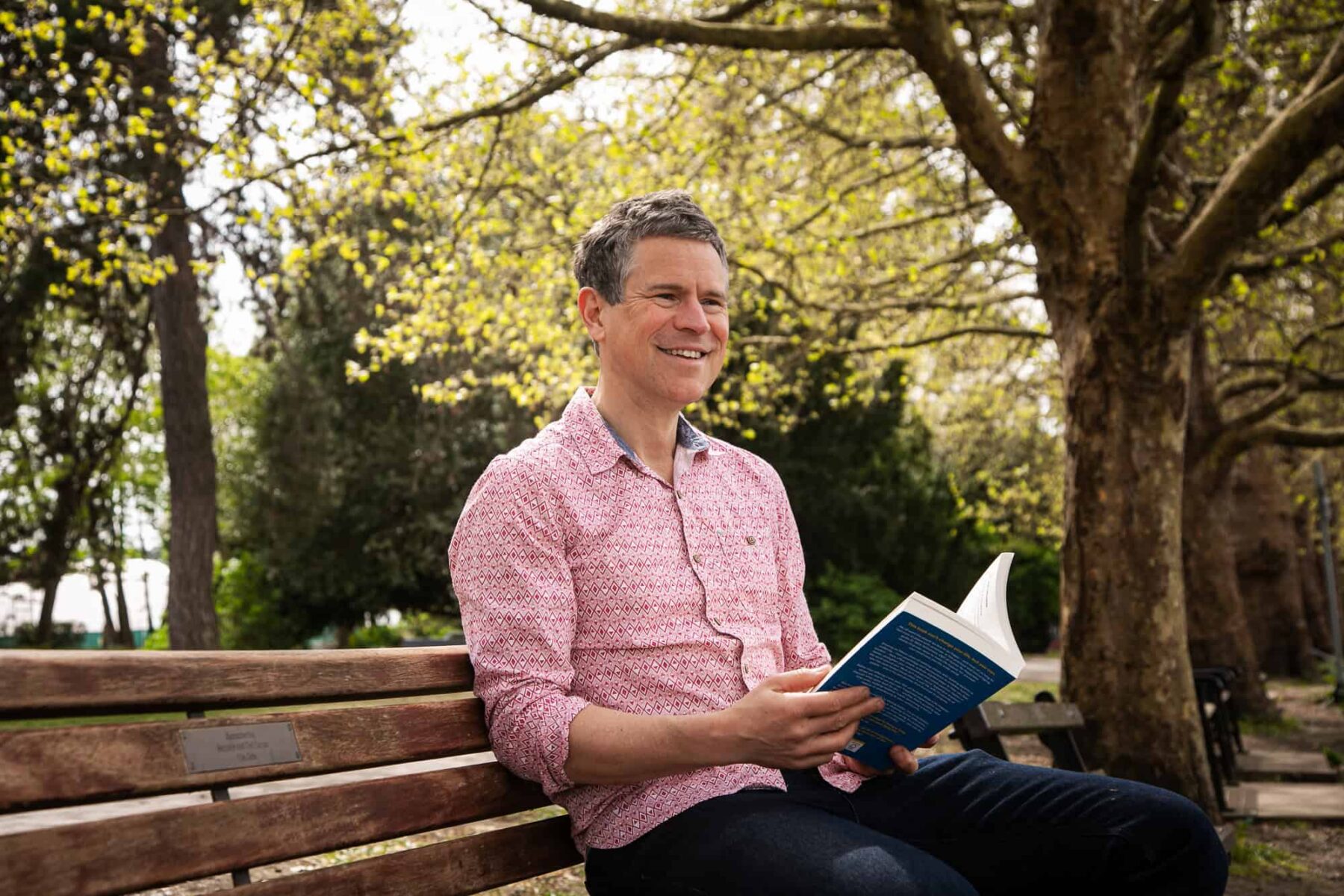
Dr Mark Williamson, director of Action for Happiness, shares five small changes that really can make a difference to your life
As director of Action for Happiness, I’ve spent 15 years working with wellbeing experts and helping thousands of people apply the latest action ideas in their everyday lives. In my new book Make Life Happier, I share practical changes which are within our control. Most importantly, it’s not just about looking after yourself. Lasting happiness comes when we combine self-care with caring for others.
Here are five small changes that really can make a difference.

We think we need to feel motivated before taking action. But actually it’s the other way round: action creates motivation. As I like to remind people, ‘we don’t think our way into new ways of living; we live our way into new ways of thinking.’ So it helps to treat life as a series of small experiments.
Instead of overthinking what might work, try something simple and see how it feels. Go for a walk. Call a friend. Change your routine slightly. Some things will lift your mood. Others won’t – and that’s useful to know too.
Science can point us in the right direction, but the most important research is your own. You’re the experiment. So stay curious, keep it small and let your experience guide you.
Image: Vitaly Gariev

Our brains are wired to focus on what’s wrong. It’s called the ‘negativity bias’, and it’s why one awkward comment can stick with us all day, while lots of good things pass unnoticed. That instinct helped our ancestors survive, but today it can leave us stuck in worry and frustration. The answer isn’t forced positivity or pretending everything’s fine. Life is messy and often really hard.
Instead, we can practise realistic optimism: seeing things as they are, while choosing to focus on what helps. A simple trick is to use the word ‘and’. ‘This is difficult and I can take a step forward.’ ‘I feel anxious and I’m grateful for my friends.’ You’re not ignoring reality, you’re expanding it. That builds hope and resilience.
Image: Helena Lopes

Decades of research show that strong relationships are the biggest predictor of a long and happy life. Yet many of us treat ours as if they’ll just take care of themselves. So we need to maintain our ‘social fitness’.
Just like physical fitness, relationships need regular attention. Without it, they slowly fade – not through conflict, but neglect. The good news is that small actions make a big difference. Take time to check in, send a message, or put your phone away and really listen.
Consistency matters more than grand gestures. So when someone comes to mind, reach out to them. That simple habit can strengthen your relationships and make life feel a lot richer.
Image: Beth Macdonald

In a world that often feels divided, two simple intentions can make a powerful difference: kindness and trust.
Kindness doesn’t have to be big – our small everyday actions can lift someone’s mood and strengthen our connections. And kindness spreads, so when we help someone, it often creates a ripple, inspiring others to do the same. So whenever something happens, a helpful question is: What’s the kindest way to respond to this right now? The same is true for trust. When we show faith in people – by giving responsibility or saying ‘I believe in you’ – they’re more likely to live up to it.
We can’t control the whole world, but we can influence the tone of the world around us. And when we amplify kindness and encourage trust, we help to make life happier for ourselves and others around us too.
Image: Priscilla du Preez

Most of us spend a lot of life on autopilot. We rush from one thing to the next, reacting to emails, habits and expectations without stopping to ask: Is this how I want to be living?
The alternative is to ‘wake up’, become more present in everyday moments and consciously pay more attention to what really matters. A simple way to do this is to imagine yourself in the future, looking back on your life. Then ask: ‘What advice would my future-self give me about what really matters now?’
Often the answers are very different from how we’re currently spending our time. Small moments of awareness can be the starting point for bigger changes.
Image: Troy Allen
Most importantly, if we want to make life happier, we need to show up for others as well as ourselves – these go hand in hand. So whatever you’re facing, ask yourself: What action can I take today to make life happier – for myself and for others?
Dr Mark Williamson is CEO of Action for Happiness and author of Make Life
Happier.
Main image:
Be part of the solution
At Positive News, we’re not chasing clicks or profits for media moguls – we’re here to serve you and have a positive social impact. We can’t do this unless enough people like you choose to support our journalism.
Give once from just £1, or join 1,800+ others who contribute an average of £3 or more per month. Together, we can build a healthier form of media – one that focuses on solutions, progress and possibilities, and empowers people to create positive change.