China’s emissions shrank, homelessness fell sharply in the US, and the world’s largest artificial reef was created, plus more good news
This week’s good news roundup

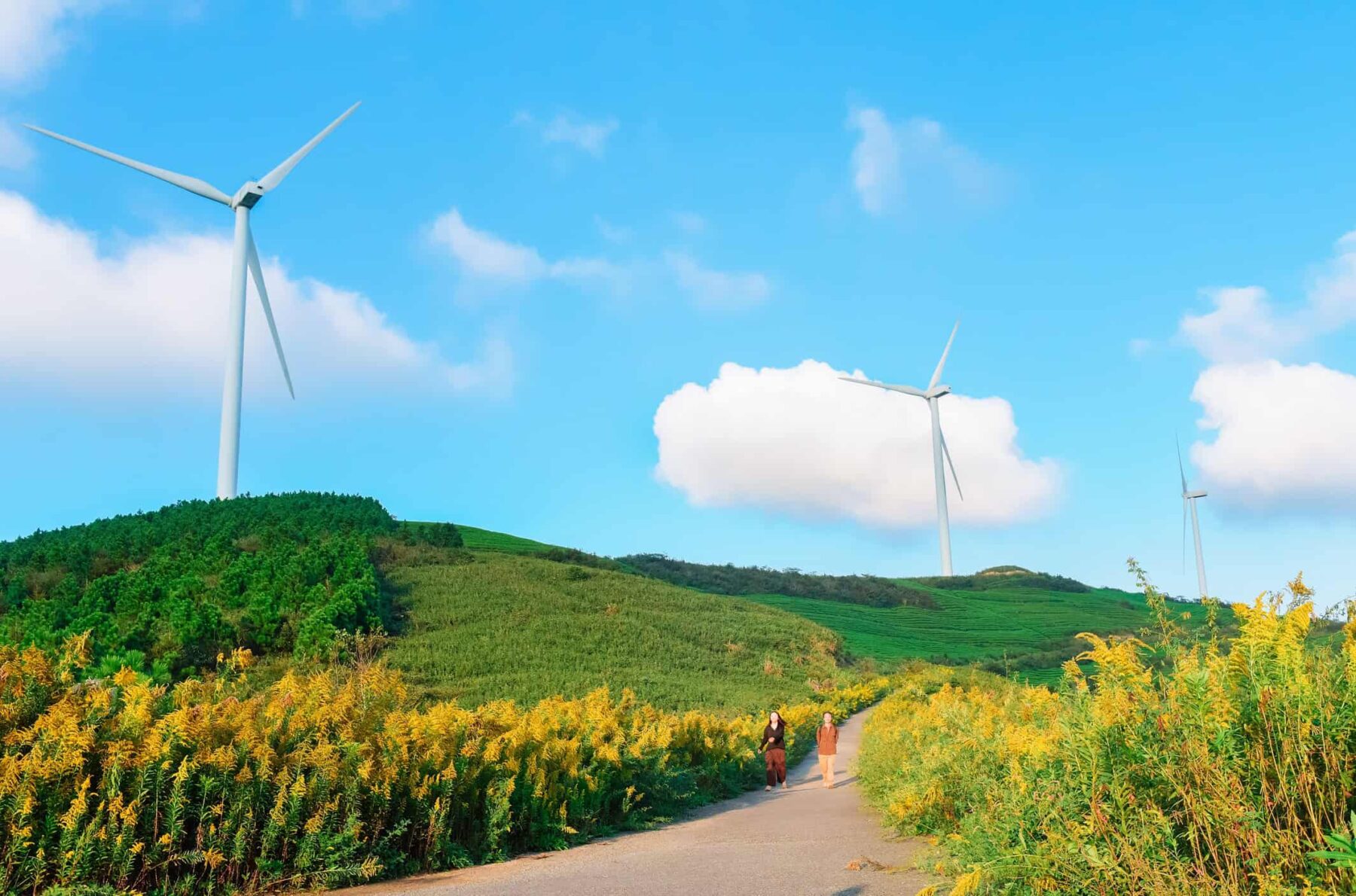
They’ve been flat for more than two years, now China’s emissions are shrinking after the country recorded its sharpest fall in CO2 since Covid.
Analysis from Carbon Brief, a climate reporting website, found that China’s emissions shrank by 3.1% in the third quarter of 2026, driven by a fall in coal and oil use.
Despite continuing to build coal power plants, China brought more wind and solar projects online last year than the rest of the world combined. Electric vehicle sales have also surged, accounting for a record 67% of passenger car sales and 50% of heavy truck sales in September.
“China’s CO2 emissions have now been flat or falling for more than two and half years, and a key part of that is a structural shift towards clean energy,” Carbon Brief’s Simon Evans told Positive News.
The soaring cost of fossil fuels caused by the war in Iran also played a part, said Evans, who warned that it’s too early to say whether China’s emissions have peaked.
“The future path of its emissions depends on the interplay between ongoing clean energy expansion, the ability of grids to absorb new wind and solar, and the government’s approach to recent weak GDP results,” he added.
Image: kynny

Nations have made “major progress” against neglected tropical diseases this decade, the World Health Organization (WHO) declared this week.
In a newly published report, it said that the number of people requiring interventions for neglected tropical diseases fell to 1.4 billion in 2024 – down 36% since 2010, and 19% since 2020.
Cases of sleeping sickness, it added, have dropped by 98% since 1999, while Guinea worm disease fell to a record low of just 10 human cases in 2025. By June of this year, 63 countries had eliminated at least one neglected tropical disease – up from 42 at the end of 2020.
“The elimination of neglected tropical diseases is one of the standout success stories of global health,” said Dr Tedros Adhanom Ghebreyesus, the WHO’s director general. “[But] the hard-won gains we have made could easily be lost, so countries and partners must step up, not step back.”
The WHO warned that progress has been uneven. Neglected tropical diseases “continue to disproportionately affect the world’s poorest and most vulnerable communities,” it said.
Image: Guillermo Spelucin Runciman
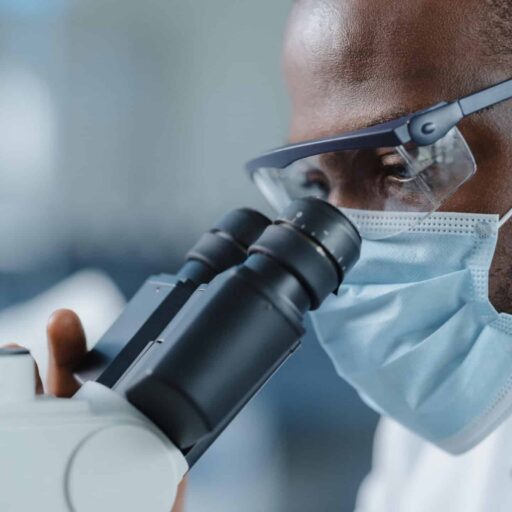
Two potential Ebola vaccines have entered a clinical trial in the Democratic Republic of Congo (DRC) amid a major outbreak of the disease.
The vaccines are among the first to target Bundibugyo virus, which causes Ebola. An outbreak of the virus was declared in the DRC in May. More than 9,500 cases and 4,600 deaths have since been reported. There is currently no approved vaccine to protect against it.
But that could be set to change after the World Health Organization (WHO) cleared the way for two new vaccines – ChAdOx1, developed by the University of Oxford in England, and Moderna’s mRNA-1469 – to enter a trial in the DRC.
“The fact that these vaccines are ready to enter clinical trials is a testament to the power of science and partnership,” said Dr Tedros Adhanom Ghebreyesus, the WHO’s director general. “The people taking part in the trial… will generate vital evidence that could help save lives.”
Image: gorodenkoff


The US has seen its sharpest decline in homelessness since records began almost two decades ago, new data suggest.
Figures analysed by the National Alliance to End Homelessness point to a 6.7% year-on-year fall in the number of people experiencing homelessness in 2026, meaning some 47,000 fewer people are sleeping rough.
While it’s the second consecutive year that the figure has fallen (it dipped 3% in 2025), there are still more homeless people in the US now than before Covid.
The reasons for the latest decline are contested. While the White House credited Trump and his tough approach to immigration, homeless charities said that policies enacted by the Biden administration played a part.
“These decreases are a testament to local homelessness systems and front-line service providers across this nation,” said Ann Oliva, CEO of the National Alliance to End Homelessness. “These professionals have continued their life-saving efforts in the face of resource shortages, staffing shortages, political interference, and an affordability crisis that continues to force more people into homelessness.
“Despite these obstacles, providers continue to do more with less every single day. They are an inspiration to us all.”
Image: BartekSzewczyk

Conservationists at the forefront of efforts to protect endangered species across Africa have been celebrated for their work at the annual Tusk Conservation Awards.
Kenya’s Raabia Hawa, founder of Ulinzi Africa Foundation, was among those honoured. Her team was credited with notching up significant conservation wins in court, including against destructive bottom trawlers.
Also honoured was Daniel Yiankere (pictured), security manager at Kenya’s Loisaba Conservancy. As well as overseeing a huge reduction in poaching, he was central to the reintroduction of the eastern black rhino to the conservancy in 2024.
The final prize went to Dr Colleen Begg, co-founder of Niassa Carnivore Project in Mozambique, which works with communities to reduce human-wildlife conflict. Its revival of traditional “Sanja” stilt houses is credited with reducing animal attacks on families.
The awards were presented by the Prince of Wales in London. Charlie Mayhew, CEO of Tusk, said the winners were “a powerful reminder that meaningful conservation is driven by local leadership and long-term dedication”.
Image: Jamie Lucas

The profusion of fake malaria tablets presents a significant public health challenge, drawing on resources that could be deployed more effectively elsewhere. But not for much longer, perhaps, thanks to a university student in England.
Jean D’Amour Kwizera (pictured), who studies computing at the University of Buckingham, has developed a tool that can spot counterfeit malaria tablets using a photo taken on a smartphone.
Counterfeit medicines are a major global health threat, with an estimated 267,000 deaths linked to falsified antimalarial treatments. Existing detection methods often rely on checking packaging or expensive lab equipment, which is often not possible in poor, rural regions.
However, in a trial, Kwizera’s machine learning software was shown to correctly recognise 94% of genuine tablets from a photo. While the innovation is still in the proof-of-concept phase, it could offer an accessible screening tool for communities where sophisticated lab testing is out of reach.
Kwizera’s innovation saw him win the UK’s Overt Stem Impact Award this week. “This award represents 10 months of my final year, filled with long days, challenges, setbacks, and moments of starting over,” he said. “It means a lot.”
Image: University of Buckingham
It’s famous for its mythical monster, but Loch Ness has a new animal attraction: the beaver.
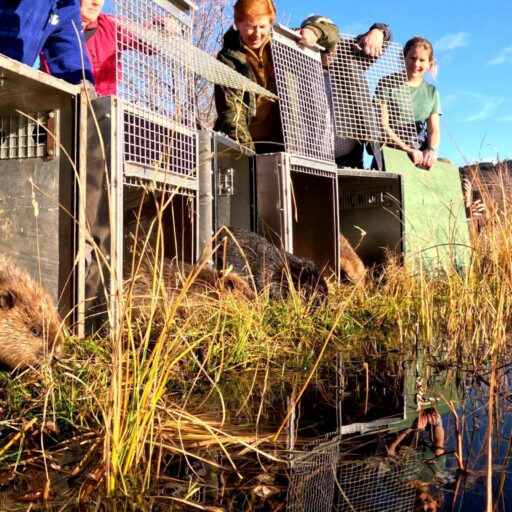
Five centuries after they were last sighted around Scotland’s iconic lake, beavers are back thanks to a large-scale rewilding initiative in the Highlands.
A family of six beavers were released last week on the Dundreggan estate in Glenmoriston, a 10,000-acre site managed by Scottish rewilding charity Trees for Life. At least 15 more beaver families are set to be released in the area over the next three years.
“Loch Ness is iconic in itself, but getting beavers there means they can start to do their magical work over a huge area of northern Scotland,” said Steve Micklewright, CEO of Trees for Life.
Beavers were once common across Britain but became locally extinct around 400 years due to hunting and habitat loss. The animals have since been reintroduced to sites across England, Scotland and Wales, including in London, where they resolved a years-long flooding problem.
Image: Trees for Life
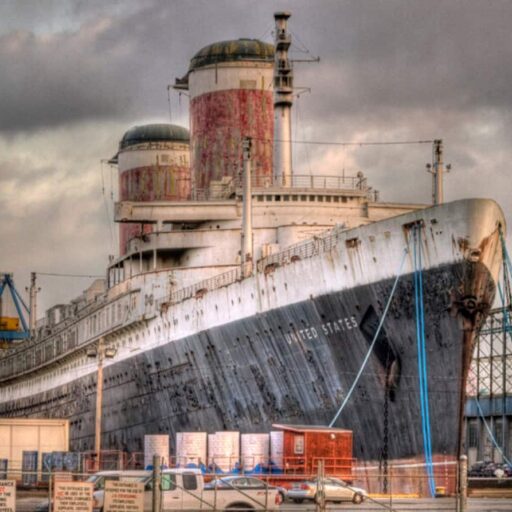
A vessel that still holds the record for the fastest crossing of the Atlantic by a cruise liner was sunk this week to create the world’s largest artificial reef.
It wasn’t the end that many had hoped for for the SS United States, a once-luxurious cruise ship that carried presidents, royals and celebrities. But after a prolonged battle over its future, the ship was scuttled off the coast of Florida on Wednesday following a months-long decontamination programme.
Stripped of toxic materials, sunken vessels can become thriving marine ecosystems. The SS United States is expected to support a range of aquatic life and become a major US dive site.
As the ship slipped below the waves, it took with it a world record. In 1952, it crossed the Atlantic in just three days, 10 hours and 40 minutes. No passenger ship has done the journey quicker.
Despite its prestige, the vessel was withdrawn from service in 1969 and swiftly deteriorated. Hopes of it becoming a floating hotel or museum were subsequently dashed, and it looked destined to be sold for scrap. In 2024, Florida’s Okaloosa county bought it for $1m (£753m) with the intention of sinking it for the benefit of wildlife.
Image: SS United States Conservancy
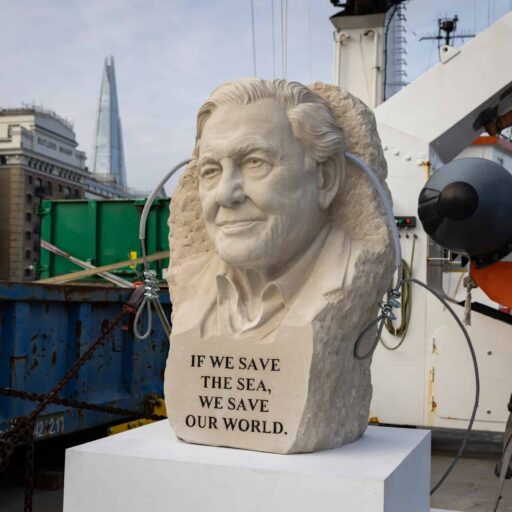
A giant limestone boulder carved to look like Sir David Attenborough has been unveiled by the conservation charity Greenpeace, which plans to drop it in the sea.
‘Attenboulder’ is part of a campaign to halt trawling in the Southern North Sea Special Area of Conservation, reportedly the UK’s “most bottom trawled marine protected area”.
Bottom trawling is a destructive fishing practice that involves dragging weighted nets along the seafloor, indiscriminately scraping up anything that gets in the way. Despite the devastation it causes, the practice is still permitted in many marine protected areas.
Greenpeace plans to lower the boulder into the sea to protect the conservation site from industrial trawlers. The UK’s Marine Management Organisation has threatened legal action if it does so.
The unveiling of the boulder comes as millions of people tune into Blue Planet III, which has brought ocean protection back into the spotlight.
“The public is falling in love with our oceans all over again thanks to Blue Planet III, yet right off our coasts the government still allows industrial fishing vessels to bulldoze the seabed,” said Will McCallum, co-executive director of Greenpeace UK. “The government should stop threatening peaceful protestors and start protecting our seas.”
Image: Andrew McConnell/Greenpeace
Main image: iSweetRiver
Because the world needs it
Positive News reports on the people and ideas driving progress. We believe that giving attention to solutions helps them spread.
Our journalism is independent and powered by our readers. There are no media moguls or shareholders extracting profits: your contribution funds our work to investigate what’s working, understand why, and bring those stories to a wider audience.
If you value a fuller picture of what’s happening in the world, please become a Positive News supporter today.