Rewilding gave low-lying islands hope, a basic income trial showed promise, and a Bangladeshi factory won a global architecture award, plus more good news
This week’s good news roundup

Restoring seabird populations and native vegetation on low-lying tropical islands would give them a “fighting chance” against rising seas, a study has found.
Habitat loss and invasive rats wiped out seabirds on many tropical atolls. Now, scientists say that bringing them back could protect islands from rising seas after they discovered bird poo “supercharges” processes that help atolls grow.
“Islands are dynamic systems that shift and build over time,” said lead author Prof Nick Graham from Lancaster University, England. “Seabirds and native vegetation enhance geo-ecological functions that can help islands cope with sea level rise.”
Graham’s team found that coral reefs around islands with “thriving” seabird populations grew up to 2.5 times faster than those around rat-infested atolls. “Seabirds deposit large quantities of nutrients through their droppings, fertilising the reef,” he told Positive News, adding that reefs act as breakwaters during storms.
Production of sediment – the building blocks of tropical islands – was also significantly higher on seabird-rich atolls, allowing the islands to grow. Root systems of native plants, meanwhile, were shown to “hold islands together”.
The study, which examined 28 islands in the Pacific and Indian oceans, concluded that restoring native plants and seabirds on some atolls could help them “keep pace with even a 2C sea level rise projection”. Cutting emissions – and fast – is also crucial to their survival.
Related: The barren island that became a rewilding success
Image: Bruskov
Proponents of basic incomes have long argued that they could reduce inequality, improve health and boost the economy. Now, new research adds protecting the environment to the list of stated benefits.
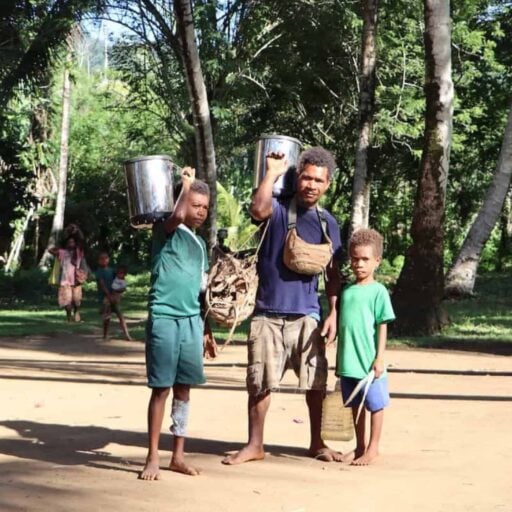
Analysis of a two-year basic income trial in the Peruvian Amazon was published this week by the University of Bath, England. The pilot saw 211 people in three Indigenous communities receive cash transfers equivalent to around £2 a day to spend as they pleased.
Academics reported a sharp reduction in food insecurity – down from 73% to 26% – plus improvements to wellbeing. They also noted that many participants used the money to invest in education and solar, while 90% “adopted environmentally beneficial practices”, such as more sustainable farming practices.
“Giving historically marginalised Indigenous people a no-strings basic income brings a multitude of benefits,” said lead researcher Dr Neil Howard. “The incentive to exploit land is diminished, and people are put front and centre with respect and dignity, which contrasts sharply with the colonial history of conservation and Indigenous policy.”
The trial was small and there was no control group, but Cool Earth, the charity behind it, plans to expand the scheme. “Contrary to traditional critiques that basic income creates dependency or reduces work incentives, this pilot shows the opposite,” it said.
Related: The bold model stopping deforestation in its tracks
Image: Cool Earth

Combining exercise with volunteering could offer a “powerful” solution to the growing mental health crisis, researchers said this week.
Academics studied 2,800 volunteers at the UK charity GoodGym, whose members walk, run or cycle to help isolated older people and assist with community projects.
Regular participation was linked to a significant reduction in poor mental health compared to a control group, researchers found. Volunteers also reported improved feelings of trust, connectedness and belonging.
Mental ill health costs the UK alone an estimated £120bn annually through sick leave and productivity losses. Academics believe their findings provide policymakers with a cost-effective means of relieving pressure on stretched health services. Doctors in some UK regions already prescribe activities, such as walking in the woods, to improve patient health.
“Sports and volunteering can be powerful tools in addressing the growing mental health crisis documented in recent years and, in the context of increasingly stretched health resources, [are] highly cost-effective,” said Dr Maria Cotofan, senior lecturer in economics and policy at King’s College London, which led the research.
Image: AzmanJaka
He labeled the climate crisis a “hoax”, dubbed green energy a “scam” and re-entered the White House on a pledge to “drill, baby, drill” – yet US president Donald Trump is unwittingly presiding over a domestic clean energy boom.
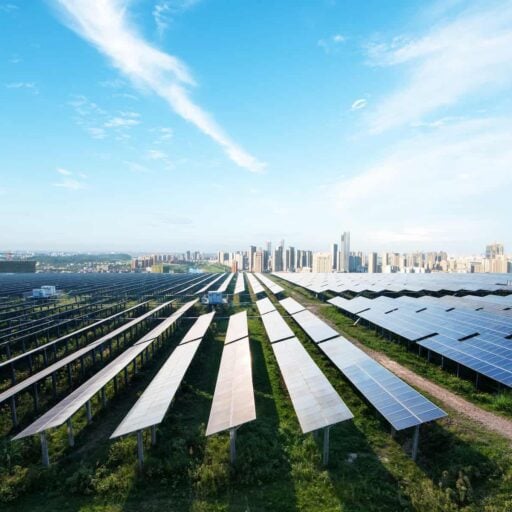
Analysis from the Financial Times suggests that 2026 will be a bumper year for US renewables, with a record 45 gigawatts of clean-energy capacity forecast to come online. Meanwhile, green energy stocks have mostly outperformed their oil and gas rivals.
“The economics of green power are proving harder to overturn than the policies supporting it,” noted the newspaper. “Technological advances have made solar panels, wind turbines and batteries increasingly competitive, leaving renewables among the cheapest sources of new electricity generation in the US, even without subsidies.”
Trump’s war in Iran, which sent oil prices soaring, is one reason why renewables are taking off in the US. That’s not to say Trump’s policies aren’t stymieing climate action. A UN report warned this week that climate-warming pollution is soaring in the US, in contrast to other developed nations.
Image: WangAnQi


The Norwegian government has vowed to protect children from harmful content and addictive algorithms ahead of its anticipated under-16s social media ban.
Politicians are due to present a bill prohibiting children from using social media, one that is expected to make tech firms responsible for age verification.
In a statement on Monday, the government said the bill would address a range of risks children face online. “This includes everything from exposure to harmful content and addictive features to illegal marketing and unwanted contact from strangers,” said Lene Vaagslid, Norway’s children and families minister.
Norway has also announced a ban on “creepy” smart glasses. Under proposed legislation, camera-enabled spectacles will be prohibited in most public places, including parks and schools.
Since Australia became the first country to implement a social media ban for children, other nations have announced similar legislation, including the UK. Many children’s charities have welcomed such moves while others criticised them, claiming they are blunt instruments that punish children for tech company failures.
Image: Lacheev

A little-known landscape characterised by its towering rock spires has become the 64th US national park.
A 12,000-acre maze of rugged rock formations, Arizona’s Chiricahua landscape is a place where desert, grassland and forest ecosystems meet, supporting a remarkable array of biodiversity. On Tuesday, it became a national park.
“Chiricahua’s towering rock spires, rich Apache heritage and remarkable biodiversity make it one of America’s most extraordinary landscapes,” said secretary of the interior Doug Burgum. “This new designation will shine a national spotlight on one of Arizona’s hidden gems.”
The designation comes at a difficult time for US national parks. Since coming to power, the Trump administration has slashed the National Park Service’s budget and cut around 25% of its workforce.
Image: AZCat
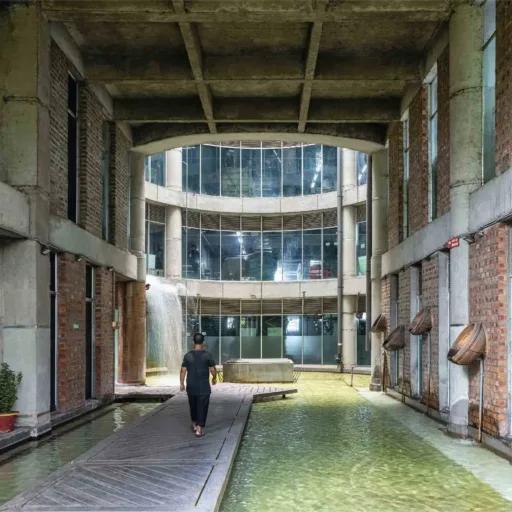
A Bangladeshi rug factory has scooped a prestigious global award for “redefining manufacturing architecture in south Asia and beyond”.
Draped in plants and surrounded by gardens, Green Field rug factory in Rangpur is “more than just a place of work”, said judges at the RIBA International Prize.
The factory, commissioned by Karupannya Rangpur Ltd, uses nature to naturally cool the building. Workers inside have views of the surrounding landscape, plus access to a medical centre, daycare facility, prayer room and canteen.
“A factory should not be a machine that consumes human energy,” said Bayejid Mahbub Khondker of Nakshabid Architects, which designed the building. “It should be a living place that restores it. At Green Field, we wanted to prove that industry can breathe, nurture and inspire.”
Meanwhile, a housing development in London won RIBA’s Stirling Prize, awarded to the “UK’s best new building”. Lion Green Road contains 157 homes and is set in a verdant landscape in Croydon, London.
“At a time when we urgently need to deliver more homes, Lion Green Road shows that density can be achieved without compromising the quality of the places we create,” said RIBA president Chris Williamson.
Image: City Syntax

If anywhere was going to blaze a trail in sustainable construction it was probably going to be a design museum.
Step forward Ghent, the forward-thinking Belgian city, which this week unveiled a new wing of its Design Museum, made largely out of recycled materials.
While its angular looks have divided aesthetes, the building’s commitment to the circular economy has been widely praised. As well as incorporating old sinks, toilets and windscreens, the building was constructed out of 85,000 bricks made from demolition waste.
Rather than being kiln-fired, the bricks were cured using hydrated lime. According to Carmody Groarke, the UK firm that led the design, this reduces embodied carbon by around two-thirds compared with conventional fired clay bricks. What’s more, “the lime binder continues to absorb carbon as it cures over time,” it added.
The new wing was part of a four-year renovation of the museum, which is now complete.
Image: Romanin & Noceto
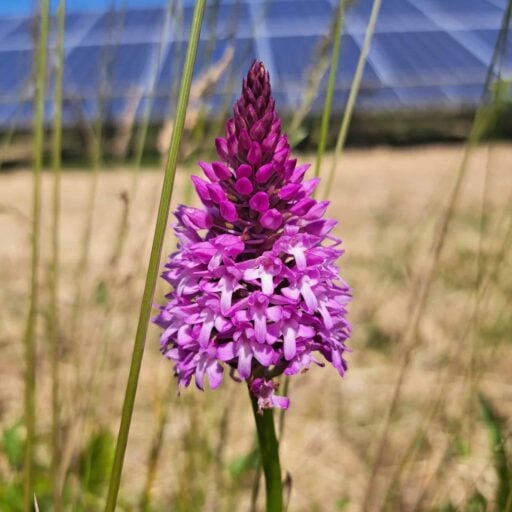
Done well, solar farms have been shown to help boost biodiversity. Now, a new UK scheme aims to ensure more green energy sites benefit wildlife.
Launched by Wild Power, the scheme assesses how renewable energy developments protect and improve habitats, awarding certification to those that meet its biodiversity standards.
“I like to think of it as a fair trade stamp, but for clean energy,” Wild Power director Joe Arafa told Positive News. “Right now, we’re facing both climate and nature crises. A well-managed solar farm can contribute to solving both at the same time.”
Read the full story here.
Image: Hertha Wood, RES
Main image: helovi
Because the world needs it
Positive News reports on the people and ideas driving progress. We believe that giving attention to solutions helps them spread.
Our journalism is independent and powered by our readers. There are no media moguls or shareholders extracting profits: your contribution funds our work to investigate what’s working, understand why, and bring those stories to a wider audience.
If you value a fuller picture of what’s happening in the world, please become a Positive News supporter today.