Regenerative agriculture is increasingly being explored as a way to make dairy farming more resilient. But what does it all mean? From mob grazing to herbal leys, here’s our demystifying guide
When we think about strategies for a green future, it’s not usually a dairy cow that springs to mind. Electric vehicles and renewable energy, yes. But bovines?
The UK is a dairy-loving nation. Milk, cheese, butter and yogurt are firm household staples: 96% of adults regularly buy milk, and it’s a similar figure for cheese. With such high domestic demand, dairy farms need to remain resilient and productive. But the changing climate is making that challenging. The widespread droughts and heatwaves experienced across the country this summer, for instance, put agricultural operations under strain. During May and June of this year, milk deliveries from UK farms dropped to 19-year lows. As extreme weather impacts become more common, the need for climate-smart, resilient farms feels less like a good idea and more like a necessity.
For Somerset-based brand Yeo Valley Organic, the solution to making farms more resilient is right under our feet: healthy soil, and the regenerative and organic principles that help create it. But what exactly is regenerative agriculture?
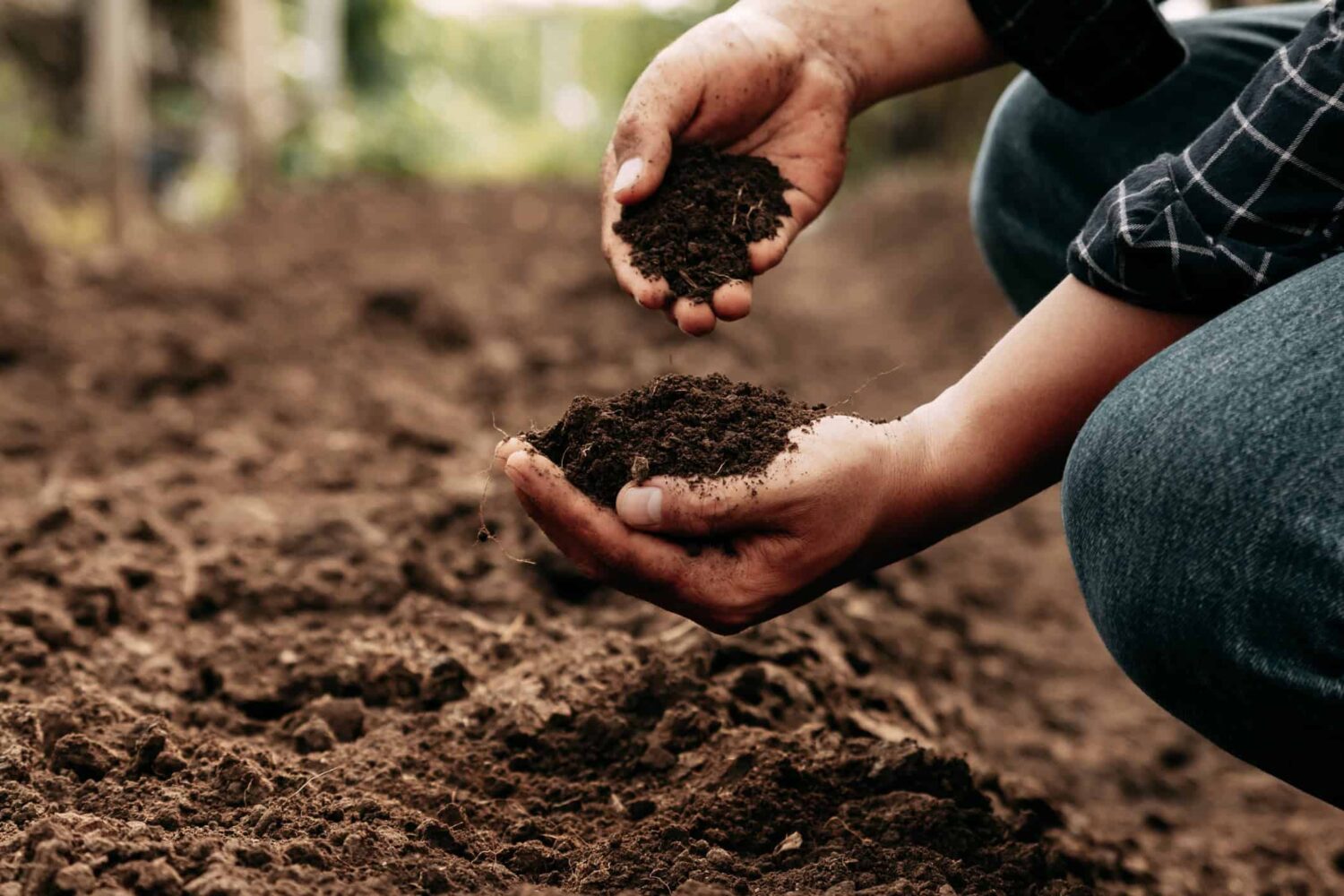
The solution to making farms more resilient could be right under our feet. Image: Thx4Stock
Simply put, the system takes a holistic approach, championing the health of soil, animals, wildlife and people. It’s about working with nature rather than against it, and not relying on chemical inputs derived from fossil fuels. If you distil it down, it comes back to “soil, not oil”, says Will Mayor, Yeo Valley Organic’s farms development manager.
Regenerative farming could cut as much carbon as taking 900,000 cars off UK roads every year, according to WWF. But this isn’t just about emissions: “Working with nature is working towards resilience,” says Mei Casal, senior policy advisor on supply chains at WWF UK.
So how does regenerative differ from organic? “First of all, organic is regenerative,” Casal explains. “They both share practices, principles and this drive to move away from intensive farming and a way of cultivating or producing in harmony with nature.” What sets them apart is that organic is regulated by a defined set of standards, while the definition of regenerative agriculture is “still evolving”, says Casal.
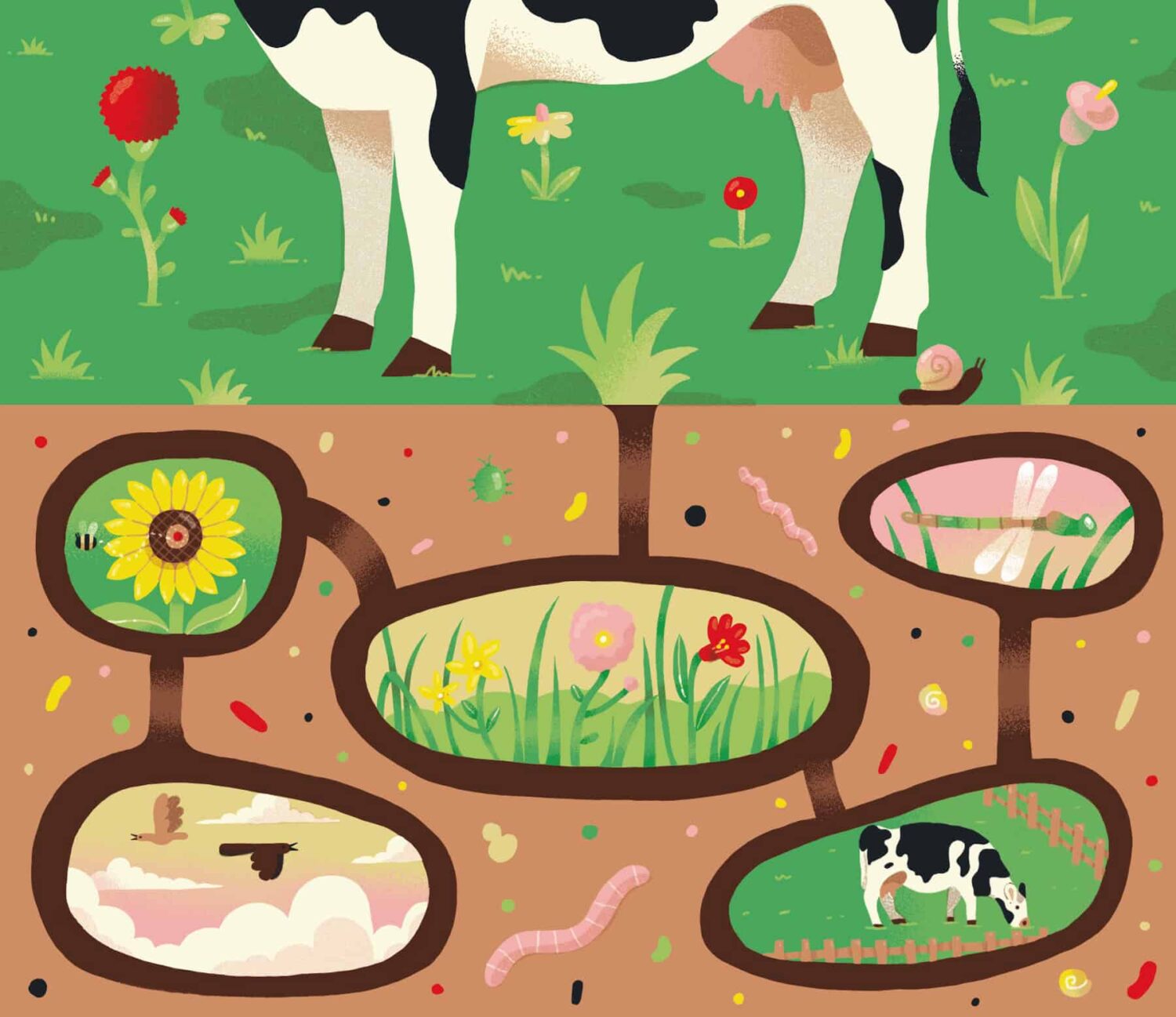
Dairy cows are an integral part of regenerative agricultural systems. Illustration: Beth Walrond
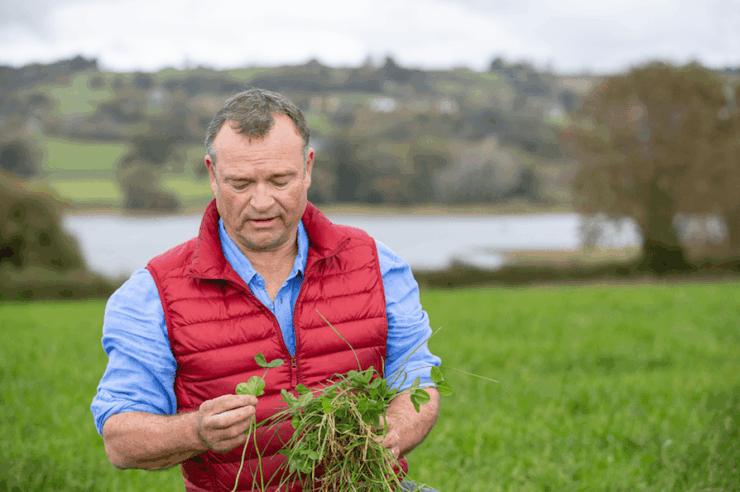
Yeo Valley Organic combines both organic and regenerative principles, and dairy cows are an integral part of these systems. Take sunflowers. Down on Holt Farm, the company’s home farm, cows graze on diverse herbal leys – a mix of grasses, legumes and herbs rather than simply grass. This summer, they planted 29 plant species in one field, including sunflowers. The cows don’t eat the flowers; instead, they trample them into the ground, where they break down like compost and help boost soil health.
The diverse leys aren’t just good for the cows; they’re also creating a haven for hoverflies, butterflies, bees and dragonflies. More pollinators can boost crop yields, while a healthy insect population provides food for local birds and helps keep pests in check.
Holly Wilkinson has been a tenant farmer at Fairfield Farm, just outside Newton Abbot in Devon, since April. Before that, she spent six years working on an organic farm, and even she admits that she initially focused on the benefits to the animals and what she could see happening above ground, without really considering what was going on beneath the surface.
“Unknowingly, we were improving the soil, but I wasn’t computing what we were actually doing,” she says. Soil health can seem a bit abstract, until you can see the difference “between the root structures, the smell, the sight of it, how it crumbles”, says Wilkinson.
Then, there’s the impact of the animals themselves on the soil. Whether it’s mob grazing, rotational grazing or next-level grazing – strategies that all move livestock around the pasture to keep it healthy – the aim is the same: to give the grass a rest. The core principle is to mimic how grazing animals would naturally move through grasslands, Mayor explains. “So, it’s high impact for short periods of time and then longer rest periods in between.”
A diverse functional ecosystem is a more resilient ecosystem – it’s giving us the ability to continue producing food in these extreme climatic conditions
These practices are just one part of a bigger picture. Mayor reels off how regenerative agriculture ticks all the boxes, from carbon sequestration to biodiversity to healthy food. And increasing resilience is at the very top of his list.
“A diverse functional ecosystem is a more resilient ecosystem – it’s giving us the ability to continue producing food in these extreme climatic conditions,” he says.
So, where can shoppers begin? There may not be a regenerative label to look out for quite yet – on dairy or other foods – but Casal notes that brands often share stories of their products on the packaging. And to take it one step further, she suggests visiting the farms themselves if you can.
Ultimately, regenerative and organic farms need to become the “new conventional”, says Mayor. But to get there, Casal believes there needs to be a “shift of markets, metrics and mindsets”, with policies, finance and business models putting nature first.
Wilkinson reflects on this mindset shift: “We want to return the land to a better [state] than we found it,” she says. And, by improving the nutrition for the cows, quality of the milk, and the ability to cope in adverse weather, she says, “we’re also setting ourselves up as a resilient business”.
Main image: Antonio D’Albore