Grassroots environmental ‘champions’ were honoured, the world hit a major energy milestone, and science beat a type of blindness, plus more good news
This week’s good news roundup
If you ever question how much of a difference one person can make then take heart from the “grassroots heroes” honoured this week by the Goldman environmental prize.
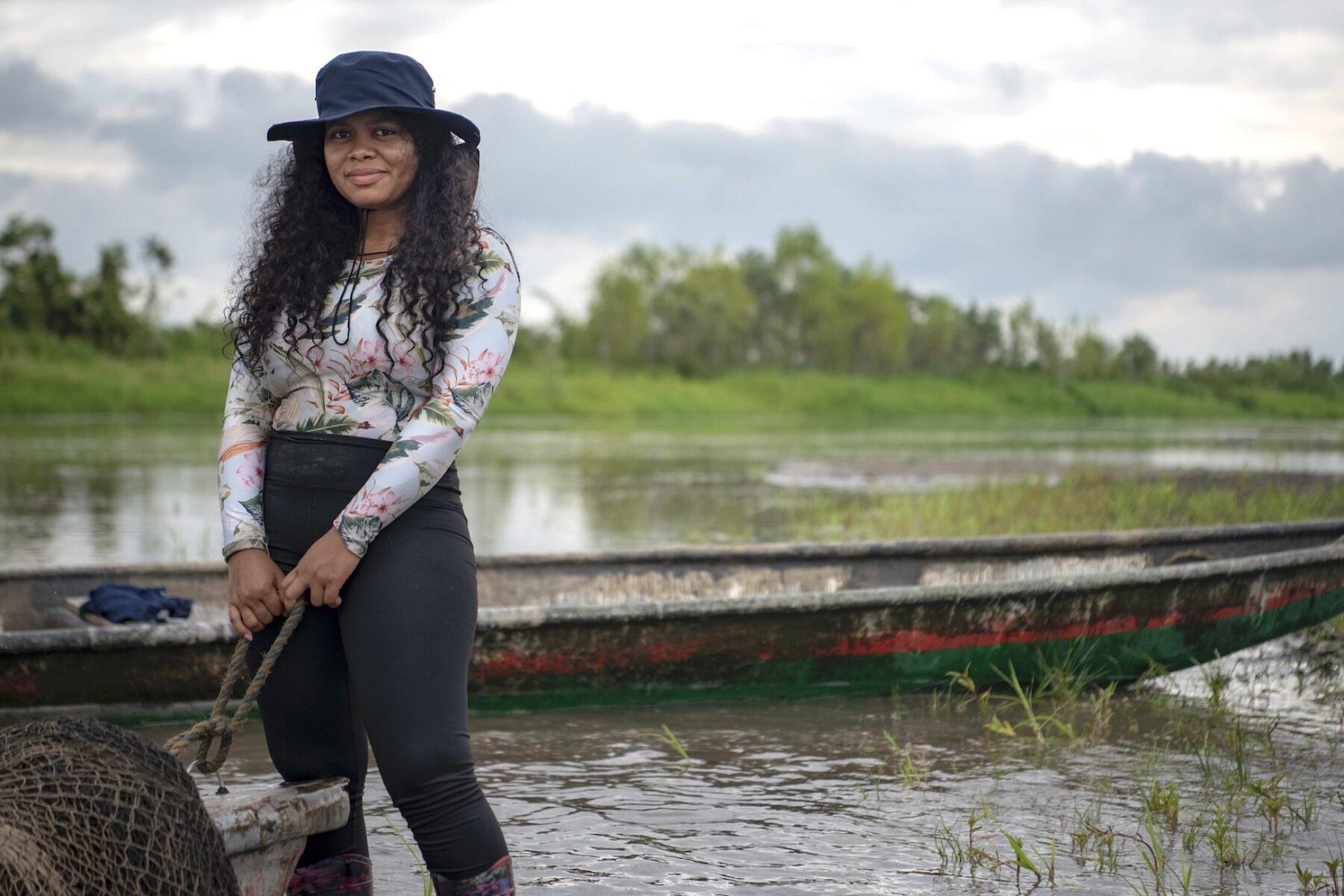
Awarded to “ordinary people taking extraordinary actions to protect the planet”, this year’s recipients include Yuvelis Morales Blanco (main picture), whose tireless campaigning halted commercial fracking in Colombia.
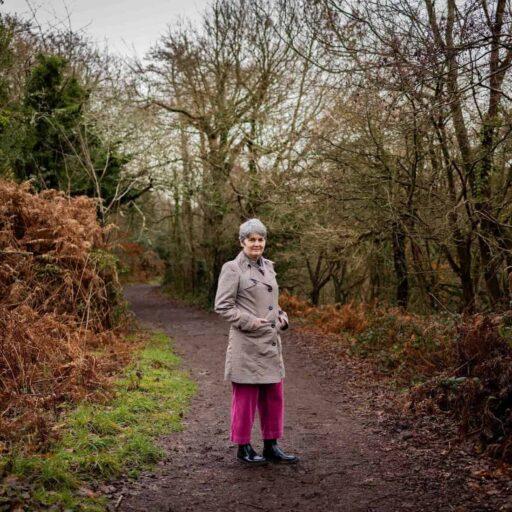
Also honoured was the UK’s Sarah Finch (pictured here), who, in a David versus Goliath battle that rumbled on for years, took big oil to court – and won. The landmark case has since stopped other fossil fuel projects in their tracks.
The other recipients were: Iroro Tanshi, who rediscovered the endangered short-tailed roundleaf bat in Nigeria – and helped to protect it; South Korea’s Borim Kim, who won the first youth-led climate litigation case in Asia; Theonila Roka Matbob, who took a mining giant to task over pollution in Papua New Guinea; and Alannah Acaq Hurley, who halted a mega mining project in Alaska, US.
“While we continue to fight uphill to protect the environment … true leaders can be found all around us,” said John Goldman, vice president of the Goldman Environmental Foundation. “These winners are proof positive that courage, hard work, and hope go a long way toward creating meaningful progress.”
Image: Goldman Environmental Prize

For the first time, renewables grew fast enough to meet all new electricity demand globally in 2025, and even nudged fossil fuel power into reverse – a milestone analysts said showed the world has “entered the era of clean growth”.
Analysis of global electricity markets, published this week by the thinktank Ember, showed that China and India, historically the largest contributors to the rise in fossil power, recorded historic falls in fossil generation last year (by 0.9% and 3.3% respectively). The two nations both added a record amount of renewables in 2025.
According to Ember, “solar power cemented its role as the dominant driver of change in the global power sector”, helping renewables to overtake coal for the first time in the global electricity mix.
Despite the good news, there was only a negligible 0.2% dip in fossil generation globally. The energy transition, Ember cautioned, remains “uneven and incomplete”. Still, the data represents a tipping point of sorts.
“Clean energy is now scaling fast enough to absorb rising global electricity demand, keeping fossil generation flat before its inevitable decline,” said Ember’s interim managing director Aditya Lolla. “The momentum we are seeing is no longer just an ambition, it is becoming a structural reality.”
Image: Kido Dong

In a big health win, Algeria has become the latest nation to eliminate trachoma, the world’s leading cause of infectious blindness, as a public health problem.
Describing the achievement as an “historic triumph”, the World Health Organization (WHO) attributed the accomplishment to Algeria’s “well-functioning” school health system, broad access to water and sanitation, and extensive coverage of specialised eye care.
Trachoma is spread via contaminated fingers or flies that have come into contact with the eyes of an infected person. Algeria is the 29th country validated by the WHO as having eliminated it.
“This milestone proves that with sustained political will and on-the-ground leadership from committed health professionals, we can eliminate neglected tropical diseases and build a healthier, more resilient future for all,” said the WHO’s director general Dr Tedros Adhanom Ghebreyesus.
Image: Mus52

A six-year-old girl has had her sight restored after receiving “life-changing” gene therapy for rare blindness at Great Ormond Street Hospital in England.
Saffie Sandford (pictured), from Hertfordshire, has Leber’s congenital amaurosis (LCA), a gene mutation that causes retinal dystrophy. Babies born with the condition have poor sight from infancy, especially in the dark, which further deteriorates. Many lose their vision completely in adulthood.
However, thanks to the eye gene therapy treatment, Luxturna, it’s a fate that no longer looks inevitable.
“Having the treatment has been life-changing, it’s like someone waved a magic wand and restored her sight in the dark,” said Saffie’s mother, Lisa. “Her peripheral sight in the daylight has also improved. She’s now able to see hazards and has improved at school. She’s thriving.”
Researchers at Great Ormond Street said that treating children like Saffie at a young age can improve sight at a critical stage of brain development. Luxturna has been approved for use on the National Health Service.
“For many of the families we work with, even small improvements in their child’s ability to see the world around them make a profound difference,” said Rob Henderson, consultant ophthalmologist at the hospital.
Image: GOSH/Sandford family


A pioneering treatment for a specific type of bowel cancer has been hailed by doctors as “extremely encouraging” after no patients relapsed in a UK trial.
The NEOPRISM-CRC study recruited 32 patients with stage two or three bowel cancer and a specific genetic profile (MMR deficient/MSI-high bowel cancer). Around 10-15% of people with bowel cancer have this genetic make-up, representing around 3,000 cases per year in the UK alone.
Participants in the trial were given a course of the immunotherapy drug pembrolizumab before surgery, instead of having debilitating post-op chemotherapy. According to University College London, which ran the trial, all are cancer-free nearly three years later.
Dr Kai-Keen Shiu, who led the research, said the results were “extremely encouraging”. “What is particularly exciting is that we now may be able to predict who will respond to the treatment using personalised blood tests and immune profiling,” he added.
The findings build on previous research showing nine weeks of pre-operative immunotherapy using pembrolizumab led to major tumour shrinkage in patients with stage two or three bowel cancer. Further research is planned.
Image: Nick Karvounis

He labelled wind and solar the “scam of the century” and pledged to “drill, baby, drill”, but despite Trump’s aggressive moves to stymie green energy, renewables overtook gas as the US’s leading source of electricity in March.
In a first for the country, the combined might of wind, solar, hydropower and biomass produced more of the US’s electricity (35%) than gas (34%), analysis from Ember shows. March, the thinktank added, was the best month on record for US wind power.
The data is not as clean as it looks, however. Environmental groups have raised concerns about the ecological impact of hydropower and biomass, which accounted for around 9% of electricity. But given the pushback against renewables from the White House, the milestone was welcomed by renewable energy advocates as a significant milestone.
Image: Gary Cole

In a surprise move that could help to unlock new mental health treatments, US president Donald Trump has signed an executive order to speed up a review of psychedelics in medicine.
Psychedelics, including LSD and psilocybin, have emerged as potentially promising new treatments for a range of mental health conditions, including depression, addiction and post-traumatic stress disorder. However, research is often held back by the illicit nature of the drugs.
The executive order is a significant departure from the hardline prohibition policy that has persisted in the US since the 1960s, when psychedelics were outlawed. “The research died after that,” Dr James Rucker, who leads psilocybin trials at King’s College London, told Positive News.
While recent years have seen an uptick in such research, the latest intervention from the US adds momentum. “It is the most substantial federal action on psychedelics in US history,” said the Psychedelic Society, a non-profit that advocates for the responsible use of hallucinogens for wellbeing.
Related: Down the rabbit hole: treating depression with psychedelic drugs
Image: Diana Parkhouse

For the first time, new electric vehicles (EVs) are now, on average, cheaper than petrol models in the UK.
That’s according to data from Autotrader, the UK’s largest automotive marketplace. It put the average cost of a new electric car at £42,620 in April – compared with £43,405 for a new petrol model.
Autotrader said that the shift was driven by a combination of government grants for electric vehicles and discounting from manufacturers. It comes as the fallout from the war in Iran pushes up petrol prices and supercharges interest in EVs.
“Geopolitical uncertainty, including the situation in Iran, has pushed fuel costs and energy security back to the front of buyers’ minds, driving a noticeable uptick in interest in both new and used electric cars,” said Autotrader’s Bex Kennett.
“While past spikes in EVs haven’t always translated into sustained purchasing, this combination of improved affordability and shifting attitudes towards the cars presents a real opportunity to accelerate the switch to electric.”
Image: Zaptec

A new literary prize launched to help writers sidestep barriers to getting published has announced its shortlist.
The Libraro prize reimagines how authors are discovered, giving readers, rather than industry gatekeepers, an active role in championing emerging talent.
Six unpublished novels have now been shortlisted for the award’s inaugural prize – £50,000 and a book deal with Hachette UK. Readers also receive prizes, with £10,000 going to the bookworm who discovered the winning entry.
“People power really works,” said David Roche, chairman of the Libraro literary platform. “We knew we would get an enormous amount of interest … but the quality of entries and the supportive community that has been built is enormously gratifying. We look forward to welcoming more writers and readers, and unearthing more future bestsellers.”
The shortlist comprises: Ben Daniels’ sci-fi novel, The Last Canary; Natalie Gordon’s WWII love story, Yours, Everlasting; Donna Fisher’s lyrical fable, Sheep’s Clothing; Mary Minnock’s intimate portrayal of a broken family, Love Lost; B Robinson’s tense crime novel, An Oath of Malice; and TJ Windwood’s fantasy about a world in peril, The Lost Zodiac.
The winner will be announced on 13 May.
Image: Marcos Paulo Prado

A vast new branch of the Victoria and Albert Museum has opened in London’s Olympic Park, positioning itself as both a cultural heavyweight and a community hub.
One of the UK’s most ambitious new museum ventures of the last decade, V&A East offers free, permanent galleries alongside major temporary exhibitions – with local young people helping to shape its vision and design.
“Our design is driven by the idea of openness – a building that welcomes its community, celebrates creativity, and frames the exchange between art, people and place,” said project director, Jen McLachlan. “It’s not just a museum, but a civic space for dialogue, discovery and shared experience.”
Read the full story here.
Image: Henry Goodfellow/V&A
Main image: Christian-Escobar Mora/Goldman environmental prize
Get your weekly fix of good news delivered to your inbox every Saturday, by signing up to the Positive News email newsletter
Be part of the solution
At Positive News, we’re not chasing clicks or profits for media moguls – we’re here to serve you and have a positive social impact. We can’t do this unless enough people like you choose to support our journalism.
Give once from just £1, or join 1,800+ others who contribute an average of £3 or more per month. Together, we can build a healthier form of media – one that focuses on solutions, progress and possibilities, and empowers people to create positive change.