
Ireland’s basic income for artists became permanent, there was progress tackling FGM, and Norways polar bears defied expectations, plus more good news
This week’s good news roundup
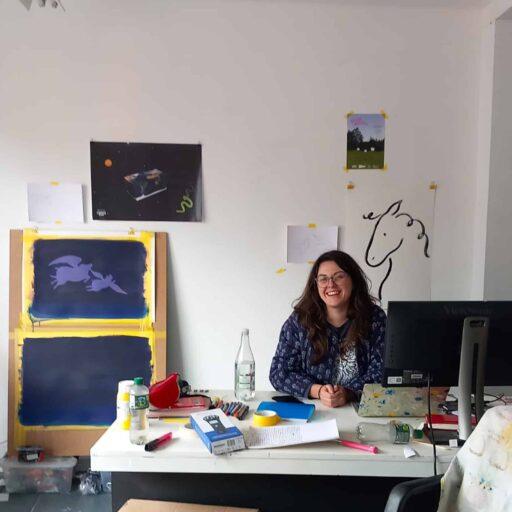
A basic income scheme for artists that launched during the pandemic to kickstart Irish culture was made permanent this week.
Offering participants a weekly stipend of €325 (£283), the €25m (£21m) pilot helped more than 2,000 artists, although many more applied. According to an independent study, the scheme generated €100m (£87m) in “social and economic benefits” to Ireland’s economy.
Elinor O’Donovan (pictured) is among the artists to have been accepted onto the scheme, which was launched by the Irish government in 2022.
“Before I started receiving it, I was working part-time as a receptionist just to be able to afford my rent. I was thinking about moving to a country where I might be able to afford to live a bit cheaper,” she told Positive News.
“Now I work full-time as an artist. [The scheme] has given me the flexibility that the job of an artist requires and has allowed me to take risks. I’ve gone into film and I was able to pay other people to work with me on it.”
Although limited in scope, it’s the world’s first basic income scheme to be made permanent.
Image: Sarah O’Driscoll
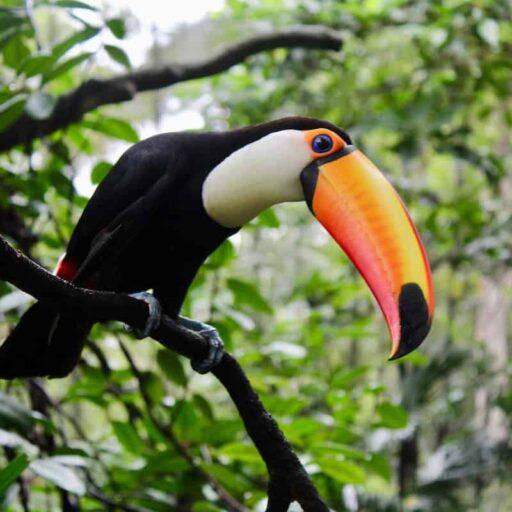
Progress halting deforestation continues in Colombia, according to new government data, which points to a 25% year-on-year reduction in tree loss.
The Institute of Hydrology, Meteorology and Environmental Studies reported that around 36,280 hectares of forest were lost in the first nine months of 2025, compared to 48,500 hectares lost over the same period in 2024.
It noted that deforestation had slowed in the Amazon, as well as other regions that have historically struggled with forest loss. Officials pointed to schemes such as the Conservar Paga programme, which provides some 5,000 families with up to $240 (£175) a month to maintain or restore forests on their properties.
“The sustained reduction of deforestation in the Amazon is the result of collaboration between the national government and communities, through ecological restoration actions, voluntary conservation agreements, strengthening of sustainable production chains and forest management,” the government said in a statement.
Research has shown that one of the most effective ways to reduce deforestation is to put Indigenous communities in charge of the land. The latest Colombian data adds more evidence to support that.
Image: Carmel Arquelau

The number of girls subjected to female genital mutilation has fallen sharply over the last decade, as progress tackling the harmful practice accelerates in countries where it is still prevalent.
That’s according to the World Health Organization (WHO). In a statement this week, it said that the number of girls subjected to FGM has fallen from one in two to one in three over the last decade in countries where the practice persists.
“After decades of slow change, progress against female genital mutilation is accelerating,” said the WHO. “Half of all gains since 1990 were achieved in the past decade. We need to build on this momentum and speed up progress.”
The WHO cited education, media campaigns and engagement with religious and community leaders, as well as parents and health workers, as proven solutions to ending FGM. However, it warned that more funding is needed to meet the Sustainable Development Goal of ending female genital mutilation by 2030.
Read more: Life after FGM
Image: Ambruaz
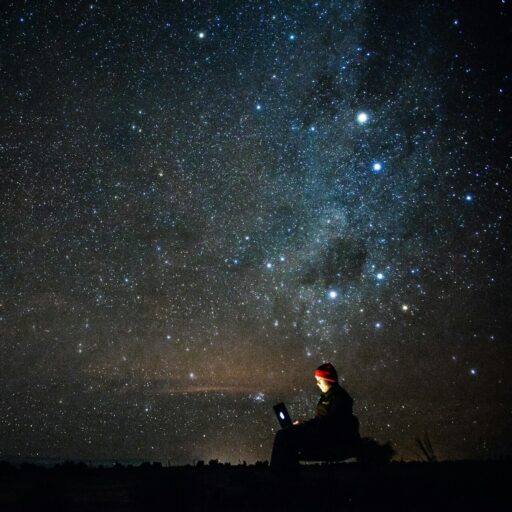
The clearest skies in the world look set to stay that way after plans for an industrial complex near Chile’s Atacama Desert were canned following a people-powered campaign.
Scientists had warned that Proyecto INNA, a proposed large-scale industrial hydrogen project, would cause “irreparable damage” to the world’s clearest skies, bringing light pollution to observatories that showcase the night sky in unrivalled clarity.
According to Dark Sky International, a group that campaigns to tackle light pollution, the win “offers a model for future efforts” to conserve other dark sky sites.
The organisation praised activists for building coalitions to ensure that the campaign was not an “astronomy-only” concern, showing that it would also affect ecosystems, cultural landscapes, and communities.
“In a world where dark skies continue to disappear, this outcome matters,” it said. “It is a reminder that coordinated advocacy works, and that meaningful protection remains possible when people and communities come together.”
Image: Johnson Wang

It’s long been assumed that melting sea ice would spell disaster for polar bears, but scientists studying the creatures in Norway have found the opposite.
In a report that offers hope for the species, researchers found that polar bears on the island of Svalbard are fatter and healthier than they were in 1992 – despite the number of ice-free days increasing by around 100 per year.
Polar bears feed mostly on seals, which they hunt from the ice. But researchers believe that their diet is evolving on Svalbard to include land-based prey, such as reindeer and walruses.
The delicate balance of the Arctic is, like other ecosystems, under grave threat from man-made climate change. A rapid reduction in emissions is required to mitigate the impacts. However, the latest findings offer some good news for a species that’s become a poster child for global heating.
“If we’d been asked 25 years ago about the consequences of bears spending two fewer months on the ice each year, we would have expected leaner animals, reduced reproduction, and the beginning of a population decline,” said Jon Aars, senior researcher at the Norwegian Polar Institute. “Instead, we see that they are in better condition.”
Image: AWeith/Wikimedia Commons
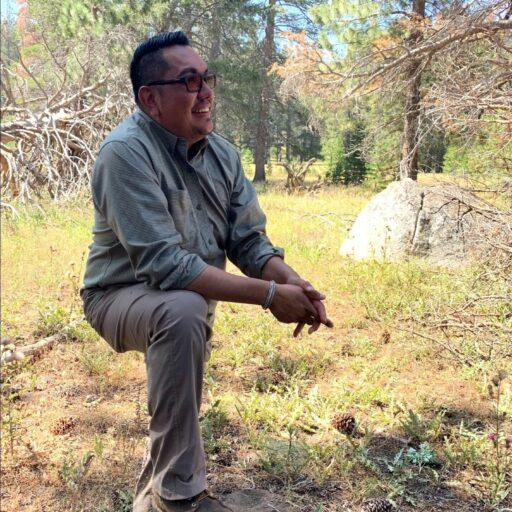
An Indigenous community has purchased more than 10,000 acres of land near Lake Tahoe, California, for conservation. It’s one of the largest tribal land returns in Californian history.
The Washoe Tribe, which was forcibly removed from its ancestral land, used a $5.5m (£4m) grant and private donations to purchase the 10,000 acres near Reno, Nevada.
The sale marks another success for California’s Land Back movement, which has seen tens of thousands of acres returned to tribes that occupied the land for millennia until European’s colonised it.
“We were told we could no longer use the land for resources or ceremony. Since that time, the land has been calling us back, and we are answering that call,” said Serrell Smokey (pictured), the tribe’s chairperson. “This is a small start to healing from generations of historical trauma, and the benefits will go on for many generations to come.”
Read more: The Indigenous forest collective restoring a corner of California
Image: Serrell Smokey

Technological advances are expanding where geothermal electricity can be produced across Europe, “opening up clean power resources that were long considered out of reach and too expensive”.
That’s according to a new report by the thinktank Ember. Its authors found that technological leaps and falling costs have brought many more sites into play for geothermal energy.
“Geothermal is now positioned to scale” noted the report, which said that around 43GW of geothermal capacity could be developed in the EU at costs comparable to coal and gas electricity projects. Modern gas power plants have a capacity of around 1MW.
However, Ember warned that the EU “risks losing its geothermal leadership without stronger political prioritisation”, warning that deployment was slow and uneven across the bloc.
“Modern geothermal is pushing the energy transition to new depths, opening up clean power resources that were long considered out of reach and too expensive,” said Tatiana Mindekova, a policy adviser at Ember.
“Today, geothermal electricity can be cheaper than gas. It’s also cleaner and reduces Europe’s reliance on fossil imports. The challenge for Europe is no longer whether the resource exists, but whether technological progress is matched by policies that enable scale.”
Image: Steve Allen

The UK government has awarded contracts to a record number of green energy projects in its latest renewables auction.
In total, 6.2GW of onshore wind, solar and tidal projects secured contracts, with the majority (4.9 GW) going to solar.
It’s part of the UK government’s drive to decarbonise the electricity grid by 2030 – an ambitious target that some say it will struggle to meet. The latest contracts will help.
The government said that the contracted projects would also drive down bills. Greenpeace agreed.
“These new onshore wind and solar projects will supply energy at less than half the cost of new gas plants,” said Dr Douglas Parr, policy director for the charity.
“If we want to enjoy the full benefits of clean power by 2030, we need to start building new renewables and storage at a much faster rate. Today’s auction result shows we’re getting up to speed.”
Image: Zbynek Burival

Historic sites across England will have ‘bonding benches’ installed in their grounds to help new parents build their support network.
The initiative comes as research from the National Child Trust shows that 62% of new parents feel lonely or isolated at least some of the time, and 87% feel overwhelmed.
English Heritage, which looks after some of the country’s many historic landmarks, aims to address that with its ‘bonding benches’. Located in areas where families tend to gravitate, such as near playgrounds, the benches will feature sliders which can be moved between ‘up for a chat’ and ‘craving quiet’, depending on people’s moods.
“Modern parenthood can be a really isolating experience,” said Emma Fernandes Lopes, assistant operations director at English Heritage. “Many parents live a long way away from their extended families and have no support network to lean back on, and it’s often a real challenge to make friends who hold the same values and interests. We want to use our sites to help parents make those essential connections.”
The idea builds on the ‘friendship bench’ concept previously featured by Positive News. Launched in Zimbabwe, the initiative employs grandmothers to deliver therapy on benches in their neighbourhoods. The idea has caught on elsewhere.
Image: English Heritage

What if ADHD isn’t a deficit of attention, but an intensified curiosity? A new study explores how reframing the disorder could transform education.
It’s being led by Anne-Laure Le Cunff, a researcher based at King’s College London. Le Cunff was kicked out of school in her teens for what she calls “creative mischief ” – disabling the fire exit alarm to sneak out for a cigarette, penning romantic fiction about her teachers, even lobbying the school to relax its dress code.
Her ever-questioning mind later propelled her into a scientific career, but it was only three years ago that she was diagnosed with ADHD. The discovery pushed her to investigate what she calls ‘hypercuriosity’ – “an intensified impulsive desire to know and explore”.
She’s now studying how curiosity plays out in university students with ADHD. Read the full story here.
Image: Karla Rivera
Main image: Dawid K Photography
Get your weekly fix of good news delivered to your inbox every Saturday, by signing up to the Positive News email newsletter
Be part of the solution
At Positive News, we’re not chasing clicks or profits for media moguls – we’re here to serve you and have a positive social impact. We can’t do this unless enough people like you choose to support our journalism.
Give once from just £1, or join 1,800+ others who contribute an average of £3 or more per month. Together, we can build a healthier form of media – one that focuses on solutions, progress and possibilities, and empowers people to create positive change.