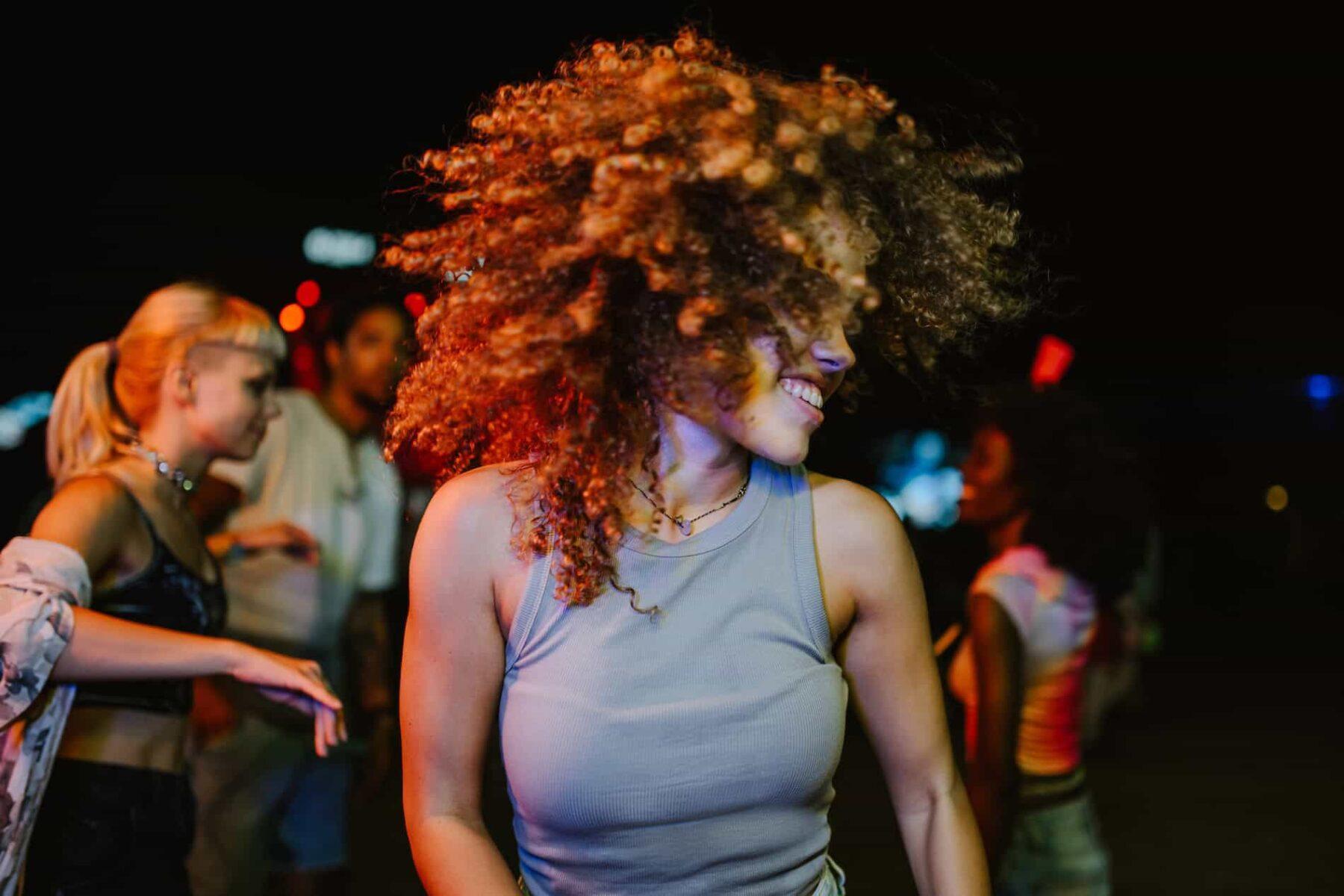
A new ecstatic dance craze fuses spirituality, physicality and a whole lot of fun. Sarah LaBrecque joined 100 other ravers on a Sunday morning
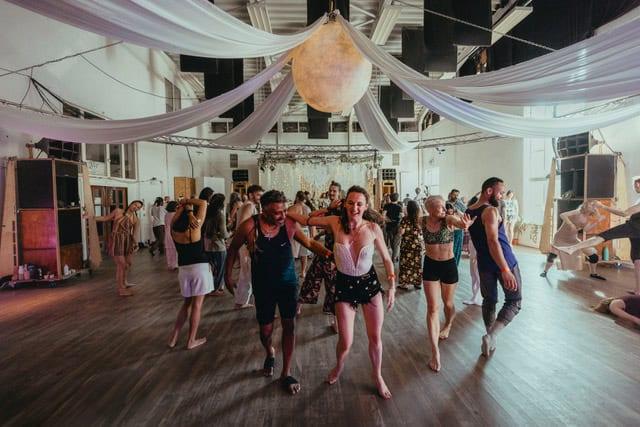
Sunday mornings are usually for lazy breakfasts or a few domestic chores. Today, however, I’m joining another 100 ravers at The Bath House in Hackney Wick, east London, for some ecstatic dancing to sweat out the stresses of the week.
Part rave, part mindful meditation and 100% workout, ecstatic dance events have been growing in popularity across the UK and beyond. Roving DJs provide the beats and participants span all ages, from young families and limber twenty-somethings to older generations. Events are hosted in community spaces, and some gyms are getting on board – David Lloyd Clubs, for instance, now offer ‘spirit dance meditation’ classes.
At its heart, ecstatic dance is about inclusivity, mindfulness and emotional expression through movement – sans alcohol. “There’s a little rhyme: no booze, shoes, no chit chat,” says Richard Batts, the co-founder of Ecstatic Dance UK, the company behind the event I’m attending.
The practice also functions as a joyous alternative to late-night party sessions, which can leave us feeling fuzzy-headed, low-energy and disspirited. For parents or those who have chosen a sober lifestyle, a Sunday morning spent shaking out the tensions of the week can feel like an unusual treat. It can also feel uncomfortable.
“People are sober – it can feel very edgy,” says Batts. But, he explains, that discomfort is part of the experience. “You might feel really silly doing this, and that’s okay. If you don’t want to do it, then don’t. But lean in if you can.”
Ecstatic dance, as it’s practised today, has roots in the ‘5Rhythms’ style of dance, which was developed in the 1960s and ’70s. The free-form practice, which centres around exploring one’s inner landscape, moves through five stages: flowing, staccato, chaos, lyrical and stillness.
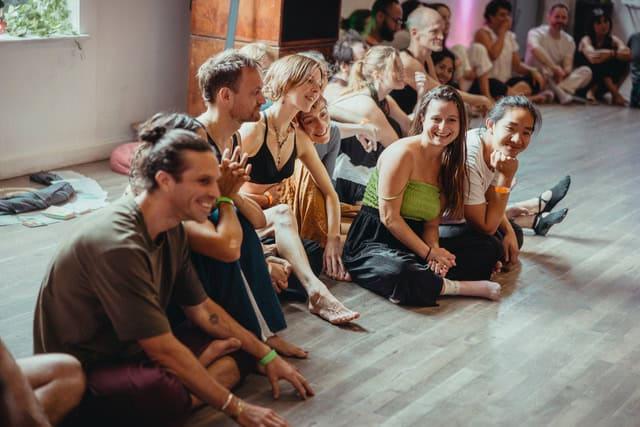
Participant Valerie Chartrand has been to several of Ecstatic Dance UK’s weekly events at The Bath House, and describes the experience as “a kind of engaged, interactive movement therapy session”. Turned off by the often structured, serious nature of conventional dance classes, Chartrand was looking for something that would give her a chance to exercise and dance freely, but also let her process emotion through movement.
“When I’m doing it, it’s absolutely wonderful, very liberating, very freeing. You get that dancer’s high. For days afterwards I feel I’m in a better state of mental health.” She also says that as an introvert, she appreciates not feeling the pressure to make conversation, but that dancing still gives her a sense of social connectedness.
It was this mental health benefit combined with social connectivity that made the events extremely popular during the pandemic, says Batts. When lockdown hit, they moved everything outdoors. Following government guidelines, people were permitted to dance in groups of six.
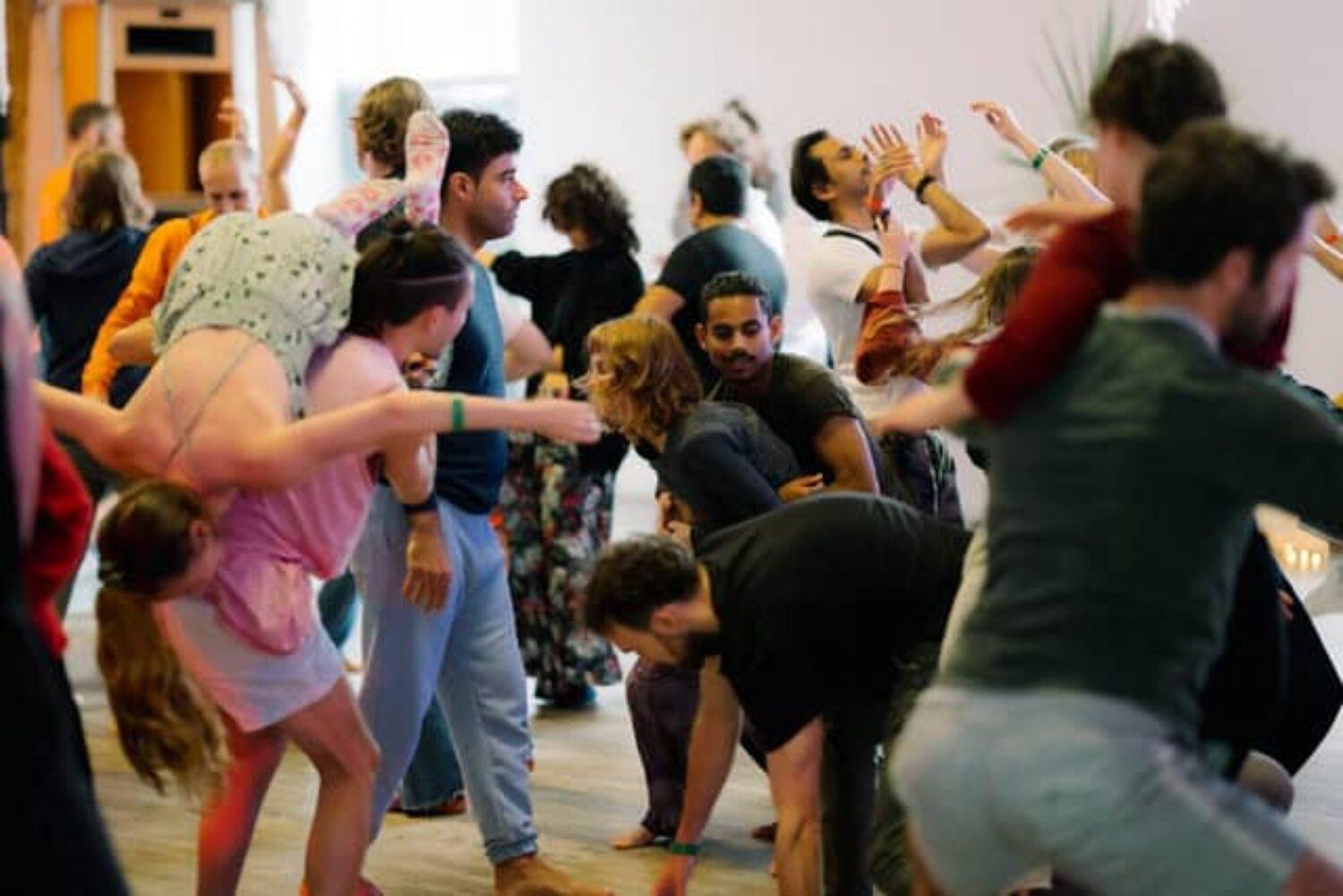
'For days afterwards I feel I’m in a better state of mental health,' says participant Valerie Chartrand
“It was a legal, healthy, fun dance practice outside in nature,” says Batts. “Some people would literally say, ‘this has saved my life’.”
About 50 minutes into my own ecstatic dance experience and we must be approaching the ‘chaos’ stage. Limbs and hips swirl and sway around me – it’s that intoxicating point in the DJ set when the music is on the cusp of crescendo and any minute the crowd is going to explode in pandemonium.
And BOOM. A merman wearing glittery fish-scale armbands spins past me and a pregnant woman in spandex veers vivaciously to my left. Delicious endorphins fill my brain.
For days afterwards I feel I’m in a better state of mental health
I sip a ‘ceremonial cacao’, bought from an onsite vendor. This warm, chocolatey drink has South American origins and is made from minimally processed whole cacao beans. It has “activation properties to enable you to be a bit more heart-open or present before you enter a dance,” says Paulina Angel Davey, executive assistant for Ecstatic Dance UK. The drink is sometimes available infused with cannabidiol (CBD) or blue lotus flower to counteract the stimulating effect.
Reinvigorated, I enter the dance room again and a woman and man, each with a baby strapped to their front, are bopping gently beside me. Davey says that’s also part of the appeal of ecstatic dance.“It is intergenerational and it’s multicultural, and I think there’s something quite special about that – you can celebrate and be in full expression, across generations, cultures and backgrounds.”
Main image: Zamrznuti Tonovi
Other images: Teodora Andrisan
Be part of the solution
At Positive News, we’re not chasing clicks or profits for media moguls – we’re here to serve you and have a positive social impact. We can’t do this unless enough people like you choose to support our journalism.
Give once from just £1, or join 1,800+ others who contribute an average of £3 or more per month. Together, we can build a healthier form of media – one that focuses on solutions, progress and possibilities, and empowers people to create positive change.