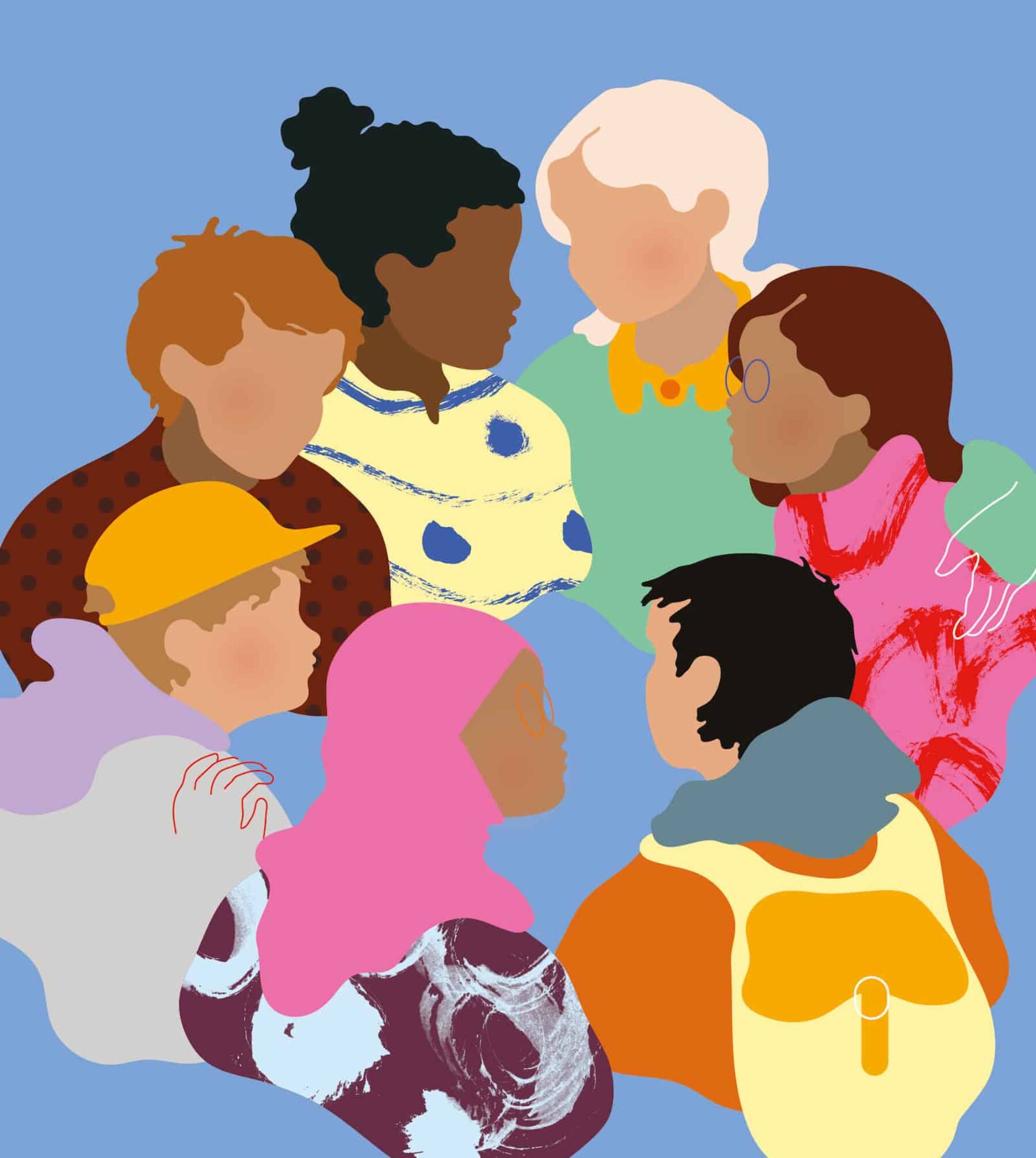
As trust in democracy declines, a project putting pupils’ voices at the heart of school life is proving its worth
Democracy has always had its doubters. But there are worrying signs it’s getting worse. Support for far-right movements is rising. Fewer citizens today feel that getting involved in politics can change things. Young people may be particularly disenchanted: the under-25s are less likely to vote than any other age group. One recent survey even suggested that a third of 18-30 year-olds in the UK would prefer an authoritarian system.
For Greg Sanderson, a former teacher and education policy adviser, restoring trust begins in the classroom. UK schools are required to promote “British values”, one of which is democracy. But telling kids “how cool democracy is” probably won’t work, he says. What if they experience it first-hand?
School councils are a common way to enable what educators call “pupil voice” – but often these are more tickbox than transformative, since the most confident kids tend to represent the class while others have little say. In fact, only two in five pupils surveyed in 2011 thought their school council listened to them. “You have a mini-Westminster in your school, forgetting the fact that Westminster sometimes doesn’t work that well,” Sanderson says.
Convinced that things could work differently, he founded Smart School Councils (SSC), a charity, in 2014. Schools log onto a platform to find thousands of discussion questions relating to issues at school or in the news, adapted to every age group. Simple-to-use software allows pupils to run weekly meetings around these questions, capture responses and share their findings, with minimal teacher involvement. Crucially, class meetings can fit into 15 minutes, and they allow even the youngest kids to participate: even five-year-olds sometimes lead discussions.
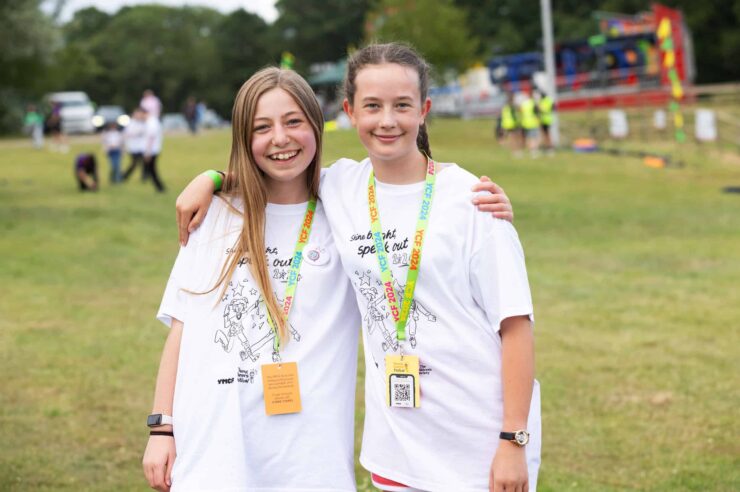
Pupils can also propose ideas and form “action teams” to improve school life. At Halling Primary School in Kent, southeast England, children’s suggestions included “buddy benches” to help lonely kids find a playmate, the creation of “houses” (divisions for competitions), new clubs, and repainting the playground. These ideas were logged and presented to educators by the school’s “communications team”, which consists of a group of year five and year six pupils whose roles and responsibilities were also developed by SSC. “We try to make every pupil’s voice heard,” explains Jess, a nine-year-old who even has a job title: suggestion box leader and staff liaison officer.
All this is a far cry from the “real old-school” council at Halling Primary, before it switched to SSC’s model three years ago, says assistant headteacher Ellie Nott. “The meetings took place, but no real positive change happened.” The new model has long-term benefits, in her view. “Children… realise that for positive change to happen, they need to do something about it,” she says. Knowing your voice matters could directly counter political apathy: “If you can look back and say, ‘I had an idea when I was six, and somebody listened, and then it happened’, that will stand children in good stead, hopefully, to vote when they’re older, and maybe even go to a peaceful protest if that’s what they want to do.”
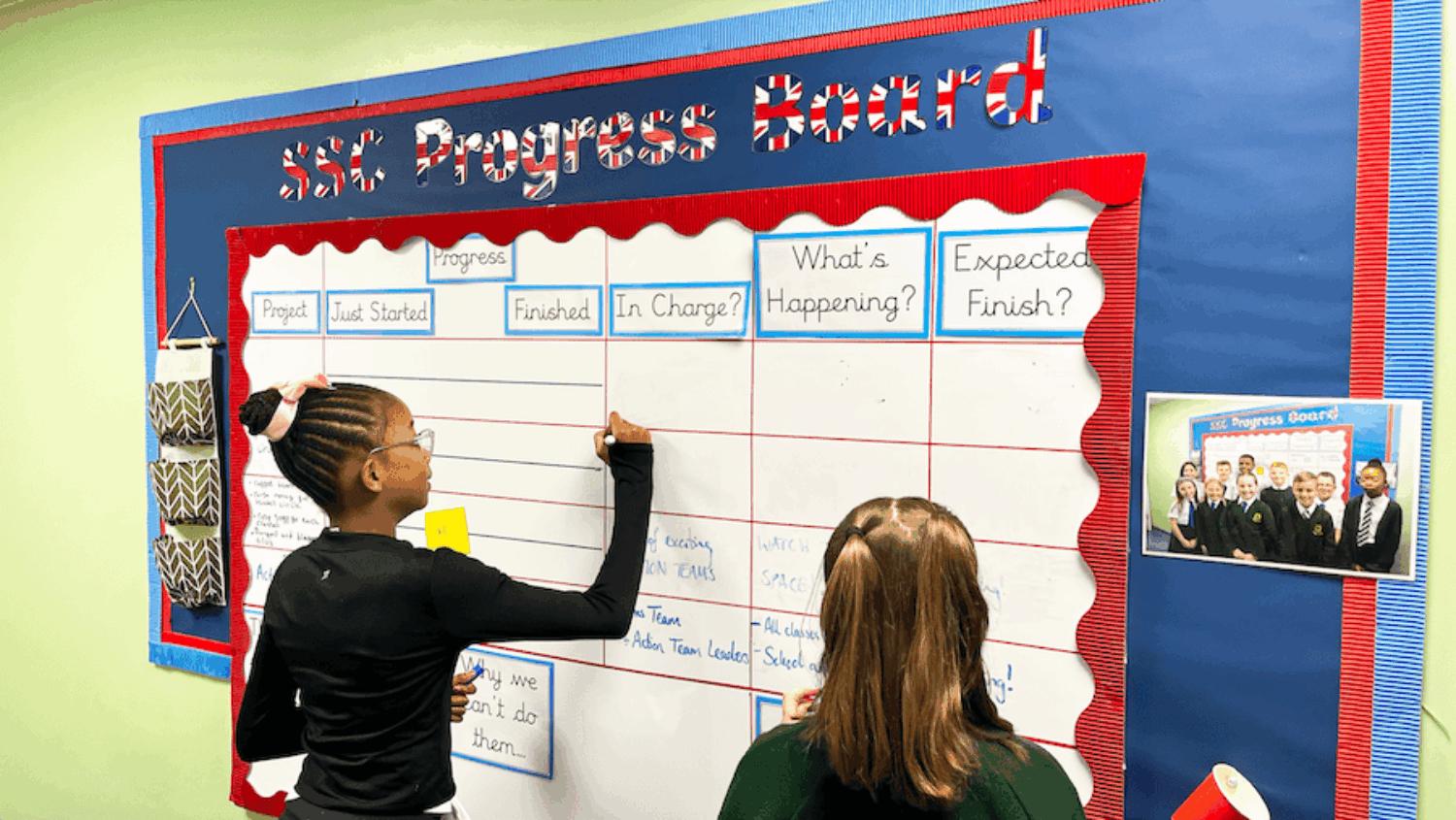
Students at Halling Primary School in Kent putting democracy into practice. Image: Anna Patton
SSC has grown fast in the last few years, with some 750 schools now signed up – mostly in England, plus some in the rest of the UK, and a handful of international ones. Thirteen per cent are special educational needs schools, and one fifth are located in England’s most deprived areas.
According to the organisation, almost 90% of pupils at participating schools feel listened to (compared with 36% beforehand), and more than 90% of teachers say the process improves pupils’ listening and speaking skills. That makes for better discussions. Rachel Gray, a teacher at Kells Lane Primary in Gateshead, northeast England, sees her pupils actively listening: “They’re actually responding based on what someone else has said and considering that, rather than just waiting to speak,” she says. Nott cites improved confidence and peer relationships. What’s more, children who feel they’re listened to are much more likely to speak up when they have concerns. “It keeps them safe,” she says.
Money remains a challenge. Sanderson wants to reach thousands of schools, but his venture sits at a “weird cross-section” – it is effectively a tech startup, but structured as a charity – making it harder to find investors. Schools need to pay an annual subscription to use the platform of between £199 and £549 depending on the size of group (although some can get subsidies from philanthropic funders). Many have little or no budget to implement new ideas; Halling Primary gets £500 a year from its parent-teacher association but that’s not the case everywhere.
What I’ve learned is that speaking out is good. It makes your life better
But SSC has some influential backers. Musician Brian Eno, whose foundation is among the charity’s funders, describes it as “such a powerful demonstration of what is possible when people– even children as young as four – are given a meaningful opportunity to make their voices heard”. Jon Alexander, the author and co-host of the How To Save Democracy podcast, recently joined the charity’s board, describing its work as “phenomenal”. And Alastair Campbell, the former Labour adviser and co-host of the podcast The Rest is Politics, raved about the potential of SSC meetings after attending one himself in 2024.
Oracy, the ability to express oneself well in speech, is increasingly a focus in the UK curriculum. That’s a validation for Sanderson, who started SSC following his own experience as a working-class, state-school-educated kid at university who felt daunted by the confidence of his privately educated peers. “I honestly felt like there was something wrong with me,” he says. He soon realised that the problem was wider: people like him just didn’t get much practice in speaking up.
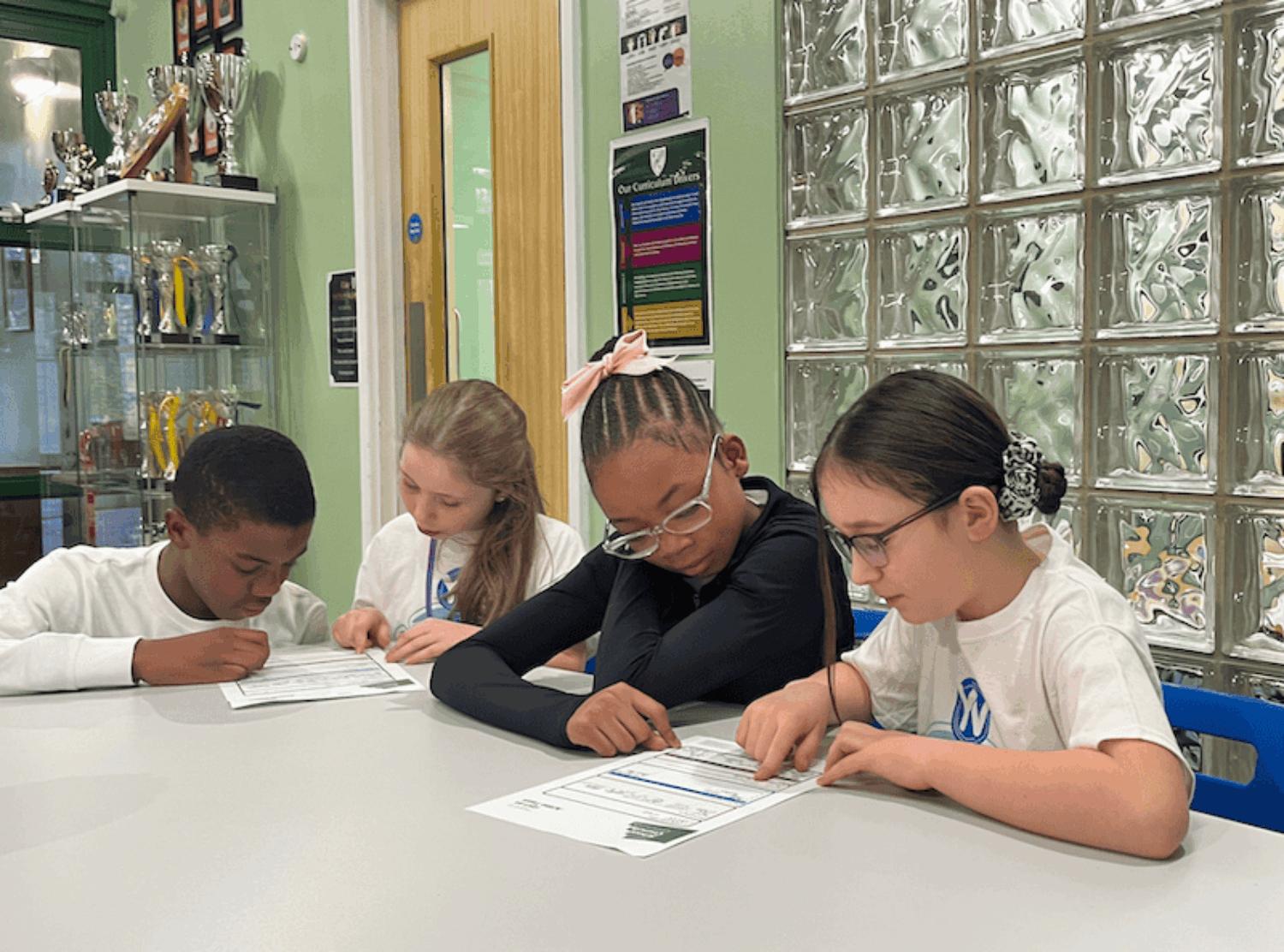
Halling Primary gets £500 a year from its parent-teacher association but that’s not the case everywhere. Image: Anna Patton
Although SSC doesn’t have hard evidence that its work leads to greater political engagement, many see a direct link. The UK’s Electoral Commission has recommended teaching oracy and debating as one way to get more young people ready and willing to vote. That’s even more urgent with the voting age set to be lowered to 16 across the UK (this is already the case in Scotland). But, whatever the threshold, teenagers don’t suddenly become politically engaged, Sanderson says. The process needs to start early, and discussing what needs to change and how to do that can make political processes “a little bit more real”. Kells Lane Primary pupils have discussed how to stop boys dominating the ball court, for instance. Halling pupils are currently debating if Friday’s extracurricular activities should be modified.
Voicing one’s opinions doesn’t come naturally to everyone. “Not everyone likes to be the one to go up [and speak] in front of everyone. I get that, because it is kind of scary,” says 10-year-old Nia from Halling Primary’s communications team. She encourages others to try expressing themselves anyway: “Sometimes we have to push them to their limits.”
As her teammate Abi, 10, puts it, “What I’ve learned is that speaking out is good… there’s no looking back. It makes your life better.
Main illustration by Elin Svensson
Be part of the solution
At Positive News, we’re not chasing clicks or profits for media moguls – we’re here to serve you and have a positive social impact. We can’t do this unless enough people like you choose to support our journalism.
Give once from just £1, or join 1,800+ others who contribute an average of £3 or more per month. Together, we can build a healthier form of media – one that focuses on solutions, progress and possibilities, and empowers people to create positive change.