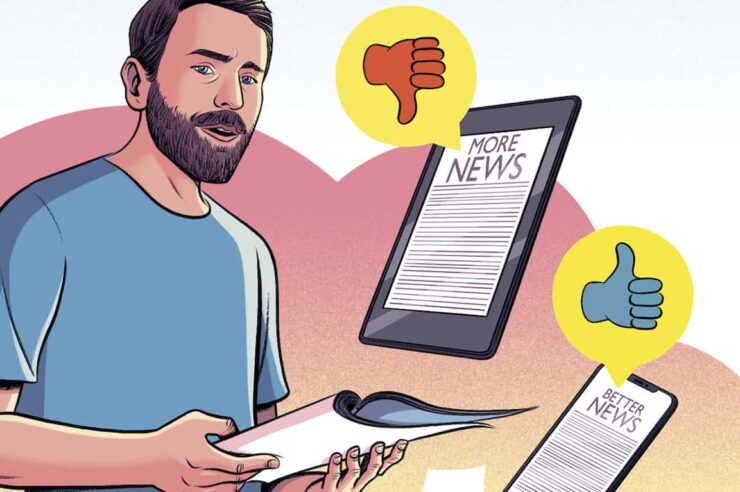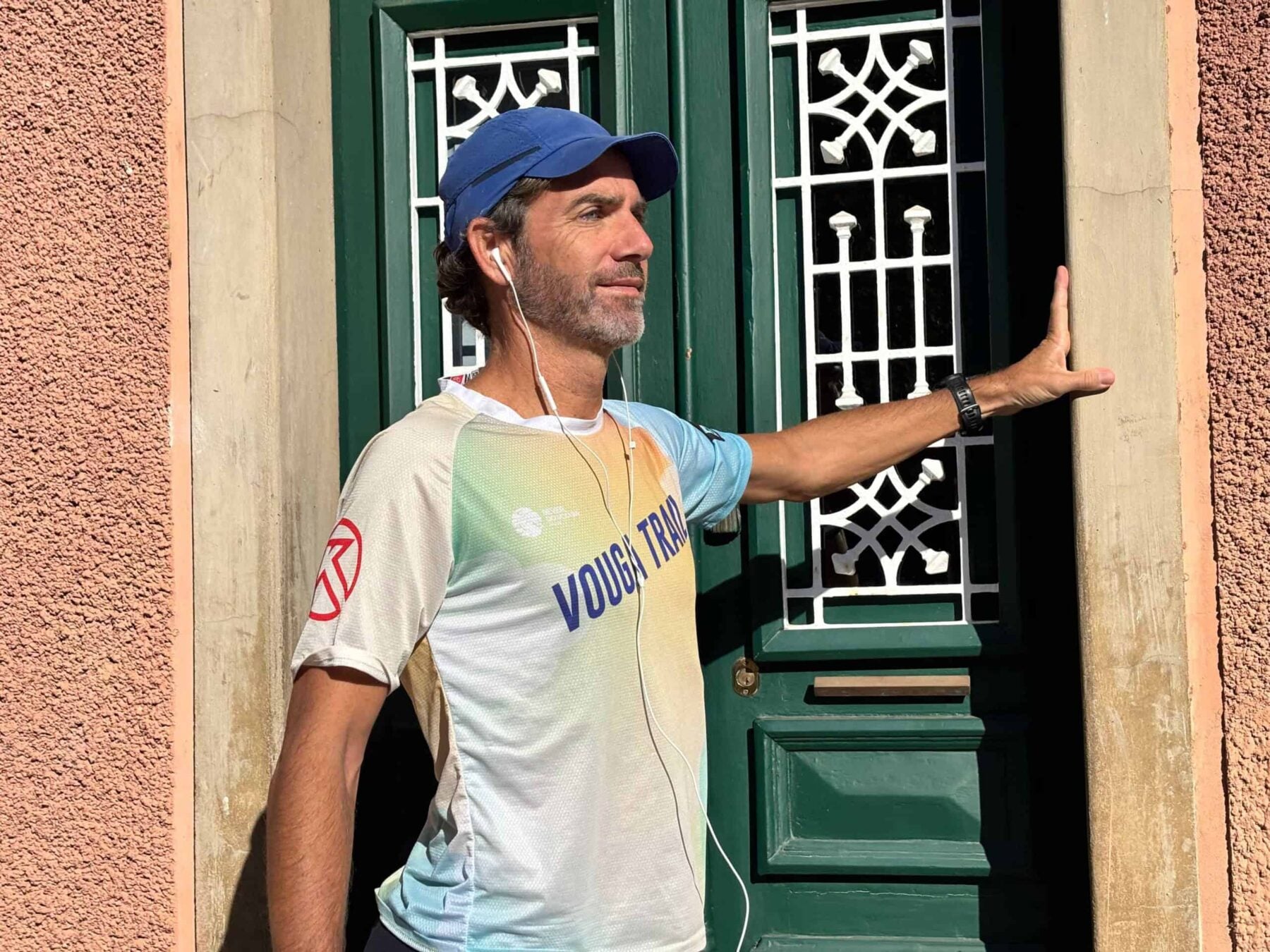
What changes when you swap the daily doomscroll for journalism that asks not just what’s wrong, but what’s working? Oliver Balch finds out
I thought two days without bad news would be easy.
“48 hours,” my editor said. “No problem- or crisis-focused news. Only solutions-focused or constructive journalism.”
“Sure,” I said. Sign me up.
After all, as assignments go, this didn’t sound too taxing. I don’t have a TV, I’m not on TikTok, I rarely go on YouTube and I ditched X long ago. At least the avoiding-the-bad-news-bit should be straightforward.
Wrong.
It turns out I consume far more negativity than I realised.
I choose a weekend for my detox. My logic is simple: less breaking news, less time on my various devices, more time with my head in other, more diverting, pursuits.
It starts well. I feel surprisingly relieved not to be listening to the radio as soon as I wake up. It’s even a bit exhilarating, like I’m breaking some kind of rule. Not waiting for the headline pips, not listening to the professional bickering: it’s also freeing in a way. The silence allows me to take a breath, think about the day ahead, figure out my own mood before the news decides it for me.
Then, after an hour or two, I find myself growing anxious.
The world is unfolding without me.
An itch to reach for the news apps on my phone grows. I resist. (Honestly.) This is ridiculous, I tell myself. Donald Trump doesn’t care whether I’m abreast of his latest Truth Social aberration. I’m not going to make any difference to the Middle East situation by knowing every sub-point of the latest peace plan.
Still, I want to know.
On Monday, after the experiment, I put this to An Nguyen, a visiting professor at Bournemouth University’s Media School and a specialist in digital journalism. He explains that humans have what he describes as an evolutionary “awareness instinct”: a drive to know about potential threats around us. Once, that might have meant spotting a sabre-toothed tiger approaching our cave. Today, it might mean worrying about rogue AI wiping out humanity.
Perhaps, as a news junkie, that explains my anxiety at being shut off from the world around me. But I’m not entirely convinced. AI is scary, but it’s no tiger at the door – at least, not yet. For me, constant news checking is partly distraction, a way of escaping the everyday, and partly titillation: the irresistible pleasure of eavesdropping on the world’s latest drama.
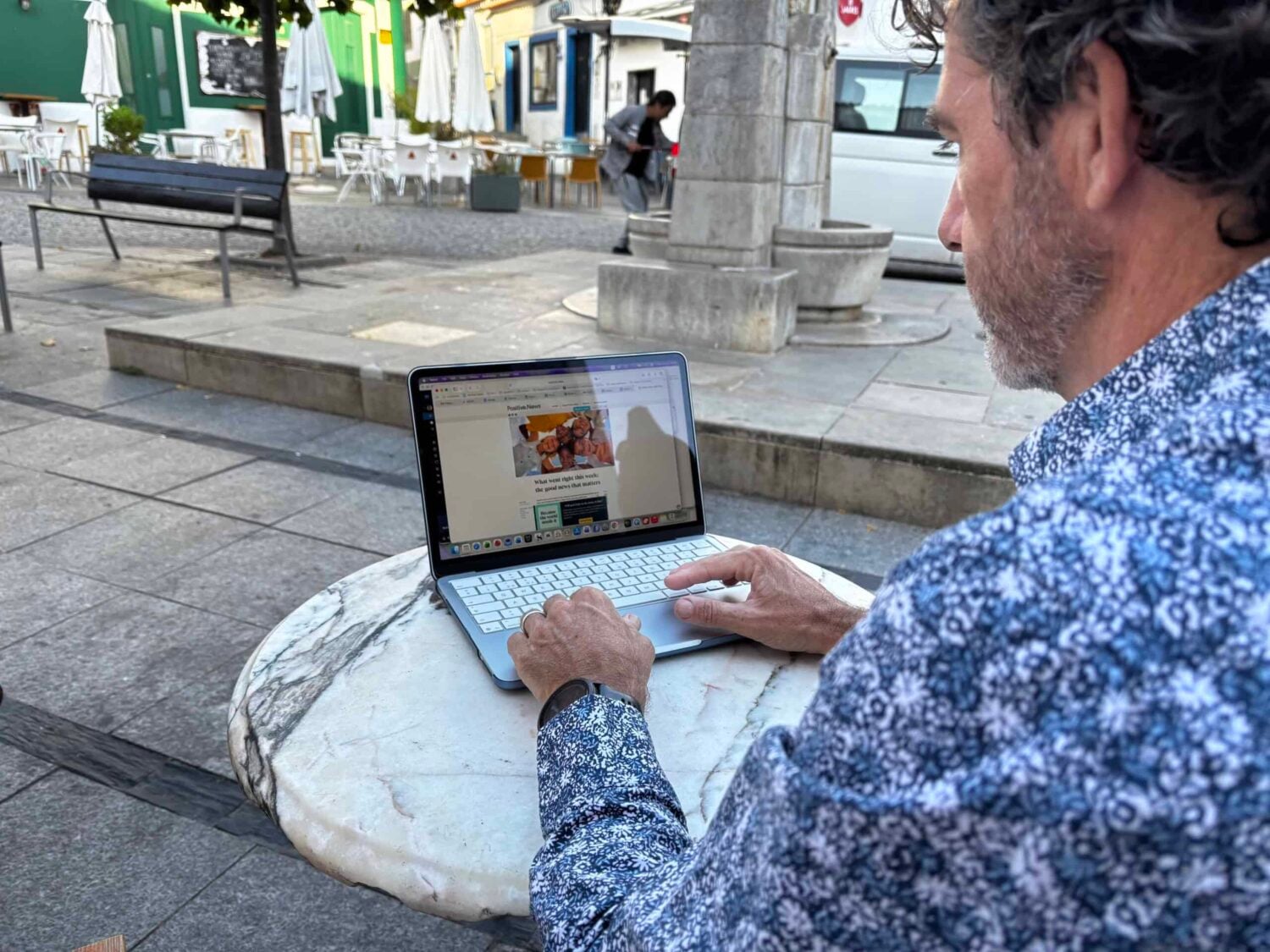
'I started with a healthy dose of What Went Right, straight from Positive News'
Nguyen has another point, though, which I find more convincing – and more reassuring. To be active citizens, he argues, we need to know about the problems around us.
But that leaves me with a question. I follow the news. I know about record temperatures, inequality spikes and social care crises. But then what?
His answer is to get some constructive news into my life.
Fortunately, this tallies with my editor’s instructions.
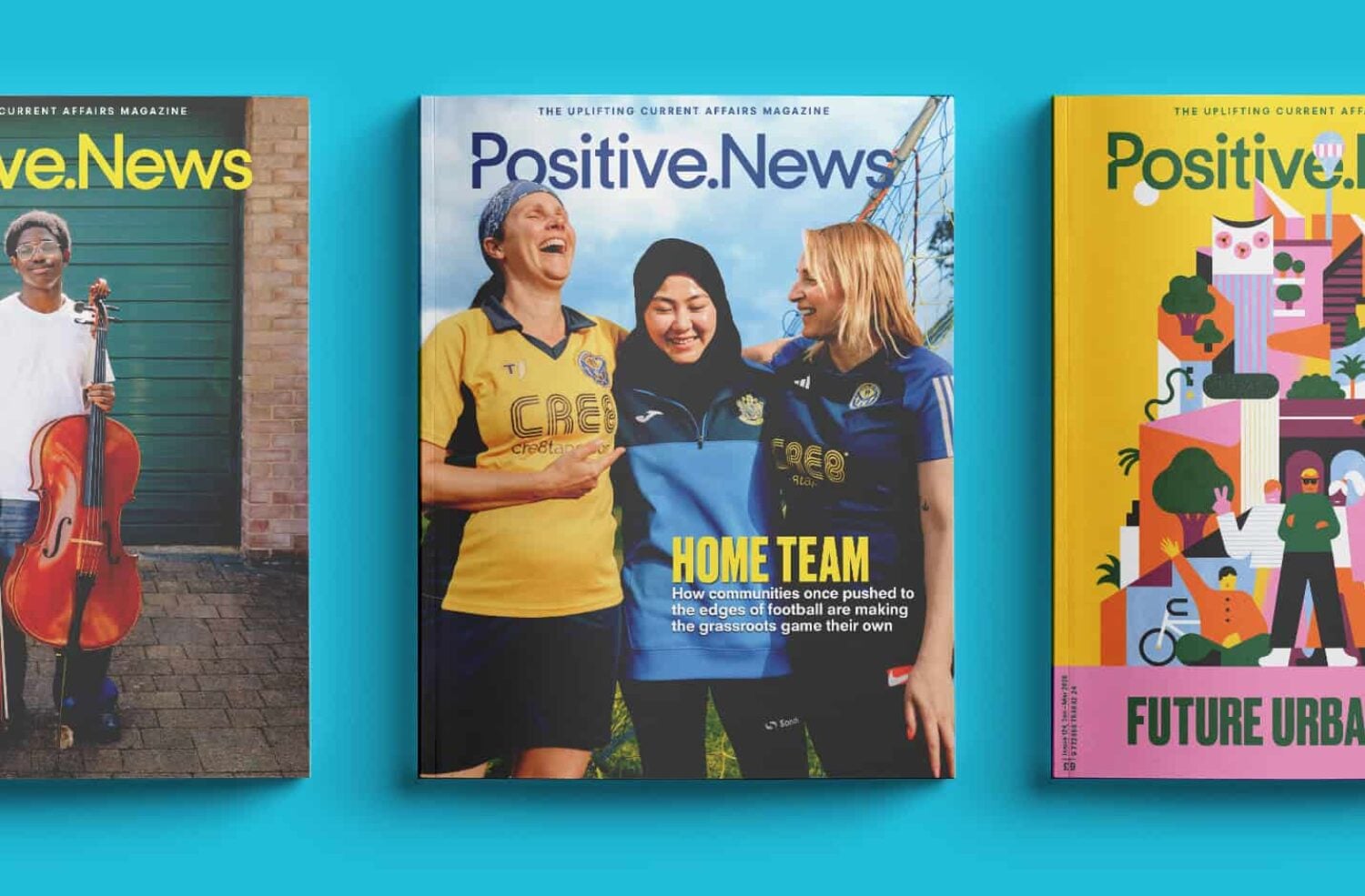
My first port of call is, naturally, Positive News. I load up the website and click on this week’s edition of the What Went Right roundup. Half an hour later, I’m feeling perky.
This isn’t simply a diet of cheery stories. The section’s bite-sized articles lead me to reports about an EU proposal to ban social media for under-13s, the elimination of dog-transmitted rabies in Chile, a life-extending drug for people with breast cancer in the UK and a fun reward scheme encouraging people in Singapore to read books.
Then my eye is caught by a longer article about the so-called NEETs problem: young people not in education, employment or training. This is where I start to understand the difference between ‘good news’ and constructive journalism.
The article doesn’t pretend the problem has disappeared. Nor does it simply catalogue despair or blame young people. Instead, it asks a different question: what is being done about it, and what appears to be working?
What changed was the question I found myself asking. Instead of: ‘How bad is this?’ I was increasingly asking: ‘What are people doing about it?’ ‘What can we learn?’
So I read about one-to-one support programmes, charities running confidence-building sessions and a government grant covering young people’s salaries for six months.
The problem remains. But now I have something else: a sense of what people are trying, and what we might learn from it.
Over the weekend, as I go looking for more solutions-focused journalism, three things surprise me.
First, it’s surprisingly difficult to find genuinely constructive news.
There’s plenty of material that amounts to paid-for PR fluff, which leaves me feeling cheated. And then there’s serious journalism that explores a solution but spends so much time caveating it that I come away slightly deflated. Perhaps that’s an inevitable consequence of journalism taking evidence seriously. But after a while, I find myself craving a story that simply lets me see an idea working.
Second, human interest matters.
More than once, I find myself getting, well, a bit bored. This makes me feel both guilty and confused. These are interesting, potentially world-changing solutions. What’s not to like?
But I realise it isn’t the solution itself that’s making me swipe left. It’s the dry or technical way in which it is sometimes presented. Lots of earnest problem-solving, not enough people-centred storytelling.
Instead of simply: ‘How bad is this?’ I was increasingly asking: ‘What are people doing about it?’ ‘What can we learn?’
The BBC podcast People Fixing the World gets this balance right. Its stories put people at the centre: French companies opening their offices to homeless people after hours; Basque students making low-cost baby incubators; an inventor creating a 999 app for people who can’t speak.
It’s not just that these stories make me feel good. I want to know what happens next.
And that brings me to the third surprise: the sheer variety of constructive journalism.
Once I start looking, there is an astonishing range of subjects. At times, it feels overwhelming. I catch myself thinking I have to consume all of it, as if I’ve somehow discovered a new information backlog.
Gradually, though, I relax. Just as with conventional news, I let curiosity lead me.
That’s how I end up reading the NEETs piece – particularly relevant as I have two sixth-form-aged children – and a Positive News article about attending a silent retreat. As someone whose wife repeatedly suggests I spend less time listening to speech radio through my headphones, this one hits home.
Another Positive News article about an oil executive turned business-accountability campaigner leaves me encouraged for another reason: perhaps those of us in middle age really can change our spots.
So, after 48 hours, do I feel better?
Definitely.
But “better” isn’t quite the point.
I haven’t discovered that bad news is simply ‘bad’ and positive news is straightforwardly ‘good’. Nor do I want to live in an information bubble where difficult stories are kept at a safe distance. Some of the most useful journalism I encountered during the experiment was about serious, unresolved problems.
What changed was the question I found myself asking.
Instead of simply: ‘How bad is this?’
I was increasingly asking: ‘What are people doing about it?’ ‘What can we learn?’ ‘And what might I do differently?’
I’ll still reach for the radio news in the morning. But perhaps I’ll be a little more deliberate about what I reach for afterwards.
And, yes, I might even leave the meditation mat where I can see it.
Images: Oliver Balch
Because the world needs it
Positive News reports on the people and ideas driving progress. We believe that giving attention to solutions helps them spread.
Our journalism is independent and powered by our readers. There are no media moguls or shareholders extracting profits: your contribution funds our work to investigate what’s working, understand why, and bring those stories to a wider audience.
If you value a fuller picture of what’s happening in the world, please become a Positive News supporter today.