For the first time, the groundbreaking science of positive tipping points has informed the selection of this year's Earthshot prize winners, with five innovators receiving £1m each to take their work to the next level
From protecting vast stretches of the Pacific Ocean to tackling toxic ‘forever chemicals’, this year’s Earthshot prize winners are pioneering solutions to some of the planet’s greatest environmental challenges. Announced at a ceremony in Mumbai this week, the five winners range from an Indigenous-led ocean conservation initiative to a Danish offshore wind energy pioneer, each demonstrating how ambitious ideas can deliver real-world change.
Founded by Prince William in 2020, the Earthshot prize is one of the world’s most prestigious environmental awards. It recognises innovative solutions to five of the planet’s greatest environmental challenges, with each winner receiving £1m to help scale up their work.
Now in its sixth year, the awards were attended by the Prince and Princess of Wales and hosted by film producer Karan Johar. Guests also included Bollywood actor Alia Bhatt, Oscar winner Rami Malek and Australian conservationist Robert Irwin, an ambassador for the prize.
Prince William, who selected the winners alongside members of the Earthshot Prize Council, said he felt energised by the ambition shown by this year’s finalists and winners.

“Innovators, entrepreneurs, communities and young people are proving that environmental progress and human progress can go hand in hand,” he said. “Young people from around the world are not waiting for someone else to find the answers. They are stepping forward, bringing fresh ideas and showing what is possible when optimism is matched with action. These are the torchbearers of a global movement.”
This year’s winners include an Indigenous-led long-term financing model that will protect an area of ocean the size of Vietnam; the country of Bhutan, which has written the protection of nature into its constitution; a maker of electric ‘last-mile’ vehicles; an offshore wind energy pioneer; and a coalition that’s working to ban ‘forever chemicals’.
For the first time, the science of positive tipping points has informed the selection of winners. The framework was used to help identify the solutions that are most likely to influence the moment when change starts to fuel itself and becomes unstoppable.
The 2026 Earthshot prize winners

Niue, a small island nation in the South Pacific, has 327,000 sq km of ocean territory – an area approximately the size of Vietnam. The Niue Ocean Wide Trust now sustainably manages all of this territory, with 40% set aside as no-fishing zones. It does this via Ocean Conservation Commitments (OCCs), a financing model pioneered by Indigenous siblings Coral and Brendon Pasisi and colleague Dr Josie Tamate. The model is designed to fund marine protection permanently, rather than relying on one-off grants.
Niue costed up the care of its ocean for the next two decades and brought together stakeholders worldwide to fund it directly. The results? Fish biomass up 60%, top predators up 45% and coral cover boosted by 10% since 2016.
It’s an instrument for ocean protection that is designed to stand the test of time, and, according to Earthshot: “a blueprint for every Pacific Island Forum state and small island developing nation on the front line of climate change”.

For decades, Bhutan has been following the principles of Gross National Happiness, a philosophy that sees nature, the economy, culture and community wellbeing as interdependent. Now, this work is paying off.
Bhutan absorbs more carbon than it emits, and its constitution requires at least 60% of the country to stay under forest cover, indefinitely. It has exceeded this target, with nearly 70% forested, and more than half its land safeguarded through a national protection scheme.
The benefits of these healthy forests reach beyond Bhutan’s borders, helping to regulate freshwater systems that around 1.6bn people across south Asia rely on.
Integral to this work has been the Restore Bhutan programme, launched by the government in 2025. The initiative targets 50,000 hectares of degraded forests, farmlands and urban landscapes for restoration by 2030.
Importantly, financing mechanisms are being built for the long-term, and Indigenous knowledge, community stewardship and education sit at the programme’s heart.

“It was really good fun,” said Prince William as he stepped out of one of Mahindra Last Mile Mobility’s electric rickshaws, ahead of the ceremony this week. Fun they might be, but they’re also “transformational”, according to Earthshot, in the bid to reduce air pollution in Indian cities.
In the country’s major urban areas, rickshaws are part of the fabric of daily mobility and commerce. Around 90% of these three-wheelers are used commercially and represent a significant source of pollution.
Mahindra Last Mile Mobility has pioneered electric three-wheelers and small commercial vehicles that help drivers with their bottom line, too: lower running costs mean take-home income can increase. The company has now sold more than 400,000 electric last-mile vehicles, with sales helping to avoid in excess of 180,000 metric tonnes of CO2, it has been calculated.
The company’s efforts have pushed India’s three-wheeler category to 33% electrification, a positive tipping point that has the potential to spread across the global south.
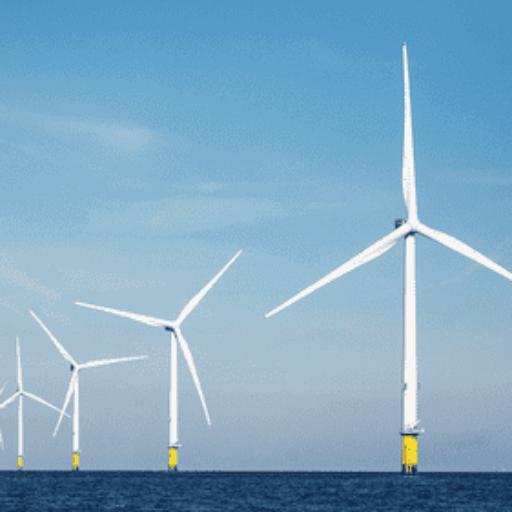
It’s transformed itself from one of Europe’s most coal-intensive utilities to an offshore wind leader and is proving that “a corporate pivot can serve both the balance sheet and the planet”. Ørsted, headquartered in Denmark, has built more wind farms at sea than any other company globally.
It is responsible for more than 10GW of offshore wind, which is enough to power the homes of around 22 million people. An additional 8.1GW is under construction across Europe, the US and Taiwan.
But it’s about more than the company’s own strategy: Ørsted has worked with governments connected to the North Sea to shift policy, so that the industry as a whole can transition and the workforce adapt.
According to Earthshot, Ørsted’s transformation is helping drive one of clean energy’s most important tipping points: for solar and wind energy to overtake fossil fuels.

From non-stick pans to waterproof clothing, PFAS have long been used to make everyday products resistant to heat, water and stains. The family of synthetic ‘forever chemicals’ are widely used in everything from pots and pans to outdoor wear, but have been linked to myriad health concerns such as fertility disorders and thyroid dysfunction.
Enter PFAS-Free France, a coalition of scientists, elected officials, NGOs and citizens. The group has been working since 2022 “to turn complex science into a public and legislative case for action” and on 1 January 2026, a law came into force.
Businesses must now publicly report and track PFAS pollution, and a levy paid by polluters will help fund clean-up efforts. The aim is to phase out industrial PFAS emissions into water within five years. From this year, restrictions are in place on PFAS in products such as cosmetics and clothing.
Encouragingly, France’s law is reportedly already encouraging other countries such as Italy and the UK to consider their own bans.
Main image: Andrew Parsons / Kensington Palace
All other images: courtesy of Earthshot prize
Be part of the solution
At Positive News, we’re not chasing clicks or profits for media moguls – we’re here to serve you and have a positive social impact. We can’t do this unless enough people like you choose to support our journalism.
Give once from just £1, or join 1,800+ others who contribute an average of £3 or more per month. Together, we can build a healthier form of media – one that focuses on solutions, progress and possibilities, and empowers people to create positive change.