
Researchers have identified 51 environmental solutions that could trigger an “unstoppable” wave of positive change. Here are five of the most promising
In a timely intervention, academics have identified 51 ready-to-go environmental solutions which they say, with the right support, could trigger an “unstoppable” wave of positive change.
Many of the proposed solutions have already been implemented somewhere and could, scientists claim, rapidly repair the planet within five years if they are scaled.
The research builds on the notion of tipping points. Many people are familiar with the concept of negative tipping points, where one component of an ecosystem collapses, sparking a chain of unstoppable disasters.

However, an emerging field of study turns the idea on its head, focusing instead on positive tipping points. Furthering the research, academics from the University of Exeter’s Green Futures Solutions team and the Earthshot Prize have now published 51 solutions that could trigger a tide of positive change.
Some of these, such as electric vehicle (EV) adoption in Norway and the global rise of solar, have already reached a tipping point, or are said to have ‘stabilised’. But others are still ‘emerging’ or ‘accelerating’, according to the research.
Here are five of the most promising solutions.
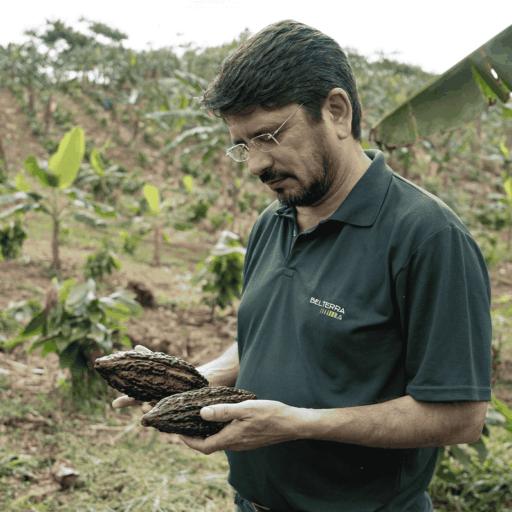
The single largest driver of tropical deforestation globally is the expansion of crops such as beef, soy, timber and cocoa. These commodities account for around 70% of tropical forest loss. And yet, a huge opportunity exists to turn this destruction around.
“Co-ordinated action by a critical mass of buyers, financiers and regulators to implement forest-friendly sourcing standards would restructure economic incentives for millions of producers,” says the report.
In short, if deforestation-free sourcing becomes the default – and it has the potential to do so – a cascade of positive effects would occur.
Belterra, an Earthshot Prize finalist in 2023, is on the case. The social enterprise, based in Brazil, supports small and medium-sized agricultural operations that grow cacao, cassava and bananas, to farm regeneratively.
Image: Belterra/Earthshot Prize

The World Health Organization (WHO) attributes around seven million premature deaths a year to air pollution. It’s the world’s most significant environmental health risk. Despite this, myriad solutions exist to tackle it. One of these, which has strong potential to tip, is clean cooking and heating fuels.
More than two billion people still use polluting cooking and heating systems, but alternatives are on the rise. Pay-as-you-go business models combined with the expansion of rural electrification is paving the way for a potential 80% cut in harmful fine-particle emissions.
Earthshot 2024 finalist d.light is pioneering in this area. It manufactures and sells home solar systems and appliances in Africa and India, and also sells through partnerships in 70 other countries. Clean cooking could become “the cheaper default”, says the report.
Image: iStock

While lots of people will be aware of negative marine-related tipping points, such as coral reef bleaching, there are many ways in which ocean-based solutions are showing promise. Namely, marine protected areas (MPAs). According to the report, MPAs have proven “instrumental” in the recovery and spread of marine life.
But how could these areas create positive, unstoppable change? “Once rebuilt biomass from protected areas spills into fished waters, fishers support more protection and the network self-expands,” states the report.
The global High Seas Treaty, which came into effect in January and took decades to broker, is an example of coordinated action to revive and restore oceans.
Ariana Densham of Greenpeace explained recently how the Galapagos Marine Reserve is an example of how protected areas “can help wildlife bounce back”.
“We don’t need to imagine what fully protected sanctuaries could achieve,” she said. “If one sanctuary around a single island chain can deliver such hope and abundance, imagine what a whole network of high seas sanctuaries could do.”
Image: Marie Martin
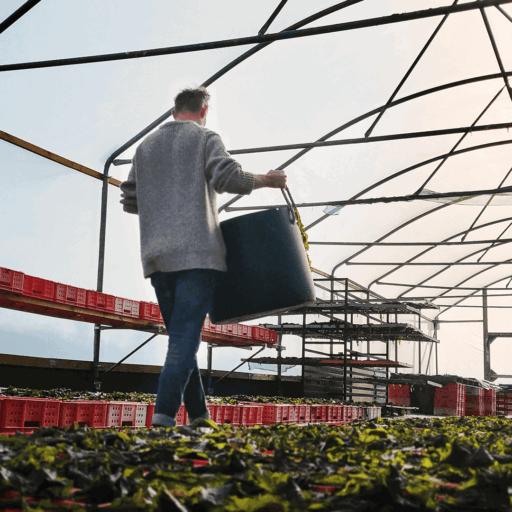
Although it may feel like recycling has become the norm, 40% of waste still ends up in open landfills. Food waste, meanwhile, clocks in at more than 1bn tonnes per year.
According to the report, the positive tipping potential in this space is connected to “regulatory and finance mechanisms focused on both the upstream design and downstream recovery of packaging”. For instance: nifty, innovative alternatives to disposable packaging, using mushrooms or seaweed.
Notpla, 2022’s Earthshot Prize winner, provides inspiration. In the last three years, the London-based company has replaced more than 32m units of single-use plastic with seaweed-based materials.
Image: Notpla

Solar, wind and smarter grids are already the cheapest form of electricity in many markets, but more can be done to complete the transition on a global scale. In order to make renewables truly self-propelling, the affordability and flexibility aspects need to be further entrenched.
Luckily, tipping point science is the most advanced in this area. “Solar PV has crossed a global tipping point, electric vehicles are crossing in leading markets, and several other transitions are fast approaching their thresholds”, states the report.
Take Form Energy, a finalist in the 2025 Earthshot Prize, which is building breakthrough energy storage systems made of iron, air and water. These systems are capable of storing 100 hours of clean energy at a time, at a fraction of the cost of lithium-based batteries.
Image: Form Energy/Earthshot Prize
Main image: iStock
Because the world needs it
Positive News reports on the people and ideas driving progress. We believe that giving attention to solutions helps them spread.
Our journalism is independent and powered by our readers. There are no media moguls or shareholders extracting profits: your contribution funds our work to investigate what’s working, understand why, and bring those stories to a wider audience.
If you value a fuller picture of what’s happening in the world, please become a Positive News supporter today.