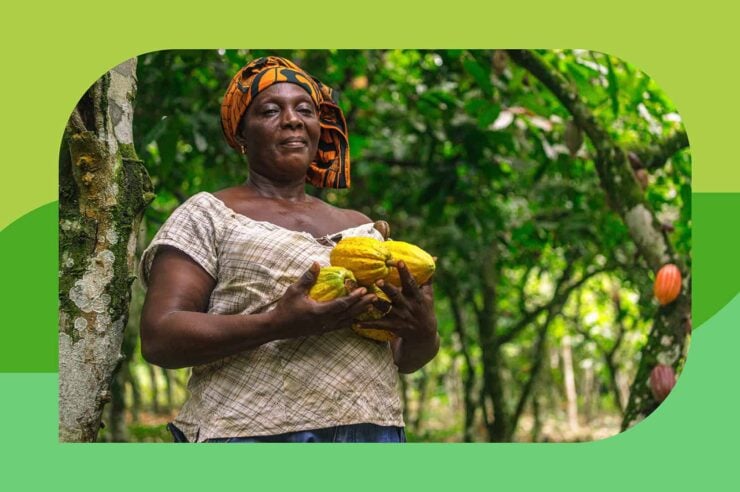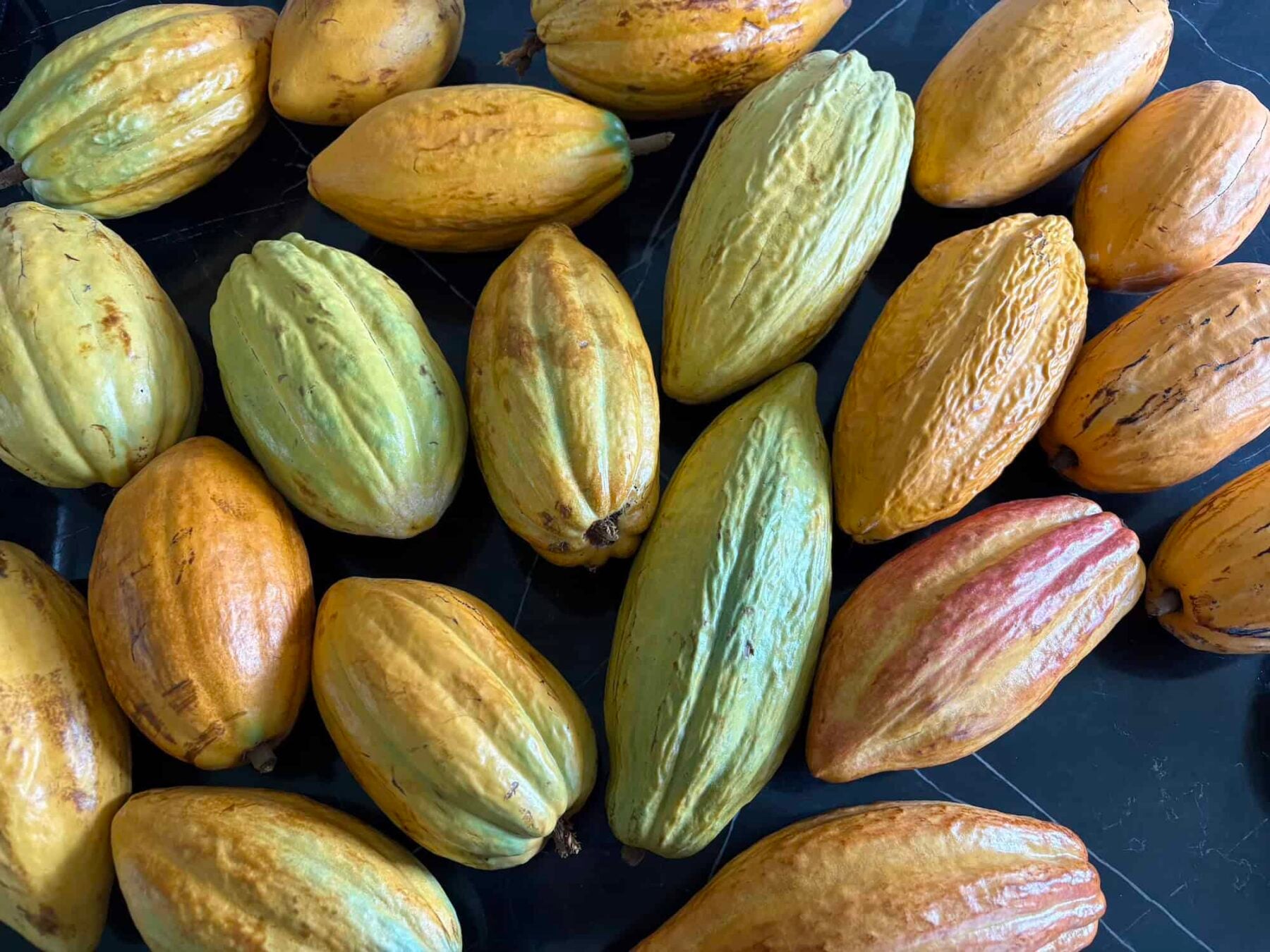
A master’s student has made six bars from cocoa grown in Reading, where scientists are developing varieties that could help growers cope with climate change, pests and disease
Move over Willy Wonka, cool your jets Cadbury – there’s a new confectionery whizz in town. Her name is Maha Khan and she’s made a chocolate bar entirely from British-grown ingredients, right down to the cocoa beans themselves.
Khan is a master’s student studying food security at the University of Reading (UoR), with a focus on chocolate and the increasingly precarious livelihoods of cocoa growers. The UK’s chocolate market is worth £10.4bn, but it’s reliant on imported cocoa, a global trade in which UoR plays a little-known but vital role. The university is home to the International Cocoa Quarantine Centre (ICQC), a safe haven of more than 300 types of cocoa plants, shielded from the pests and diseases found in the world’s cocoa-growing regions.
Khan harvested cocoa pods from UoR’s greenhouses and used British-made milk and sugar to craft a strictly limited run of just six chocolate bars, named The Reading 100 in honour of the university’s centenary. The cocoa pods would normally have been removed from the collection without being used.
“We have cocoa growing here, we have the processing facilities, but no one had made chocolate before,” she said. “It’s great to be the person who joined the dots.”
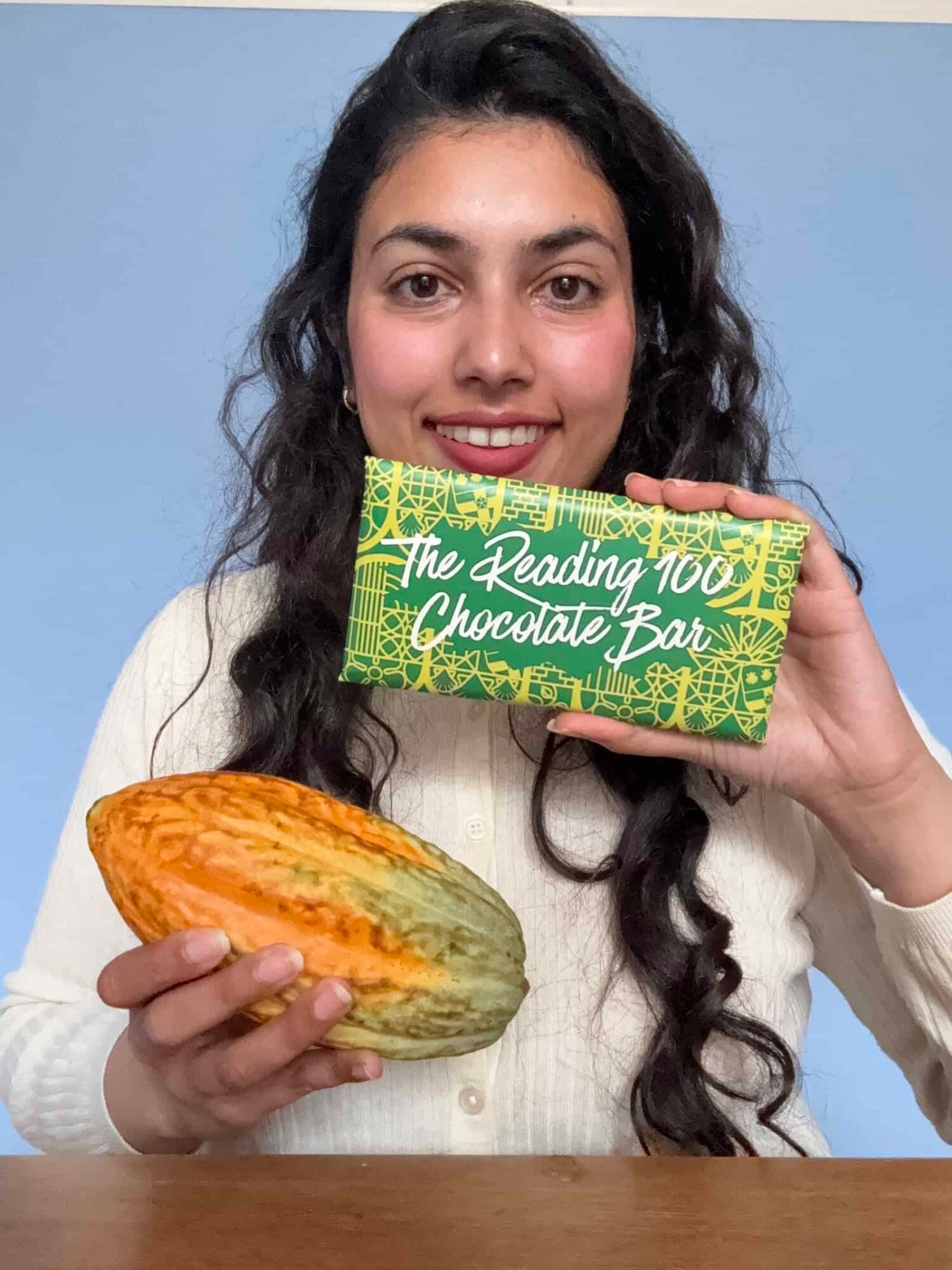
Maha Khan has made a chocolate bar entirely from British-grown ingredients. Image: University of Reading
But there’s more to Khan’s stunt than a bit of confectionery kudos: in recent years, extreme heat in cocoa-growing regions has led to stunted plants and poor harvests, sending prices skyrocketing. West Africa produces around two-thirds of the world’s cocoa, but in some nations, including Ghana, ageing treestock, disease and fertiliser shortages have led to dwindling yields.
The ICQC has a hand in helping cocoa regions rise to these new challenges. Plants are nurtured in its greenhouses under quarantine for two years to ensure they are free of disease.
Its scientists can control temperature, water and CO2 availability to simulate current and possible future climatic conditions and explore which varieties thrive. Cuttings are then sent to other research institutes around the world, where they can be used in breeding programmes to develop cocoa plants with higher yields and better tolerance to climate change and pests.
“This material ends up in the hands of the smallholder farmers to use and improve their productivity as they mitigate all the challenges of cocoa growing,” Khan said.
The US Department of Agriculture was co-funding the facility until it withdrew support in March 2025, casting a shadow over its future. Khan said she hoped the publicity around her chocolate bar would help raise the profile of the ICQC, and ultimately attract new funding.
“It’s nice to have the chocolate bar because it’s tangible, it’s something that people can really hold on to,” she said. “But behind it is this incredible service backed with world-class expertise. Let’s expand the potential of what can be done here.”
Main image: University of Reading
Because the world needs it
Positive News reports on the people and ideas driving progress. We believe that giving attention to solutions helps them spread.
Our journalism is independent and powered by our readers. There are no media moguls or shareholders extracting profits: your contribution funds our work to investigate what’s working, understand why, and bring those stories to a wider audience.
If you value a fuller picture of what’s happening in the world, please become a Positive News supporter today.