Twenty-five years on from 9/11, BGC Group has managed to turn tragedy into a day with purpose
It’s just after 1pm on September 11, and former international footballer Jamie Redknapp is standing in the middle of the trading floor of brokerage firm BGC, phone pressed to his ear, trying desperately to hear above the din.
“Four-month Euro Czech! 2025 choice”, a broker shouts at him. Redknapp relays the message to the man on the other end of the phone, then listens carefully for his reply. “He can do that either side,” the former Liverpool star says calmly.
Around him, three traders talk amongst themselves with growing intensity, but Redknapp’s face suddenly softens as it becomes clear the caller wants to talk football while they wait. “Birmingham City? Well yeah of course they’ve got Tom Brady now haven’t they?” he says, smiling.
Within a minute, the deal is done – it’s in the tens of millions of pounds – and a huge cheer goes up.
As he walks away from the desk, I ask if he has a clue what just happened . “I don’t know what I said or what I did, but it was fun,” he laughs.
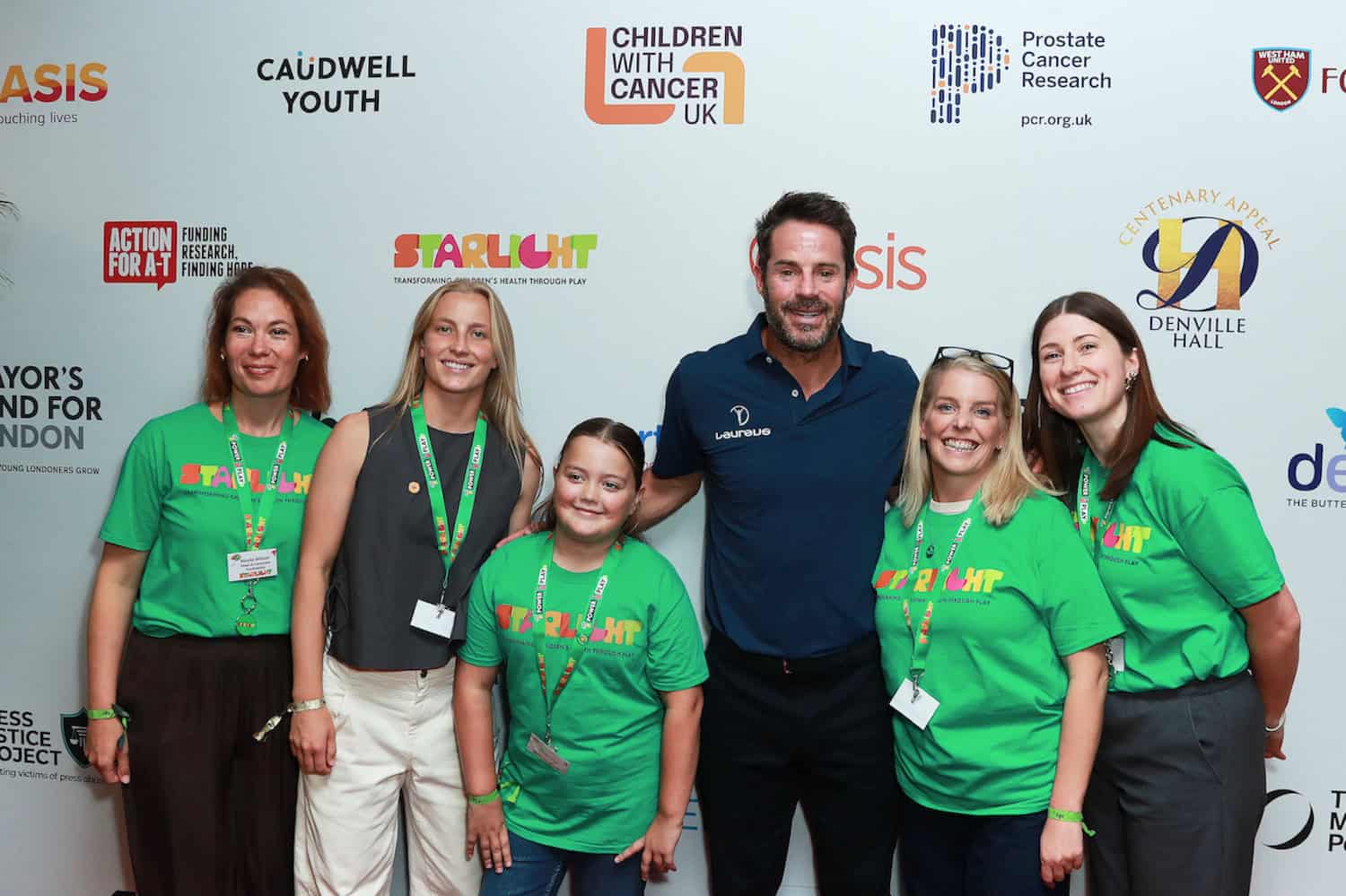
Redknapp is just one of around 50 celebrities who have made their way to Canary Wharf for BGC’s Charity Day – an annual event borne out of the tragedy of 9/11 when the firm’s parent company, Cantor Fitzgerald, lost 658 employees – the most of any organisation.
Today, everyone from Dame Helen Mirren to Tom Hardy and Michael McIntyre are helping to close deals, with clients trading in the knowledge that every pound of the commission on those deals goes to charity. That’s not just 100% of BGC’s profits going towards the cause – it’s 100% of revenue. As a result, this year, BGC raised a whopping US$16m (£12m) for charities both in the UK and around the world. Since 2005, they’ve raised a global total of US$250m (£186m).
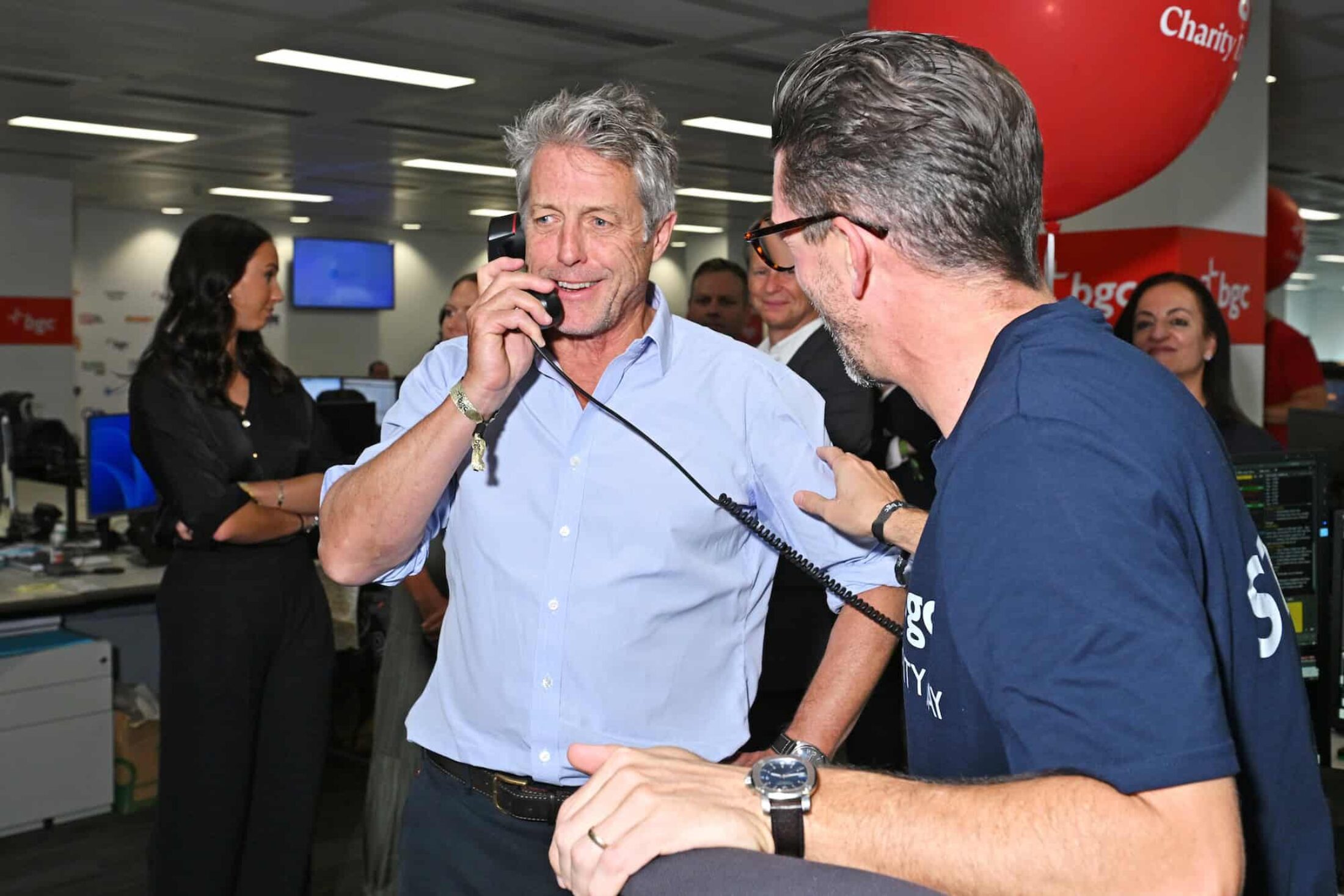
BGC raised US$16m (£12m) for charities both in the UK and around the world this year. Pictured: Hugh Grant helping to close a deal. Image: Getty Images
“I’ve never seen so much money raised in one day for a charity event,” says the comedian Leigh Francis (aka Keith Lemon), who closed one of the biggest trades of the day: a mind-boggling US$10 billion (£7.43b).
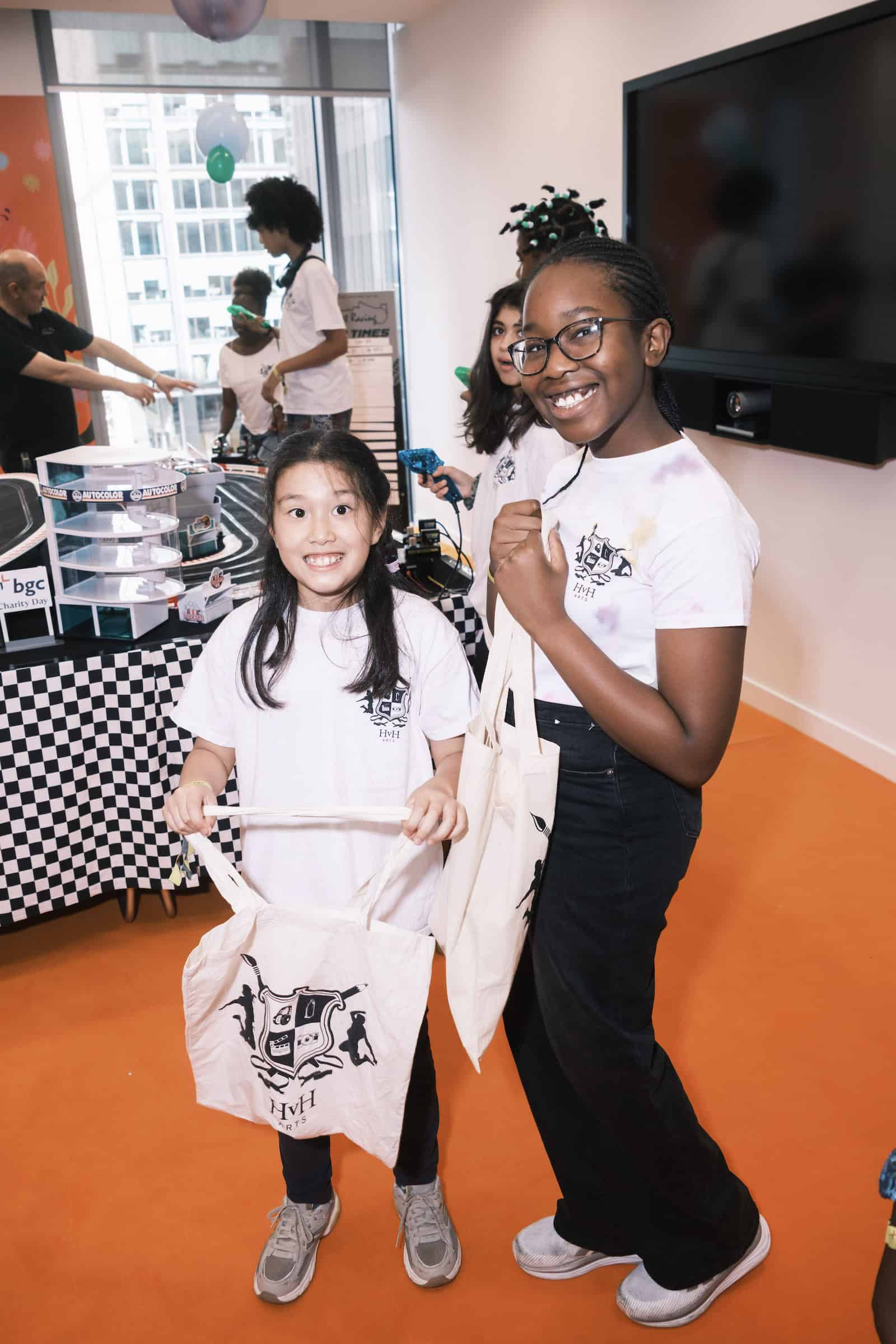
For the organisations and families that benefit from the annual windfall, those kinds of numbers can be life changing. One level below the trading floor, BGC has set up a huge play area for the children taking part in the day. There’s a petting zoo, sand painting workshops, a karaoke area, a vast Scalextric – and a giant Paddington Bear who’s as much of a hit with the younger kids as YouTuber KSI was with the teens earlier in the day.
It’s here that I speak with Debbi Clark, founder of London based charity HvH Arts, which gives children from marginalised backgrounds and low-income families access to the arts. BGC’s Charity Day makes up a full third of their annual income, she explains, and helps fund a music mentorship programme. “The donation is fundamental,” she says. “There’s no way we could run that programme without it. BGC’s funding has given us the capacity to treble the amount of children we help since 2019.”
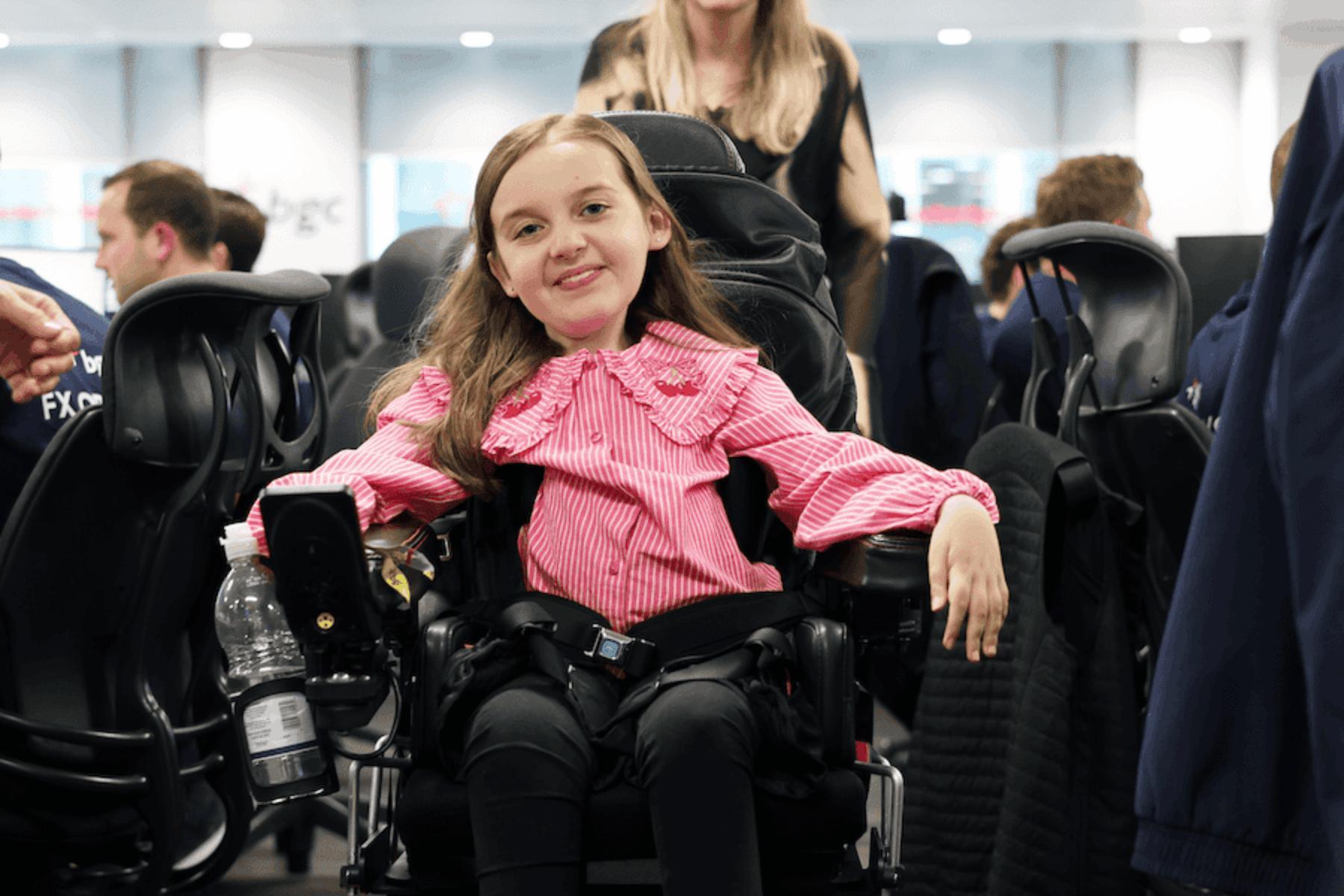
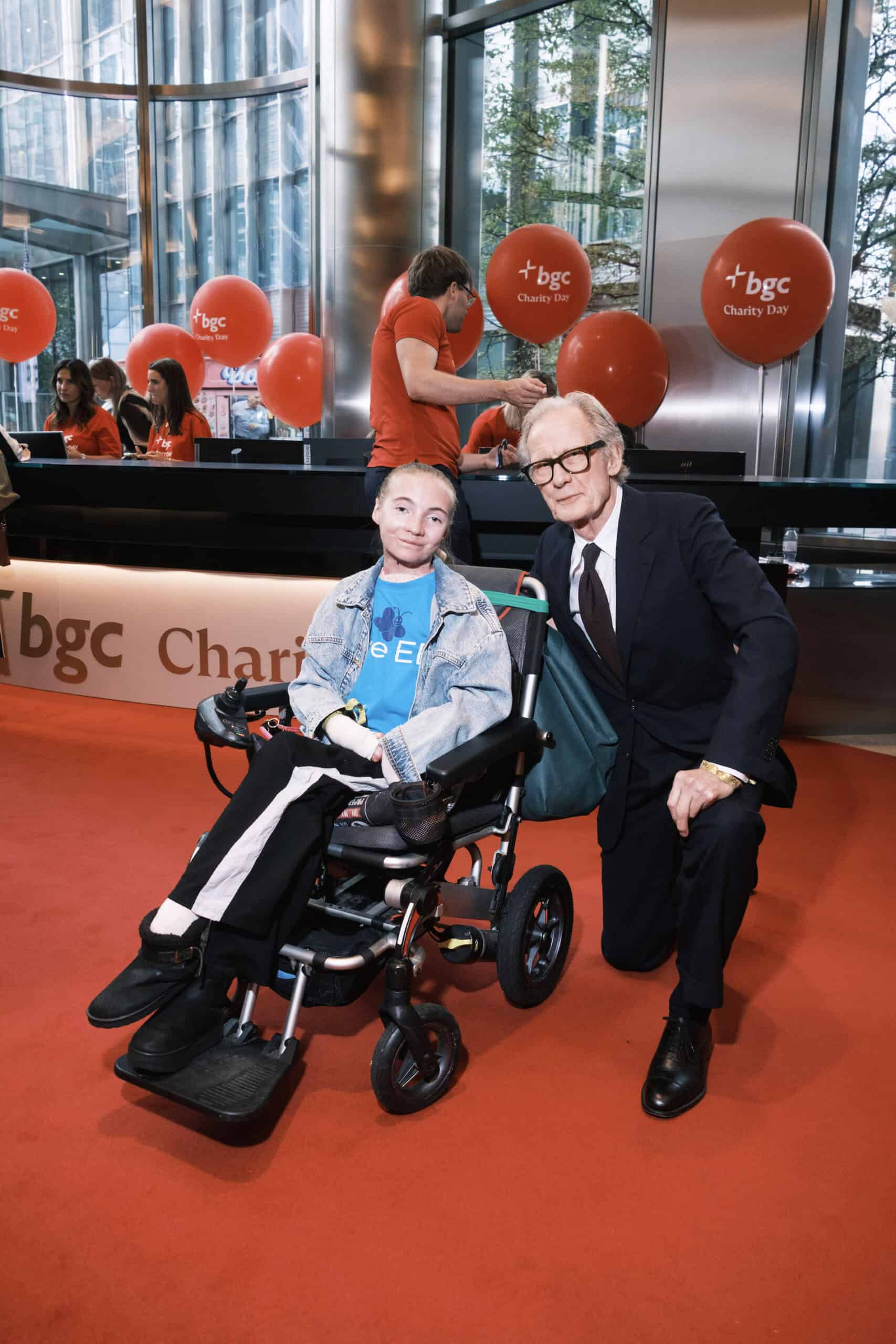
Another person whose life has been directly impacted is Carmela Chillery-Watson, 12, who has a rare form of muscular dystrophy that also affects her heart and liver. She’s one of Muscular Dystrophy UK’s Young Ambassadors, and I find her watching the action from the edge of the trading floor with her mum Lucy and her dog Tinker.
A lot of businesses make an awful lot of profit. They can even reduce their tax by helping charities – they could do so much good
For her, money raised on days like this makes a tangible difference to her daily life – most notably, by helping her purchase a custom wheelchair not covered by the NHS. “When I’m tired, a wheelchair is my main support need,” she explains. “[MDUK] has managed to fund the special wheelchairs, and I’m very grateful for that, because I use it every day.”
“I wish more companies did things like this”, her mum Lucy says. “A lot of businesses make an awful lot of profit. They can even reduce their tax by helping charities – they could do so much good.”
And she’s right. New research reveals that only 27% of UK businesses support charities, and giving by companies in the FTSE 100 has halved as a percentage of profits since 2009.
BGC Group’s Co-CEO Sean Windeatt says that’s a dismaying statistic. “I know these are challenging times for many businesses, but the challenges are far greater for charities,” he points out. “When household budgets are squeezed … and the public can’t give what they used to, business has a role to play in helping to fill that gap.”
For him, BGC’s Charity Day is personal. In 2001, he was just 28 and working in the finance department of Cantor Fitzgerald’s London office. “Every morning I’d call my counterpart in New York and I’d say, this is what’s happened in London today. And that morning, on September 11th, I called as normal, and then 15 minutes into the call, the phone went dead.”
Losing so many US colleagues meant Windeatt and the London team had to take the reins to save the company – and fast. “There’s no textbook for that,” he tells me. “You can learn how to deal with a crisis, but that was another level. The first two months were a bit of a blur.”
Once they were back up and running, the company decided to pledge 25% of its profits to a relief fund for the families of those lost in the tragedy, and once they’d been taken care of, decided to use it to raise money for global charities by donating a full day’s revenue each year. “Even though we’re in a pretty cutthroat business,” admits Windeatt, “that was very much in the culture and the DNA of our firm: never forget what happened to us.”
The beauty of this level of corporate giving is that it inspires others to be generous too: “Traders will always try and go with BGC today, as opposed to our competitor,” he beams. “And how nice is that, right? Even our competitors say ‘you should give BGC the first chance because it’s their charity day.’”
When household budgets are squeezed … and the public can’t give what they used to, business has a role to play in helping to fill that gap
Windeatt knows that companies with a big heart get noticed by employees in the City too, and a conversation I have with one of BGC’s brokers, George Mallett, seems to bear that out.
Mallett has worked for BGC for nearly 19 years, and confirms that its company culture is absolutely part of why he’s there: “It’s a good company to work for, they look after their staff. And stuff like this just proves that we’re here trying to do things for a good cause. We obviously had a catalyst to create this day, but there’s no reason why other companies can’t do it.”
John Caudwell, the first British billionaire to sign the Giving Pledge, says the Charity Day – and the publicity it generates – sets a clear example to all businesses, and wants to remind companies that they don’t have to go that big to make a difference. “There’s so many other ways they can be involved in charity,” he points out, citing payroll giving and volunteering among them, “and that makes a huge difference to society.”
“The more of us that stick our heads above the parapet and say, why on earth aren’t you doing this too, the more social pressure there will be,” he adds.
Main image: Nikki Osborne
Because the world needs it
Positive News reports on the people and ideas driving progress. We believe that giving attention to solutions helps them spread.
Our journalism is independent and powered by our readers. There are no media moguls or shareholders extracting profits: your contribution funds our work to investigate what’s working, understand why, and bring those stories to a wider audience.
If you value a fuller picture of what’s happening in the world, please become a Positive News supporter today.