A vaccine ‘almost eliminated’ a type of cancer, the green economy surged, and India halved its smoking rate, plus more good news
This week’s good news roundup

A future where almost nobody gets cervical cancer is “firmly in sight,” doctors said this week, as a study showed that for the first time no women in their early-20s died from cervical cancer in England between 2020 and 2024.
The “incredible milestone” follows the rollout of the human papillomavirus (HPV) vaccine, which scientists say has reduced the risk of cervical cancer deaths before the age of 30 to “effectively zero”.
HPV infects cells inside the body. Most people catch it at some point and while the infection usually clears, some types can cause cancer – a link that was established 25 years ago, leading to the development of a vaccine against the disease.
The UK was one of the first nations to roll out a HPV vaccine in 2008. The latest study offers the strongest evidence yet that it is saving lives, estimating that around 200 cervical cancer deaths have been prevented so far in England alone – a figure that lead researcher Peter Sasieni, professor of cancer epidemiology at Queen Mary University London, believes is the tip of the iceberg.
“As vaccinated generations grow older, we’ll see many more lives saved from cervical cancer,” he said. “It is incredible to think that a single jab can almost eliminate a particular type of cancer. This new research shows just how vital it is to keep HPV vaccination levels high so more people are protected.”
Image: Becca Tapert
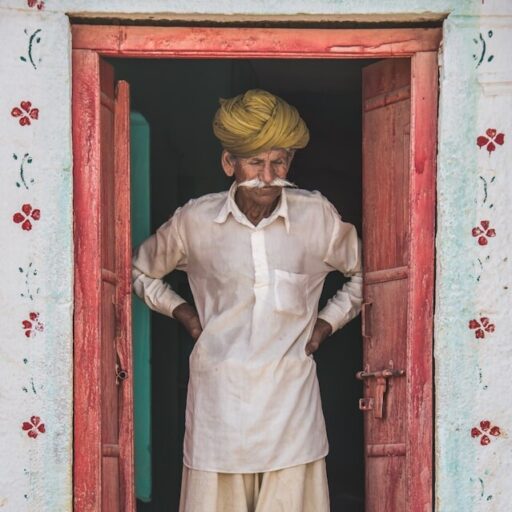
Rates of smoking and tobacco use have halved in India this century, a positive trend that will have “huge implications” for a country where nearly one million people die from smoking each year.
The trend was highlighted by analysis from Our World in Data, which said smoking rates had fallen significantly for both sexes. Some countries, it added, have seen rates fall for men while rising for women.
India’s progress is exceptional but part of a wider trend. According to the World Health Organization, there’s been a 27% fall in the number of people smoking since 2010.
Image: Abhas Mishra

Barely a week goes by without another new marine protected area being announced; last week it was Sao Tome and Principe, the week before it was French Polynesia. It’s good news, but drawing lines on a map is one thing, implementing effective conservation is another.
Enter the Blue Park Awards. Recognising marine protected areas (MPAs) that set a benchmark for ocean conservation, the prize revealed its latest winners this week. They were: Banc-des-Américains, Canada; KAWAWANA Indigenous community heritage area, Senegal; Nosy Hara national park, Madagascar; Nosy Tanihely national park, Madagascar; Sahamalaza-îles Radama national park, Madagascar; and Rapa Nui marine protected area, Chile.
Selected by conservation experts convened by the US-based Marine Conservation Institute, the winners were benchmarked against “a rigorous, science-driven framework” to evaluate their effectiveness.
Together, the six parks encompass approximately 455,000 sq miles of ocean, bringing the total Blue Park network to more than 2.6m sq miles of effectively protected ocean across 30 countries and Indigenous territories.
“These six MPAs show that effective marine protection is achievable across cultures, geographies, and political systems,” said Dr Lance Morgan, president of Marine Conservation Institute. “We hope they inspire ocean champions everywhere to raise their ambitions for what protection can and should look like.”
Image: mirecca
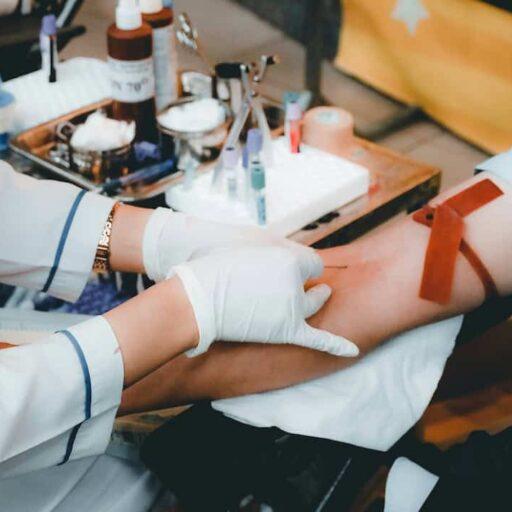
Global blood donations increased by almost a fifth in the decade to 2023, thanks to a growing army of unpaid volunteers, new figures from the World Health Organization (WHO) show.
Data collected from 132 countries reveals that global blood collections increased by nearly 19% between 2013 and 2023, with unpaid volunteers accounting for more than 85% of the estimated 120m blood donations received in 2023.
Dr Tedros Adhanom Ghebreyesus, the WHO’s director general, said the data offered “encouraging progress”.
However, the WHO warned that access to safe blood remains unequal. While high-income countries account for just 15% of the global population, they collect 36% of all blood donations worldwide, the WHO said. In contrast, many lower-income countries continue to face blood supply shortages due to limited financing, weak infrastructure, logistical barriers and insufficient donor recruitment.
“Governments must continue investing in strong, sustainable national blood systems and supporting the voluntary unpaid blood donors whose generosity saves millions of lives every year,” said Ghebreyesus.
Image: Nguy

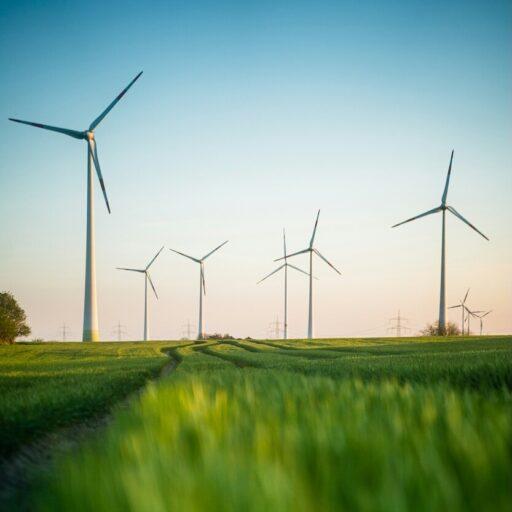
The green economy has topped $10tn (£7.6tn) in market value for the first time, a report by the London Stock Exchange Group (LSEG) revealed this week.
Against a backdrop of volatile markets and energy supply disruptions, the LSEG noted that green revenues were up 5.3% in 2025 – the fastest growth since 2022.
It means that the green economy – an umbrella term to describe companies working on environmental solutions – has overtaken healthcare in terms of market value. If it was officially classed as its own sector, which it’s not currently, the LSEG said that the green sector would be the world’s third largest behind technology and industrial goods and services.
The report comes as some populist politicians try to stymie the green economy, notably the current occupant of the US White House. Despite such headwinds, however, green revenues soared.
“The global green economy in 2026 appears to be shaped as much by energy security and supply disruption as by decarbonisation,” the report noted. “The current energy shock could further accelerate this shift, as it highlights the scalability and energy security benefits of many green technologies.”
Image:
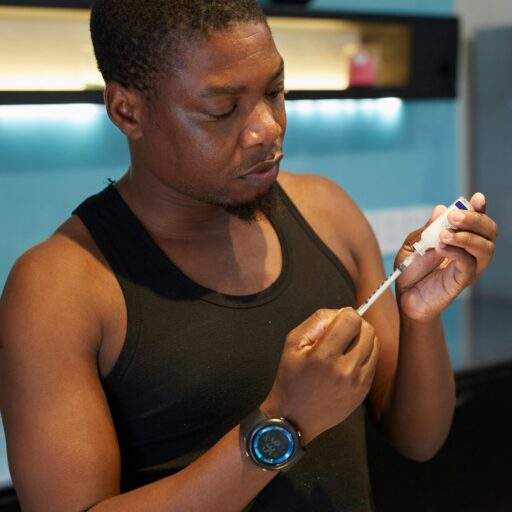
England has become the first European nation to approve a new therapy that delays the onset of type 1 diabetes for up to three years.
Teplizumab was approved for use by the National Institute for Health and Care Excellence (NICE) this week following promising results in clinical trials. NICE said the therapy represents a “significant step forward” in the treatment of type 1 diabetes.
“This is a genuinely exciting recommendation,” said Helen Knight, director of medicines evaluation at NICE. “For the first time, we have a treatment that can give people diagnosed at an early stage of type 1 diabetes precious extra time before they need to manage the full demands of the condition.”
Lucy Common, clinical nursing advisor at NICE, added: “Having time before the onset of diabetes is not just a clinical benefit; it can make a meaningful difference to people’s lives, their mental wellbeing, and the wellbeing of the families and carers who support them.”
Image: Sweet Life
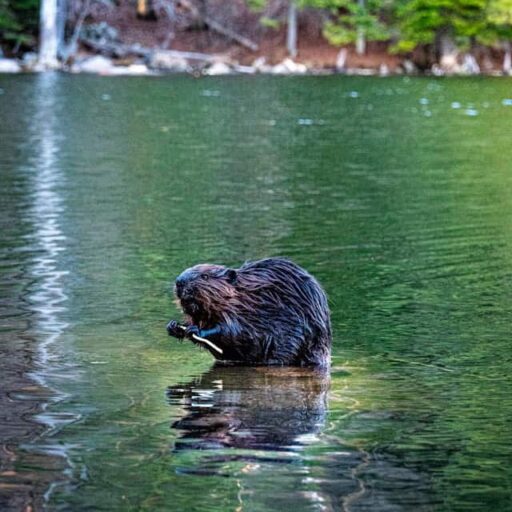
Reintroduced beavers have been credited with halting flooding in a west London neighbourhood that was routinely deluged after heavy rainfall.
For years, flooding was a persistent problem around Greenford tube station, leaving the local council facing expensive engineering works – until beavers came along and fixed the problem for free.
“I just can’t believe how much they’ve done in a short period of time, they basically said ‘step aside, humans’,” Şeniz Mustafa, England’s first urban beaver officer, told Positive News. “Even in situations like on Monday, where there was really heavy rainfall, the area didn’t flood.”
Some 400 years after being pushed to local extinction in England, beavers were introduced to Paradise Fields – a 10-hectare stretch of land in Ealing borough – in 2023. Since then, they have reengineered the landscape around Greenford with a series of dams, which have not only helped alleviate flooding but also boosted biodiversity.
“We’ve had four new species in the last 11 months alone,” said Mustafa. “One of them is the stickleback, which now lives alongside dragonflies and damselflies. There are tadpoles, freshwater shrimp, toads, too. None of that would have happened without beavers.”
Read the full story here.
Image: Eliot Sachot
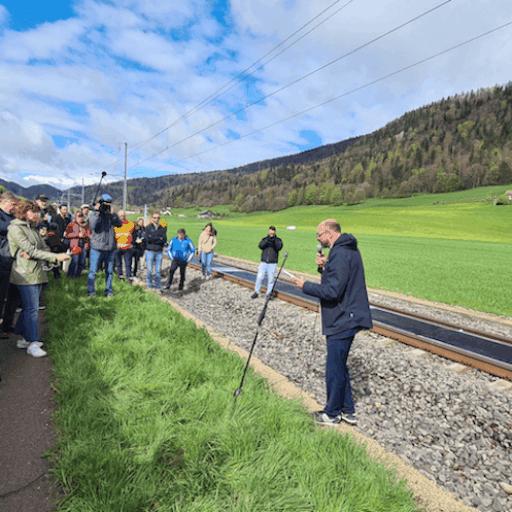
A proof-of-concept energy project, which involved installing solar panels between railway lines, is spawning copycat programmes globally after reporting positive early results.
Last April, Swiss startup Sun-Ways installed solar on a 100-metre stretch of railway in Buttes, a village in Neuchâtel canton, western Switzerland. It came after the firm’s founder Joseph Scuderi had a lightbulb moment on a platform where he noticed the unused space between the tracks.
Scuderi told Positive News that he overcame a “mountain of obstacles” to bring his idea to fruition. Now it’s paying off with data showing the panels have produced 18.2 megawatt-hours (MWh) of electricity – all while 11,000 trains rattled overhead.
“We have achieved our objectives, both in terms of railway safety and electricity production,” Scuderi told Swiss Info, adding that the system proved “perfectly stable and safe during [the trains’] passage”.
Amid growing pressure to boost green electricity without using productive farmland, other countries are taking note. France’s largest electricity consumer and second-largest landowner, the SNCF railway group, announced plans to install similar systems on its land. Pilots are also mooted for Indonesia, Italy and South Korea. “This is just the beginning,” said Scuderi.
Image: Sun-Ways
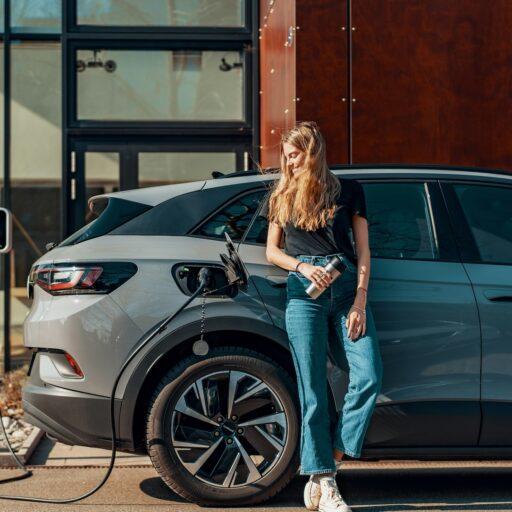
For the first time, electric vehicles (EVs) have outsold petrol cars in the UK – a milestone which comes amid a row over the future of the UK’s ‘zero-emissions vehicle’ (ZEV) mandate.
The mandate sets a rising target for the share of new car sales that must be zero-emissions vehicles each year. The motor industry is pushing back, arguing that demand for the cars is too low. Fresh data from Carbon Brief suggests otherwise. It found that in the year to May 2026, 516,490 new EVs were sold, versus 504,010 new petrol cars.
“Demand for EVs has, in fact, grown consistently – and it has now overtaken demand for petrol cars for the first time,” said Carbon Brief.
The data comes as separate Carbon Brief research found that the UK’s EV drivers are saving an average of £1,100 a year in fuel costs, compared with running a petrol car.
Image: Juice

As World Cup fever grips co-host Mexico, one local football team is helping visually impaired women build confidence, friendship and sporting ambition in a game that has too often left them on the sidelines.
Chilangas FC is football team for blind women that is transforming lives. “Football has changed how I see myself as a blind woman,” a player known as Pau told Positive News this week. “Bringing my son with me and knowing I’m setting an example for him fills my heart. I’m showing him that there are no limits.”
Chilangas FC is one of only six women’s blind football teams in Mexico. Together they are trying to get their country to become only the fourth nation, after Brazil, Argentina and Canada, to form a women’s blind football national team. The aim is to compete at the Copa América in São Paulo, Brazil, this September.
Read the full story here.
Image: Mark Viales

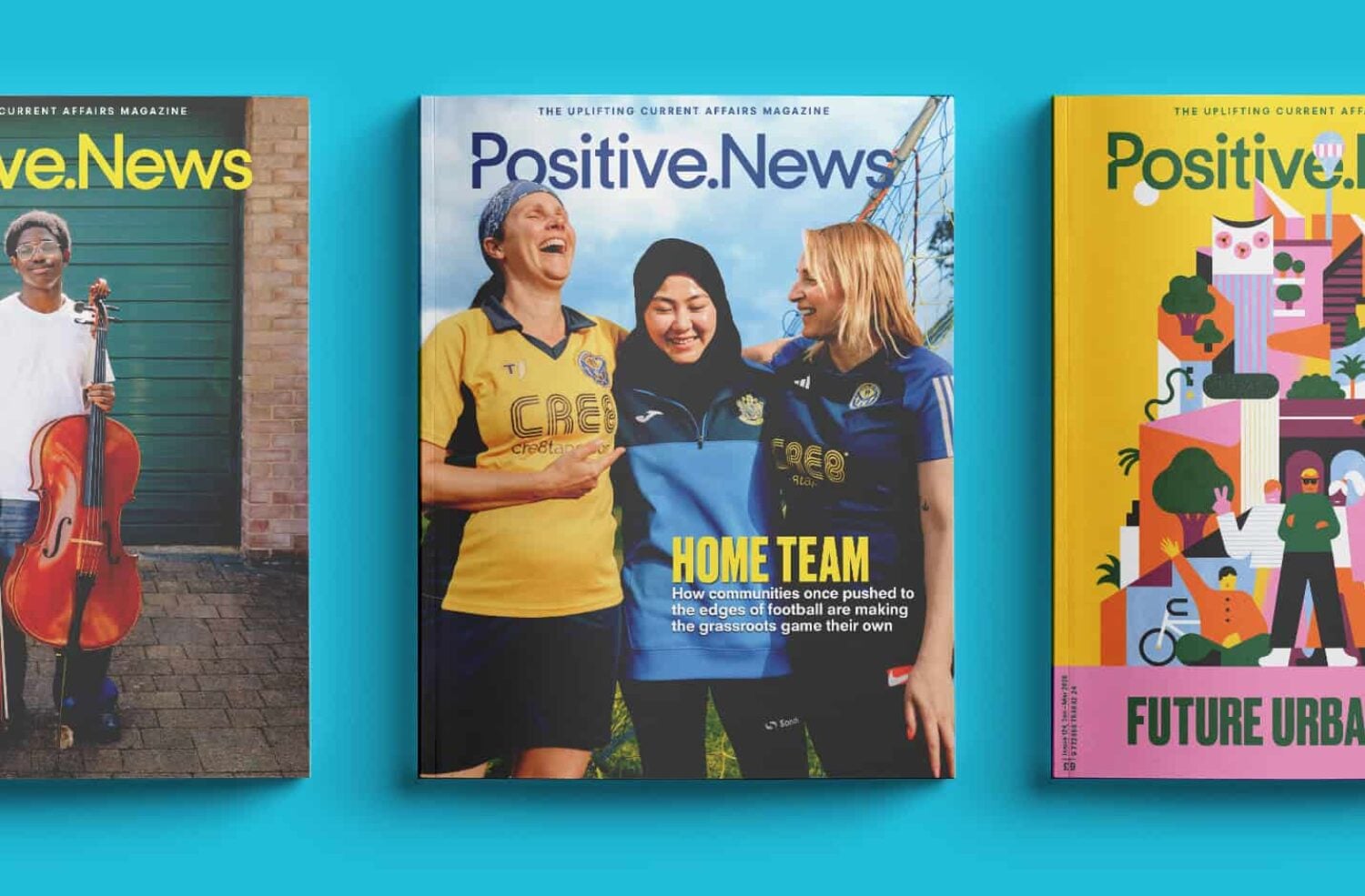
The photographer behind a recent Positive News cover story about people who rescue instruments and distribute them to wannabe musicians has won an award for his photojournalism.
Jack Roe’s striking images triumphed over some 900 other submissions in the visual images category at the Solutions Journalism Network Award.
“Beautiful imagery meets sensitive reporting in this piece about, ostensibly, recycling instruments,” said the judges. “What the words and images present is really a story about purpose and opportunity. Both the people rescuing instruments and the young people who play them afterward enjoy the benefits.
“That sense of mutual joy flows through this bright and moving story, so much so that you might not even notice how much you learn.”
Read the story here.
Image: Jack Roe
Main image: SolStock
Get your weekly fix of good news delivered to your inbox every Saturday, by signing up to the Positive News email newsletter
Be part of the solution
At Positive News, we’re not chasing clicks or profits for media moguls – we’re here to serve you and have a positive social impact. We can’t do this unless enough people like you choose to support our journalism.
Give once from just £1, or join 1,800+ others who contribute an average of £3 or more per month. Together, we can build a healthier form of media – one that focuses on solutions, progress and possibilities, and empowers people to create positive change.