A major new study argues that rising living standards, shorter working hours and a liveable climate are not competing dreams, but parts of the same future – if the world is willing to tackle extreme inequality
For years, the climate debate has often been framed as a choice between two unappealing futures. Either the world carries on consuming and emitting until the planet becomes increasingly unstable, or it cuts back so sharply that ordinary people feel they are being asked to accept less.
A major new report from the World Inequality Lab offers a very different possibility. It argues that humanity could raise living standards for the vast majority of people, reduce extreme inequality and still keep global heating below 2C by the end of the century.
The Global Justice Report, published on Thursday, sets out what its authors describe as a “plan for equality and prosperity within planetary boundaries”. It is not a forecast, and it is certainly not a modest piece of policy tinkering. It is a deliberately ambitious model of how the global economy could be reorganised between now and 2100 so that wellbeing, equality and climate stability are treated as part of the same project.
At its heart is the simple idea that people do not need endless material consumption to live well. Instead, the report argues for “sufficiency” – a shift towards shorter working hours, better health and education, cleaner energy, changed diets, reduced pressure on land and a much narrower gap between the very rich and everyone else.
Under the report’s central scenario, average monthly income would converge towards about €5,000 (£4,250) per person in every country by 2100. That would mean far faster growth in poorer regions and much slower growth in today’s richest economies, but the authors argue that most people in wealthy countries would still gain because income would be distributed more evenly and people would have more time outside paid work.
Nearly 90% of the world’s population would double their monetary income by the end of the century, according to the model. When extra leisure and the avoided damage of runaway heating are included, the report says more than 99% of people would be better off.
Average monthly income would converge towards about €5,000 (£4,250) per person in every country by 2100
One of the report’s most striking proposals is a dramatic reduction in working time. Annual labour hours per employed person would fall from about 2,100 today to around 1,000 by 2100, roughly continuing the long historical trend that has already seen working hours fall sharply in many countries since the 19th century. The aim is not simply to work less, but to redirect human effort towards care, education, health, culture and other lower-carbon parts of the economy.
The report also links this shift to gender equality. Its model envisages women and men converging on equal pay and an equal share of paid and domestic labour, arguing that a fairer distribution of work inside and outside the home is central to any credible vision of social progress.
To stay within climate limits, the authors say rapid decarbonisation would still be essential. Energy systems would need to move quickly away from fossil fuels, with electricity generated from low-carbon sources by mid-century and major investment in renewables, electrification and cleaner industrial processes. But the report argues that technology alone is not enough. Without changes in consumption, land use and inequality, the energy transition becomes harder to finance and harder to sustain politically.
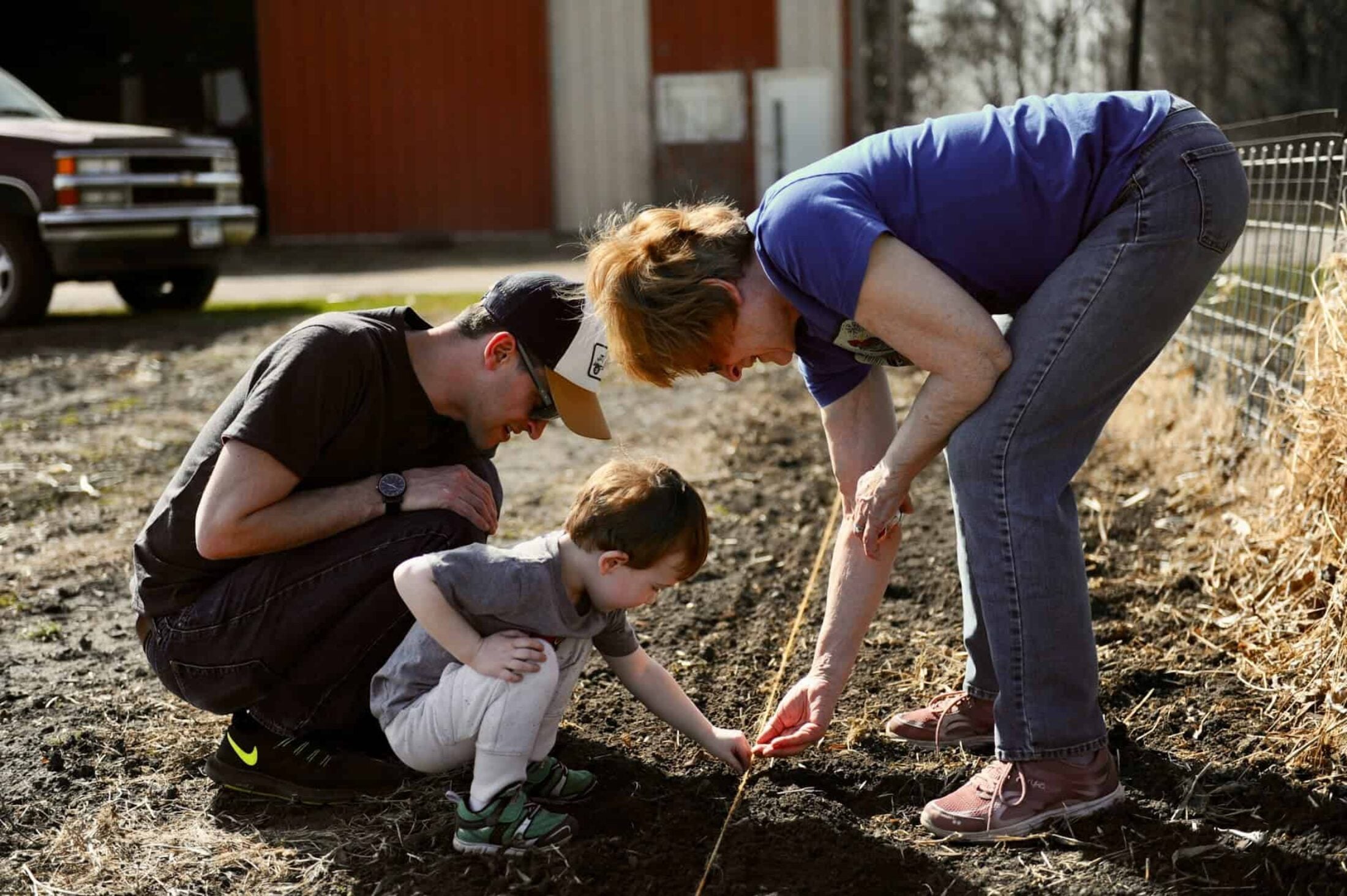
When extra leisure and the avoided damage of runaway heating are included, the report says more than 99% of people would be better off. Image: Holly Landkammer
The report proposes a Global Justice Fund, financed by a global wealth tax and a top income tax levied on the richest 1% of the world’s population. The fund would support climate investment, health, education and country-level dividends, particularly in poorer countries. The report also proposes a world sovereign fund, new forms of international currency and a rebalancing of voting power in institutions such as the IMF and World Bank.
The Global Justice Fund would spend an average of 10.3% of world GDP each year between 2026 and 2060, compared with less than 0.4% currently represented by official development aid and the combined budgets of the UN, IMF and World Bank. The report argues that this reflects the scale of the challenge: climate investment alone is expected to require 3-4% of world GDP annually in the coming decades.
The effect on wealth would be profound. The bottom half of humanity would see its share of global wealth rise from 2% to 30%, while the share held by billionaires would fall from 6% to 0.05%. The report’s authors argue that this is not only a question of fairness, but also of climate logic, because the richest people have disproportionately benefited from high-carbon growth and hold much of the capital needed for the transition.
The aim is not simply to work less, but to redirect human effort towards care, education, health, and culture
Writing in the Guardian, several of the report’s authors, including Thomas Piketty and Lucas Chancel, described the plan as “radical”, but argued that the alternative is to accept a future shaped by deepening inequality, climate breakdown and political instability. The obstacle, they wrote, is “not technical impossibility”, but political choice.
That is also the report’s greatest vulnerability. It sets out what could be done, not what is currently likely to happen. Global wealth taxes, a new international financial order and a managed shift away from overconsumption would face fierce political resistance, particularly from those who benefit most from the present system. Even the authors acknowledge that this would require major coalition-building, social movements and legislative action.
But the report is important because it challenges a familiar mood of defeat. It does not say that a fair, healthy and sustainable world will arrive naturally, or that the transition will be easy. Instead, it says that the figures can be made to add up, that climate safety does not have to mean worse lives for most people, and that equality is not a distraction from the environmental crisis but one of the conditions for solving it.
Main image: Sagar Gnawali
Be part of the solution
At Positive News, we’re not chasing clicks or profits for media moguls – we’re here to serve you and have a positive social impact. We can’t do this unless enough people like you choose to support our journalism.
Give once from just £1, or join 1,800+ others who contribute an average of £3 or more per month. Together, we can build a healthier form of media – one that focuses on solutions, progress and possibilities, and empowers people to create positive change.