Forty years after poems first appeared on London’s Underground, the project that placed verse beside adverts and Tube maps continues to shape the daily journeys of millions
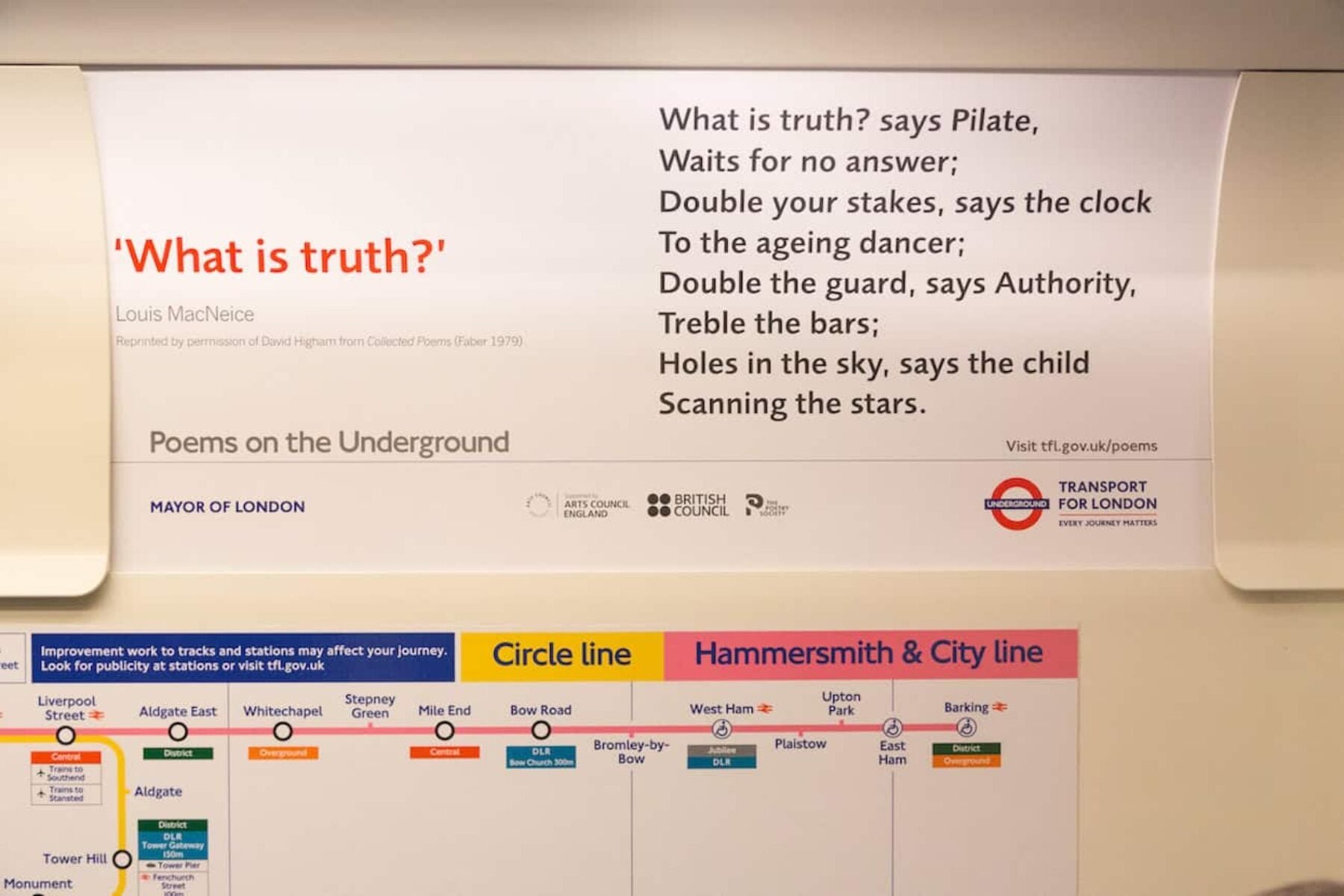
On a Tuesday morning in January, packed into a Victoria Line train between Oxford Circus and Green Park, most commuters keep their eyes firmly on their phones or gaze dreamily into the middle distance. Then something appears in their sightline: a poem, tucked alongside the usual ads for apps and health supplements, grabs their attention. A few heads lift. A few eyes linger. A moment later, the doors open and they are whisked back into the bustle of London’s streets.
This is Poems on the Underground in action. It’s been like this for 40 years, and the scheme marks its anniversary this year by reminding the 3 million people that make journeys on the Tube everyday that public transport need not be only about deadlines and screens.
Founded in 1986 by the American writer Judith Chernaik, the project now displays six poems, refreshed three times a year across London Underground trains, deliberately mixing classic and contemporary voices so riders encounter a range of styles and subjects during their commute. Over the decades, hundreds of poems by hundreds of poets have appeared in carriages and stations– from Shakespeare and Sappho to Wole Soyinka and Blake Morrison – collected now in a 40th-anniversary anthology of 100 Poems on the Underground.

Wrapped in a cosy scarf, Chernaik greets me into her north London kitchen on a crisp January morning, walls adorned with framed Tube posters from years past. Around the table, pamphlets and old leaflets lie like artefacts of a cultural project that has become invisible precisely because it works. As she flips through selections from earlier years, it’s clear each poem carries its own life on the move, inseparable from the daily rhythm of millions underground.
The poem has to “strike them” in that time. That’s the criterion. They aren’t chosen to be relentlessly upbeat, because “life is very complicated, and grief and struggle and despair are part of it.”
Chernaik’s voice is clear and playful. She recounts early letters from literary figures like Seamus Heaney and Philip Larkin, who championed the idea, and she shows me the archive of correspondence – now held at Cambridge University – that helped convince Transport for London to give poetry a home next to Tube maps and schedules. Larkin, writing to Chernaik in 1985, compared the project to pulpit posters outside churches, a reminder that “the world of the imagination existed.”
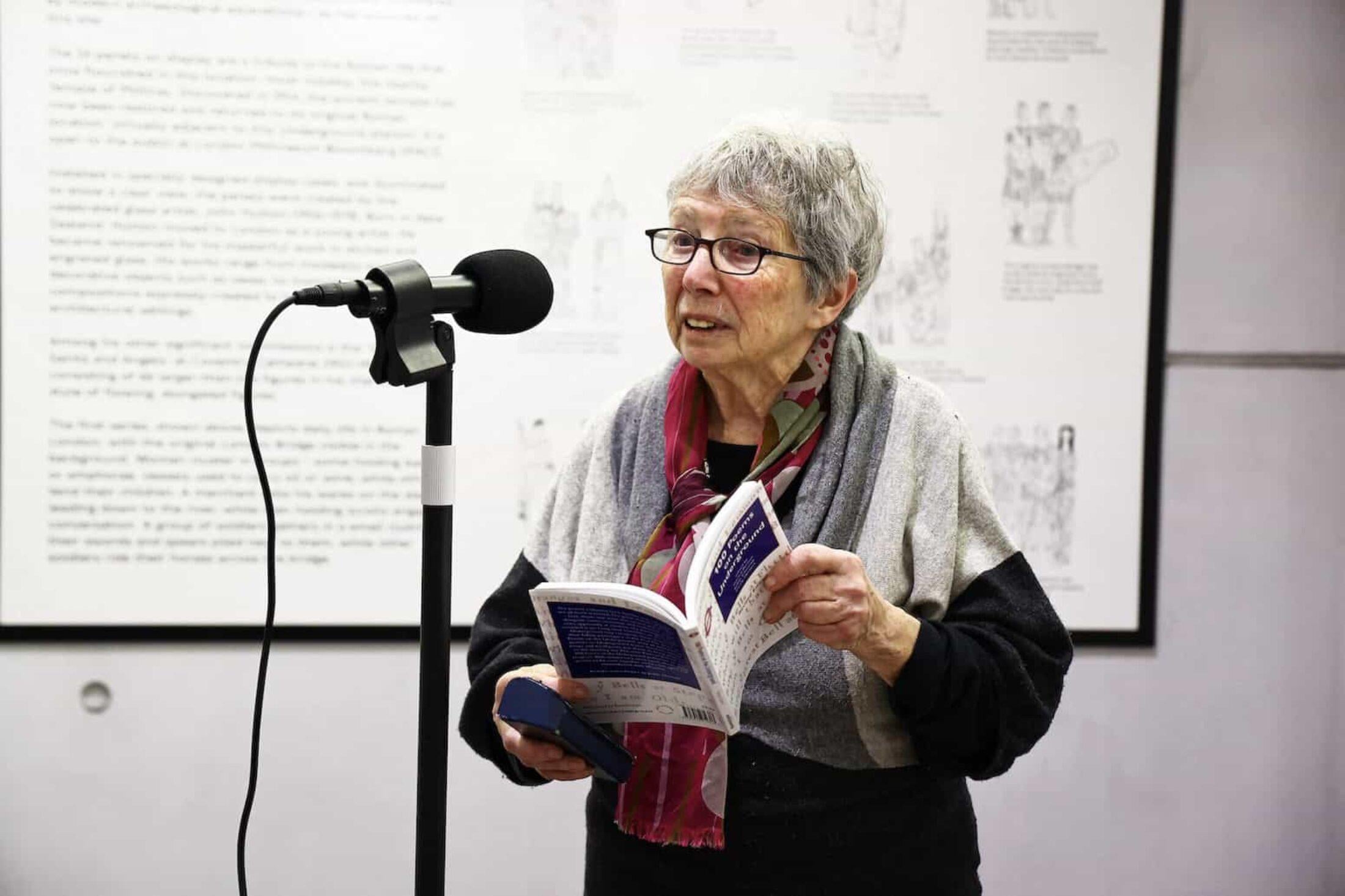
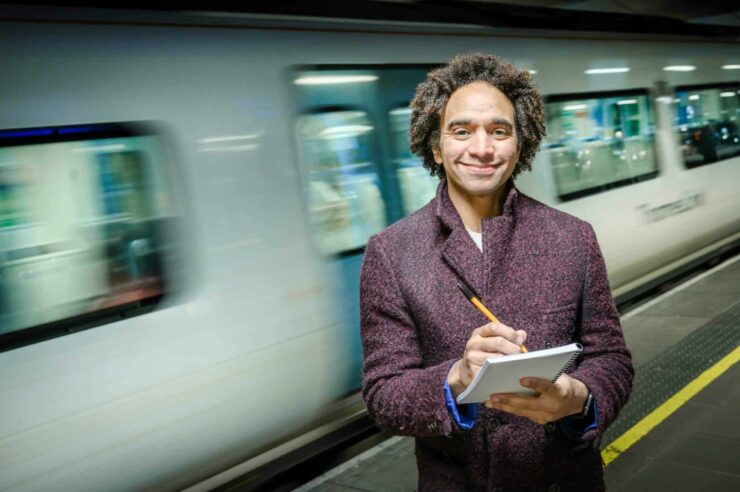
American writer Judith Chernaik founded Poems on the Underground in 1986. Here, she reads a poem at Bank Underground station to celebrate the project’s 40th anniversary
The structure is simple: every few months, Chernaik and her co-editors – now poets Imtiaz Dharker and George Szirtes – gather to pick a fresh set of six poems that will run across Tube carriages for about three months. In recent years they have also placed selections at key stations such as Heathrow, Westminster and Aldgate East, extending the reach of the project beyond the carriages into the spaces where journeys begin and end.
In a space dominated by screens and consumer messaging, these poems demand nothing and allow for reflection, empathy, puzzlement or humour.
“People like the idea of something artistic in public space, because there’s so much advertising, which is telling you, buy this, buy it now…” Chernaik puts it. The poems “offer you something. It’s free.”
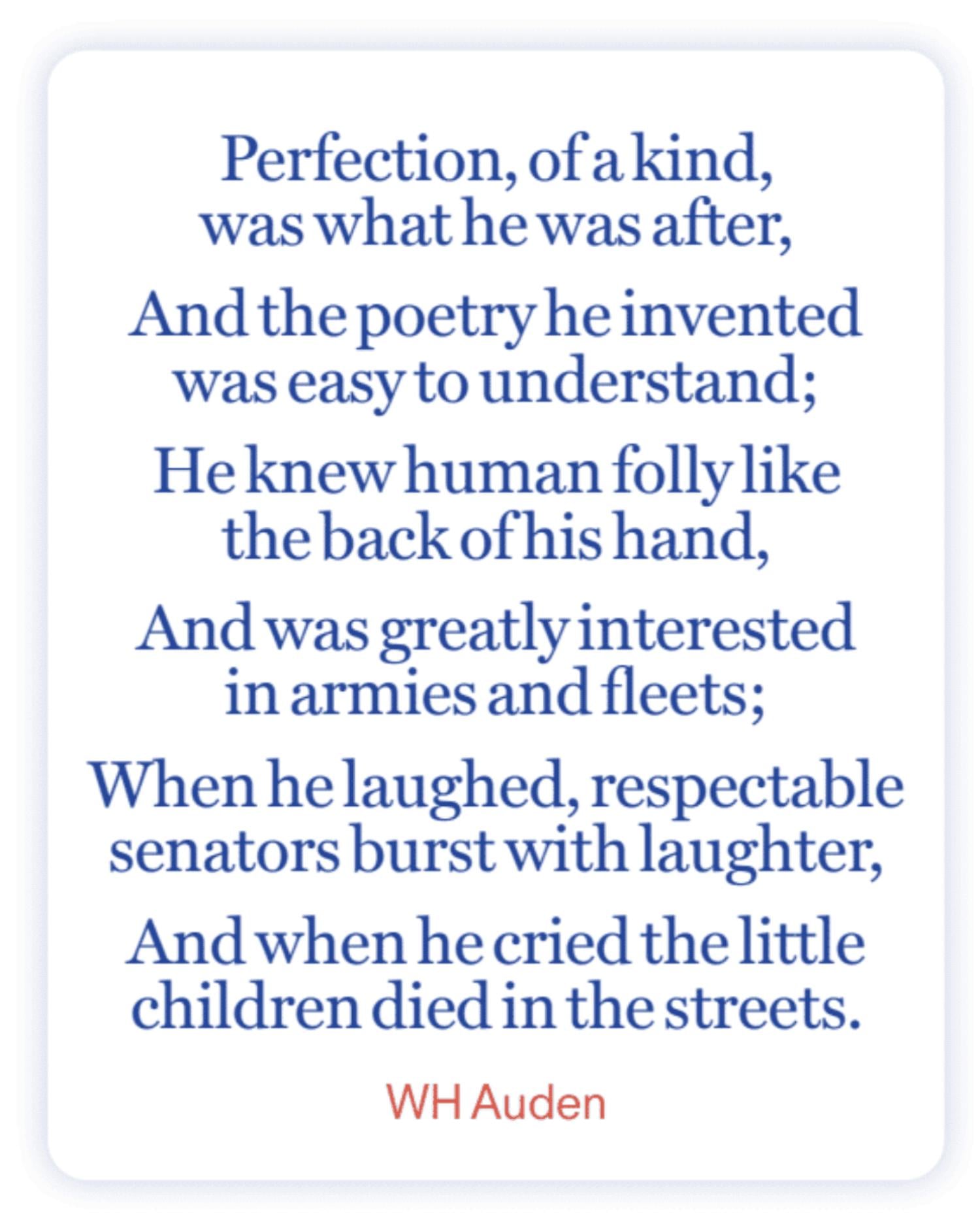
The inclusion of WH Auden’s Epitaph on a Tyrant carried its own resonance recently – and Chernaik makes a point of dating the posters so casual readers might connect the poem to its time
Selections have also been sensitive to context and meaning. Some have quietly acknowledged broader cultural moments – such as Black History Month, marked with expanded leaflets featuring voices from the African diaspora – while others have nodded to collective memory and geopolitics without overt partisanship. The inclusion of WH Auden’s Epitaph on a Tyrant, for example, carried its own resonance recently – and Chernaik makes a point of dating the posters so casual readers might connect the poem to its time.
The approach isn’t without challenge. Very occasionally there have been complaints – one over accusations of blasphemy, another over a medieval poem titled I Have A Gentil Cock.
“This is a very sophisticated city with a very sophisticated population,” Chernaik says. “People don’t take offence that easily..”
When I finished reading it I looked up to see a woman with her teenage daughter also reading it, with tears in her eyes
Chernaik remembers them with a lightness belying the project’s seriousness. Nearly all responses, she says, are positive: letters telling of consolation found in lines read en route to a difficult day, or debates sparked among strangers who paused mid-commute to exchange interpretations.
Ask Tube users what they make of the project and the answers are as diverse as the poems themselves. For Glen, 44, the poetry “removes me from my commute. I’m reading and re-reading it, trying to make sense of it. If I see certain publishers, it sparks off London memories from when I was a kid and exploring poetry books in libraries and having my mind blown. Having poetry in a public space transports us, even if we don’t understand it.”
Katie, 27, says the presence of poems feels like a reminder “that not everything is AI and marketing”.
Malaika, 25, says she once saw a poem about a woman’s love for her newborn on her morning journey. “I’m not even a mother but it was so beautiful it was making me tear up,” she says. “When I finished reading it I looked up to see a woman with her teenage daughter also reading it, with tears in her eyes.”
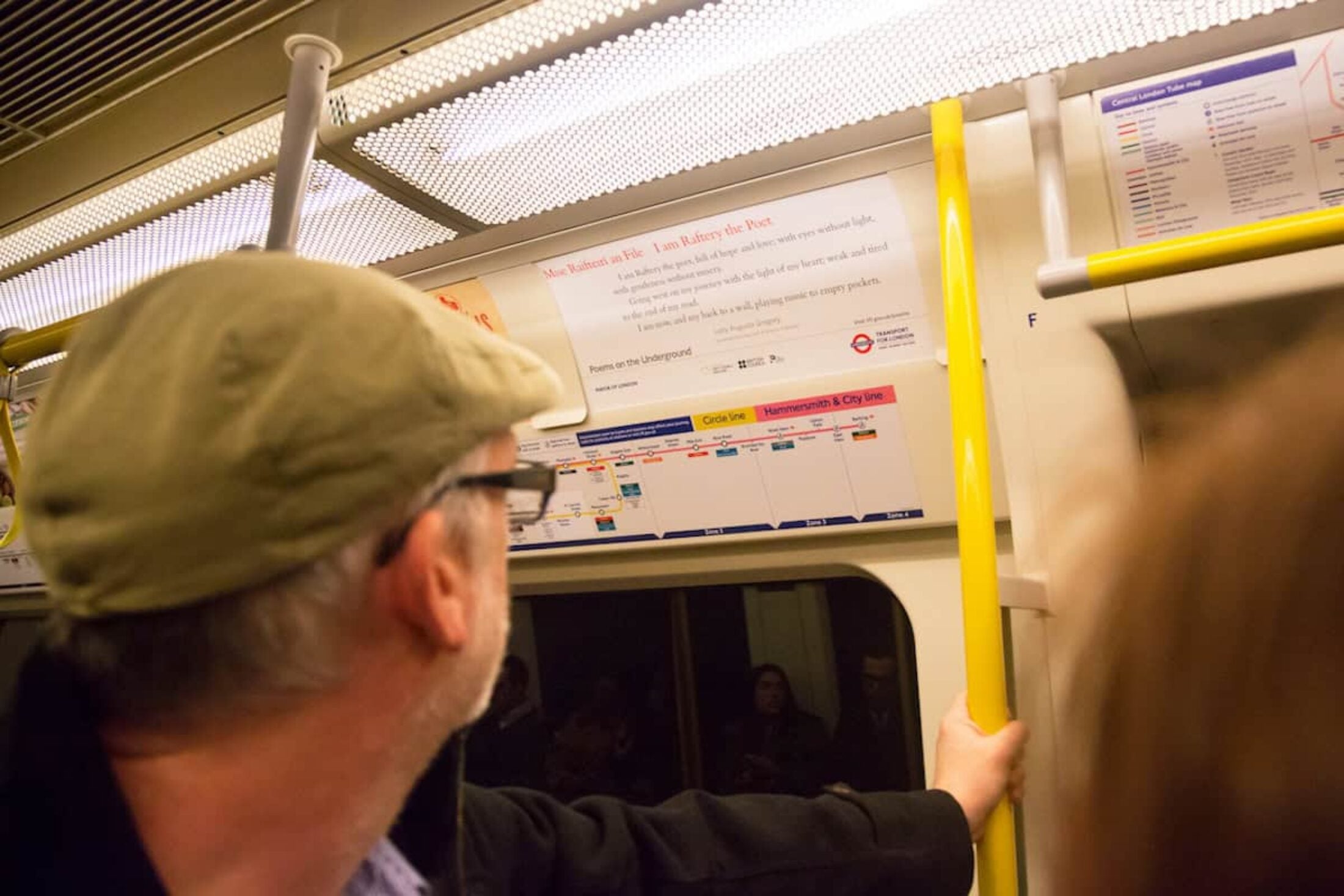
I am Raftery the Poet, part of the Poems on the Underground campaign, April 2015
Today the project has inspired similar public art initiatives around the world – from Dublin to New York to Shanghai – but its greatest impact is felt in the everyday journeys of Londoners. Though the Underground is still beset by delays, overcrowding and daily grind, a few lines of poetry can prompt riders to look up, think, feel and connect.
This January the scheme marked its 40th year with a special anthology and event at Bank Station. For Chernaik, who never imagined this idea would “take over her life” in the way it has, the future of these poems still feels open. She hopes another will take up the mantle and keep the poems alive long after her own tenure.
Late last year, the scheme did receive some criticism from Reform UK and Conservative members of the London Assembly, who were quoted as calling the £72,000 TfL spend on the project “a waste of money”. But the project, which is currently funded by a combination of support from the Arts Council, TfL and the British Council, will remain available to all those travelling on the Underground. They are, as one supporter wrote to Chernaik, “a shaft of light in the darkness. They must continue.
Images: TFL
Be part of the solution
At Positive News, we’re not chasing clicks or profits for media moguls – we’re here to serve you and have a positive social impact. We can’t do this unless enough people like you choose to support our journalism.
Give once from just £1, or join 1,800+ others who contribute an average of £3 or more per month. Together, we can build a healthier form of media – one that focuses on solutions, progress and possibilities, and empowers people to create positive change.