Currently hitting headlines for being the sovereign state to which Greenland belongs, it's also the birthplace of Lego and Hans Christian Andersen. Play is in this country's DNA, making it ideal for a family getaway
Children here don’t reach for devices – they reach for bricks. At Lego House in Billund, Denmark, my three-year-old kneels in front of a tumbling rainbow waterfall of blocks, fully absorbed in the creation of a Duplo mansion. Nearby, my six-year-old works on a Lego electric vehicle charging station, calm and content, focusing intently.
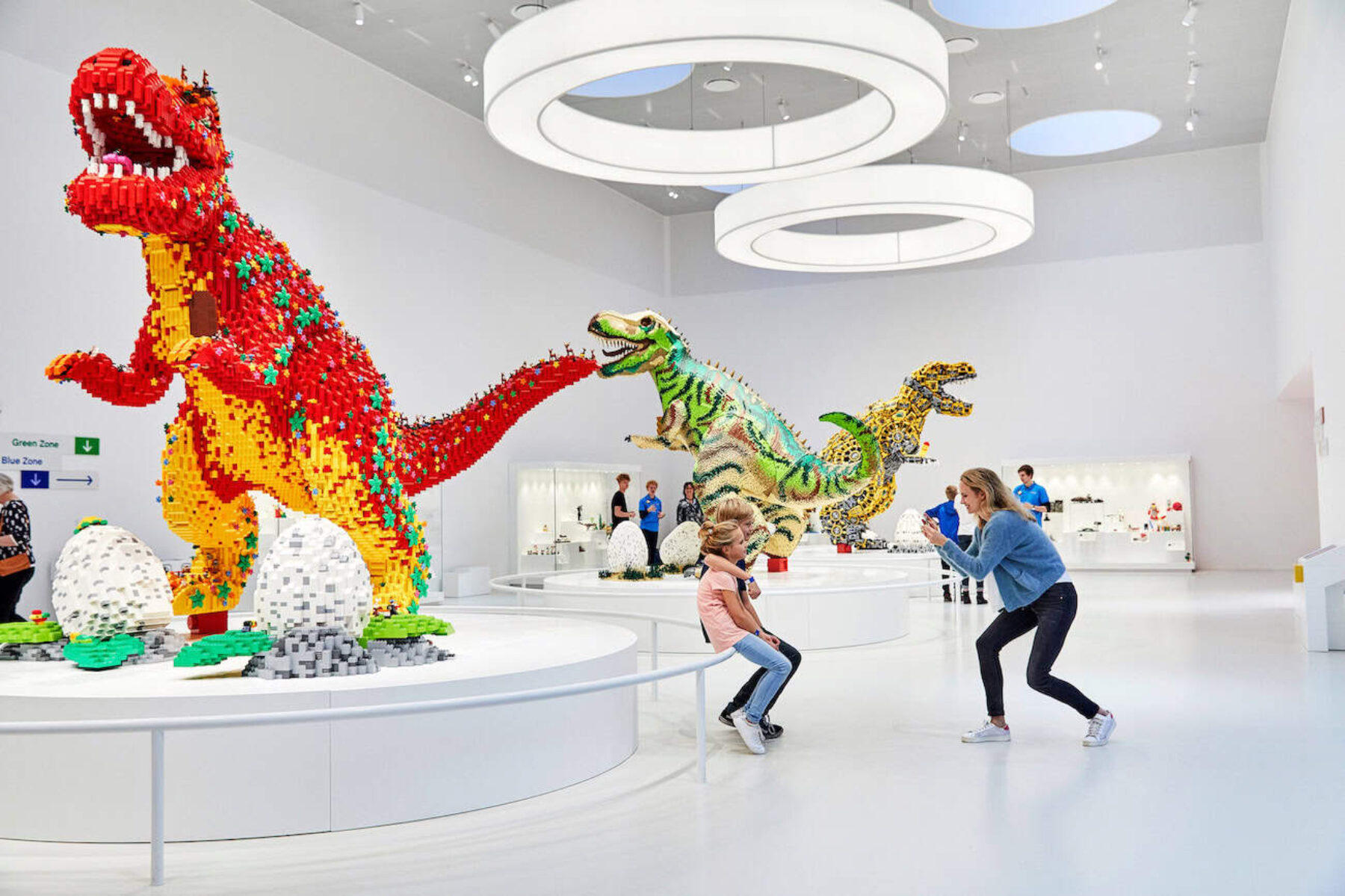
Lego House – a stone’s throw from the bustling Legoland theme park resort – is a sprawling temple to play. Part museum, part playground, it’s filled with 25m bricks and hands-on building zones that are designed for kids and adults alike. You can create and test Lego vehicles on ramps and tracks, make Lego flowers and ‘plant’ them into a shared creation garden. You can even order your lunch via mini Lego models that get scanned at your table; the meals arrive down a spiralling turquoise conveyor belt, presented by Robert and Roberta the robots. The building’s striking stacked-block structure and crisp white walls are designed to make the world-famous bricks stand out to maximum eye-popping effect.
In this room at least, there are no screens, no notifications, just the delicate rattle of pieces, and quiet concentration. In a world where our indoor environments are dominated by devices, it strikes me as unusual, even radical. And, as Denmark announces plans to restrict children’s access to social media, the country’s experiments with unplugged play – from Lego bricks to fairy tales – feel more urgent, and complex, than ever.

Since the company was founded in 1932, just metres away from where Lego House sits today, Lego has rooted its ethos in the concept of det gode leg – ‘good play’ – the idea that children learn best when they’re free to follow their curiosity, test ideas and make mistakes. The name Lego is itself clipped from the Danish leg godt, ‘play well’.
As we drive through the Jutland peninsula and on to the island of Funen, I’m reminded that this is a country where play is considered a tool for resilience. Imagination is almost a national virtue. Forest kindergartens, where Danish children spend their days climbing trees and building shelters, sit alongside degree-trained pædagoger, who specialise in nurturing curiosity rather than drilling phonics.
There are play-focused after-school clubs, maker-space libraries that offer everything from prototyping labs to woodworking and welding workshops, and a workplace culture that appears, at least, to put hygge and imagination on a par with productivity.
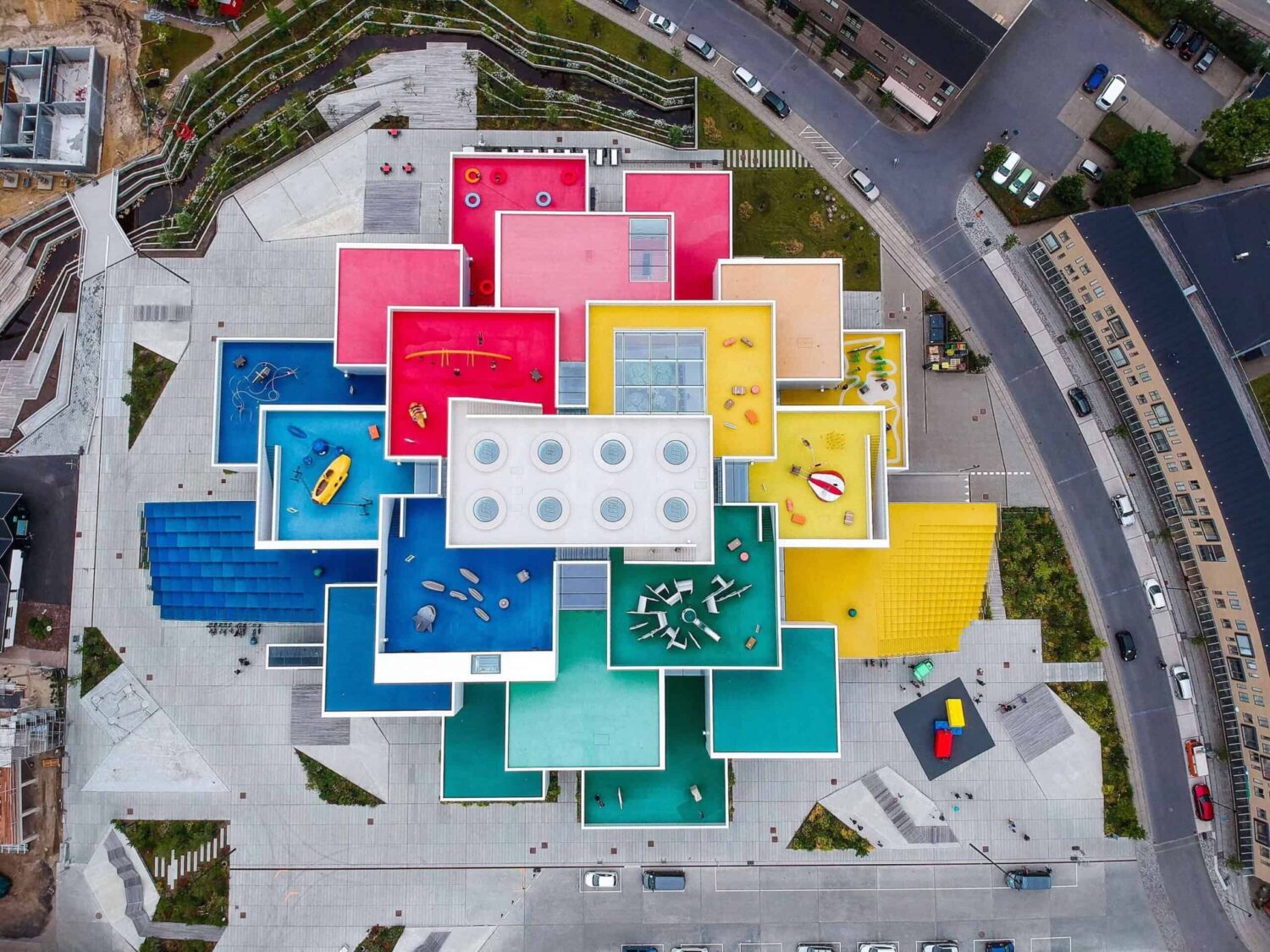
Lego House in Billund, Denmark, is part museum and part interactive playground. Image: Lego House
Even the national curriculum leans into this ethos, legally embedding play and experimentation as the foundation of early learning. It all adds up to a quiet assertion that imagination is something worth protecting.
Prof Helle Marie Skovbjerg, an expert on play and childhood at Design School Kolding, is among those exploring this national obsession. Genuine play, Skovbjerg says, must be allowed to unfold freely on its own terms, rather than as a tool for learning or even, shudder, preparing kids for a future jobs market. Play, she insists, is a “state of being” – a mood that opens us up to others and to new meaning.
So what can we learn from the ‘homeland of play’? Is this just quaint nostalgia packaged up to the tune, in Lego’s case, of profits of £1.6bn in 2024? Or could it be a deliberate counter-model to screen-saturated childhoods elsewhere?
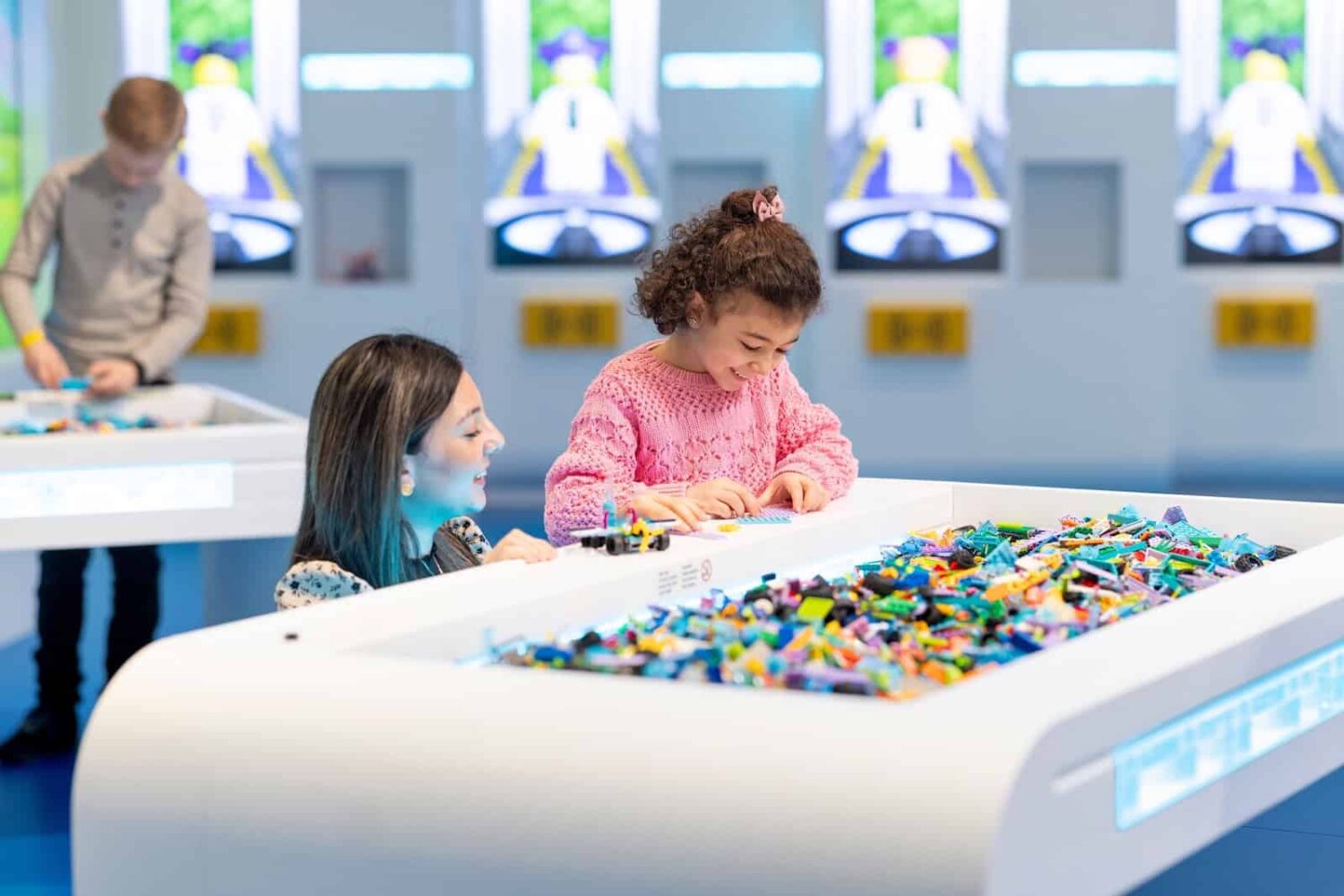
Lego has rooted its ethos in the concept of det gode leg – ‘good play’ – the idea that children learn best when they’re free to follow their curiosity, test ideas and make mistakes
Someone who didn’t have to compete with the pull of screens in his time was Hans Christian Andersen, author of classic fairy tales including The Little Mermaid, The Princess and the Pea and The Snow Queen. Andersen was born into poverty in the city of Odense, but while he lacked in material terms, his imagination ran in wild and inexhaustible supply. A poor boy overcoming trials and tribulations to become world-famous, his biography is like a fairy tale in itself.
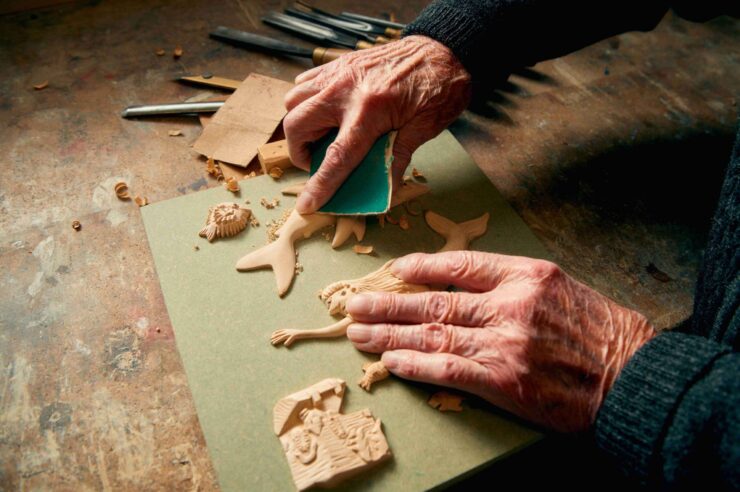
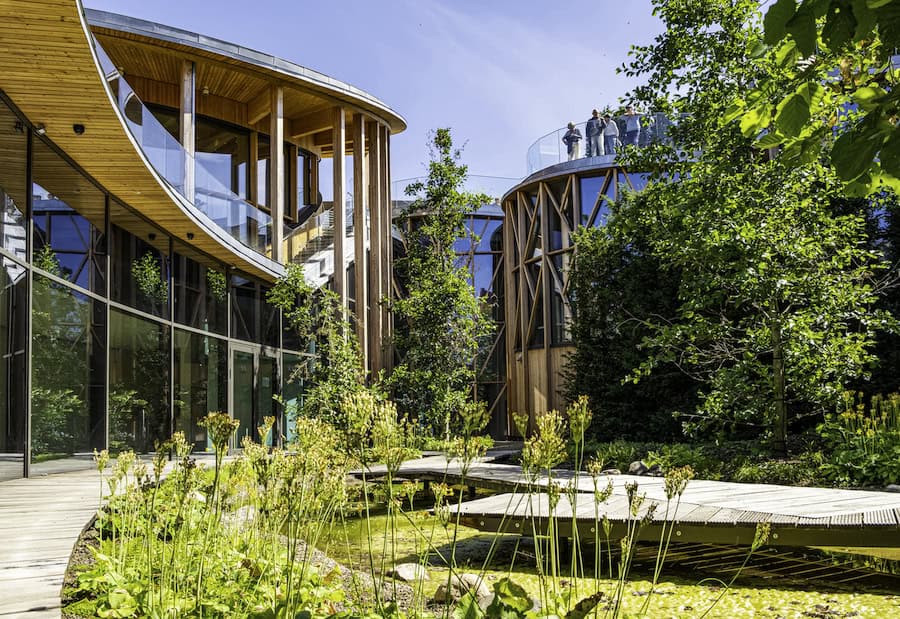
As well as his experimental, boundary-pushing writing style – childlike wonder meets surreal dread, surface-sweet, often sharp underneath – Andersen also drew and made papercuts and picture books. His weird and wonderful world is conjured up beautifully at Hans Christian Andersen’s House, a museum designed by Japanese architects Kengo Kuma and Associates, which opened in Odense in 2021. Here, you can summon the swans from The Ugly Duckling with a wave of your arms, use a special mirror to ‘try on’ ornate kimonos and enter the garden of giants, where even the tallest guest can feel as tiny as Thumbelina.
This is a country where play is considered a tool for resilience. Imagination is almost a national virtue
His life and work are woven together in a magically trippy way. As Henrik Lübker from the museum puts it: “H.C. Andersen’s House does not talk about H.C. Andersen – it speaks as H.C. Andersen.”
But for families, the standout feature of this most un-museum-like museum is Ville Vau in the basement. The name of this make-believe land, taken from one of Andersen’s children’s song books, has no literal meaning, but to borrow a famous Danish slogan, it’s probably the best make-believe centre in the world.
There are multiple zones, including a little town with shop fronts, a palace and a horse-drawn carriage. Huge tactile fabric pebbles sit alongside brimming baskets of pretend food and racks and racks of gleaming dress-up outfits, headwear and jewellery. It’s less ‘Look but don’t touch’ and more ‘Look and touch everything and dive with total imaginative abandon into your own stories and games until your parents literally drag you out at closing time’.
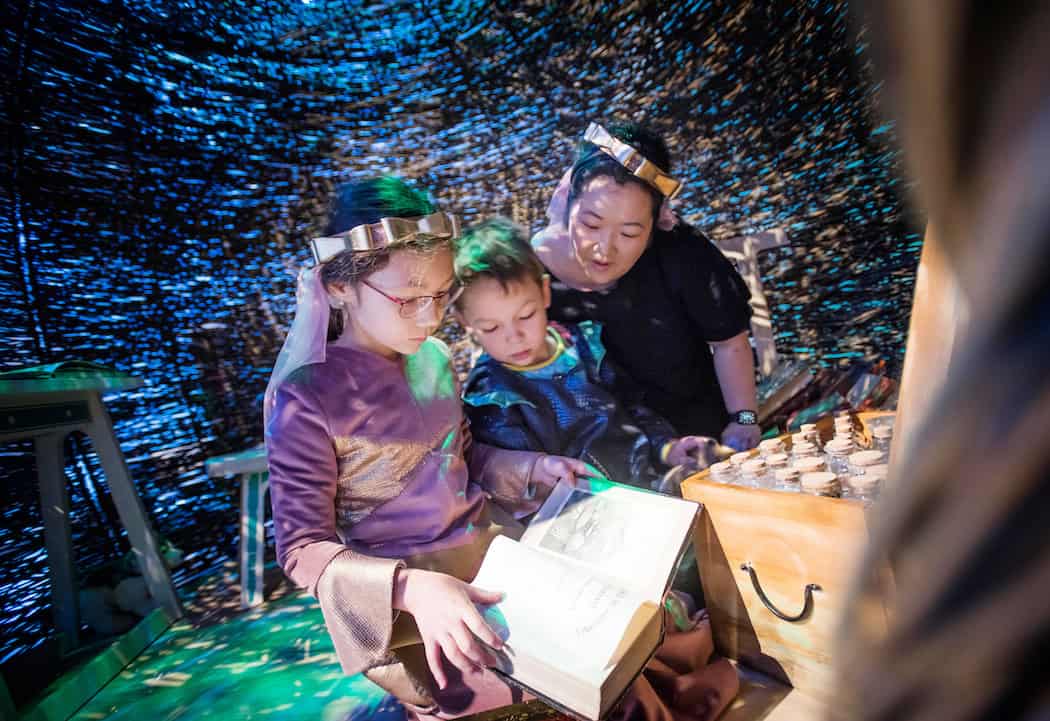
The space is dimly lit, which makes it feel mysterious and a little bit thrilling, everything is unapologetically child-height and best of all, created to top-tier theatrical production-level quality. You won’t find any shoddy polyester Disney princess costumes here, more like embroidered linen polka dot tunics in multiple size options and painstakingly crocheted Danish pastries in the make-believe bakery. My children are in heaven.
“It often feels to me as if every fence, every little flower says, ‘take a look at me, and my story will unfold within you,’” wrote Andersen. Aside from being amid mud, stones and sticks in nature, this is one of the spaces I’ve been in with my children where that sense of creative stimulation and flow has felt most alive. As if the stories themselves are pressing to be discovered.
We travel on to the city of Vejle, where the graceful curls of the Bølgen apartment complex rise like liquid waves against the fjord. The kids haven’t watched (or asked for) any TV all week and their dad and I have been reaching for our phones less too. I’m thinking about how hollow the ready-made narratives offered by screens can feel. On the opposite end of the scale, I’m reminded about how my partner manages to summon up some fantastical, obscure characters from the depths of his tired brain at bedtime, rewarded by the rich closeness of a shared story.
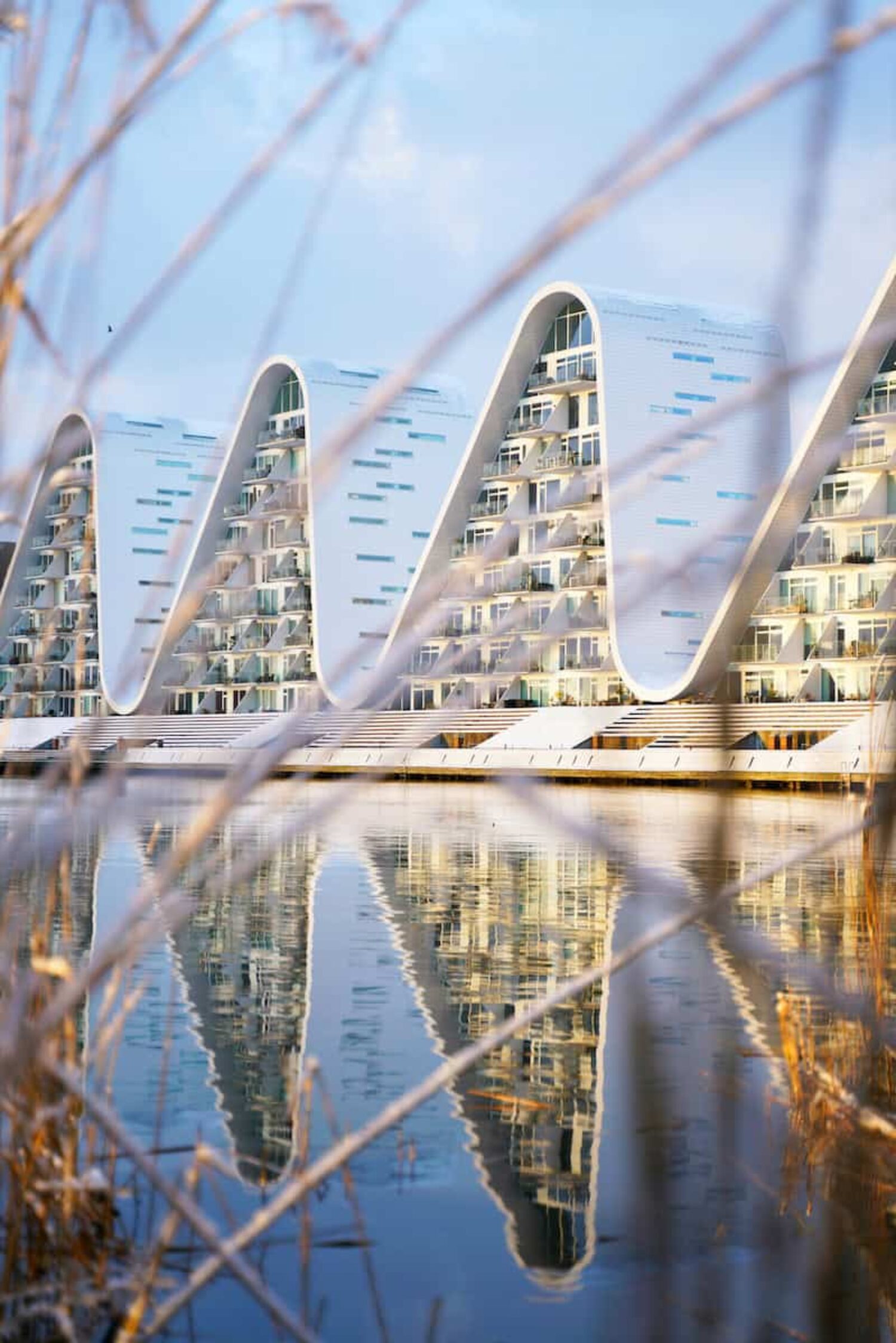
Waves etched in concrete – the Bølgen complex in Vejle rises over the fjord. Image: Morten Elsborg
I’m grateful for Denmark’s reminders to take time to create alongside, or with, our children.
Neuroscientist Ruth Feldman published research in 2012 about how coordinated play between parent and a child releases oxytocin simultaneously in both. Her work showed that music, art and other tactile activities trigger this faster than verbal affirmation – helping to explain why creative sessions can shift a child’s mood quicker than lectures or advice. Their nervous system literally feels a sense of safety through creation. On the other hand, what does it say to their neural networks if we’re constantly clutching our phones? That danger could strike at any moment, we ‘might’ need to be ready.
You may well be sceptical about Denmark’s utopian promises. After all, the country has recently made headlines over immigration debates, housing shortages and tax controversies to mention a few, but some people here seem to understand the slow, quiet work that’s needed to create stories.
It’s making me think that imagination isn’t a luxury but a skill nurtured slowly, in playful moments: tinkering with bricks, in a fleeting fairytale corner of a museum. Perhaps we don’t need a Danish blueprint to reclaim it – just permission to let curiosity lead, to follow ideas wherever they tumble, and to remember that the most magical inventions often start with nothing more than a child kneeling on the floor, lost in play.
Unplugged inspiration: three more Danish detours to fire up your imagination
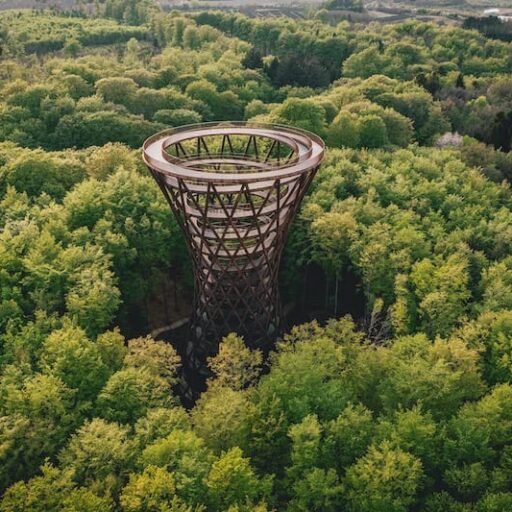
A slow-rising spiral through the treetops of the Gisselfeld Castle’s forest, the Forest Tower turns a simple walk into a theatrical ascent. As visitors circle higher, the canopy thins and the structure’s form becomes more apparent, the architecture interacting with its surroundings. This is Danish creative problem-solving in practice: using design to frame nature in new ways and encourage visitors to notice familiar environments differently.
Image: Mads Tolstrup

Restaurant Remouladen serves Danish open sandwiches (smørrebrød) and simple mains built around traditional local ingredients. Recent dishes include yuzu-marinated herring on malt rye with daikon and grilled spidskål (pointed cabbage) with poached egg, cashew hummus and mixed greens. The kitchen captures how Danish cooking can evolve without losing its roots.
Image: Remouladen
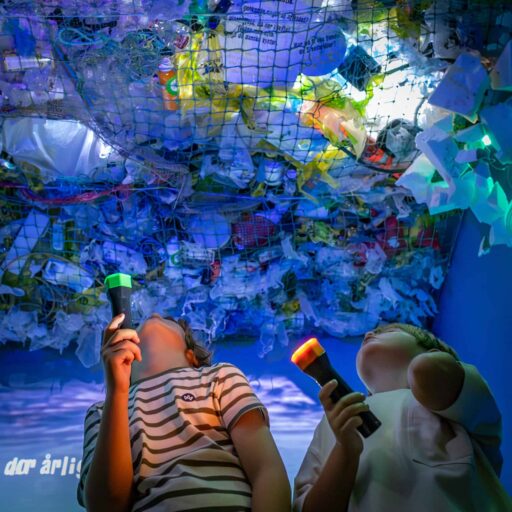
In Vejle, Økolariet is a hands-on sustainability centre where visitors can experiment and explore environmental issues in playful, unexpected ways. Generate energy with mini wind turbines, test water quality with simple kits, or watch food waste turn into compost. Økolariet makes climate action tangible and immediate, showing that learning can come from doing, not lecturing.
Image: Økolariet
Main image: Lego House
Travel to and from Denmark, accommodation, attraction entry fees and meals were partly covered by VisitDenmark
Support solutions in 2026
At Positive News, we’re not chasing clicks or profits for media moguls – we’re here to serve you and have a positive social impact. We can’t do this unless enough people like you choose to support our journalism.
Give once from just £1, or join 1,800+ others who contribute an average of £3 or more per month. Together, we can build a healthier form of media – one that focuses on solutions, progress and possibilities, and empowers people to create positive change.