Workers got a rights boost in the UK, global EV sales hit the fast lane, and Europe’s night train revival gathered pace, plus more good news
This week’s good news roundup

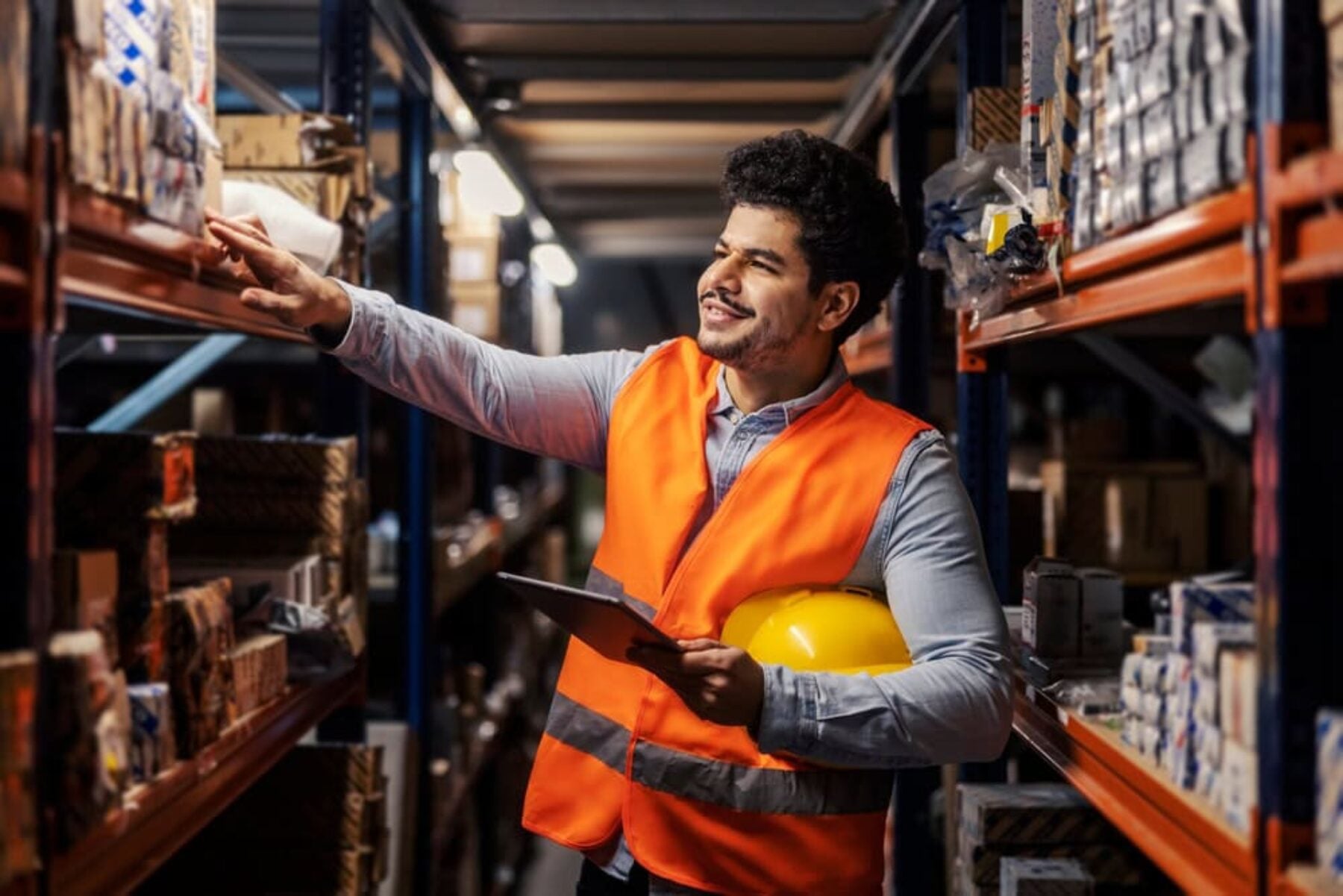
Landmark employment laws passed the UK’s House of Lords this week, heralding what Unison – a union representing public sector employees – hailed as “a bright new era for workers’ rights in Britain”.
The Employment Rights Bill is set to be enshrined in law within days. Measures include curbs on exploitative zero hours contracts, day-one sick pay and better protections for new mothers and expectant women. They will apply to England, Scotland and Wales. Northern Ireland is pondering similar legislation.
“This is going to change working lives for the better. Every employee will now be able to enjoy the rights that only those working for good employers previously enjoyed,” said Unison general secretary Christina McAnea. “There were times when it felt like we’d never get here. But the bill has now finally become an act and workers at last have something to celebrate.”
The UK prime minister Sir Keir Starmer said the bill was the “biggest upgrade to workers’ rights in a generation”. The opposition Conservative party said that it would heap more costs on businesses and suppress an already weakening labour market.
Image: John Fornander

Medical provision is improving globally and most countries are reducing the financial toll of healthcare costs, according to fresh research by the World Health Organization (WHO).
The two indicators are seen as the foundation of Universal Health Coverage (UHC), a global pledge that everyone, everywhere, can access help without financial hardship by the next decade.
The WHO’s UHC Global Monitoring Report found that better sanitation and inclusive economic growth have supported the gains. It means that the share of people struggling financially due to health payments has fallen from 34% to 26% since 2000.
Meanwhile, health service coverage, measured by the ‘service coverage index’, is up 17 points to 71.
The WHO cautioned that there is still much work to be done, however, as 4.6 billion people worldwide still lack essential health services. “Now is the time for countries to invest in their health systems, to protect the health of their people and economies,” said director general Dr Tedros Adhanom Ghebreyesus.
Image: Zhanjiang Chen
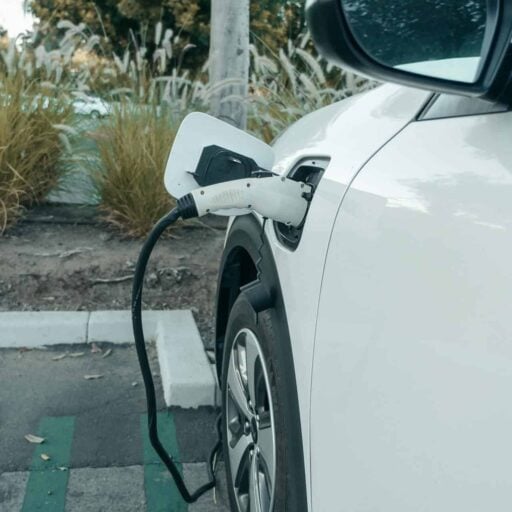
The global electric vehicle (EV) market shifted up a gear in 2025, according to energy think tank Ember, which has revealed that a quarter of cars sold this year were electric.
Much of the growth has been driven by EV uptake in emerging markets where, until recently, adoption has been slow off the mark. Ember said that its analysis shows that “the EV race has truly gone worldwide.”
In Singapore and Vietnam, EVs made up 40% of sales, surpassing the EU and the UK. Indonesia overtook the US for the first time this year, with EVs cornering a 15% market share. Meanwhile Thailand sold more EVs than Denmark in the first quarter of 2025, reaching a 20% share.
Ember is also reporting gains in south and central America. Uruguay, for example, is on a par with the EU at 27%.
“In 2025, the centre of gravity has moved,” said Ember’s electricity and data analyst, Euan Graham. “Emerging markets are no longer catching up, they are leading the shift to electric mobility.”
Image: Kindel Media

People in the UK overwhelmingly support artists demanding action to protect their work from AI bots.
That’s according to a government consultation on AI policy proposals, which revealed that 88% of the 11,500 respondents wanted tougher copyright laws, while just 7% were happy with the existing legislation. A paltry 3% backed the government’s preferred proposal – an ‘opt out’ scheme which would place the onus on artists to refuse AIs access to their work.
The consultation comes off the back of a campaign by creatives, including showbiz luminaries such as Elton John and Paul McCartney, to prevent AIs from mining their work.
The UK government has yet to decide on next steps – the government has promised proposals by mid-March. Performing arts trade union Equity said the consultation was a “vindication for the creative industries” and called on ministers to follow the public’s lead.
Equity general secretary Paul W Fleming commented: “With 95% backing strengthening or maintaining copyright protections, there is clear consensus on the need for protections. The government’s preferred option for a data mining exemption must be dead in the water.”
Image: Elizeu Dias

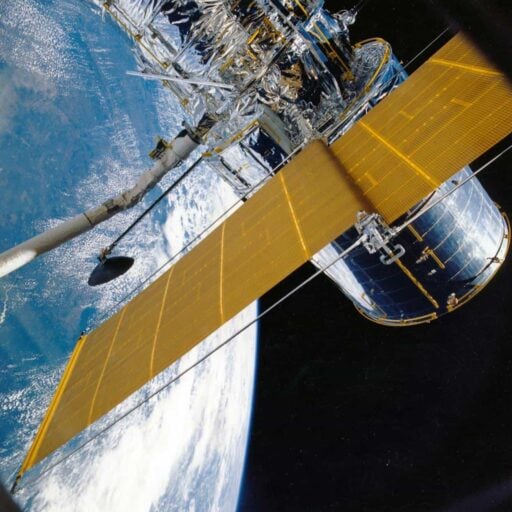
New satellite data is pinpointing emissions hotspots for methane, the second-largest contributor to climate change after CO2.
The potent greenhouse gas is responsible for around 30% of the rise in global temperatures since the industrial revolution, but garners relatively little attention compared to carbon.
Now, data from a 14-strong constellation of private satellites operated by Canadian space firm GHGSat has been used to evaluate emissions from major global sources for the first time.
GHGSat collaborated with the non-profit Carbon Mapper and Space Research Organisation Netherlands on the landmark study, which identified thousands of individual oil, gas and coal sites that are releasing the gas. Previous estimates on methane emissions have been based either on broad industry activity, or on atmospheric measurements which fail to locate specific sources.
But GHGSat’s eyes in the sky were able to detect methane plumes from individual fossil fuel facilities. Researchers estimate that the 3,114 sites they identified belched up to 8.54m tonnes of methane in 2023.
“This information will be useful to improve understanding and predictions of methane emissions, and, therefore, provide information that is useful to direct mitigation efforts,” GHGSat’s Dylan Jervis told Space.com.
Image: Pixabay

Thousands of names flagged by Microsoft dictionaries as likely typos are now recognised by the tech giant’s databases following a spirited inclusivity campaign.
The I Am Not a Typo (IANAT) initiative called on tech firms to update their dictionaries to reflect multicultural Britain.
Positive News reported on the campaign way back in March 2024. It launched following the discovery that as many as 41% of names given to children in England and Wales were being flagged by Microsoft’s UK English spell-checkers.
Organisers said this week that they had worked alongside the firm to develop updates for its desktop apps. It means that thousands of names, including many from African, Asian, Welsh and Irish origin, will no longer be slapped with the angry red squiggle which denotes a spelling error.
IANAT spokesperson Cathal Wogan said he hoped other platforms would follow Microsoft’s lead.
“Technology shapes how we see ourselves and each other,” he said. “For too long, our devices have been telling people – especially those from underrepresented communities – that they don’t belong, or they or their identities are invalid in some way. This update from Microsoft… proves that when we work together positive change is possible.”
Image: Ninthgrid

Lawmakers in Poland have banned fur farming, drawing down the curtain on an industry which ranks second only to China’s in size.
The reforms won cross-party approval in the Polish parliament last month, and president Karol Nawrocki has now signed them into law.
The legislation outlaws new fur farms, and Poland’s existing 200 farms have until January 2034 to cease trading. Many are expected to close sooner, cashing in on a compensation offer open only for the next five years. It makes Poland the 18th EU nation to outlaw fur farming, further isolating the remainders, which include Finland, Denmark, Spain, Hungary and Greece.
The measures come after the charity, Humane World for Animals (HWA), submitted a 76,000-strong petition to Nawrocki. Across Europe, 1.5 million have signed a further petition calling for an EU-wide ban. The European Commission plans to respond in March.
HWA Poland director Iga Głażewska-Bromant said the move was a “historic moment for animal protection in Poland.”
“We hope this will be a crucial catalyst for change as the European Commission considers the case for banning fur farming EU-wide,” she added.
Image: Peter Trimming

Oysters are thriving once more in a Scottish estuary after a 100-year absence.
The Firth of Forth was once home to an oyster bed the size of Edinburgh, but overfishing and pollution drove them to local extinction in the 1900s.
Since 2023, some 46,000 European flat oysters have been scattered across four sites in the river, aided by a 1,500-strong army of volunteers. The effort is part of the Restoration Forth project, which besides oyster beds aims to revive seagrass habitats. Monitoring by Heriot-Watt University shows an 88% survival rate for the molluscs.
Dr Naomi Kennon, from Heriot-Watt’s school of energy, geoscience, infrastructure and society, described the creatures as ecosystem engineers, filtering water, and locking away carbon in their shells.
“They also enhance biodiversity, providing an intricate reef matrix for other creatures,” she told Positive News. “A mature oyster bed can double biodiversity in a decade. It’s really exciting to see them growing so well.
“This is something that we as the Firth of Forth community can all benefit from, and I think that’s why we’ve had such an amazing response from local volunteers. They see how much it could improve life here for everyone.”
Image: Ben Stern
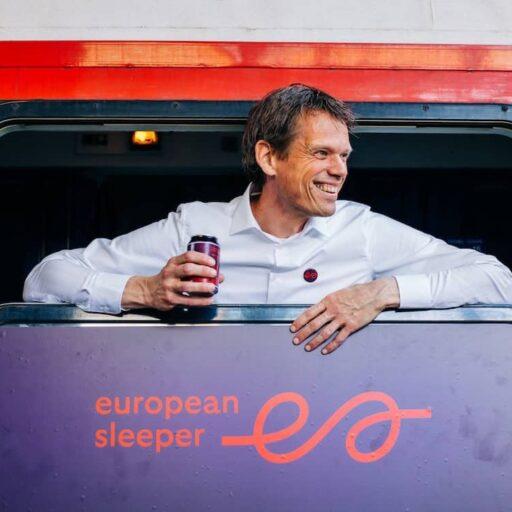
Night train travel in Europe is getting yet another boost, with a new route linking Amsterdam and Brussels with Milan slated for summer 2026.
European Sleeper, a 100% community-owned Dutch-Belgian railway firm, is already on track to launch its Paris-Berlin route in March.
The company hopes the Milan service, running three times a week, will start in June. Tickets are expected to go on sale early in the new year.
“After Paris–Berlin, this new night train to Switzerland and Milan is our next step in building a real north–south backbone for travellers in Europe, city centre to city centre, while you sleep,” said European Sleeper’s co-founder Chris Engelsman. “As a community-owned cooperative, we’re proud to make it easier to reach places … with a comfortable, low-impact alternative to short-haul flying.”
The route follows Switzerland’s historic Simplon line before crossing into northern Italy, offering views along the way of alpine valleys, with stops in Cologne, Bern, Brig and Stresa on the shores of Lago Maggiore.
European Sleeper has steadily expanded since its launch in 2023, responding to growing demand for international rail travel. The company currently connects Brussels, Amsterdam, Berlin, Dresden and Prague, and has carried almost a quarter of a million passengers to date.
Image: European Sleeper

Abandoned oil refineries in the UK and US are emerging as unlikely wildlife havens, as Positive News reported this week.
In the West Coyote Hills, near Fullerton, California, a former oil field owned by Chevron has regenerated into coastal sage scrub and is now alive with threatened bird species, wildflowers and amphibians.
Meanwhile at Canvey Wick in Essex in southern England, a once barren industrial wasteland has been transformed into a brownfield oasis.
The area had been earmarked for a refinery project and was plastered in asphalt in the 1970s. Since the project was shelved in the oil crisis, Canvey Wick has become a mosaic of flower-rich grassland, home to rare insects including the shrill carder bee.
Read more here.
Image: Carlos Moral Reis
Main image: Dusan Petkovik
Look our for our annual digest of the good news that mattered, ’What went right 2025’, to be published next Tuesday. The weekly column will return on 9 January.
Get your weekly fix of good news delivered to your inbox every Saturday, by signing up to the Positive News email newsletter
Be part of the solution
At Positive News, we’re not chasing clicks or profits for media moguls – we’re here to serve you and have a positive social impact. We can’t do this unless enough people like you choose to support our journalism.
Give once from just £1, or join 1,800+ others who contribute an average of £3 or more per month. Together, we can build a healthier form of media – one that focuses on solutions, progress and possibilities, and empowers people to create positive change.