A pancreatic cancer ‘breakthrough’, a victory for international justice, and Rotterdam’s poetic bin lorries, plus more good news

Experts have hailed “the biggest leap forward for pancreatic cancer in decades” as a breakthrough drug was shown to shrink and even eliminate tumours in some patients.
Pancreatic cancer is the most deadly form of cancer in the UK, with survival rates remaining stubbornly low. After a diagnosis, life expectancy is typically measured in months not years.
That could soon change, however, with the arrival of daraxonrasib, a drug that is taken as a daily pill. It was given alongside chemotherapy to 61 patients with pancreatic cancer in a clinical trial.
The results, published this week, showed that tumours stopped growing in 90% of patients. What has really excited experts, however, is that in 60% of patients tumours shrank, while in 8% they became undetectable on CT scans.
Questions remain, chiefly how long the pill can keep the disease at bay. Further research is planned. Nevertheless, the findings have been hailed as a milestone.
“This is the biggest leap forward we’ve seen in decades for pancreatic cancer patients,” said Cancer Research UK’s chief executive, Michelle Mitchell. “These results raise the exciting possibility that this breakthrough could eventually pave the way for treating other cancers.”
Image: seb ra

Efforts to eradicate HIV in Africa hit a milestone this week with the arrival of a new, low-cost drug to treat the virus.
The first shipments of lenacapavir – shown to be almost 100% effective at preventing HIV infections – arrived in Zambia this week. The drug is taken as a twice-yearly injection. Experts claim it has the potential to transform Africa’s HIV response.
“The arrival of generic lenacapavir is a major breakthrough in our efforts to prevent new HIV infections and accelerate progress toward ending AIDS,” said Peter Sands, executive director of the Global Fund to Fight AIDS, Tuberculosis and Malaria.
“By making this powerful prevention tool more affordable and accessible, we have an unprecedented opportunity to reach millions more people at risk of HIV.”
As a second shipment headed to Uganda, Sands called on African nations to roll out the drug at pace. “This is how we bring the goal of ending AIDS within reach,” he said.
Image: PeopleImages
In a landmark judgement, the International Court of Justice (ICJ) has ruled that countries could be in breach of their duty to prevent genocide – even if the legal threshold for genocide has not been met.
The ruling, considered to be a major legal development, has implications for states providing arms to countries that could be committing genocide. Experts say that it places a new obligation on them to act, even if it’s unclear whether the legal definition of genocide has been met.
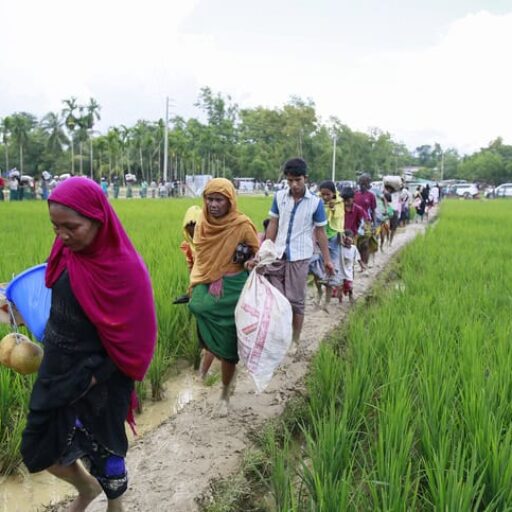
The judgement came out of last week’s ruling by the ICJ, which said that Myanmar had committed genocide against the Rohingya people in 2017. It’s the first time a state has been held responsible for genocide under the 1948 genocide convention.
UN secretary general Antonio Guterres described the ruling as “a demonstration of international justice and a reaffirmation that impunity for such horrific acts must not stand”. Amnesty International said it “represents a major victory for Rohingya survivors, and reinforces findings by UN investigators and human rights organisations”.
It also called on governments to take steps to prevent genocide in Gaza, “where the serious risk has been clear since at least January 2024”.
Image: Suvra Kanti Das

The UK government will introduce a world-first licensing scheme for anyone selling knives in a bid to halve knife crime, it pledged this week.
The policy, announced on Wednesday, will require vendors selling anything from butter knives to machetes to hold a licence, or face fines. The measures are specifically aimed at online sellers.
The government is yet to finalise how the scheme will operate and said that further details will be set out in forthcoming legislation. The move comes as data shows knife crime is falling across the UK, including in London, albeit slowly.
“The government’s proposals to introduce a licensing scheme is a welcome step forward,” said Patrick Green, CEO of the Ben Kinsella Trust, a knife crime prevention charity. “This will address gaps in the current legislation, strengthen accountability across the retail sector, and ensure that rogue sellers can no longer operate unchecked while responsible businesses do the right thing.”
Image: Marco Piunti

Rewilding projects around the world show time and again that if you give nature space it will thrive – and this week came further evidence from England.
A report examining the transformation of two intensive farms on the Isle of Wight reveals that they have become biodiversity hotspots in just five years.
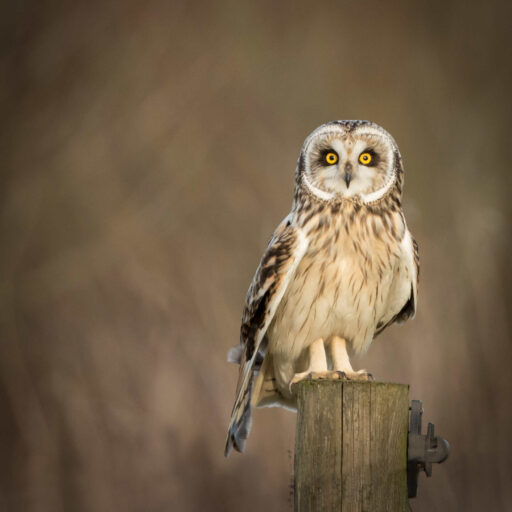
The findings reveal significant gains in both the numbers and variety of wildlife. Bird numbers have almost tripled, it found, while butterflies increased by 117% and bumblebees by 64%. Short-eared owls (pictured) are among the visitors.
The research was conducted by ecologists at the Hampshire & Isle of Wight Wildlife Trust, which has helped transform two sites on the island: Wilder Little Duxmore, near Newchurch, and Wilder Nunwell, near Brading.
“One of the biggest highlights has been seeing just how quickly nature can respond when it’s given the opportunity,” said the trust’s Aggie Iveson. “When we started this journey, we hoped we would see positive change, but I don’t think we knew how quickly we would see it.”
Image: fungirlslim
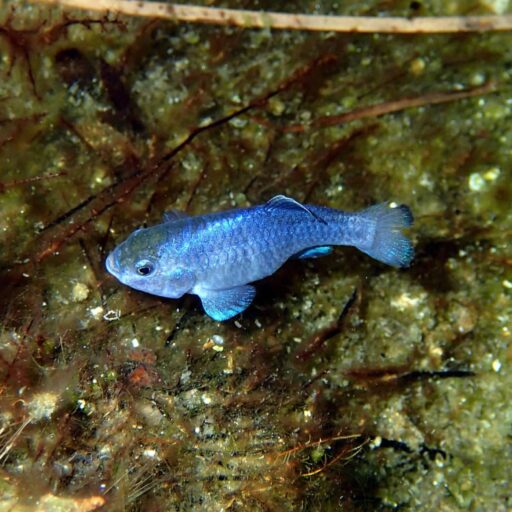
A rare fish that exists against the odds in California’s Death Valley has seen its population double this year, conservationists report.
Named after the water-filled canyon that it lives in, the Devils Hole pupfish is a small species that has inspired a big conservation effort. Disturbed by earthquakes, ecologists boosted the population with captive-bred fish. Their work appears to have had the desired effect: the latest census puts the population at 137, up on the 77 counted in 2025.
“It’s exciting to see Devils Hole pupfish numbers increase so significantly over the past year,” said Death Valley National Park superintendent Mike Reynolds. “These results reflect the dedication of our scientists and conservation partners working to protect this extraordinary species. While challenges remain, we’re encouraged by this progress.”
Image: Steve Howard

London’s cycling revolution has stepped up a gear with data pointing to a record-breaking year for biking in the city.
New figures show that Londoners now make more than 1.6m journeys per day by bike – an increase of 58% compared to 2019. The city had aimed to reach 1.6m journeys daily by 2030, but has hit its target four years early.
Successive London mayors have created more space for cycling in the city, transforming roads and parking into cycle superhighways – much to the ire of motorists. Current mayor Sadiq Khan said the figures prove “the naysayers” wrong.
“London is now a truly world-class cycling city,” he said. “Contrary to what the naysayers would have you believe, this growth shows that if you build high-quality cycling infrastructure people will use it, and the silent majority will be supportive.”
Image: DZarzycka

A “song of hope” written by people touched by terminal illness has been performed for the first time in Wales.
The Sun Will Rise Again was created during a six-week songwriting and poetry project that brought together people living with terminal illness and their loved ones.
The song was performed at the Marie Curie Hospice in Penarth, Cardiff, by a choir of professional singers, patients and families. The project was led by Joe Cavalli-Price, founder of Music in Hospices, which he set up after his mother received hospice care.
Cavalli-Price said the project showed that “regardless of a diagnosis of a terminal illness”, people’s capacity to create should not stop.
Read the full story here.
Image: Rob Norman / Marie Curie
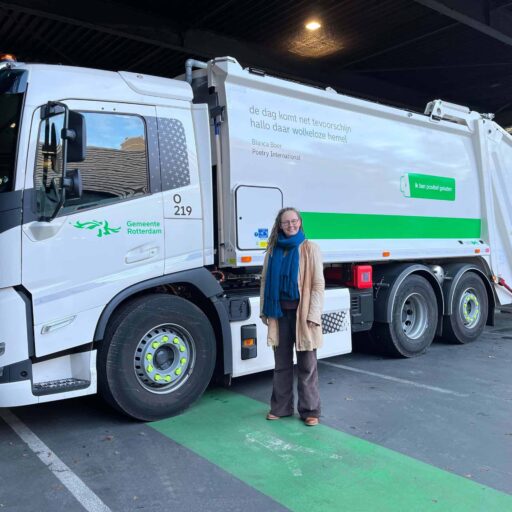
For years, Rotterdam’s bin lorries have whizzed around the city carrying lines of poetry on their paintwork – a lyrical tradition that has now been added to the Dutch inventory of intangible cultural heritage.
“If you are in Rotterdam and a garbage truck goes past you it just brightens up your day,” the Dutch poet Bianca Boer (pictured) told Positive News.
Boer has just had lines from one of her poems printed on the side of a new electric bin lorry. “I always wanted my own garbage truck – and now I have one,” she said.
Putting poetry on bin lorries has been a Rotterdam tradition since 1988, when a local poetry festival came up with the idea. The custom has now been added to the Dutch list of intangible cultural heritage, which guards the nation’s traditions.
“Every year there’s an international poetry festival with all these amazing poets from around the world,” said Boer. “They come, give us their poetry and leave, but on these trucks they stay in our city a bit. It’s amazing.”
Image: Gavin Haines
Main image: Ridofranz
Because the world needs it
Positive News reports on the people and ideas driving progress. We believe that giving attention to solutions helps them spread.
Our journalism is independent and powered by our readers. There are no media moguls or shareholders extracting profits: your contribution funds our work to investigate what’s working, understand why, and bring those stories to a wider audience.
If you value a fuller picture of what’s happening in the world, please become a Positive News supporter today.