Blind people were able to read again, Ireland kept its basic income for artists, and life returned to a liberated US river, plus more good news
This week’s good news roundup
In a medical breakthrough that sounds like the stuff of science fiction, blind people have been able to read again thanks to a revolutionary eye implant.
The microchip was inserted under the retinas of 38 blind people as part of a landmark global study, the results of which were published this week. All those taking part had untreatable age-related macular degeneration, which is the leading cause of blindness for over-50s and affects some five million people worldwide. For 84% of participants, the device enabled them to see again.
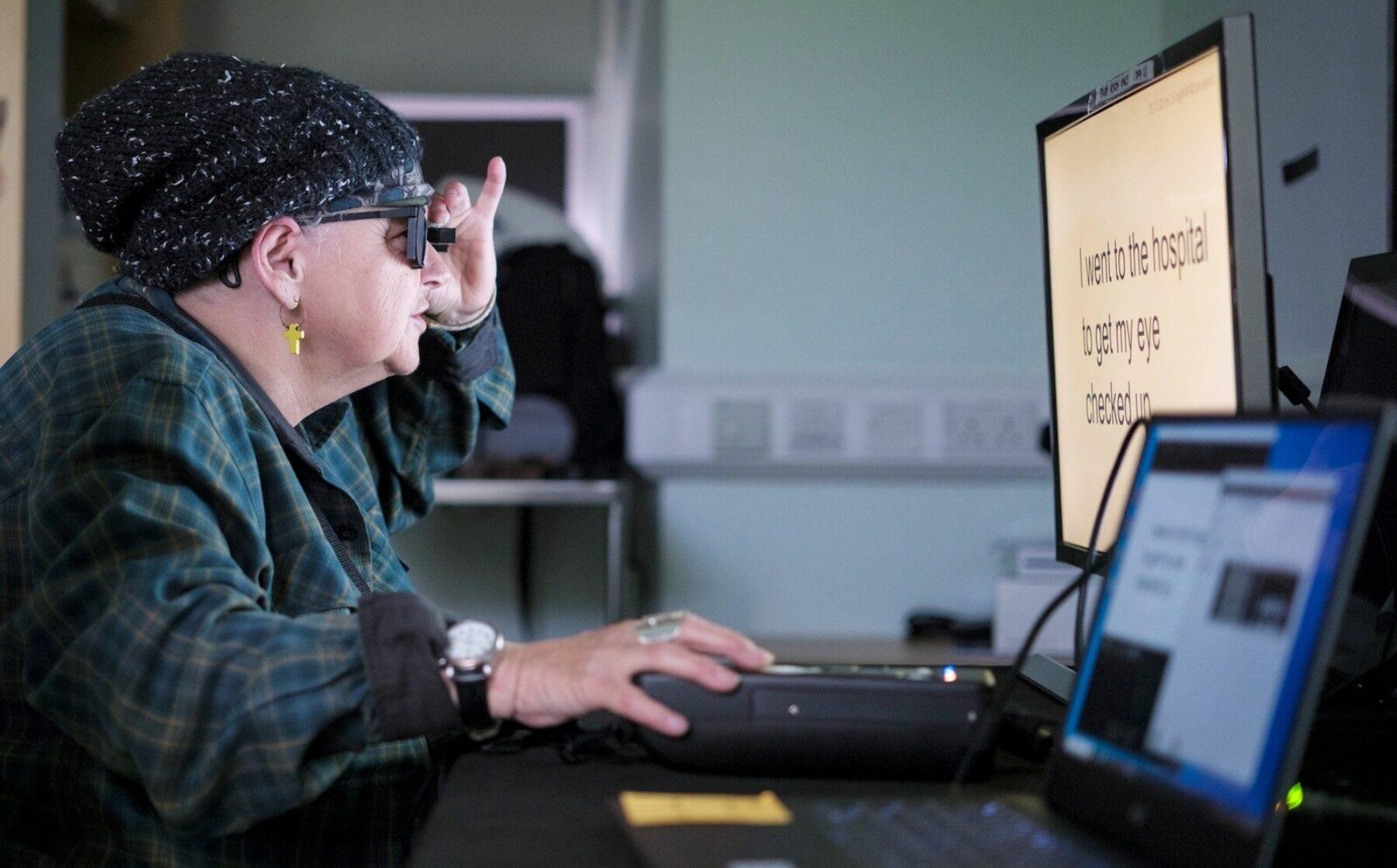
“I was an avid bookworm, and I wanted that back,” said Sheila Irvine (main image), who took part in the multi-country trial at London’s Moorfields Eye Hospital. “It was dead exciting when I began seeing a letter. It’s not simple, learning to read again, but the more hours I put in, the more I pick up. It’s made a big difference. Reading takes you into another world, I’m definitely more optimistic now.”
Designed by US-based Science Corporation, the chip is paired with a set of video recording glasses, which transmit live footage to a pocket computer that converts the footage into an electronic signal. This signal is then beamed to the chip, which sends it through the retinal and optical nerve cells and into the brain, where it is interpreted as vision.
“In the history of artificial vision, this represents a new era,” said Mahi Muqit, senior vitreoretinal consultant at Moorfields. “[It has] has never been done before.”
Image: Vanessa Bumbeers

Fiji has become the latest nation to eliminate trachoma as a public health problem, the World Health Organization (WHO) announced this week.
Trachoma, the world’s leading cause off infectious blindness, is spread via contaminated fingers or flies that have come into contact with the eyes of an infected person. Fiji’s success in defeating the disease follows improvements in water sanitation, increased monitoring and community awareness programmes.
“Future generations of Fijians have been given a precious gift in being set free from the suffering that trachoma has inflicted on their ancestors,” said Dr Tedros Adhanom Ghebreyesus, director general of the WHO.
Image: M M
A pioneering procedure that deploys ultrasound to destroy tumours is “a major and exciting step forward in cancer treatment”, doctors said this week.
Histotripsy uses sound waves to create microscopic bubbles from gases present in tumour tissues. The bubbles form and collapse in microseconds, destroying cancer cells without the need for surgery, radiation, or chemotherapy. With treatment taking as little as 30 minutes, patients can recover quickly and spend less time in hospital.
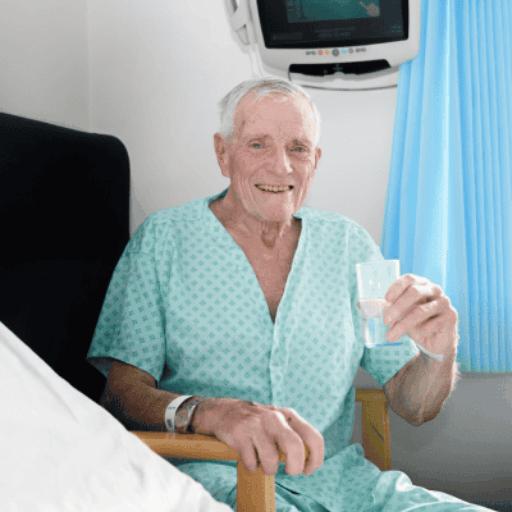
Roger Jackson, 80, is the first patient in Europe to receive the treatment for his liver cancer. “I feel privileged,” he said. “It’s impressive to think that sound waves can treat cancer, without the need for patients like me to go through intensive surgery, at what already is a stressful time.”
Jackson (pictured) was treated at Addenbrooke’s Hospital in Cambridge, England, which is currently the only hospital in the country offering the therapy.
“Histotripsy represents a hugely exciting and new era of cancer innovation and care,” said the hospital’s chief exec Roland Sinker. “With faster recovery times … this not only reduces the strain on our hospital beds, but also frees up surgeons to focus on the more complex cancer cases.”
Studies are underway to explore histotripsy’s effectiveness on other cancer types.
Image: Cambridge University Hospitals NHS Foundation Trust

Making ends meet is a struggle for creatives at the best of times, let alone in the generative AI era. Does Ireland have the answer?
This week, its government announced that the country’s basic income scheme for artists will be made permanent. Introduced to help creatives during the pandemic, it offered participants a weekly stipend of €325 (£283) in a bid to kickstart grassroots culture.
The €25m (£21m) programme helped more than 2,000 artists, although many more applied. According to an independent study, the scheme generated €100m (£87m) in “social and economic benefits” to Ireland’s economy.
“There have been many basic income schemes around the world in the 21st century, but virtually all of them have been discontinued upon the ending of their pilot phase,” said Dr Andrew White, senior lecturer in culture, media and creative industries at King’s College London.
“As all societies face the possible threats to jobs and livelihoods by AI, many policymakers and researchers will be watching the progress of the Irish government’s permanent basic income scheme.”
Image: Divyank

Investors poured more money into green technologies in the first nine months of 2025 than they did in the whole of 2024, analysis by Bloomberg suggests.
The flight of finance to climate tech comes despite the Trump administration’s aggressive anti-renewables agenda. According to Bloomberg, more than $56bn (£42bn) has flowed towards clean tech so far this year, compared to $51bn (£38bn) last year. Huge sums, it added, have been poured into battery storage, electric vehicles and renewable energy.
“Institutional investors are re-upping their interest in the sector, particularly around climate tech that can also improve energy independence and help address national security,” wrote Bloomberg’s Coco Liu.
Image: Wenying Yuan

Politicians in the Welsh capital are putting the brakes on the growing trend for supersized SUVs.
Following a public consultation, councillors in Cardiff voted in favour of raising parking permit fees for drivers of heavier vehicles. Paris introduced a similar scheme in 2024.
Two thirds of residents who responded to the consultation agreed that larger vehicles should pay more for permits, with 24% disagreeing. Since 2000, the share of SUVs in neighbouring England has grown tenfold, research shows.
The council has not confirmed how much the surcharge will be, but permits currently cost £35 per year for regular cars. Even a doubling would be “negligible”, it said.
While Cardiff’s ‘Land Rover tax’ was decried as “a war on motorists” by critics, road safety campaigners welcomed it, pointing to research indicating that SUVs are 77% more likely to kill a child than a regular car.
“Cardiff is showing real vision by standing up to the SUV carspreading that’s taking over our streets,” said Oliver Lord of the Clean Cities Campaign. “This is a common-sense policy that will make our city streets safer, cleaner and fairer.”
Image: Crown
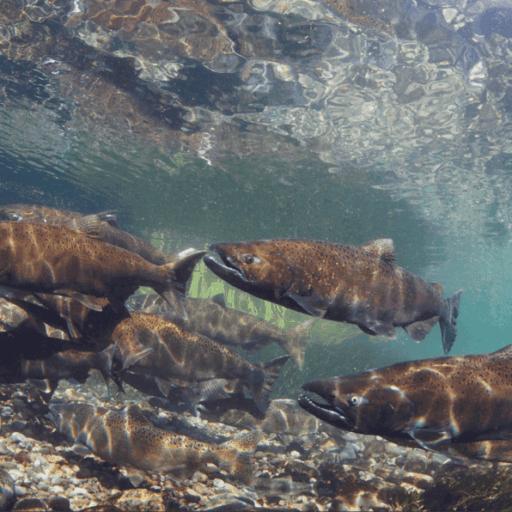
For the first time in more than 100 years, chinook salmon have been spotted swimming around the Chiloquin Basin in Oregon, US.
Their return follows the removal of four large hydroelectric dams on the Klamath River, which had long prevented the fish from swimming upstream.
Chinook salmon were a vital food source for local Klamath Tribes, before industrialisation of the river prevented them from reaching the Chiloquin Basin.
“Our fish relatives are finally returning home, a moment generations of maqlaqs [Klamath people] have prayed to see,” said Klamath Tribes chairman William Ray, Jr. “Their journey back is a sacred reminder of resilience, restoration and our responsibility. They have come home. Now it’s our turn to take care of them.”
Image: Roger Tabor

A spoonful of peanut butter helps the allergies go down.
That’s according to a new US study, which suggests that fewer Americans have developed peanut allergies since guidelines advocating early peanut exposure were introduced.
Scouring medical records, researchers compared rates of food allergies before 2015 – when the early exposure guidance was introduced – and after. They noted a significant decline in peanut allergies (from 0.79% to 0.45% of the study population) and food allergies more generally (from 1.46% to 0.93%).
The 2015 guidance was issued after a study found that supervised exposure of peanuts to 4 to 11-month-old infants with severe eczema or egg allergy reduced peanut allergy risk by 81%.
“More awareness, education and advocacy could further increase the positive results we observed in this study,” said senior research author David Hill, an attending physician at Children’s Hospital of Philadelphia.
Image: Tom Hermans

The positive impact pets have on our mental health has been well documented, with studies suggesting they ease loneliness, stress and anxiety. However, tenants are often forbidden by landlords from keeping them.
That’s set to change in England after the Renters’ Rights Bill was waved through parliament. The law, which is awaiting royal assent, will give tenants a legal right to request keeping a pet and prohibit landlords from “unreasonably” refusing that request.
According to the Royal Society for the Prevention of Cruelty to Animals (RSPCA), the law could “revolutionise” pet rehoming in England at a time when many of its rescue centres are “full to bursting”.
“This is great news for people looking to add a pet to the family, and could potentially help thousands of rescue pets in animal centres find a forever home of their own,” said the RSPCA’s Harriet Main.
Image: Joe Caione

Good comedy is all about timing, and for proof look no further than the photos shortlisted for this year’s Comedy Wildlife Awards.
Slapstick and silly, the perennially uplifting competition reveals a different side to nature, serving up fleeting shots of wildlife at funny and improbable moments.
But there is a serious side to the “world’s funniest wildlife photography competition”, which also supports conservation efforts.
Read more, and see other shortlisted images, here.
Image: Mark Meth-Cohn/Nikon Comedy Wildlife
Main image: Moorfields Eye Hospital
Get your weekly fix of good news delivered to your inbox every Saturday, by signing up to the Positive News email newsletter
Attention: use it for good
Every day, the news competes for your attention. Too often it exploits it, pulling you into outrage, despair, or distraction.
At Positive News we make a different promise: we will use your attention for good.
With 40% of people globally now avoiding the news, many are rejecting how traditional media uses their attention. Our journalism offers a different choice: we show what’s going right in the world, so that you’re informed in a way that uplifts you and helps you take positive action in your own life.
But search engines, social media algorithms, and now AI tools, increasingly control where attention goes. Their aim is to keep people on their platforms – which makes it harder than ever for independent, not-for-profit media like us to reach people. We’re not chasing clicks or profits for media moguls – we’re here to serve you and have a positive social impact. We can’t do this unless enough people like you choose to support it.
Give once from just £1, or join 1,500+ others who contribute an average of £3 or more per month. Together, we can build a healthier form of media – one that focuses on solutions, progress and possibilities, and empowers people to create positive change.
Support Positive News and we promise to always use your attention for good.