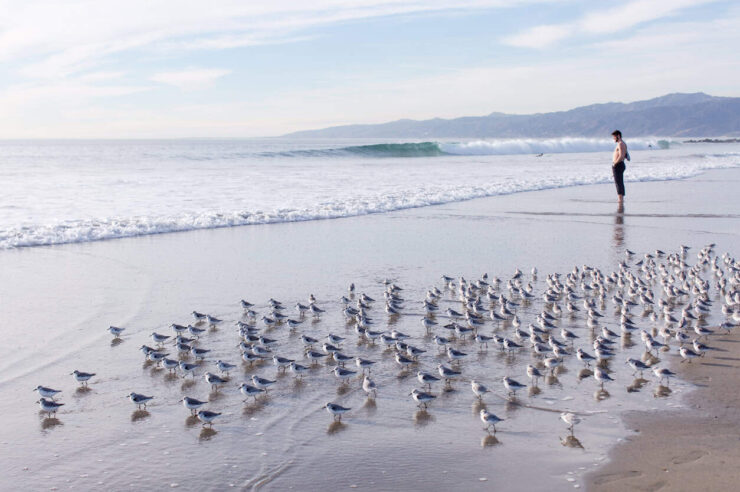
Nations achieved a ‘milestone’ for people and planet, terrorism deaths fell to a 20-year low, and medicine’s ‘most ignored organ’ was finally mapped, plus more good news
This week’s good news roundup
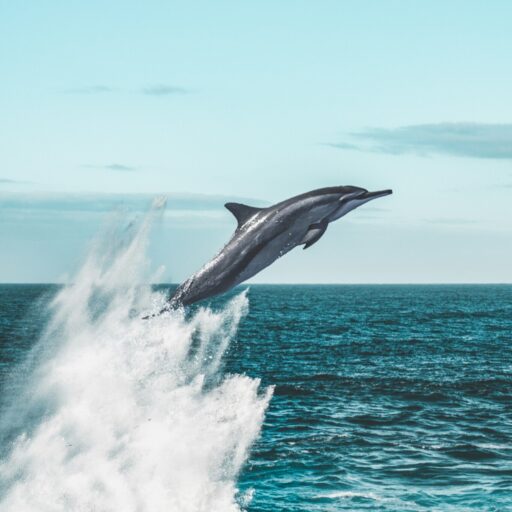
Nations have achieved “an important global milestone” for people and planet, with more than 10% of the ocean now officially protected.
That’s according to the United Nations Environment Programme (UNEP), which revealed this week that 5m sq km of ocean – an area larger than the European Union – was classed as protected in the last two years alone. The percentage of ocean now officially under conservation measures, it added, stands at 10.01% – up from 8.6% in 2024.
“We all depend on the ocean for our survival; over half of the world’s oxygen is produced by life in the ocean,” said Neville Ash, director of UNEP’s World Conservation Monitoring Centre, “[this] therefore is a moment for celebration.”
It’s also, he added, “a reminder of how much work there is still to do”, pointing to the 2022 agreement committing nations to conserving 30% of Earth’s land and sea by 2030. To meet the target, an area the size of the Indian Ocean must be protected in the next four years, said UNEP.
Policing protected areas is also a challenge, as highlighted by a new report revealing how the UK’s marine protected areas are being plundered by industrial trawlers. “It is critical that both new and existing areas are managed effectively to deliver positive outcomes for people and nature,” added Ash.
Image: Pagie Page

The number of deaths from terrorism fell to a 20-year low in 2025, despite an increase in attacks in the West.
That’s according to the latest Global Terrorism Index from the Institute for Economics and Peace (IEP). It found that deaths from terrorism fell by 28% to 5,582 last year, while the number of attacks declined by 22% to 2,944.
The improvement was “widespread”, it said, with 81 countries recording a decline in terrorist incidents. Only 19 countries saw a deterioration – the lowest number in the index’s history.
However, many of the countries that saw a deterioration were in the West, where terrorism fatalities rose by 280% to 57. This, said the IEP, was “largely driven by antisemitism, Islamophobia and political terrorism”, and the result of youth radicalism and lone-wolf attacks.
While the IEP welcomed the “substantial” reduction in global terrorism, it warned that “hard-fought gains” could be derailed by the conflict in the Middle East.
Image: Ryoji Iwata

For centuries, the clitoris has been ignored by medicine, shrouded in shame and secrecy. Now, 30 years after the same was done for the penis, the clitoral nerve network has been fully mapped out for the first time.
As well as revealing more, potentially, about female sexual pleasure, the map will help guide medical procedures, including reconstructive surgery following female genital mutilation. An estimated 200m women alive today have been subject to female genital mutilation, a barbaric practice that involves removing parts of the clitoris, usually without anaesthetic.
The 3D map was created by academics at Amsterdam University Medical Center in the Netherlands and reported in the health journal BioRxiv. It builds on earlier work done by Australian urologist Helen O’Connell, who, outraged by the absence clitoris in textbooks, created a detailed image of the organ in 2005.
O’Connell said that the new 3D map marked a “major step forward in understanding female anatomy”.
Read more: The taboo around medicine’s most ignored organ is finally being broken
Image: Miléna Bucholz

Rapid advances in battery technology and plummeting costs have made round-the-clock solar power viable in the world’s sunniest regions, fresh analysis suggests.
Critics of wind and solar have long cited their intermittency as a reason to keep burning fossil fuels – an argument that looks weaker as batteries improves and costs fall.
Citing India as one of the nations with the most to gain from such shifts, analysis by Ember, an energy thinktank, found that solar and batteries could already meet 90% of the country’s electricity demand at a “competitive” cost.
“The dramatic improvement in battery economics over the past two years has delivered the missing piece that turns sunshine into reliable electricity day and night,” said Kostantsa Rangelova, Ember’s global electricity analyst.
The thinktank’s research chimes with data from another sunny clime, California. On 29 March, batteries provided a reported 12.3GW of power to the state’s grid – around 43% of total demand. Supporters said it marked an “infection point” for batteries that will “rewrite power markets”.
Image: Kolkata, India. Credit. Arindham Saha

The number of people killed on US roads last year fell to the second lowest level on record, new data suggests.
Stats released by the National Highway Traffic Safety Administration showed that traffic deaths fell by 6.7% to 36,640 – still, however, a shocking figure. Only 2019 saw fewer fatalities.
Reasons for the decline are disputed. While the Trump administration claimed the victory, citing its drive to get “dangerous foreign truck drivers off the roads”, experts attributed it to Biden-era street safety projects.
Under its Safe Streets and Roads For All programme, the Biden administration awarded approximately $1bn (£750m) annually to street safety plans in hundreds of communities.
The US stats come as efforts to improve road safety gain momentum globally. Last year, the Finnish capital Helsinki went a whole year without a single road death. Keen to emulate that feat, London has hatched a plan to eradicate road deaths by 2041, which may include efforts to curb the growing trend for SUVs.
Meanwhile, Africa recently ratified its first ever road safety charter – a welcome move by the continent with the world’s worst road safety record.
Image: Andreas Strandman

Having an optimistic outlook could reduce your risk of getting dementia by around 15%, a US-led study has found, adding to a growing body of evidence linking a positive attitude with improved health outcomes.
Researchers studied 9,071 “cognitively healthy” individuals over a 14-year period. At the start of the study, participants (who had an average age of 73) completed “life orientation” tests to assess their outlook. Their health was then tracked over 14 years.
Overall, a third of participants went on to develop dementia. Researchers found that those who scored higher for optimism “demonstrated lower risk of developing dementia over the follow-up period”. Each increase of six points on the study’s “optimism scale” was linked with a 15% lower risk.
Other factors, researchers acknowledged, could be at play, since greater optimism is associated with higher levels of physical activity and lower rates of smoking.
“Identifying optimism as a protective psychosocial factor highlights the potential value of optimism in supporting healthy aging,” the study concluded. “Although optimism is a complex construct, and it is not clear exactly how it might translate in terms of future dementia prevention initiatives, this is an area which merits future research.”
Read more: Six lifestyle choices that can slash your risk of developing dementia
Image: Alexander Grey
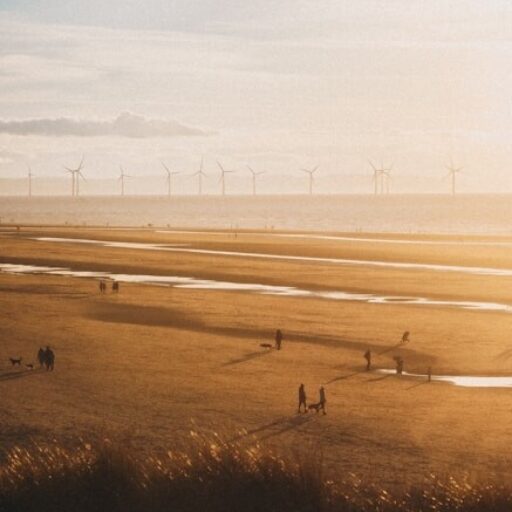
For the second year running, the UK sourced most of its electricity from renewables in 2025.
Government data published this week showed that renewables generated 52.5% of the UK’s electricity last year, surpassing the previous high of 50.4% in 2024 – and the second consecutive year above the 50% threshold.
“These figures show renewables are now the backbone of Britain’s power system, supplying most of our electricity for the second year running, with wind doing the heavy lifting,” said Tara Singh, CEO of RenewableUK.
“That matters for bills, because low‑cost renewables reduce our reliance on gas, which still sets electricity prices most of the time and is vulnerable to spikes.”
Image: Tuna Ekici

Degraded coastal communities in the UK could soon be transformed by floating wetlands as part of a drive to boost biodiversity.
Researchers behind the project say the approach could offer a scalable solution to the loss of coastal ecosystems. Some 85% of marine vegetation, including saltmarsh, seagrass and kelp, has been lost over the past 50 years.
As part of a trial led by the University of Portsmouth, floating wetlands have been installed at Southcoast Wake Park in Portsmouth, where they will be monitored to see how they affect water quality and biodiversity.
“This is an exciting step forward in how we think about restoring coastal ecosystems,” said Dr Ian Hendy, project lead. “These systems can provide refuge for marine species, improve water quality and help rebuild biodiversity in some of our most impacted coastal areas.”
Image: University of Portsmouth
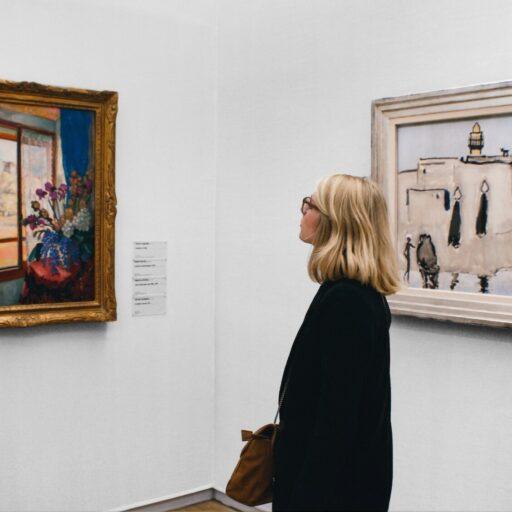
Gallery visitors spend an average of 15 seconds reading a wall label and just three seconds contemplating the artwork next to it, research shows. Art, like much else today, has become something to consume rather than contemplate.
Enter the ‘slow looking’ movement, which encourages people to rediscover how they see art. The rewards of doing so can be profound, with research revealing that engaging with art benefits wellbeing – findings that artists, philosophers and poets have long intuited.
“Slow looking invites a different rhythm – one of patience, curiosity and connection,” art historian and ‘slow looking’ advocate Olivia Meehan told Positive News. “In lingering before a work of art, we make space for surprise. We begin to see, not just look.”
Find out how to appreciate art slowly – and why doing so is good for you – here.
Image: Pauline Loroy
Main image: Dudarev Mikhail/Shutterstock
Get your weekly fix of good news delivered to your inbox every Saturday, by signing up to the Positive News email newsletter
Be part of the solution
At Positive News, we’re not chasing clicks or profits for media moguls – we’re here to serve you and have a positive social impact. We can’t do this unless enough people like you choose to support our journalism.
Give once from just £1, or join 1,800+ others who contribute an average of £3 or more per month. Together, we can build a healthier form of media – one that focuses on solutions, progress and possibilities, and empowers people to create positive change.