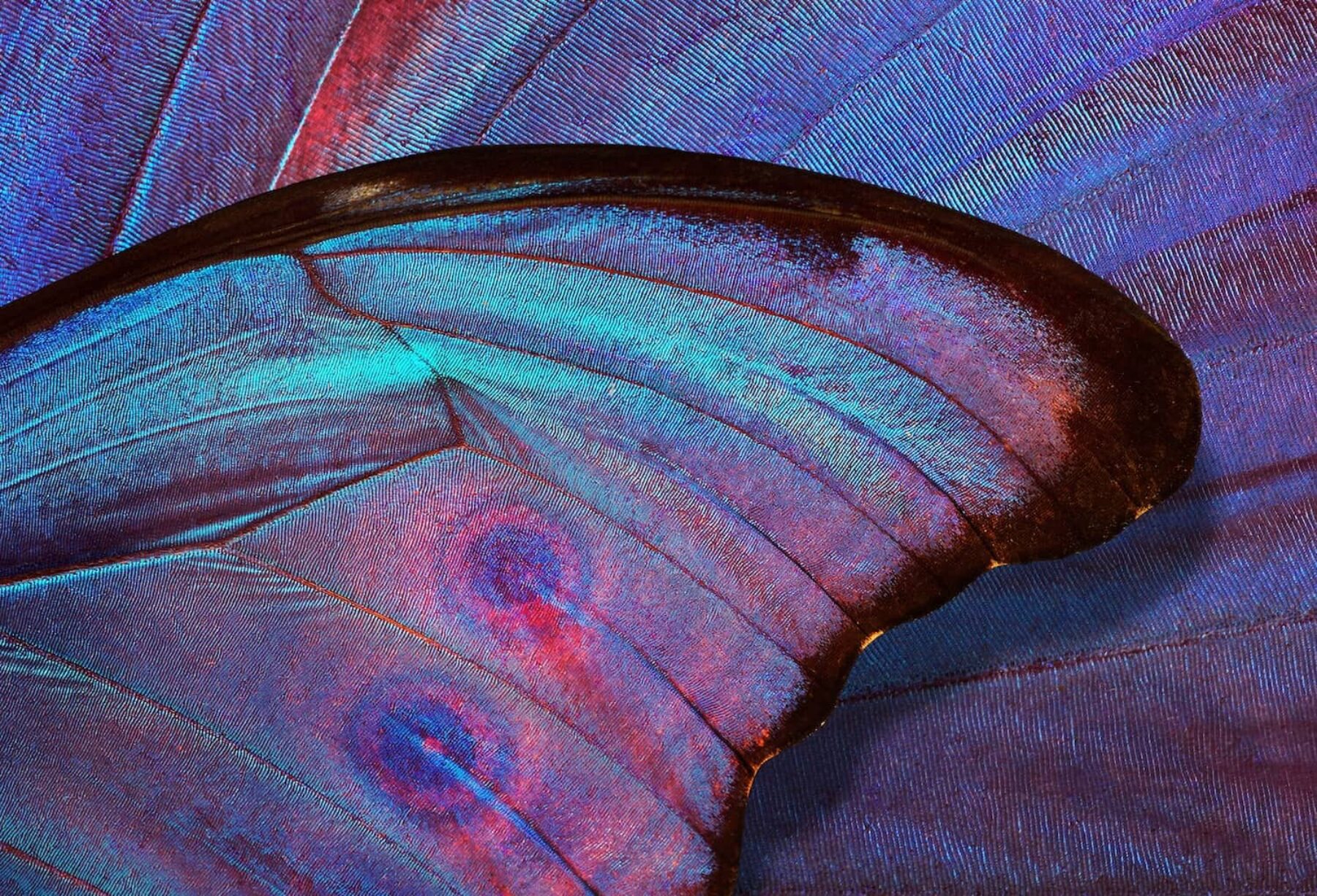
Researchers are looking to butterflies in the search for coatings without harmful, chemical-based pigments. Could their vibrant colours pave the way for safer paints and glitters?
The science behind the vibrant colours of butterflies could inspire a new generation of safer and more durable paints and glitters. Researchers from Northeastern University (NU), which has its headquarters in Boston, US, are taking a cue from nature in the search for coatings without harmful, chemical-based pigments.
They are investigating a phenomenon called ‘structural colour’, in which microscopic structures interact with light to create the kind of shimmering displays seen on butterflies’ wings and peacocks’ feathers.
Most of the familiar colours we see are the result of pigmentation. Carrots, for example, get their hue from carotenoids, which reflect orange light while absorbing other wavelengths.

However, pigments can fade in sunlight, and some chemicals used in synthetic ones – including compounds containing lead, cobalt and arsenic – can pose risks to human health and the environment.
Butterflies offer a potential alternative. Their colours come from microscopic crystals that bend and scatter light so that we only see specific, reflected wavelengths. Leila Deravi, associate professor of chemistry and chemical biology at NU, has been studying crystalline pterin compounds found on the wings of the cabbage white butterfly. She believes it could be possible to adjust their colour by tweaking the size
and arrangement of the crystals.
They’re safe for the environment, they’re safe for people, and they don’t have a lot of downstream toxicity
And although pterins have not yet been formally assessed for safety, Deravi’s team suggests the fact that they occur in nature makes them a promising candidate for further investigation.
“They’re safe for the environment,” she said. “They’re safe for people, and they don’t have a lot of downstream toxicity like some of the forever chemicals used in synthetic pigmentary dyes.”
The challenge now is to manufacture pterin crystals at scale. So far, the team has only grown milligram-size crystals, roughly the size of a grain of table salt, but Deravi believes the method has commercial potential.
“Ultimately, there’s still a great deal left to learn about biological colour,” she said. “It’s something we all interact with daily in the flowers, insects and animals around us, yet the underlying mechanisms behind their long-lived, fade-resistant colour are still being defined.”
Main image: Okeksii Kriachko
Because the world needs it
Positive News reports on the people and ideas driving progress. We believe that giving attention to solutions helps them spread.
Our journalism is independent and powered by our readers. There are no media moguls or shareholders extracting profits: your contribution funds our work to investigate what’s working, understand why, and bring those stories to a wider audience.
If you value a fuller picture of what’s happening in the world, please become a Positive News supporter today.