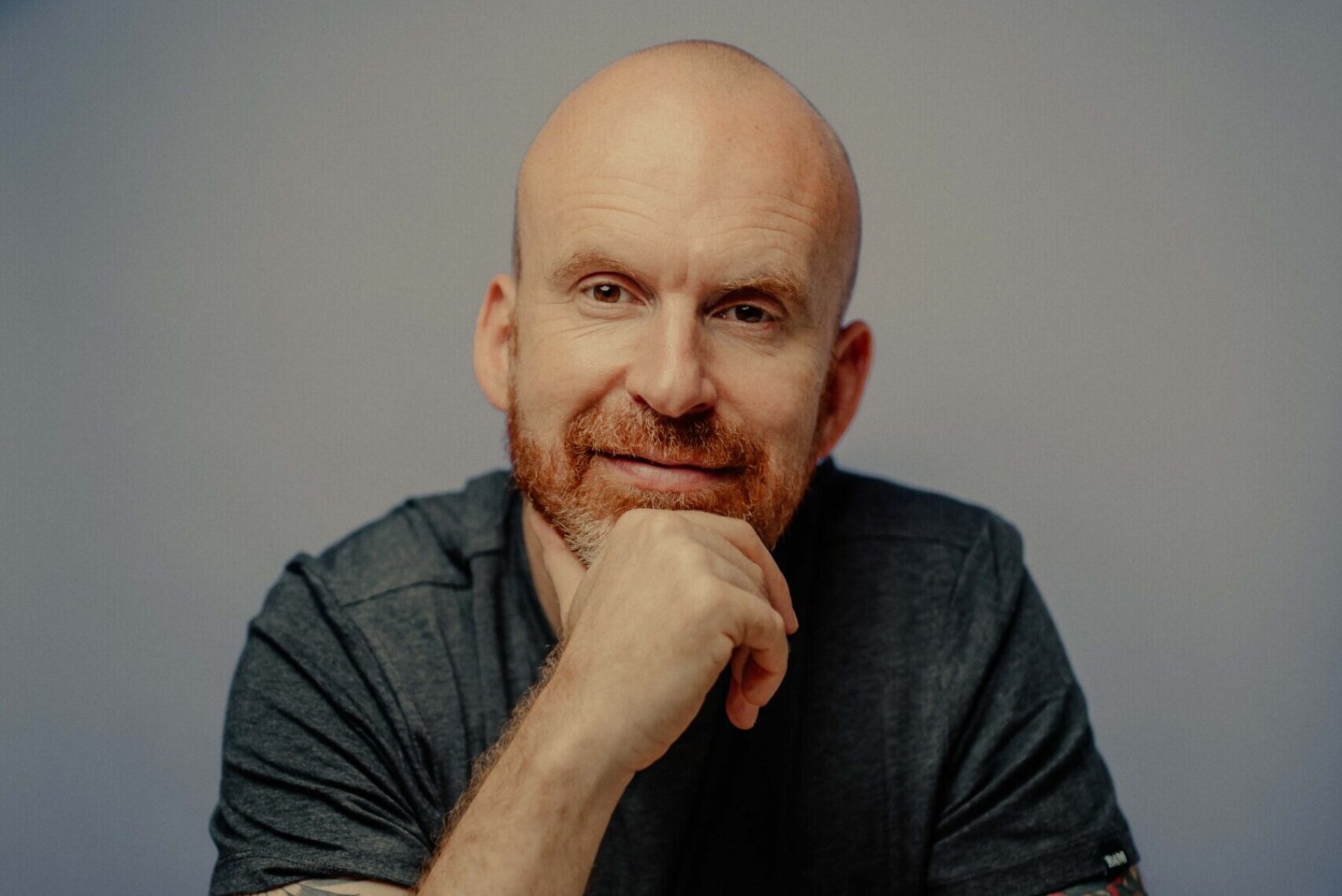
Best-selling author of The Midnight Library, Matt Haig, has made his career addressing regret and mental health. Now, at 50 years old and with the release of his new book The Midnight Train, he explains why acceptance descended on him
When Matt Haig thinks about regret, his mind goes back to the mental health crises he experienced in his early 20s, including a suicide attempt, and the impact it had on his girlfriend, now his wife.
“Me and Andrea have been together since we were 19, and I had a full-blown breakdown at the age of 24 and the years prior to that,” he says. “There was drink, drugs, bad behaviour, all giving Andrea hell. Then I went from being one type of nightmare boyfriend to the opposite type, who couldn’t leave the house and had to have his hand held to go to the corner shop for years, as I was agoraphobic.”
Now 50, Haig has found that, with time, “acceptance descends on you”.
“If you’ve spent enough time through depression, regretting and regretting, you start to regret the regret. It got to that point. Therapy helped.”

Haig’s personal experiences, particularly around mental health, have fed much of his work over the last three decades, from his breakthrough memoir Reasons to Stay Alive to the bestselling The Midnight Library, which explored alternate lives and roads not taken.
His latest novel, The Midnight Train, follows 81-year-old Wilbur, who boards a magical train after a heart attack and revisits key moments in his life, particularly his Venice honeymoon with his late wife, Maggie, confronting regret and the temptation to rewrite the past.
“Regret is a major theme of my work,” Haig says. “I feel this book is a companion to The Midnight Library. Whereas that was about there being no perfect life, this is more about not getting trapped in social pressures of status and workaholism and those very male things where, whatever level you’re at, you always feel you need one level higher.”
If you’ve spent enough time through depression, regretting and regretting, you start to regret the regret
That may be easier to say when you are one of Britain’s most widely read novelists.
“Yes,” he says, laughing. “But if you’re the type of person who always feels like you’re failing at something, that psychology stays with you. You tick a box and get something you’ve been dreaming of, whether in career or relationships, and you stay the same miserable git you were to start with.
“Then you think the problem is something else you’ve got to fix. That’s why we see so many celebrities go off the rails, because they haven’t fixed something they thought success was going to fix.”
He adds: “When the kids were young, me and Andrea were both, like a lot of new parents, in a state of freefall. I can’t remember much of those first 100 days. You treat everything too seriously and worry about everything. I’d love to go back and enjoy that more.”
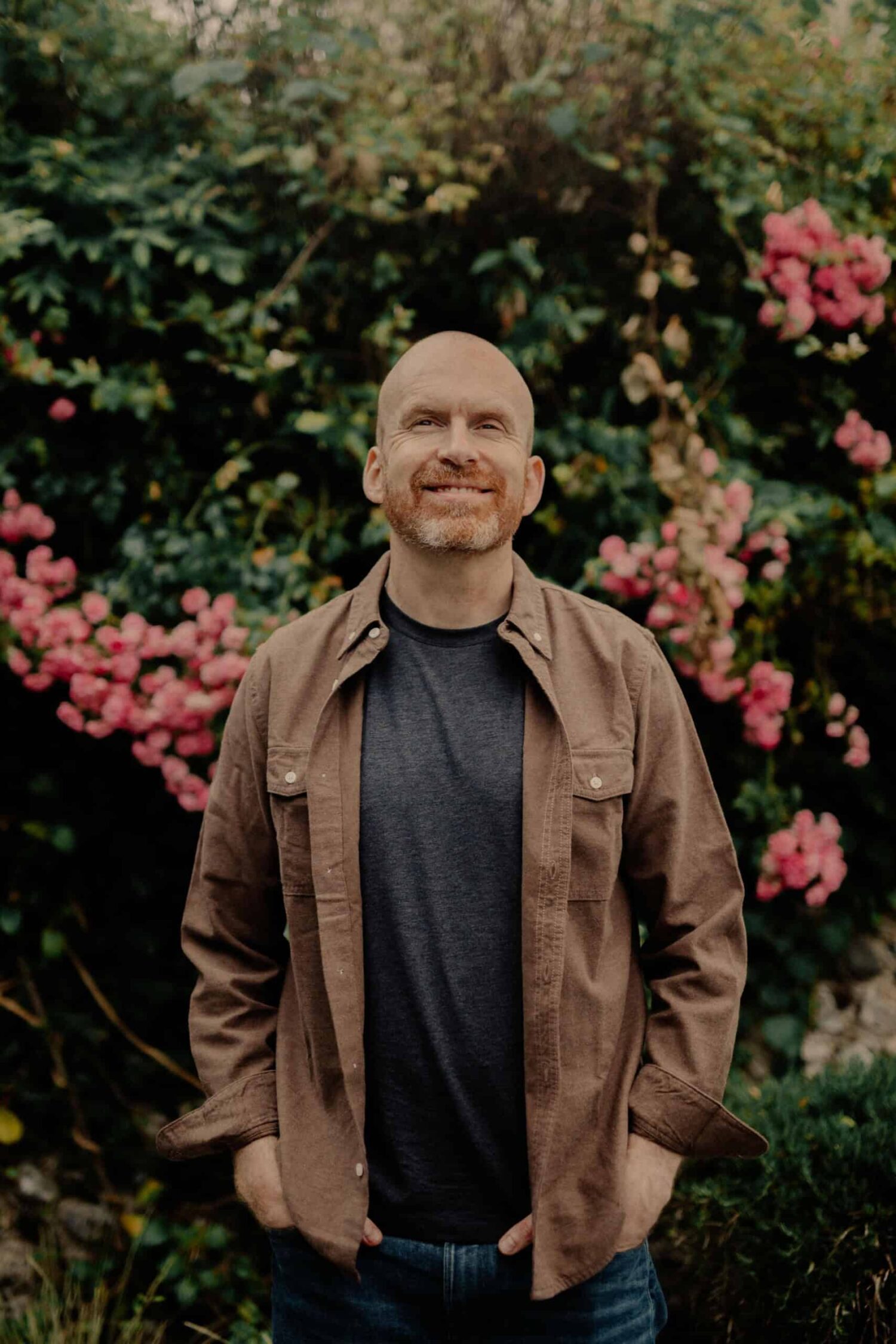
Haig’s personal experiences, particularly around mental health, have fed much of his work over the last three decades
“There is always some calamitous world’s end to focus on, but what you remember at the end of your life is not going to be news footage, it’ll be the people you lived with.”
Born in Sheffield in 1975 and raised in Newark, Nottinghamshire, Haig says writing helped him find his feet, though it took time.
“A lot of people think Reasons to Stay Alive was my first book. I think it was number 10,” he says. “I started off being karaoke Ian McEwan, very intense, trying to win a Booker, and I realised that wasn’t me. Over time, I developed my own style.”
Part of that voice was shaped by his willingness to speak openly about mental health before it was common. “I’ve always had a dopamine hit from saying truths other people might find uncomfortable,” he says. “I like directness.”
Celebrities go off the rails because they haven’t fixed something they thought success was going to fix
However, that openness he says labelled him. “I wasn’t seen as Matt Haig the writer for a while, it was Matt Haig the mental health ambassador, and I didn’t feel equipped for that. People would write to me almost like I was a therapist. I was just someone who had had a breakdown, no longer was suicidal, and wrote about it.”
Now based in Brighton, with his wife, two children and two dogs, Haig has also found some relief in his 2021 autism and ADHD diagnosis.
“A lot of things clicked into place,” he says. “At school I was fidgety, couldn’t pay attention, always accidentally getting into trouble. I always wished there had been one clear reason for my struggles, because when you have depression you become a detective, trying to work out who did it.”
He smiles at the thought. “You almost envy people who had one triggering event. Mine was more diffuse. Some of it was family history, some bullying, some not fitting in, and part of it was being neurodivergent in a world that wouldn’t have recognised it. In the 1980s autism was basically Rain Man. That wasn’t me.”
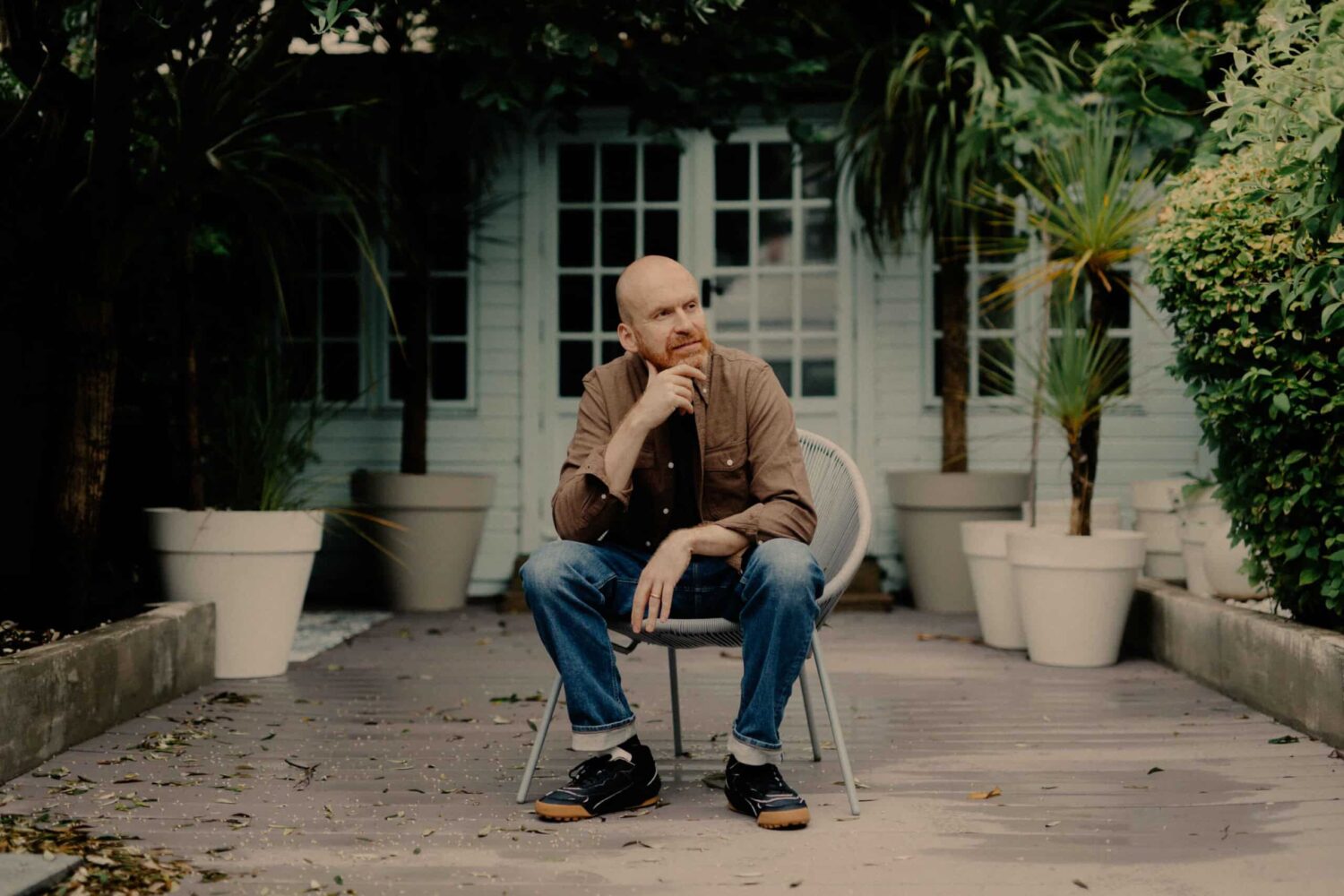
Matt Haig is now based in Brighton, with his wife, two children and two dogs
“I always had this feeling of difference. You feel like a weirdo in your own head. That sense of otherness, and the work of making peace with it, has shifted over time. Getting older has been beneficial for me,” he says. “The breakdown I had when I was younger was so traumatic, but the flashbacks eased. Accepting myself as a vulnerable person helped.”
That does not mean stability is permanent. “I’m convinced there will be future patches where I’m not mentally that well. Last year I descended into massive hypochondria and was diffcult to live with. You have to accept happiness is temporary and when you feel bad that is temporary too. It’s about riding the waves.”
That phrase feels close to a philosophy but it also informs how he thinks about masculinity and what he sees happening among younger men.
“If young men have nothing to do but stare at YouTube, rabbit holes are easy to fall down,” he says. “When I was young I hated being diagnosed with depression. I thought it said something weak about me as a man. A lot of what we’re facing with toxic masculinity is to do with men being unable to embrace vulnerability, to ever be a victim, to ever be ill. That’s why people don’t go to the doctor and die younger.”
I’ve always had a dopamine hit from saying truths other people might find uncomfortable
His answer is not abstract policy but places and people: youth clubs, sport, arts and community. Simply more places to belong. Research increasingly backs that instinct up, linking community belonging and social connection with better mental health, especially for young men vulnerable to isolation.
It is striking how often Haig circles back, even when talking about regret, to connection rather than achievement. Not the milestones, but the relationships around them. For a writer so associated with alternate lives and what-ifs, his conclusions are surprisingly grounded. Regret, he suggests, may be unavoidable, but it need not be a prison.
The fantasy at the heart of The Midnight Train is that we might revisit the past and alter our course. The gentler truth running beneath it is that peace may come not from changing what happened, but from seeing what was already there.
After decades writing about breakdown, mortality, anxiety and second chances, that feels close to a hard-won kind of hope. And perhaps that is the destination of this novel too: not to spend life staring backwards at missed platforms, but to recognise, while there is still time, that we are already on the journey.
The Midnight Train by Matt Haig is out now, published by Canongate.
Photography by Peter Flude
Be part of the solution
At Positive News, we’re not chasing clicks or profits for media moguls – we’re here to serve you and have a positive social impact. We can’t do this unless enough people like you choose to support our journalism.
Give once from just £1, or join 1,800+ others who contribute an average of £3 or more per month. Together, we can build a healthier form of media – one that focuses on solutions, progress and possibilities, and empowers people to create positive change.