Indonesia’s plummeting poverty rate, America’s largest wildlife bridge, and ‘a new era’ for the River Thames, plus more good news
This week’s good news roundup

The number of Indonesians living in extreme poverty has plummeted by almost 83% in just four decades, “impressive” new figures reveal.
While China has led the way in reducing extreme poverty in Asia – cutting it from 91% to almost zero in 40 years – Indonesia has not been far behind.
“In 1984, 86% of Indonesians lived on less than $3 (£2.26) per day; by 2025, this had fallen to less than 4%,” the nonprofit, Our World in Data, reported this week. “While it didn’t quite match China’s decline, it has still been impressive.”
The figures chime with data from Statistics Indonesia. In 2024, it put the extreme poverty rate at 9%, and suggested that some three million Indonesians had been lifted out of extreme poverty in the previous decade alone.
While the figures were broadly welcomed, critics claimed they were a result of social assistance, such as cash handouts, rather than gains in overall living standards. Nonetheless, millions of Indonesians are living more comfortably than before.
Image: benk.88

US president Donald Trump may have entered the White House on a pledge to “drill, baby, drill”, but his adventures abroad are accelerating the global shift to electric vehicles.
So finds a new report from the energy thinktank Ember. Of the 56 countries tracked by its researchers, 49 were shown to have broken records for the number of electric vehicles sold since Iran closed the Strait of Hormuz – through which a fifth of the world’s oil and gas transits – in response to US-Israeli launching air strikes on the country.
According to Ember, nations that led the way in electric vehicle adoption have insulated themselves significantly from the subsequent energy price shock, especially China. Its EV fleet, Ember says, has saved the country $14bn (£10.5bn) in oil imports since the crisis began.
Ember’s research also shows that it’s not just rich countries embracing battery powered vehicles, with the likes of Vietnam and Uruguay also rolling them out at pace. The US, meanwhile, is losing ground on other nations, it added.
“The countries that invested in electric vehicles before this crisis are now better protected, and a growing number are following,” said Euan Graham, a senior analyst at Ember. “Every electric car on the road reduces exposure to volatile oil markets.”
Image: Ake Ngiamsanguan
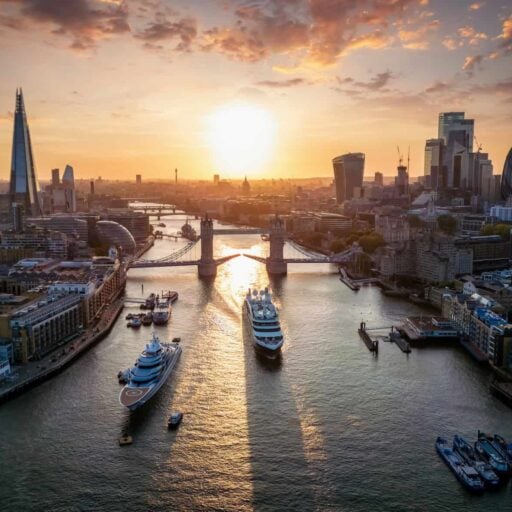
London’s new ‘super sewer’ has led to a “dramatic reduction” in sewage entering the River Thames, marking a “new chapter” for a waterway that was once declared biologically dead.
That’s according to a report from Thames Water, which recently took on the running of the 16-mile sewer. The beleaguered water firm, which faces re-nationalisation due to poor performance, reported an 86% decline in the amount of raw sewage entering the river since the tunnel opened.
The sewer has also prevented around 84 tonnes of litter, such as wet wipes and sanitary products, from reaching the waterway, it added. However, pollution and extreme weather still present “big challenges” for the capital, the firm warned, claiming further action was needed to prepare London for the effects of climate change.
Thames Waters’ Tess Fayers, said the report’s findings were “an important milestone for the river and a significant step towards a cleaner, healthier and more resilient Thames.”
Image: SHansche
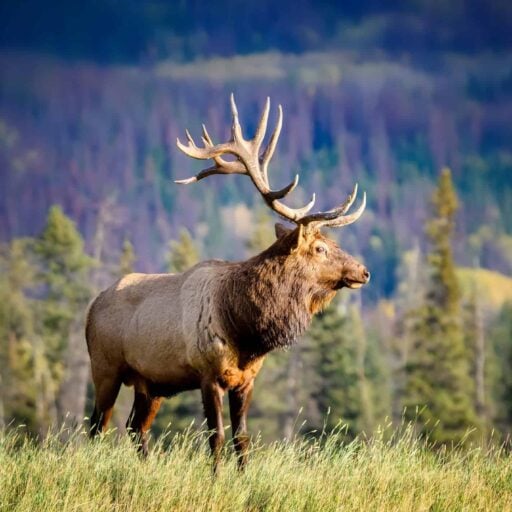
A bridge built exclusively for wildlife has been credited with a 91% reduction in the number of animals being hit by vehicles on a busy US freeway.
The overpass in Colorado opened 10 months ago and has already been hailed a “huge success”, with elk (pictured), pronghorn and bears among the animals captured on camera using it to cross Interstate 25.
The $15m (£11.3m) bridge – North America’s largest wildlife crossing – opened last December, along with five underpasses, on a stretch of freeway that saw frequent collisions between vehicles and animals.
Not anymore. The Colorado Department of Transportation told Positive News this week that since the overpass opened, it has provided safe passage for scores of migrating animals, reducing collisions by 91%.
Image: Jaroslav Sugarek


All those walks to school and kickabouts in the park could be doing more for teenagers than previously thought, as a new study links higher step counts with better mental health.
Researchers tracked 5,515 young people in the US over a year. Participants wore Fitbits and were quizzed on their mental health using the Child Behaviour Checklist, a widely used questionnaire that measures anxiety, low mood and behavioural problems.
A link between step count and mental health emerged. Adolescents who took fewer than 5,000 steps a day were shown to have the most symptoms for poor mental health, while those hitting 12,000 or more had the fewest. Those with the highest step counts also showed thicker brain tissue in areas involved in movement and regulating emotion.
The findings add to a growing body of evidence linking physical activity with improved mental health.
“This study gives us some of the clearest evidence yet that even an everyday, low-cost, accessible measure of physical activity like daily step count is tied to how adolescent brains and mental health develop,” said Dr Divyangana Rakesh, senior lecturer in neuroscience and psychology at King’s College London, which led the research.
Image: monkeybusinessimages
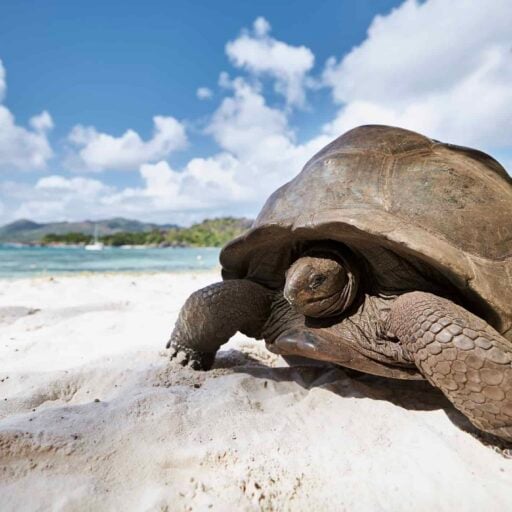
Giant tortoises are “thriving” again in the Seychelles, a century after the species stood on the brink of extinction.
A survey of the Aldabra giant tortoise population on Aldabra Atoll has revealed 180,000 individuals living on the island – the highest figure ever recorded. It’s a remarkable turnaround for a population that was reduced to around 1,000 individuals in the 19th century, when the animals were persecuted to near-extinction. It means there are now more tortoises on the Seychelles than humans (135,000).
Aldabra Atoll is one of only two places where giant tortoises are found in the wild, with a smaller population living in Galápagos. The island was declared a nature reserve in 1982, and its tortoises have been subject to ongoing conservation efforts.
“More than 180,000 giant tortoises roaming freely on our atoll is proof of what long-term commitment to conservation can achieve,” said Dr Frauke Fleischer-Dogley, CEO of the Seychelles Islands Foundation. “This is wonderful news for Seychelles, for the world, and for everyone who has worked to protect Aldabra.”
Image: Chalabala
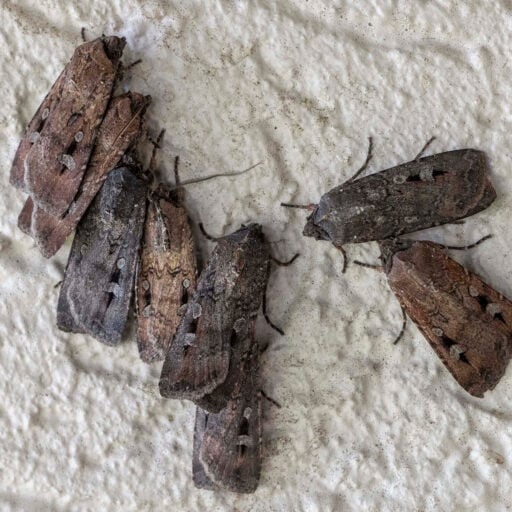
Reports of moths invading people’s homes might not sound like good news, but it’s a development welcomed by Australian scientists this week.
The sight of bogong moths swarming through the skies was once common in New South Wales as the species migrated to the mountains in summer before returning to their lowland breeding grounds in autumn.
However, the insect’s population has fallen dramatically since the 1980s due to drought and warming temperatures. In 2021, it was listed as an endangered species.
Recent weeks, however, have seen a huge resurgence in the moths. Footage posted online showed them swarming people’s homes – a phenomenon scientists think was made possible by a milder winter and more rainfall.
Prof Dieter Hochuli from the University of Sydney described the event as “one of the great animal migrations of the world”.
Image: Ken Griffiths

The share of land farmed organically in England will rise to 10% by 2036, the UK government promised this week, as it published its long-awaited organic farming plan.
It comes a week after the World Wildlife Fund warned that urgent changes to food production are required to halt biodiversity loss. That’s especially true in England, one of the world’s most nature-depleted nations, where just 3.4% of agricultural land is given over to organic farming (in France it’s 10.4%, and rising).
The UK government pledged on Wednesday to support more farmers in England to go organic. Details were thin, but public procurement and grant funding were mooted as potential levers to affect change.
The plan, said the government, “recognises how organic farmers can help maintain healthy soils, support biodiversity and produce food sustainably”. It’s also a response to growing demand for organic produce.
“More shoppers are choosing organic food and drink than a few years ago, yet the share of England’s farmland managed organically has barely moved,” the government said. “That gap is a chance for English producers.”
Related: Regenerative agriculture isn’t misty-eyed nostalgia, it’s the future
Image: WHPics
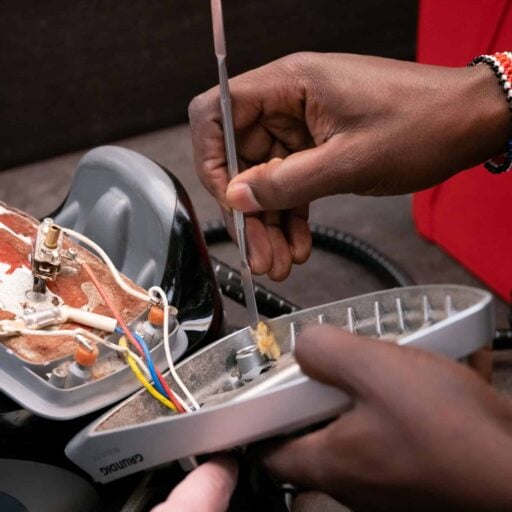
Almost five years after it was invaded by Russia, Ukraine has shown remarkable resilience in the face of war – and not just on the battlefield.
While the environment usually takes a backseat in times of conflict, Ukraine has continued with its rewilding efforts. Now, residents of one Black Sea city are taking the circular economy underground amid the threat of Russian strikes.
Chornomorsk is a hub for Ukraine’s repair movement, but has been subjected to Russian missile strikes. Ahead of International Repair Day on 17 October, organisers of Chornomorsk Repair Festival in Ukraine are relocating their event to an underground shelter.
“When we fix something broken, bring items back to life, or find new uses for them, we see the tangible results of our actions and feel that we can make a difference,” said Nataliia Pasenko, one of the organisers. “This simple experience can be especially important right now.”
Read the full story here.
Image: The Restart Project / Mark A Phillips
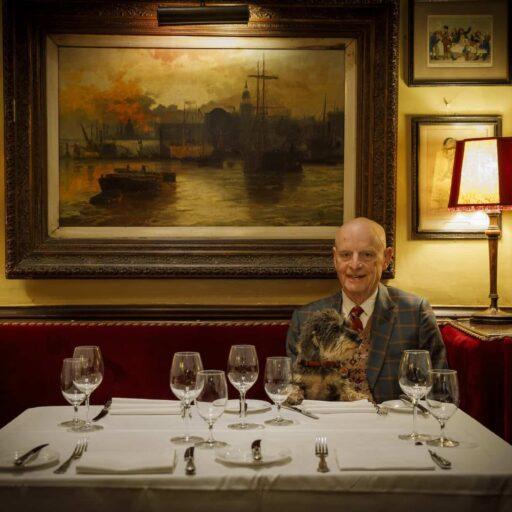
It’s been a culinary institution for 228 years, nourishing royals, politicians and celebrities, including Charles Dickens, who declared it his favourite restaurant.
Now, Rules of London – the city’s oldest restaurant – looks set for another 228 years in business after it was donated to the National Trust.
The poet Sir John Betjeman, a Rules regular, famously described it as having an “invisible atmosphere just as a church frequented by praying people acquires an atmosphere”. That didn’t stop it from being threatened demolition in 1971, which it was ultimately spared from.
Now its future looks truly safe after owner, J-P Mayhew (pictured), gave the building to the trust. The charity will not run the restaurant, however, which will trade independently.
“This place is an outstanding piece of living history, with its corners where kings dined and writers and politicians plotted, and the traditions it kept alive through wars and upheaval,” said Hilary McGrady, director-general of the National Trust.
“It has defied the odds to be standing here today. Mr Mayhew’s extraordinary generosity … means this beloved place has a future measured not in years but generations.”
Image: National Trust/James Dobson
Main image: fbxx
Because the world needs it
Positive News reports on the people and ideas driving progress. We believe that giving attention to solutions helps them spread.
Our journalism is independent and powered by our readers. There are no media moguls or shareholders extracting profits: your contribution funds our work to investigate what’s working, understand why, and bring those stories to a wider audience.
If you value a fuller picture of what’s happening in the world, please become a Positive News supporter today.