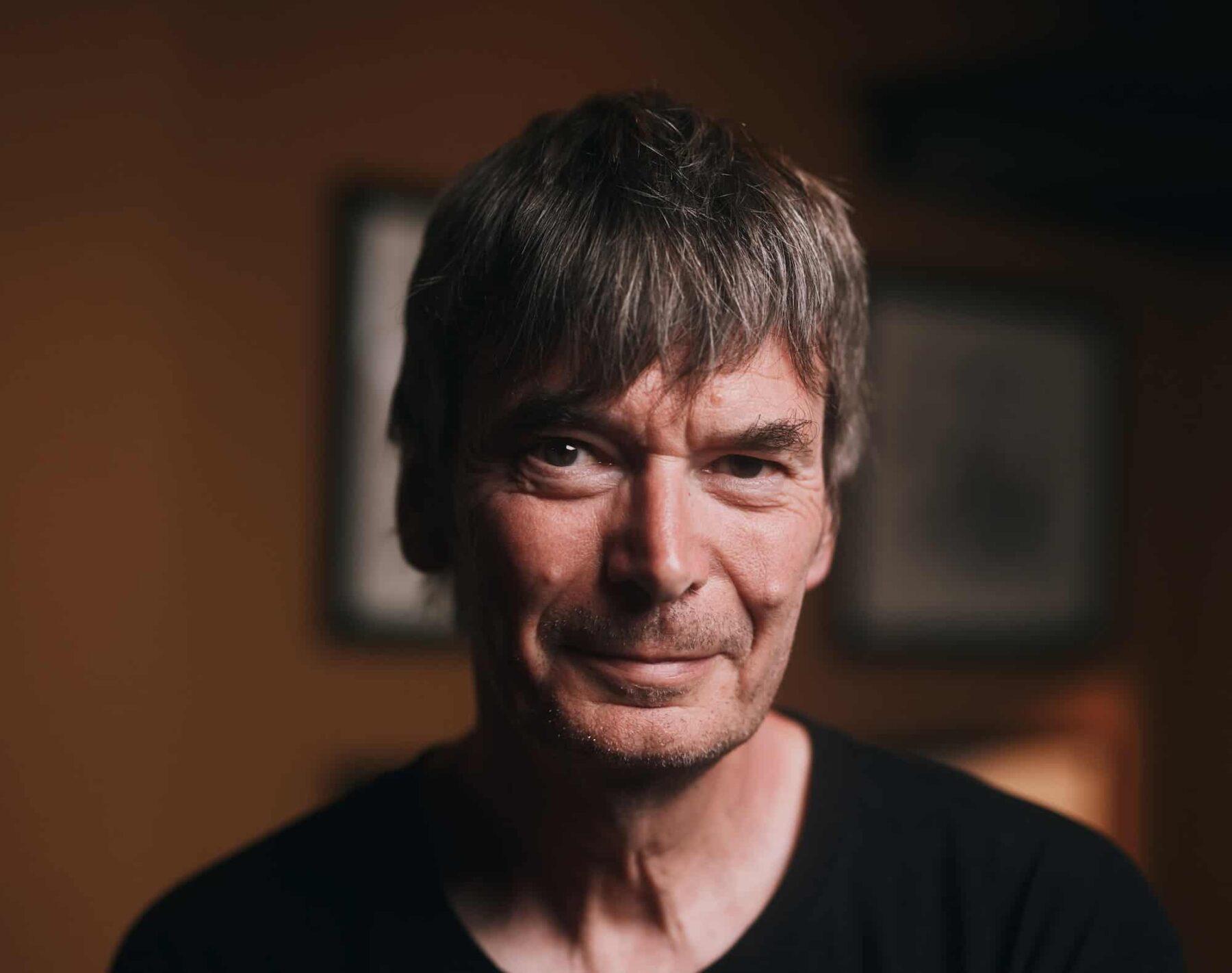
As Ian Rankin publishes his first standalone thriller in two decades, the Scottish author talks about making sense of difficult experiences through fiction, giving away a share of his success and why he is still looking for new challenges
Having a ‘Sir’ in front of his name means Ian Rankin often comes in for a bit of ridicule from friends. “When I go into my local bar, someone will look out of the door and say, ‘Where have you parked your horse today?’” he tells me. “The knighthood hasn’t got me very much in terms of freebies or status. Living in Edinburgh keeps you grounded.”
Rankin was knighted in 2023 for his services to literature and charity, with Princess Anne “doing the business” at Buckingham Palace while King Charles was otherwise engaged.
Even if his drinking buddies don’t take the knighthood all that seriously, Rankin does, not so much for what it says about him as what it says about the genre in which he has spent much of his working life.

“What it does is reinforce that crime fiction is literature,” he tells me. “For a long time in the UK, there was a snobby attitude that said popular fiction or commercial fiction is not of the same status or standard as literary fiction. If the royal family say, ‘No, this is for services to literature, not services to commercial fiction’, that, for me, is a big deal because other people will see crime fiction is just as serious as any other kind of writing.”
The Scottish author has sold more than 35m books worldwide, with his best-known creation, John Rebus, repeatedly making the leap to television, played by John Hannah and Ken Stott, and more recently by Richard Rankin, no relation, in the BBC series Rebus.
This month, though, Rankin is leaving both Rebus and Edinburgh behind. Published today, The Heights is his first standalone thriller in two decades and is set in a luxury London apartment block, where detective Gillian Gish investigates the murder of a night concierge.
For Rankin, writing something different offered the chance to test himself again. “There’s always the fear of becoming complacent,” he says, speaking from his office at home in Edinburgh. “It’s good to set yourself a new challenge.”
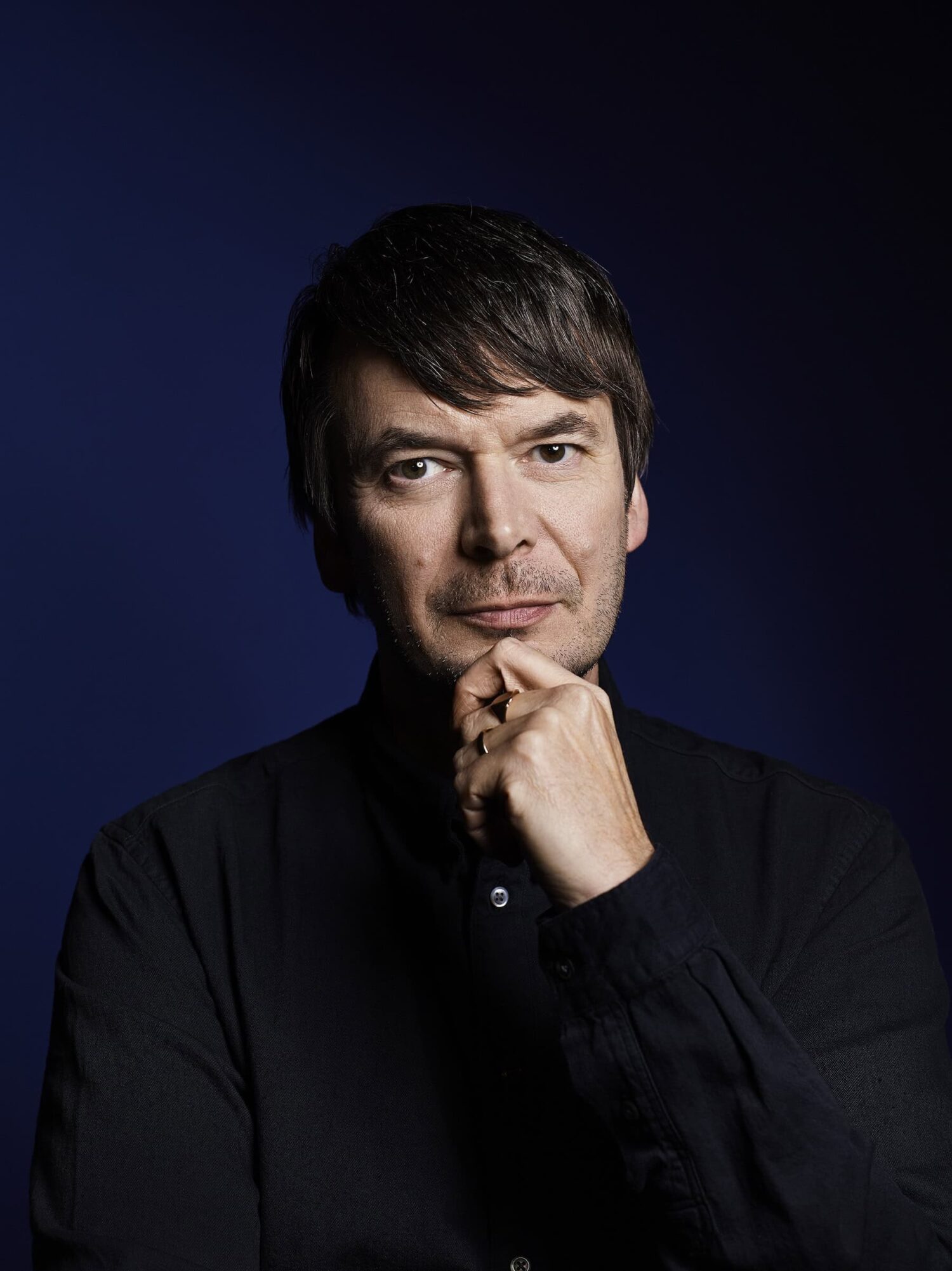
The Scottish author has sold more than 35m books worldwide, with his best-known creation, John Rebus, repeatedly making the leap to television. Image: Hamish Brown
It also allowed him to explore a city in which extreme wealth exists alongside people struggling to make ends meet, sometimes only streets apart. Rankin has long seen crime fiction as a way to examine the world beyond the crime itself.
“The crime novel is the perfect vehicle for an author, whatever you want to do,” he suggests. “If you want to write entertainment, the crime novel will do that. If you want to look at moral issues, good and evil, and big subject matter, from war crimes to adultery, you can do that. If you want to look at a culture, a civilisation, a city or a country, you can do it in a crime novel. For me, it’s the perfect package.”
Although he spends a great deal of time in London, Rankin still lives in Edinburgh. Originally from Cardenden, Fife, he moved to the Scottish capital to study at university, where he began writing novels. His mother became ill a month after he arrived and died when he was 19, an experience that shaped those early years and his relationship with writing.
“Every time I went home from university, she’d be a little bit worse and a little bit worse,” he says. “My first couple of years at university were quite a dark time.”
“I was writing to try to make sense of the world,” he adds. “In one of my Rebus novels, I put his daughter in a wheelchair because I’d learned my son was not going to be able to walk. Writing is a way of dealing with things. You give your problems and big questions to a fictional character and let them worry away, and you might get a solution or a bit of closure.”
Writing is a way of dealing with things. You give your problems and big questions to a fictional character and let them worry away, and you might get a solution or a bit of closure
Rankin’s younger son, Kit, has Angelman syndrome, a rare genetic condition that can cause severe physical and learning disabilities. Now 32, he lives in full-time care.
“He’s got quite a severe case,” Rankin says. “He’s a smashing young man. He can’t walk and he can’t talk, and he can’t dress himself or feed himself.”
The experience of bringing up Kit also exposed Rankin and his wife to other families trying to secure equipment, education and support for children with disabilities. As his books became increasingly successful, they found themselves in a position to help.
“From the get-go, we were going to day care centres with him, and we were meeting families who were struggling to buy a wheelchair, families who were struggling to get a ramp put in or to get the right education or the right support,” he says. “If money can help that sort of thing, that’s an easy fix.”
Rankin describes the success of his books as eventually leaving him “making more money than you can spend”. He and his wife, Miranda, whom he met at university, established a charitable trust and he estimates that they now channel “about 20-30%” of his net income towards good causes.

Rankin and his wife Miranda channel 'about 20-30%' of his net income towards good causes, including helping children with disabilities. Image: Gaysorn Eamsumang
Some of that support has gone to international organisations including Médecins Sans Frontières and WaterAid, while other grants have focused on literacy and organisations supporting young people with additional needs.
Now 66 and recently in receipt of his state pension, Rankin shows little sign of wanting to stop writing. Another series of the BBC’s Rebus is on the way and he would like to produce a new Rebus novel in 2027, when it will be 40 years since his book Knots & Crosses introduced the detective to readers.
There is, admittedly, a logistical problem. Rebus is approaching 80 and his most recent outing ended with him in prison.
“I can’t think what else to do with him,” Rankin admits. “He’s getting on for 80 years old and at the end of the last book he was in the nick. It’s a challenge to keep him realistic, working as an amateur detective, at the age he is. But next year we’re celebrating 40 years since the first Rebus novel was published, and I’d like to write something. Whether that’s set in the present or the past, I don’t know.”
His next release could conceivably involve music rather than books. In his student days, Rankin was the vocalist in a punk band called the Dancing Pigs and, decades later, joined another group, Best Picture.
I’m basically the same boy I was when I was 10, 11, 12, 13, 14 … sitting in my bedroom, making up stories, having adventures in my head. That’s still where I’m happiest
“I was the vocalist – let’s not say ‘singer’, as that’s putting it a bit strongly,” he says. “We made a single. We fell apart because of Covid, which meant we couldn’t rehearse or play gigs. I bumped into our guitarist recently and he said we should get the band back together, if only to record the songs that we didn’t get around to recording.”
Rankin has also been thinking about what a lifetime spent inventing other lives has meant for his own. He recently commented, part-jokingly, on a podcast that he had “wasted” his life by spending so much of it “in a world of fictional characters”, but behind the joke is some genuine reflection about being mentally absorbed in a job he loves.
“Physically, I was there for my family, for first days at school, for holidays …” he says. “But inside my head, I was busy with a plot or a problem on a book I was writing. I was never totally focused on family, and I do regret that a bit. I feel I’ve missed some big beats in the life of my family. I’ve spent a lot of time in this make-believe world.”
But the impulse that drew him towards writing as a teenager has clearly not disappeared.
“I’m basically the same boy I was when I was 10, 11, 12, 13, 14 … sitting in my bedroom, making up stories, having adventures in my head,” he says. “That’s still where I’m happiest.”
The Heights by Ian Rankin was published by Orion Fiction on 8 October in hardback (£25), ebook and audio.
Main image: Louise Mather
Because the world needs it
Positive News reports on the people and ideas driving progress. We believe that giving attention to solutions helps them spread.
Our journalism is independent and powered by our readers. There are no media moguls or shareholders extracting profits: your contribution funds our work to investigate what’s working, understand why, and bring those stories to a wider audience.
If you value a fuller picture of what’s happening in the world, please become a Positive News supporter today.