
A reality check for ‘AI slop’, the US’s plummeting murder rate, and a victory for an uncontacted Amazonian tribe, plus more good news
This week’s good news roundup

AI-generated content was dealt a reality check this week by the European Union (EU) as new transparency legislation came into force.
The rules require companies to inform citizens when they are interacting with AI systems. AI-manipulated content, including text, audio and visual, must also be labelled as such. Non-compliant companies will be fined up to €15m (£12.8m) or 3% of annual global turnover, whichever is higher.
The transparency regulations are part of the EU’s world-first AI Act. It was drawn up to place some safeguards on the fast-moving technology and to empower citizens to make informed choices about engaging with AI.
Henna Virkkunen, an executive vice-president for the European Commission, said the legislation was “an important step towards AI that people and businesses can understand and trust”.
The new rules were welcomed by creators, who are competing with huge volumes of so-called ‘AI slop’. However, creators also criticised the AI Act for not banning the practice of training AI systems on copyrighted work.
Not everyone is convinced by mandatory disclaimers. “If we have to label everything, from simple spell-checked emails to photos with a filter, the labelling of AI content will lose all meaning,” said Boniface de Champris from the Computer and Communications Industry Association.
Image: Toa Heftiba
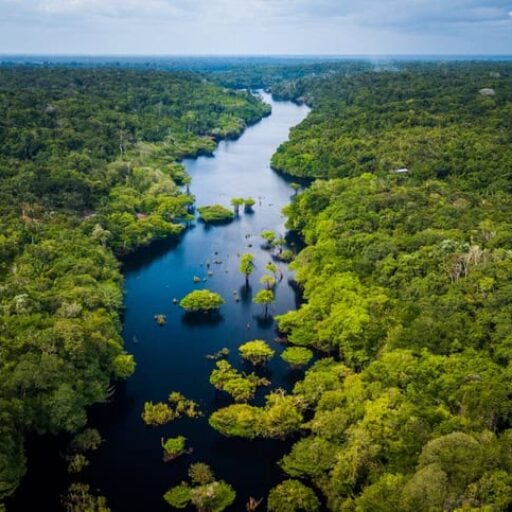
An uncontacted tribe in the Amazon rainforest has had its territory mapped by the Brazilian government in what campaigners have hailed a “huge leap forward” for the indigenous group.
The Kawahiva are threatened by land grabbers and loggers, who have used violence and political lobbying to prevent the Kawahiva’s territory from being recognised, according to the charity Survival International.
However, such tactics appear to have failed after the physical demarcation of the Rio Pardo Kawahiva Territory was completed on Thursday – 27 years after their presence on the land was confirmed. Only the Brazilian president’s signature is required for the territory to be official.
“The uncontacted Kawahiva have been under threat in their own forest home for decades, while simply trying to exercise their right to live as they choose without contact,” said Survival International’s director Caroline Pearce. “Now, finally, we are just one step away from their territory being recognised and protected.”
Demarcation alone will not protect the Kawahiva, however. Survival International called for government teams on the ground to monitor the territory and prevent land theft.
Image: Marcio I Sa

A new vaccine that can be stored at room temperature could be “transformative” for isolated communities, potentially saving many lives, scientists said this week.
Around half of vaccines are wasted each year globally, according to the World Health Organization. Many are lost because they get too hot or cold. The scale of the loss prompted scientists to work on fridge-free versions of common vaccines – and this week one such vaccine showed promise in a world-first trial.
A new powder variation of the tetanus-diphtheria vaccine was developed by UK-based Stablepharma. It can be stored at room temperature for a year before being mixed with water and injected. A phase one trial involving 60 volunteers produced “encouraging results”, scientists said.
“Keeping vaccines cold from the factory to the patient is one of the biggest challenges facing immunisation programmes. Our study suggests that this vaccine can remain safe and effective without refrigeration,” said Prof Saul Faust, director of the UK’s National Institute for Health and Care Research.
“If larger studies confirm these findings, this technology could help transform the way vaccines are stored and delivered around the world.”
Image: Markus Spiske

The US has recorded another sharp fall in its murder rate, with homicides down 18% in the first six months of the year compared to the same period in 2025.
That’s according to analysis from the Council on Criminal Justice (CCJ), which said that the US homicide rate has likely reached a “historic low”.
It’s not just the murder rate that’s falling. The CCJ said that four types of crime have fallen by more than half in recent years: homicide (51% lower than 2022), carjacking (73% lower than 2023), residential burglary (56% lower than 2018), and vehicle theft (down 51% compared to 2023).
While the White House has framed the data as a triumph for the Trump administration, crime rates in the US have been falling for years, albeit with some exceptions, notably shop-lifting and drug offences.
“Murder and other crime rates are falling across the map, in cities with different political leadership, housing and economic conditions, policing and prosecution strategies, violence reduction models, and levels of federal enforcement activity,” said Adam Gelb, the CCJ’s president.
“Local policies and programmes surely matter, but the striking consistency of the decline suggests that macro-level forces are exerting enormous influence as well.”
Image: Andreas Strandman


A baby boy has become the first child in the UK to undergo in-utero surgery for gastroschisis, a rare condition where a baby’s intestines develop outside the body.
Gastroschisis affects around 3,000 children annually in the UK. Currently, those who have the condition require surgery after birth, which involves long hospital stays and intravenous feeding while the intestines heal.
But not for much longer perhaps, after surgeons successfully operated on a baby while he was in the womb. The child’s mother, Maisie Savage from London, travelled to the US for the procedure as part of a study led by Texas Children’s Hospital and Great Ormond Street Hospital (GOSH) in London. Her son, Theo, is now five months old and “thriving”. “He’s a miracle,” Savage told the BBC.
The new approach builds on techniques already used for conditions such as spina bifida. Surgeons believe it could improve outcomes for gastroschisis, too.
“Families can go home sooner after birth with a healthy baby that shows few signs of their bumpy start in life,” said Paolo De Coppi, professor of paediatric surgery at GOSH. “We hope this could become the standard operation for complex gastroschisis cases.”
Image: Fé Ngô

The latest big cat census in Nepal suggests that the country’s tiger population has risen sharply to 429 – more than triple the number recorded in 2009.
The latest figures build on Nepal’s success in becoming the first country to meet a global pledge, agreed by 13 nations in 2010, to double their tiger populations by 2022.
Threatened by habitat loss and poaching for the illegal wildlife trade, global tiger populations plummeted from around 100,000 individuals in the early-20th century to 3,200 individuals in 2010. Today, thanks to conservation efforts, that number stands at around 5,500.
“Their recovery stands as one of the world’s greatest conservation achievements and demonstrates what determined political will, scientific management, and committed protection can accomplish,” said Keshav Varma, founding director of the Global Tiger Forum.
Despite the good news, however, Varma warned that more needs to be done amid a resurgence of poaching and continued habitat loss. “Building momentum and sustaining it is fundamental,” he added.
Image: Praniket Desai

Germany has become the latest nation to cross a green energy “tipping point” after getting more of its electricity from wind and solar than fossil fuels for the first time.
Fresh analysis reveals that wind and solar generated 44% of Germany’s electricity in 2025, just ahead of fossil fuels on 43%. The progress came despite opposition from some anti-renewables politicians, analysts at Carbon Brief noted.
Germany’s green energy success mirrors that of the wider European Union, which got more of its electricity from clean power last year than fossil fuels. Still, Germany has much work to do, cautioned Carbon Brief.
“Despite Germany’s rapid decline in coal power generation, the nation still relies far more on coal than most other European countries,” it noted. “[It also] has to rely on renewables more than neighbours … due to its phaseout of nuclear power.”
The German government has committed to phasing out coal-fired power by “no later than 2038” – a timeline that disappointed many climate groups, who say it’s too slow.
Image: Karsten Wurth

A rooftop solar revolution has helped the UK break its previous record for the amount of solar power generated in a single month.
Figures from the National Energy System Operator show that solar provided 14.4% of the UK’s electricity in July, breaking the 12.4% record set in May, and way up on the 9.6% recorded last July.
It comes as households turn to solar amid a deepening global energy crisis. According to government figures, there have been more new rooftop installations in the first half of 2026 than in any other six-month period since 2011 – the first full year of the UK government’s feed-in tariff, which paid homeowners for solar.
“Fifteen years ago, solar energy was a footnote in the electricity mix. Now it is a major player, delivering home-grown, cheap, clean and reliable energy,” said Chris Hewett, chief executive of Solar Energy UK, a trade association. “It’s a success story that the whole nation should be proud of.”
Related: The upside to the global energy crisis
Image: Bill Mead

White storks have returned to England’s Midlands region for the first time in more than 600 years, thanks to an ambitious species recovery project.
The native birds went extinct in the UK in the 15th century due to hunting and habitat loss. However, following a successful reintroduction programme at the Knepp Estate in West Sussex (“where miracles of nature happen”), three birds have been reintroduced to the Willington Wetlands in the Midlands.
The 113-acre Derbyshire site has been identified as a critical stepping stone for stork recovery in the UK. It sits beside the River Trent, an ecological corridor where beavers have also been reintroduced.
“This whole project is about more than the return of an iconic bird – it’s about reigniting people’s sense of wonder in nature,” said Katie Last, a landscape officer at the Derbyshire Wildlife Trust, which led the release. “Their return offers a powerful opportunity to engage people in nature recovery, rewilding, and the restoration of lost species.”
Image: Doncoombez

Having normal blood pressure, no diabetes and not smoking between the ages of 48 and 68 could ward off dementia for an average of 13 years, a new study suggests.
Academics at New York University Langone Health analysed data from a long-term study of more than 12,000 US citizens, who were followed for decades into late life and monitored for midlife vascular risk factors and dementia.
Participants with none of the three risk factors lived without developing dementia almost 13 years longer than those who had all three, researchers noted. The findings adds to a growing body of evidence linking positive lifestyle choices with a lower risk of cognitive decline.
“Our findings argue that people need to actively avert these factors in midlife as a strategy for preserving brain health for more than a decade,” said study lead Josef Coresh, a director at Langone’s Optimal Aging Institute.
Related: Eight habits that could add years to your life
Image: Vlad Sargu
Main image: lechatnoir
Get your weekly fix of good news delivered to your inbox every Saturday, by signing up to the Positive News email newsletter
Be part of the solution
At Positive News, we’re not chasing clicks or profits for media moguls – we’re here to serve you and have a positive social impact. We can’t do this unless enough people like you choose to support our journalism.
Give once from just £1, or join 1,800+ others who contribute an average of £3 or more per month. Together, we can build a healthier form of media – one that focuses on solutions, progress and possibilities, and empowers people to create positive change.