The world’s roads got much safer, global hunger levels eased, and Brazil set a welcome record for deforestation, plus more good news
This week’s good news roundup

Despite the addition of more than one billion motor vehicles to the world’s roads since 2011, traffic deaths have plummeted by 21% over the same period, new data from the World Health Organization (WHO) shows.
“In the last 15 years, we’ve made real progress in reducing road deaths, despite surging vehicle numbers and major shifts in how people move,” noted Dr Tedros Adhanom Ghebreyesus, the WHO’s director general.
However, while praising nations for making roads safer, he warned that traffic accidents still claimed 1.16 million lives in 2025 and are the leading cause of death among people aged 5–29 years.
The WHO data came as nations adopted a new United Nations declaration on road safety, which committs them to halving road deaths by 2030. Finland is among those leading the way after its capital, Helsinki, went a year without a single road death.
“We know what works – strong laws and enforcement, safe infrastructure and vehicles, with particular attention to lowering speed and addressing impaired driving,” said Dr Etienne Krug, a director at the WHO. “This declaration means we must all go further and faster.”
Image: Jack Finnigan

The number of people around the world going hungry has fallen for a third consecutive year – an encouraging trend which shows “progress is possible”.
That’s according to a UN report published this week. It found that 7.8% of the global population faced hunger in 2025 – down from 8.1% in 2024 and 8.6% in 2022.
The UN has previously said that Covid-19 set the world back 15 years in tackling hunger. While the latest figures show that lost ground is being regained, the recovery remains slow and uneven. Asia, Latin America and the Caribbean all recorded significant improvements, while hunger rates in Africa merely stabilised. The continent still has the highest number of hungry people on Earth, the UN noted.
Recent progress is also fragile, it warned, pointing to the potential for extreme weather and the conflict in the Middle East to further increase food inflation.
“The report shows that progress is possible, but we must move faster,” said QU Dongyu, director general of the UN Food and Agriculture Organization.
“Ending hunger and making healthy diets affordable requires political commitment, sustained investment and enabling policies. Recent crises have demonstrated both the resilience of agrifood systems and the need to strengthen them further to better serve the world’s most vulnerable people.”
Image: Stephen Olatunde

Deforestation in the Brazilian Amazon has fallen to its lowest level in a decade, according to fresh data from the country’s National Space Agency.
In the first half of 2026, some 500 sq miles of rainforest was cleared, it found, compared to 807 sq miles over the same period in 2025 – a 38% decrease.
While campaigning for office, president Luiz Inácio Lula da Silva, known as ‘Lula’, pledged to tackle deforestation, which had spiralled under previous president Jair Bolsonaro.
“This shows that the political will to fight deforestation has prevailed,” said Ane Alencar, science director at the Amazon Environmental Research Institute. “This is evidence that deforestation is not an inevitable process and its reduction is responsive to decisions made by society and the government.”
Lula said he will stand again for election in October when Brazil returns to the polls.
Image: rahimajan

A targeted and minimally invasive treatment for prostate cancer is as effective as surgery and radiotherapy, a major study has found.
Prostate cancer is the most common cancer in men, with more than 60,000 cases diagnosed each year in the UK alone. Men are typically offered either surgery to remove the prostate, or radiotherapy delivered to the whole prostate. Both are effective but can cause side effects, such as urinary incontinence and erectile dysfunction.
However, a less invasive treatment has shown huge promise. Focal therapy, which destroys only the cancerous part of the prostate, was found to be as effective as existing methods in a 10-year trial involving 3,500 men. What’s more, the risk of developing urine leakage or loss of sexual function fell by around half.
“This is the largest and longest running study demonstrating that focal therapy delivers excellent long-term cancer control across a broad range of patients,” said study author Prof Hashim Ahmed, chair of urology at Imperial College London. “It makes a compelling case for more centres to offer this treatment. I am pleased to see the government make a firm commitment of capital funding to support it.”
Image: Lance Reis


Psilocybin, the active ingredient in magic mushrooms, has been mooted as a potential treatment for anorexia nervosa, when combined with talking therapy.
In a trial led by Imperial College London, 21 women with anorexia nervosa were administered three doses of psilocybin, combined with talking therapy. Changes in the severity of their eating disorder symptoms were subsequently measured at regular intervals.
After three months, researchers found that 48% of participants had scores comparable to someone without an eating disorder. However, while they described their findings as “encouraging”, they warned that the trial was small and did not include a drug-free comparison group.
“It was encouraging to see that the trial, albeit with a very small cohort, provided an opportunity for individuals living with anorexia nervosa to approach treatment from a different angle,” said Jennifer Danby, lead therapist on the trial.
“Anorexia often serves as a protective mechanism for people and we saw participants be able to explore their relationship with the illness and gain some new perspectives.”
Imperial said the trial’s findings warranted further research while warning that such treatments should only be administered by trained clinicians.
Image: Igor Omilaev
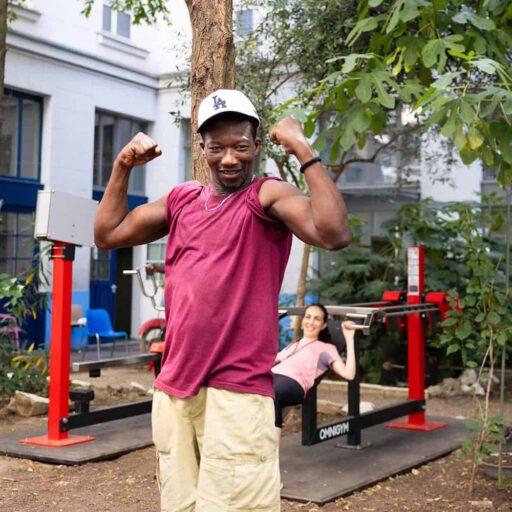
Improving access to exercise should have a greater role in efforts to transform the lives of people experiencing homelessness.
That’s according to those behind a project in Paris which installed a free-to-use outdoor gym at the city’s Emmaüs Solidarité homeless shelter.
According to a survey of its 200-plus residents, the facility has had a “striking” impact, with 80% of respondents reporting improved physical health and 90% saying that it has helped them meet other people. Some claimed to be smoking less since the equipment was installed.
The pioneering initiative is a collaboration between Emmaüs Solidarité and the Finnish outdoor gym company Omnigym. The idea was to remove barriers to exercise for economically vulnerable individuals. Research shows that low levels of physical activity are more prevalent among disadvantaged groups.
“Access to physical activity should not depend on income or personal circumstances,” said Kirsti Laasio, CEO of Omnigym. “This initiative addresses a need that is often overlooked.”
Image: Omnigym

Around 3,000 hectares of degraded land in the north of England – roughly equivalent to 4,200 football pitches – is set to be restored for nature after a major conservation project secured vital funding.
The ambitious initiative to rewild the Emblehope and Burngrange Estate (pictured) in Northumberland has long been a dream for Restore, the nature restoration company. This week, its mission took a huge step forward after raising almost £9m to buy the site, with some funding coming from the purpose-led bank Triodos UK.
A key focus of the project is rewetting the estate’s degraded peatlands, which Restore says will act as a vital carbon sink while supporting biodiversity and reducing flooding. The project also seeks to deliver social and economic benefits, partly through the introduction of low-intensity grazing.
“What has long been missing from the English uplands is a large-scale site dedicated primarily to the most ambitious forms of nature restoration,” said Benedict Macdonald, founder and director of Restore.
“Whilst many upland estates, farms and forestry benefit from nature as a side-product of commercial activity, Emblehope is destined to become a biosphere-level reserve where nature itself is the driver.”
Image: Emblehope estate. Credit: Grays
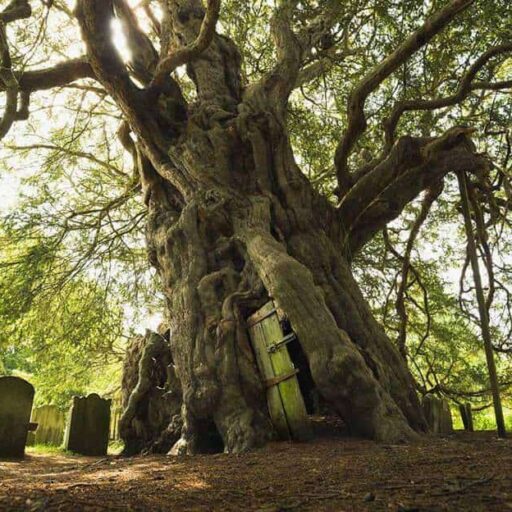
Miraculous trees that survived plane crashes, defied gravity and even witnessed the English Civil War have been shortlisted for the UK’s Tree of the Year contest.
Run by the Woodland Trust, the competition has become a perennial fixture of the UK summer. This year’s contest is about celebrating nature’s great survivors.
“Most things survive by fleeing. A tree, rooted for life to a single patch of ground, doesn’t get that option. So trees have perfected the opposite: the art of weathering whatever arrives,” said actor David Oakes, a Woodland Trust ambassador.
“The ten nominees for Tree of the Year have all defied the odds in extraordinary ways, from clinging to cliffs and church towers, to enduring collisions and cannonballs. The big question now is: which tenacious British tree would you like to see crowned champion?”
The public can vote for their favourite tree until 29 September via the Trust’s website. A winner will be announced in October.
Image: Surrey’s Crowhurst Yew tree was hit by a cannonball in the English Civil War. Credit: Lee Cooper

Plans have been unveiled for a bold new building in the Netherlands that will showcase solutions to global problems and encourage positive action.
Billed as a place to help people “shift from complacency and powerlessness to hope, imagination and collective action,” Shift Embassy will use art, architecture and storytelling to show that a different future is possible.
Renders of the building were revealed on Tuesday and the plans will now go out for a public consultation. The proposed building will be at the heart of a new nature-positive neighbourhood along the river Maas.
“Most people, when they think about the future, they think that it’s all going to shit,” Shift’s founder Don Ritzen told Positive News. “We need to create places where people get inspired and find hope again, where they feel empowered to take action.”
Read the full story here.
Image: MVRDV

As the World Cup reached its (not very dramatic) conclusion on Sunday, the corporatisation of the beautiful game – with its new quarter time commercial breaks – was a big talking point.
It’s against this moneyed backdrop that interest in community football is surging in the UK. With the Premier League now too expensive for many people, growing numbers of supporters are seeking out something cheaper, closer to home and more human in non-league football.
“At Real Bedford, I can turn up with mates, have a pint, stand near the pitch and feel like I’m actually part of the club,” Andy Chinnec, a supporter of Real Bedford, which formed in 2021, told Positive News. “It’s brought a much-needed sense of community back to the town.”
Read the full story here.
Image: Curt Taylor
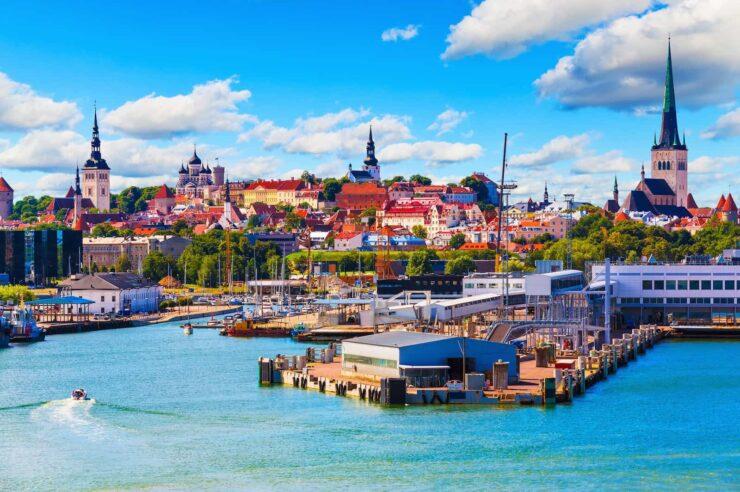
Main image: iStock
Get your weekly fix of good news delivered to your inbox every Saturday, by signing up to the Positive News email newsletter
Be part of the solution
At Positive News, we’re not chasing clicks or profits for media moguls – we’re here to serve you and have a positive social impact. We can’t do this unless enough people like you choose to support our journalism.
Give once from just £1, or join 1,800+ others who contribute an average of £3 or more per month. Together, we can build a healthier form of media – one that focuses on solutions, progress and possibilities, and empowers people to create positive change.