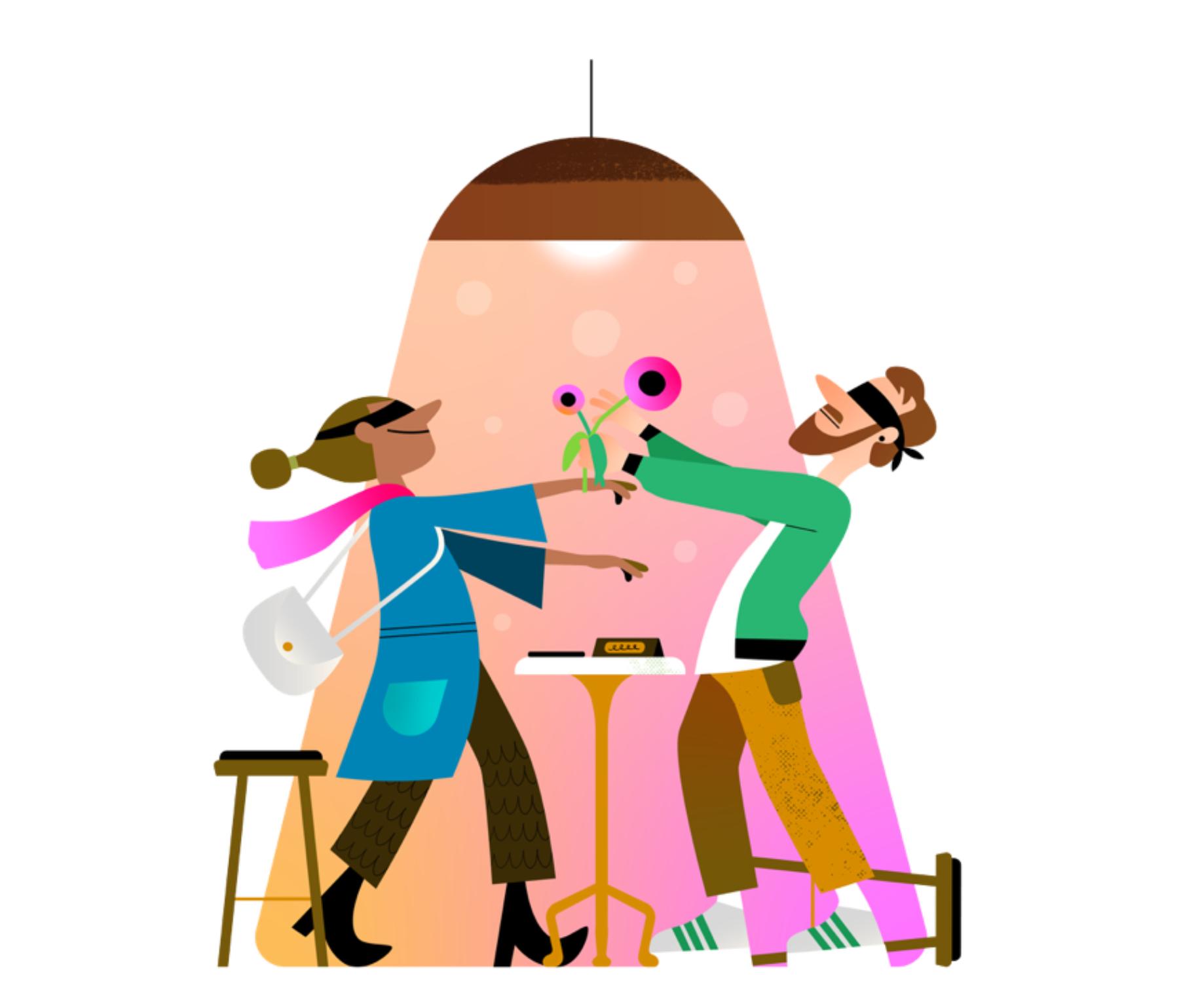
Burnt out by the apps, Angela Garwood has taken her quest for love offline, and embarked on a series of ‘in real life’ dating events in a bid to foster a real connection
Bad dates, countless ghostings, weeks of messaging men who had zero intention of ever meeting. My digital dating CV includes a man who forgot to mention he was in a relationship, one who wanted to bring a friend along for “moral support”, and another who failed to inform me that he lives in Florida. Perfect.
What once felt thrilling now feels transactional. According to the Ofcom Online Nation 2024 report, the UK’s 10 leading dating apps saw a decline of 16% overall. Tinder lost 23% of its UK user base, Bumble dropped by 26%, and Hinge fell by 9%. The swipe economy is wobbling. Gen Z are nostalgic for a pre-app era they never experienced, and millennials like me are craving the way we used to fall in love – accidentally, in person.
Dating apps are engineered to keep us hooked. But like any compulsion, the high fades and what remains is fatigue.
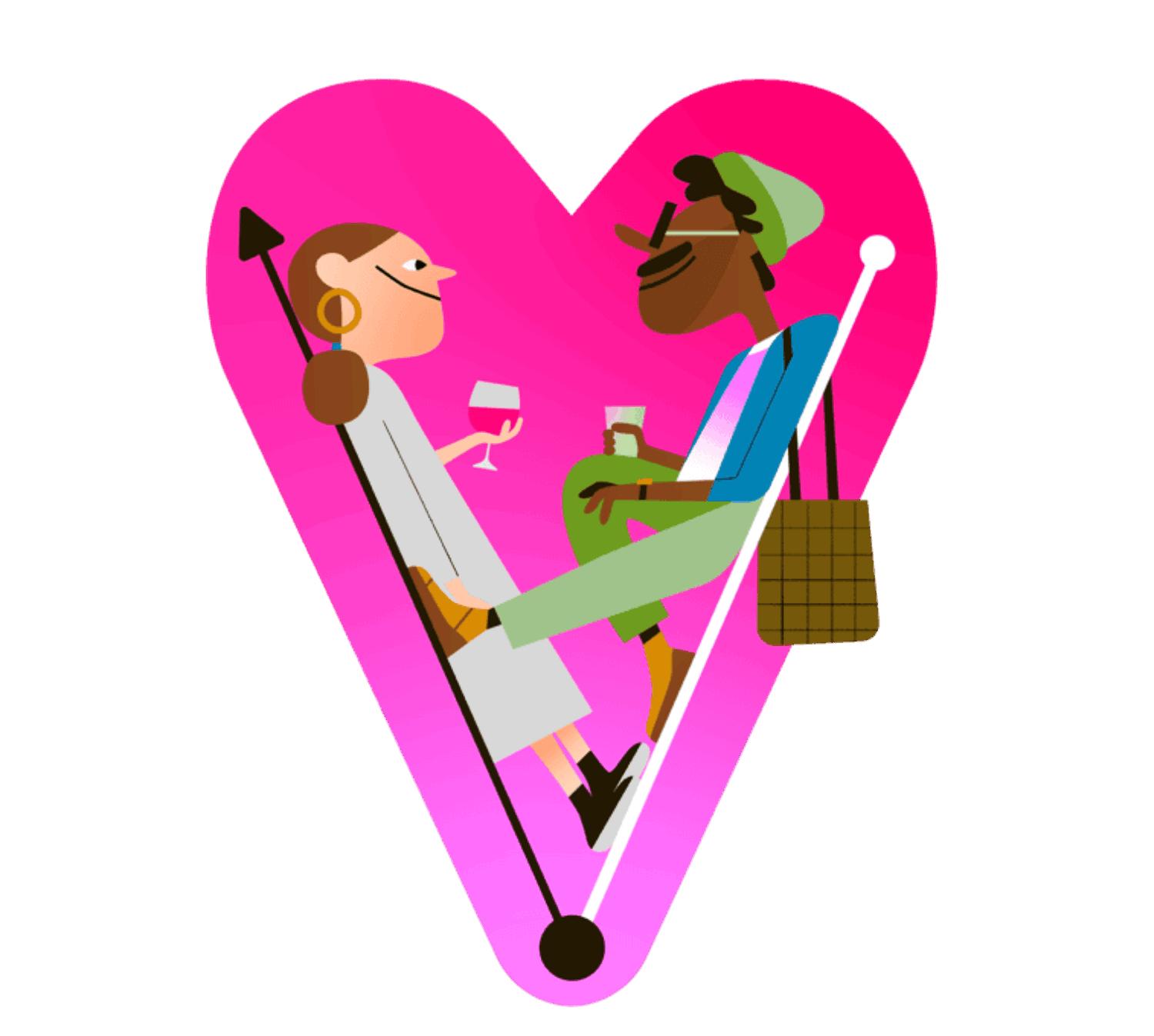
So where are all the singles going? Increasingly, offline. Anti-app events are booming – from dog walking dates to bookshop gatherings – promising chemistry over compatibility filters. Reports by event organisers Original Dating and The Inner Circle, suggest that conversion rates to first dates from live events can exceed 60%, compared to around 14% on apps. In the name of research, and romance, I logged off and stepped out.
Speed dating
I arrived at the bar in Oxford feeling nervous but open-minded. The host, Leo, greeted us warmly. Before the timer even began, I’d struck up a promising chat with a cute guy at the bar, who, by the time the first bell rang, had mysteriously vanished. Not the strongest start.
Each date lasted eight minutes. With some it felt like seconds, others much longer. As a writer, I’m professionally nosy and happy to ask the questions, but one date had to be prompted to ask a single thing about me, while another crossed his arms so tightly I wondered if he was bracing for impact.
Yet there was something undeniably refreshing about it. Eye contact, laughter (I chuckled with almost everyone) and the childlike awkwardness of two humans attempting connection without a screen.
Speed dating, invented in the late-’90s by Rabbi Yaacov Deyo in Los Angeles, fell out of fashion when apps took over. Now it is resurging. Eventbrite reported triple the number of London speed dating listings in 2022 versus 2021.
“Dating apps have turned love into a numbers game,” says Andrew Summersgill, founder of Original Dating. “You can’t swipe your way to connection. You feel it in the room. Within minutes of meeting someone face to face, you know more than you would after weeks of messaging.”
He’s right. Nuance returns in person – voice, posture, warmth – even the mildly excruciating exchanges felt more honest than the carefully curated profiles.
No potential partner emerged from my eight-minute carousel. But I left uplifted, reminded that attraction is physical and unpredictable.
Score: 7 out of 10
Singles night
If speed dating is structured, then singles night is chaos with cocktails. On a Thursday evening in a packed bar, the atmosphere was optimistic, if slightly disorganised. Knowing everyone was single created a rare permission slip. You could approach anyone without second guessing their relationship status.
James Ormerod, head of London events at organiser Thursday, says demand is surging. “People are getting bored of the toxic and draining culture of dating apps and want to go back to basics and find genuine connections the old-fashioned way, in real life. We’re trying to bring the joy back into dating.”
Joy is one aspect. Liquid courage is another. Two glasses of wine and one margarita in, my eyes quickly landed on a tall, handsome man in an age-appropriate navy half-zip jumper. Women hovered nearby like determined satellites. I decided to circle back later.
Instead, I found myself chatting to several enthusiastic twentysomethings who could be likened to overexcited puppies. Endearing, but not quite what I had in mind. Eventually, I reached Navy Half Zip. Polite, well dressed… and incredibly dull. Husband material he was not.
One singleton told me that he preferred the format where everyone was open to being approached. “Which is just not the case on a normal night out,” he said.
There is truth in that. The openness is liberating but so is the alcohol, which can blur judgement as easily as it softens nerves. If meaningful connection is the aim, meeting at your sharpest might serve you better than meeting at your tipsiest.
Score: 6 out of 10
The house party
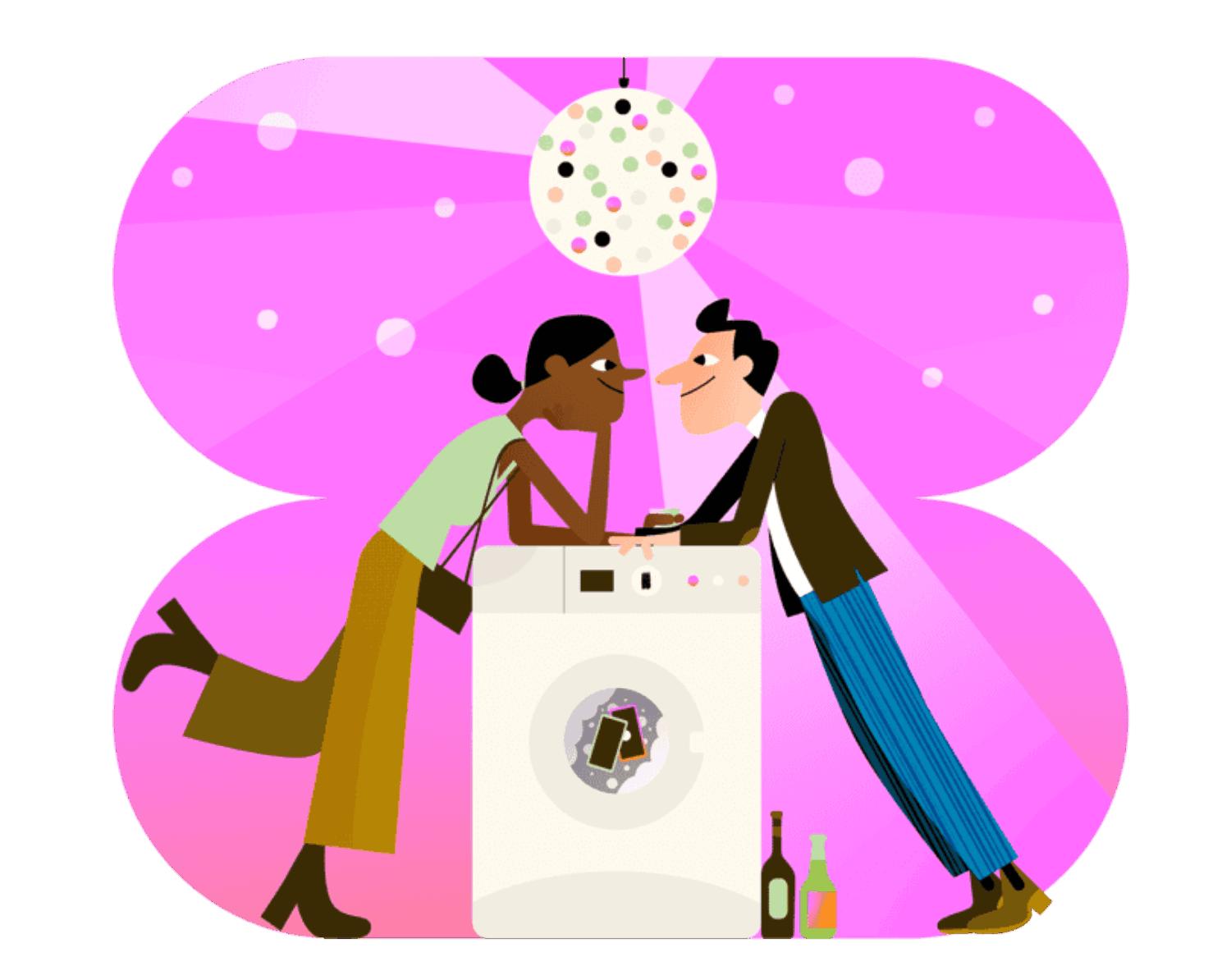
The Bored of Dating Apps (BODA) house party felt different from the start. Floral ‘90s carpets, a bookshelf concealing a secret room, clusters of guests in their late-20s to early-40s. It felt playful.
“The unifying factor isn’t age but mindset,”says founder Jess Evans. “These events attract people who value effort and depth, and are open to meeting without hiding behind a screen.”
Evans launched BODA in Liverpool in 2022. It has since expanded to London and New York. “So many brilliant people were starting to believe something was wrong with them because of an algorithm,” she says. “I wanted to bring back the electricity of walking into a room and not knowing who you might meet.”
That electricity was tangible. I repeatedly bumped into Amir, who I mentally nicknamed Sexy Hair Man. With his crisp white shirt, designer jeans and immaculate locks, he wasn’t someone I would have swiped right on. But he turned out to be surprisingly easy to talk to.
I wanted to bring back the electricity of walking into a room and not knowing who you might meet
“Why are you wearing that piece of thread around your neck?” I teased, pointing at his barely there scarf. “It’s fashion!” he protested. “Are you going to mention this in your article?” Absolutely.
Later, I met another guy who I wouldn’t have matched with online. Dylan, dressed in an All Saints T-shirt and trainers, made me laugh within seconds. He said he liked my energy, which I credited to the apple juice I’d been diligently drinking in my decision to remain sober for the evening.
“It’s hard being exotic,” he joked as we discussed our apparently ambiguous ethnicities, me being half-Filipino, half-English and him Irish and Sierra Leonean. We have since messaged. Drinks are planned.
The house layout helped too. Multiple rooms meant you could gracefully exit a flat conversation and vanish. BODA enforces a no ghosting and respect-the-rejection policy post-event, which adds a layer of accountability often missing online.
Not every interaction sparkled. “There’s a bed in here…” said one man, half-smiling. Indeed there was. And cheerio.
Score: 8 out of 10
Illustrations by Alex Tait
Be part of the solution
At Positive News, we’re not chasing clicks or profits for media moguls – we’re here to serve you and have a positive social impact. We can’t do this unless enough people like you choose to support our journalism.
Give once from just £1, or join 1,800+ others who contribute an average of £3 or more per month. Together, we can build a healthier form of media – one that focuses on solutions, progress and possibilities, and empowers people to create positive change.