There were some big health wins, Mexico pledged free healthcare for all, and Amsterdam pulled the plug on fossil fuel ads, plus more good news
This week’s good news roundup

In a potential gamechanger for patient care, a new blood test has successfully predicted how diseases will progress in patients – and how they will respond to treatment.
In a proof-of-concept study – the results of which were published this week – scientists used the test to predict patient outcomes for a range of health conditions, including infectious and chronic disease. According to Imperial College London, which led the research, it was even able to predict how patients with inflammatory bowel disease would respond to a course of therapy.
The test works by analysing RNA markers in the blood. When people fall ill, some genes switch ‘on’ and ‘off’ as the body mounts a response, leaving behind the markers.
“The patterns of gene expression we see in the blood offer clues as to what is happening… not just where someone is right now, but where they are going to be in the next few hours or days,” said Imperial’s Dr Clair Duncan. “This could tell us whether they will get better or deteriorate, and how they might respond to treatment.”
Further research is needed, but Imperial said that a working test could be available within as little as five years, with the potential to improve patient outcomes.
Image: Gustavo Fring

A decade of rapid growth in Alzheimer’s research is “reshaping what the future could hold for people living with the disease”.
That’s according to a review of emerging treatments, published on Tuesday. It found that the number of potential new drugs for Alzheimer’s has surged by 40% in a decade.
The study noted that researchers are now testing drugs that could help people at every stage of Alzheimer’s; from those who have no symptoms but are at risk of the disease, to those in the later, more severe stages.
“The 2026 pipeline review gives me huge optimism that we’re building towards a future in which Alzheimer’s can be effectively treated – and, in time, prevented,” said lead researcher Dr Jeffrey Cummings from the University of Nevada, Las Vegas, US.
Alzheimer’s Research UK welcomed the findings. “The Alzheimer’s drug pipeline is now the largest and most diverse it has ever been, and that breadth increases the chances of finding treatments people urgently need,” said Dr Sheona Scales, the charity’s director of research.
Image: Vitaly Gariev

The Mexican government has pledged free, universal healthcare for all from next year as part of an ambitious plan to tackle inequality in the country of 120 million.
Elderly citizens are already enrolling on the new system, which will replace a service widely criticised for being fragmented and unequal. The current two-tier system is a mix of public and private care that sees richer patients take out insurance to cover medical costs, and poorer ones using the free but overcrowded public service.
Mexican president Claudia Sheinbaum described the shift to a single, universal system as a “historic step”. Her plan relies largely on efficiency gains, including through the digitalisation of medical records.
While some extra funding has been pledged, critics warn that it’s unlikely to be enough, pointing to Mexico’s low healthcare spending compared to the other 37 nations in the Organisation for Economic Co-operation and Development.
“If it works though, it could be a remarkable achievement,” wrote Mihai Andrei, a geophysics covering healthcare for ZME Science. “It’s a pivot away from the US-style employment-tethered chaos and toward a unified, digital-first ‘national health service’ like in Canada, the UK, or Europe.”
Image: Bernardo Ramonfaur

Fossil fuels are losing their grip on the global energy market as renewables provide a greater share of power.
That’s according to a global energy review by the International Energy Agency (IEA), which declared that “the world has entered the age of electricity”, with many economies now electrifying at pace.
Overall demand for energy continued to rise in 2025, the report found, with a quarter of new demand met by solar – the first time that a renewable source met the largest share of demand growth.
The IEA also highlighted the growing role of batteries in electricity grids. Battery storage, it said, was the fastest-growing power sector technology in 2025, a trend that’s likely to accelerate.
It wasn’t all good news, however. Demand for oil, gas and coal also grew in 2025 (by 0.7%, 1% and 0.4% respectively), albeit at a slower rate than in 2024. The rollout of electric cars, sales of which surged by 20%, kept oil demand “in check”, the IEA said.
Still, global energy related emissions still increased by 0.4% last year, when they needed to be rapidly falling. In one sign of hope, however, the IEA confirmed what other researchers had found: that China’s emissions contracted in 2025.
Image: Nikola Jonny Mirkovic


The energy crisis triggered by the conflict in the Middle East has sparked a surge in rooftop solar installations across the UK, as households seek security in renewables.
According to government figures, there were 27,000 solar installations across the UK in March – equivalent to around one every two minutes. It’s the highest monthly total since 2012, when households were awarded generous payments for rooftop solar power.
According to the government, the UK’s solar capacity has increased by 11.7% over the last year, with more large-scale installations due to come online.
Energy secretary Ed Miliband said that 2m UK households now have rooftop solar, “helping families weather global energy shocks, bringing bills down, and getting Britain off the fossil fuel rollercoaster.”
Related: Amid an energy crisis, the renewables juggernaut gathers pace
Image: Shutterstock

Amsterdam has become the first capital city to outlaw ads for high-carbon products, including meat, flights and internal combustion engine cars.
The ban came into force on 1 May following similar moves by other Dutch cities, including The Hague, Utrecht and Delft.
“There is no longer a place in Amsterdam for advertising by companies that fuel the climate crisis,” said councillor and policy instigator Jenneke van Pijpen of GroenLinks Amsterdam. “We are very pleased that there is now a ban on fossil fuel and meat advertising in our public spaces.”
Not everyone welcomed the policy, however. The Dutch meat industry reacted angrily to the ban, arguing that its products provide nutrients to citizens. Others claimed the measures curtailed companies’ commercial freedom.
Shweta Narayan of the Global Climate and Health Alliance defended the move. “Banning fossil fuel advertising is a logical and necessary first step to discourage their use,” she said. “The public health evidence from tobacco advertising bans is clear: this approach works.”
Image: Tobias Kordt

In a conservation win for the West African nation, Ghana has announced its first ever marine protected area.
The Greater Cape reserve covers 703 sq km kilometres and is a key spawning ground for fish, stocks of which have plummeted in the area due to overfishing.
The new protected area has a core no-take zone where fishing will be prohibited, plus other zones where fishing and other activities will be permitted, albeit strictly regulated.
Environmental groups said that the success of the marine reserve will be determined by how effective it is enforced, but welcomed the move.
“This declaration is a defining moment for Ghana; its fisheries are under severe pressure, and the coastal communities that depend on them cannot wait,” said Steve Trent, founder of the Environmental Justice Foundation.
“A well-resourced, well-enforced protected area will safeguard vital ecosystems and help secure the livelihoods and food security of millions of Ghanaians.”
Image: Gerhard Petterson

Thousands of seabed-dwelling species have returned to a marine protected area off Scotland since bottom trawling was prohibited there.
A new study of Scotland’s South Arran marine reserve found that twice as many species and three times as many animals overall live there compared to areas still open to trawlers.
Bottom trawling involves scraping the seabed with dragnets and is one of the most destructive forms of fishing. Incredibly, the practice is still permitted in many marine protected areas, including some in Scotland.
In 2024, Greece became the first nation to outlaw bottom trawling in all of its marine protected areas, but the ban doesn’t come into effect until 2030.
The South Arran study, led by Convex Seascape Survey, said that efforts to protect seabeds could help to tackle climate change. “The role these habitats and their ecological communities may play in carbon storage has emerged as a compelling argument for strict protection,” it concluded.
Related: Why tackling biodiversity loss could solve the climate crisis
Image: Isle of Arran. Credit: Ian Cylkowski

A new high-speed train between Prague and Copenhagen has restored a missing link in Europe’s burgeoning rail network as demand for no-fly holidays soars.
The Czech and Danish capitals have not been linked by a direct train for more than a decade, but that changed this week with the launch of the new route from Czech Railways. Reaching speeds of 230kph, the daily service calls at Berlin and Hamburg, with a total journey time clocking in at 13 hours.
Exploring Europe by train has been a rite of passage for backpackers for generations. However, other travellers are embracing long-distance rail amid concern about aviation emissions. New routes have launched to meet that demand, ushering in what commentators have described as a “golden age” for rail.
It’s a trend that looks set to continue – Google search data shows a 33% increase in searches for “flight-free holidays” over the past month. It comes as airlines cancel flights due to jet fuel shortages caused by the Middle East conflict.
Image: Nesir Muradov
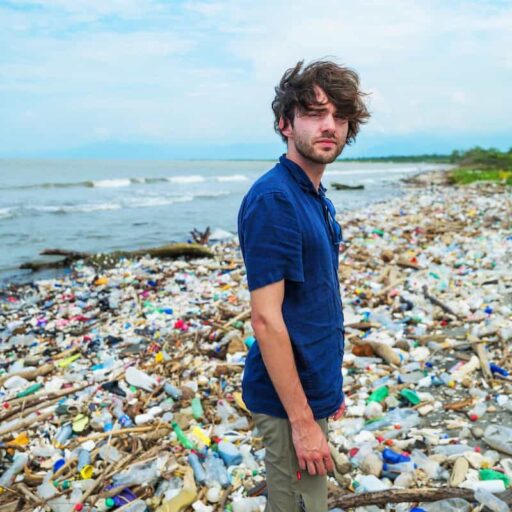
The world’s ocean plastic crisis could be dramatically reduced in just 15 years – and for less than $1bn (£750m).
That’s according to Dutch inventor Boyan Slat, whose nonprofit, The Ocean Cleanup, is already deploying technology that stops waste before it reaches the sea.
According to Slat (pictured), targeting just 30 cities could reduce future ocean plastic by around a third. However, he’s much more ambitious than that – his plan is to reduce floating ocean plastic by 90% by 2040.
Read more here.
Image: The Ocean Cleanup
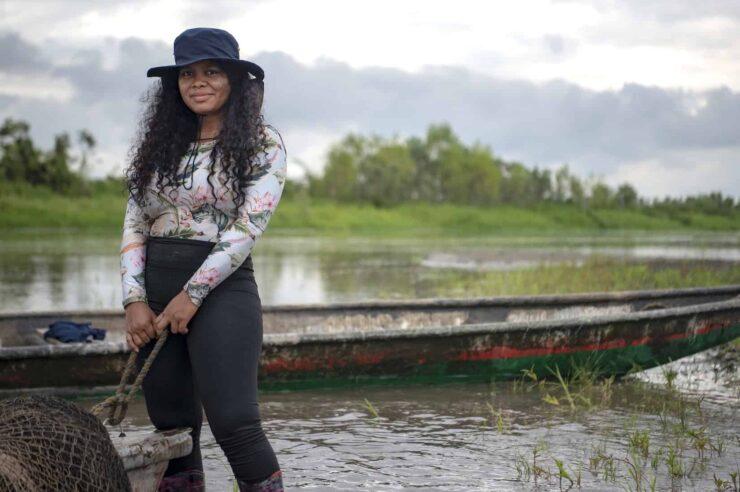
Main image: Omar Lopez
Get your weekly fix of good news delivered to your inbox every Saturday, by signing up to the Positive News email newsletter
Be part of the solution
At Positive News, we’re not chasing clicks or profits for media moguls – we’re here to serve you and have a positive social impact. We can’t do this unless enough people like you choose to support our journalism.
Give once from just £1, or join 1,800+ others who contribute an average of £3 or more per month. Together, we can build a healthier form of media – one that focuses on solutions, progress and possibilities, and empowers people to create positive change.