A new law boosting renters rights came into force in England, the kiwi made a comeback in New Zealand, and the ‘return to coal’ myth was debunked, plus more good news
This week’s good news roundup

On Friday, 1 May, the Renters’ Rights Act will take effect in England. The long-awaited law, which is the first set of significant reforms to rental housing legislation since 1988, includes several changes that will affect renters and landlords alike.
One of the most significant is the abolition of ‘Section 21’ or no-fault evictions. Previously, landlords could evict tenants without a specific reason, which some campaigning groups say is a leading cause of homelessness. Now, landlords will only be able to evict if they plan to sell or move into a property. Notice periods will also increase from two months to four.
Another major change is around tenancies, which will revert to rolling contracts as opposed to being fixed for 12 or 24 months. The ability for tenants to challenge rent hikes will also be introduced. Additionally, Awaab’s Law, which already requires social landlords to respond to emergency hazards and serious damp and mould within fixed timeframes, will also be extended next year to cover a wider range of health and safety risks. It’s named after two-year-old Awaab Ishak, who died in 2020 after prolonged exposure to mold.
Groups such as homelessness charities and unions welcomed the legislation. Acorn, a renters and community union, said that the act will affect around 12 million renters across the country and is the biggest change in a generation. Chelsea Phillips, Acorn national chair, said: “We won this. This wasn’t just handed to us from above. It came from more than 10 years of tenants organising, taking action, and refusing to accept a system that wasn’t working for us.”
Critics, however, say that the new law could force landlords with smaller operations out, while favouring larger corporate landlords. Some landlords fear that it will give them reduced powers to remove genuinely problematic tenants, while others argue that rent prices could edge upwards if the volume of properties on the market decreases.
Image: HiveBoxx
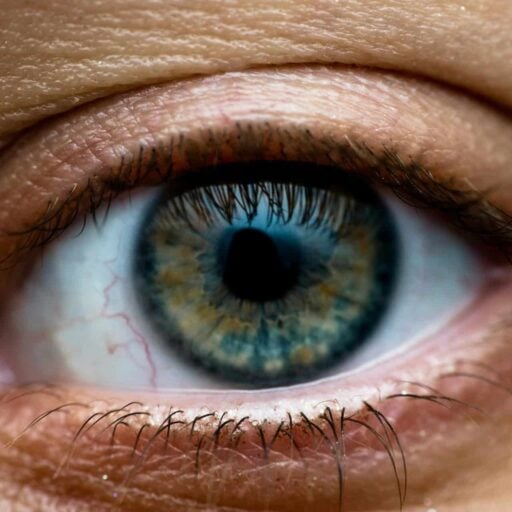
It can cause scarring of the eyelids, eyelashes that turn inward, and ultimately blindness if left untreated. Trachoma is the world’s leading infectious cause of blindness, but now no longer presents a threat in Australia. After decades of public health action around eliminating it, the World Health Organization (WHO) this week validated Australia for the milestone.
The country has made concerted efforts, particularly in remote Aboriginal and Torres Strait Islander communities, to eradicate trachoma, which is one of 21 diseases and disease groups that are regarded by the WHO as neglected tropical diseases (NTDs).
NTDs affect more than 1 billion people around the world and can have life-changing health, social and economic consequences. They mainly occur in underserved or impoverished communities, which lack essential services such as clean water, sanitation, and healthcare.
Mark Butler, Australia’s minister for health and ageing, said: “Elimination of trachoma is a win for the eye health of communities across Australia, particularly those whose lives have been impacted by a disease that is entirely preventable. This major milestone is thanks to Aboriginal and Torres Strait Islander leadership, community commitment and sustained investment over many decades.”
Image: Galinda Bogdanova

There was more good news from the southern hemisphere this week, as a conservation project for the kiwi marked a triumphant end. Images of the national bird of New Zealand, with its long needle-like beak and fluffy brown feathers, can be seen on everything from the one dollar coin to – somewhat ironically – the side of air force planes (the bird is flightless). Yet, in the last 100 years, it has rarely been seen in the wild.
A population of more than 12m birds once roamed the country, but a combination of introduced predators and habitat loss has reduced numbers to around 70,000. But this week, it was revealed that a conservation project in the Wellington area is seeing promising results.
The Capital Kiwi Project began re-introducing chicks into the city’s surrounding rural areas in 2022. A total of 250 birds have been released since then, with 90% of chicks surviving. This rate greatly exceeded the project’s 30% goal.
On Tuesday, an event saw kiwi brought into the New Zealand parliament’s banquet hall, where people had gathered to celebrate the success of the initiative.
Paul Ward, the founder of Capital Kiwi Project, told the Guardian: “That work to return kiwi is a shared purpose that is extremely powerful. What’s incredibly satisfying about tonight is that it’s working, it’s showing what’s possible when people work together.”
Image: Kimberley Collins
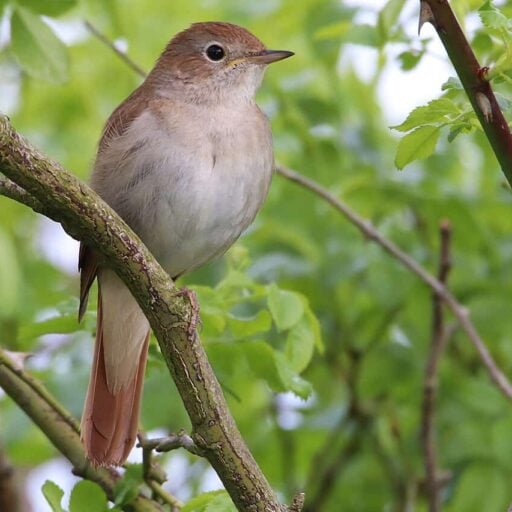
The enigmatic nightingale, known for its melodic and complex song, is seeing a growth in numbers in England. The migratory bird arrives from West Africa in late April every year, and spends a few weeks looking for a mate and marking its territory. Nightingales make their presence known through their distinct song – sometimes the only way to detect if the bird is nearby. The small brown songbirds are remarkably secretive and very rarely seen.
While they have been on the Birds of Conservation Concern’s Red List since 2015, conservationists are now seeing an upsurge in numbers. The British Trust for Ornithology has reported an 8.9% increase in singing males between 2014 and 2024. And last year, the second highest total was recorded on RSPB reserves for more than 10 years.
Alan Johnson, the RSPB’s manager for Kent and Essex, is optimistic about the potential for numbers to continue to rise and said nightingales are “a proxy for the health of the wider countryside.” On a walk through Northward Hill, an RSPB reserve that has the largest population of singing males, Johnson remarked: “Nightingales are an indicator of what’s happening in these woodland scrub habitats. This walk today is telling me this is in pretty good nick, it’s working for nightingales, there’s loads of them in here. It’s the most common bird that I can hear at the moment. It’s not often you can say that. Normally you’d wander round and hear one or two, but we’re surrounded.”
He cautioned, however, that woodland birds overall are not out of the woods just yet. Populations are diminishing due to the decline of insects, agricultural intensification, changes of land use and climate change.
Image: Warrieboy

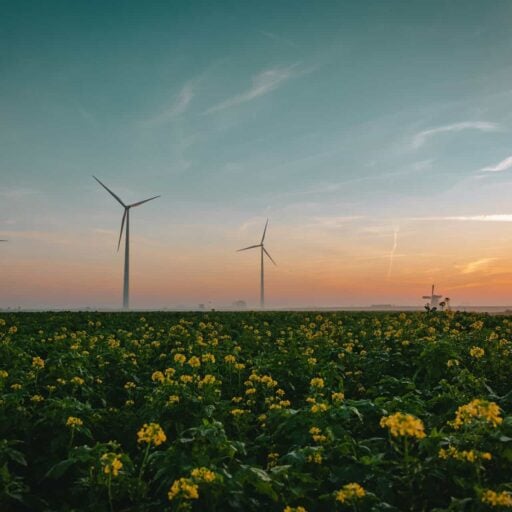
Colombia this week played host to the world’s first high-level conference dedicated to phasing out oil, gas and coal. Representatives from 57 countries gathered in the coastal city of Santa Marta for two days of talks, with four days of civil society workshops held just before.
The conference, convened by the governments of the Netherlands and Colombia, was born out of frustration with the lack of progress that often accompanies the annual COP summit.
As well as the creation of fresh collaborations between countries, a new international scientific panel on the energy transition was announced. Some countries also progressed individual plans to phase out fossil fuels. Colombia published a draft plan last week, for example, and France followed suit on Tuesday with a roadmap to remove coal from the grid by 2027, and end dependency on oil fossil gas by 2045 and 2050, respectively.
While no “negotiated political outcome” was produced, according to Amnesty International, the Netherlands’ climate minister Stientje van Veldhoven noted that the conference was meant as “an accelerator of work”.
Candy Ofime, a researcher and legal advisor on climate justice at Amnesty International, was positive about the conference’s innovative and inclusive methodology. “The conference adopted a more participatory and holistic approach than most multi-lateral summits, welcoming the contributions of Indigenous Peoples’, Afro-descendants, children and youth, trade unions and NGOs,” she said.
Talks will continue at a second conference held in Tuvalu in 2027.
Image: Tim van der Kuip
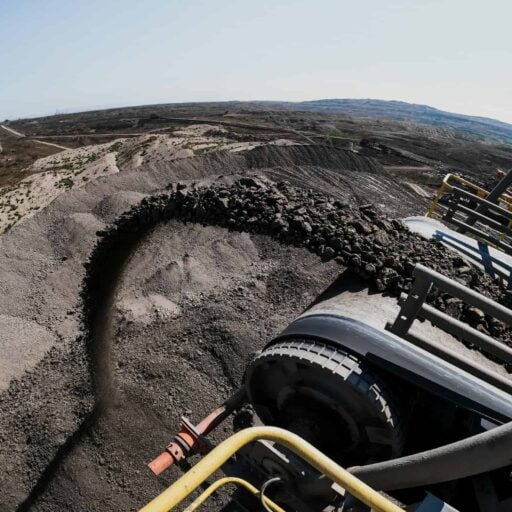
The conflict in Iran has had global ramifications, not least on gas supplies. Around a fifth of the world’s liquefied natural gas (LNG) is routinely shipped through the strait of Hormuz. Since the blockage of the strait in late February, supplies have been significantly reduced, and what’s left has risen in price.
Some countries have, as a result, announced that they intend to increase coal-fired electricity generation, or review their phase-out plans. This has led to concerns around a resurgence of coal power. But new evidence has found that increases will be much more limited than some had predicted.
The analysis, by thinktank Ember and reported by Carbon Brief, states that a global rise of no more than 1.8% in coal power output will occur this year. In fact, the reality could be even lower as the figure is a ‘worst case scenario’.
Instead, experts say that clean-energy projects are actually emerging as more appealing investments. Suzie Marshall, a policy advisor at thinktank E3G, told Carbon Brief: “We’re seeing possible delayed retirements and higher utilisation [of existing coal plants], as understandable emergency measures to keep the lights on, but not investment in new coal projects…Any short-term increase in coal consumption that we may see in response to this ongoing energy crisis is merely masking a longer-term structural decline.”
Image: Albert Hyseni

Hypertension during pregnancy, known as pre-eclampsia, affects 3-8% of pregnant women worldwide. It usually develops after 20 weeks gestation and can lead to organ damage for the mother. If not managed, it can even endanger the baby’s life. Long-term problems can often also develop, such as a higher risk of heart disease in later life.
But now, scientists from the University of Oxford have identified a remarkably simple method that could reduce these mothers’ risk of heart attack, stroke and potentially early death: daily blood pressure checks.
The study, published in the journal Hypertension, involved a group of 112 women who performed at-home blood pressure checks and reported the readings in an app. Doctors then adjusted medication accordingly. A different group of 108 women did not perform these checks and instead received standard care where only a few blood pressure readings were taken and medication was reduced in a less person-specific way, in the eight weeks post-birth.
Follow-up tests six to nine months later revealed that the women performing daily checks had less stiff arteries, which are linked to high blood pressure, the formation of clots, and potentially heart attacks and strokes. Trials are now beginning, to assess how more regular checks can be rolled out on a larger scale.
Dr Sonya Babu-Narayan, the clinical director at the British Heart Foundation, which funded the work, said: “We now look forward to seeing results from larger studies with longer follow-up to see how this might save women’s lives.” she said.
Image: Vanessa

The weather was perfect, the crowds in good humour. Last Sunday, 26 April, saw thousands of runners take to the streets of the UK capital for the London Marathon, reaffirming its status as the world’s largest annual one-day fundraising event.
While the race attracts elite runners and is notoriously hard to get into through the public ballot, it’s also the single most important fundraising event of the year for many charities. This year was no exception, with more than £95m raised. Additionally, more than 1,900 people with disabilities took part this year, making it the most inclusive London Marathon to date.
For charities, it’s a moment when they can tell their story to a huge audience, recruit supporters, and raise significant amounts of money. One of these organisations is Children with Cancer UK, which funds research, supports families and raises awareness about cancer in children and young people. With around one in every 40 runners wearing its bright orange t-shirts, it’s one of the largest teams in the race.
Gavin Maggs, chief executive of the charity, says that the race is a hugely important day for the organisation. “It’s really powerful – and a huge visual joy for those of us who are involved in it,” he says.
Read the full story here.
Image: Alan Kean/Shutterstock
Main image: oneinchpunch
Get your weekly fix of good news delivered to your inbox every Saturday, by signing up to the Positive News email newsletter
Be part of the solution
At Positive News, we’re not chasing clicks or profits for media moguls – we’re here to serve you and have a positive social impact. We can’t do this unless enough people like you choose to support our journalism.
Give once from just £1, or join 1,800+ others who contribute an average of £3 or more per month. Together, we can build a healthier form of media – one that focuses on solutions, progress and possibilities, and empowers people to create positive change.