From ferry companies to shopping centres, communities are buying up local assets to run for themselves as big retailers and the state retreat. Could new funding supercharge the movement?
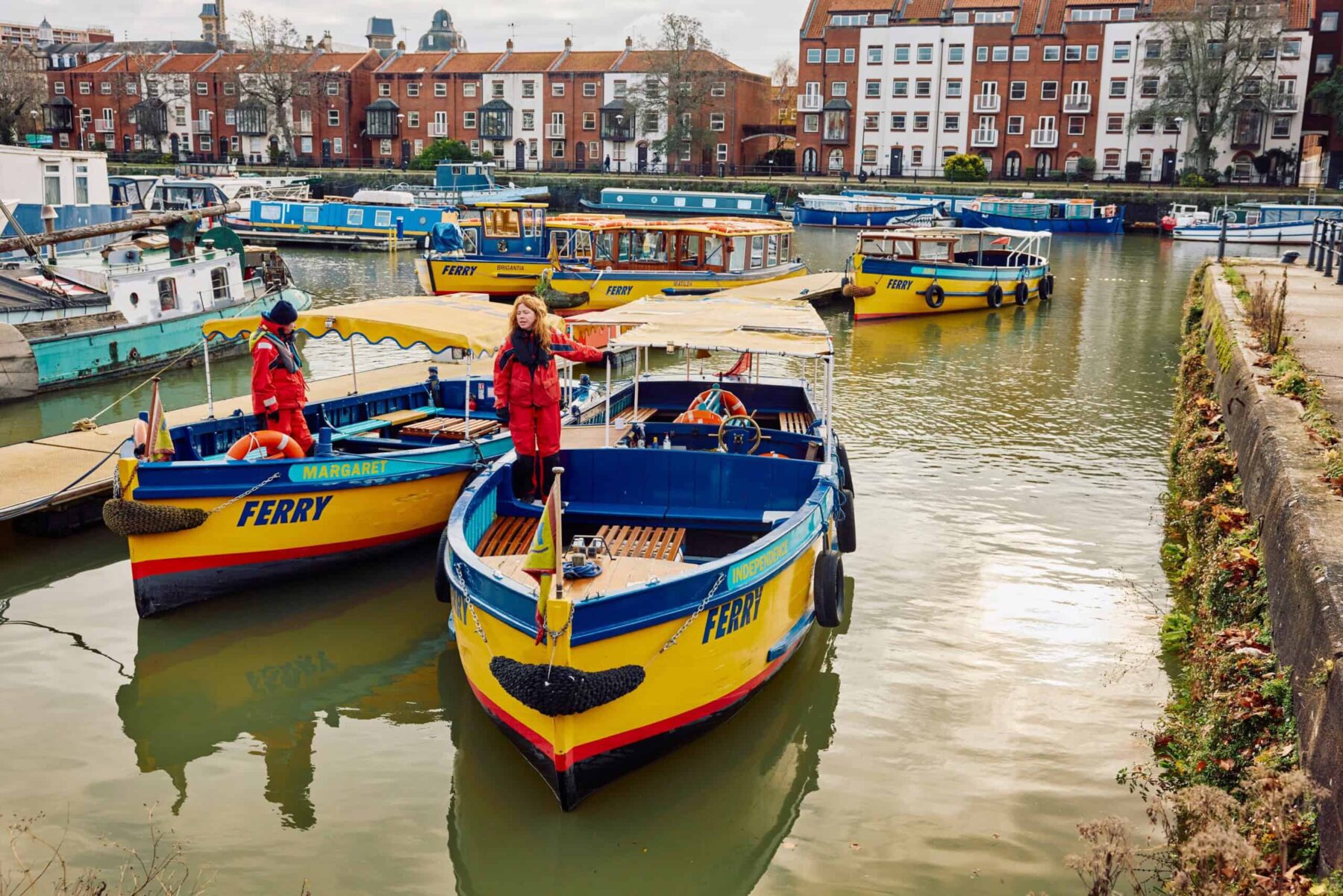
A child waves from a bridge and mallards scatter as our boat glides through Bristol harbour. The city’s colourful buildings reflect in the rippling water, offering a cheerful contrast to the dark clouds racing overhead.
It’s always satisfying travelling by boat, but especially so today. I’m on a people-powered ferry run by the community, for the community.
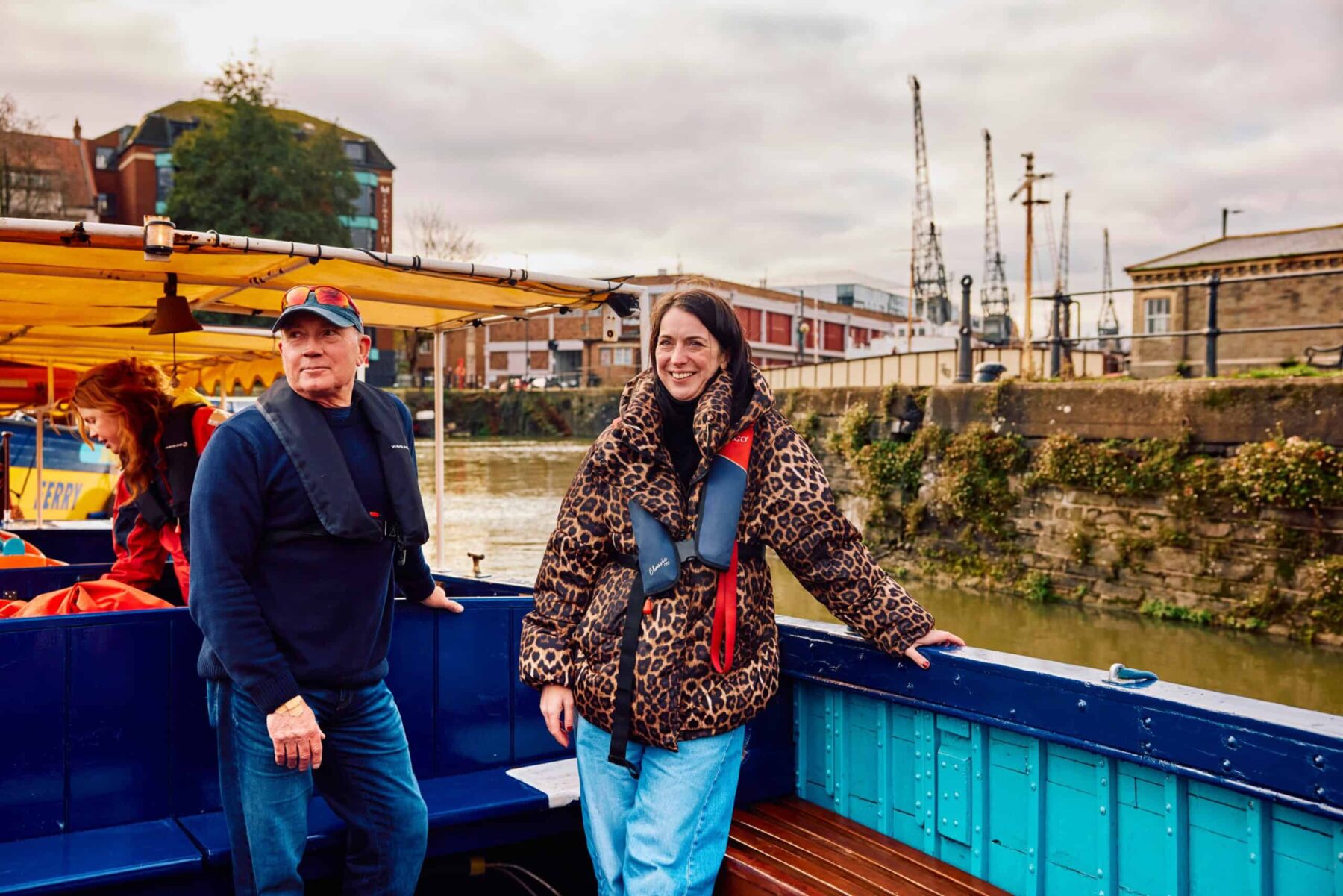
“With everything that’s going on in the world today, having something like this is a powerful thing,” says Roisin Tobin-Brooke, co-director of Bristol Community Ferry Boats. “Everything we make goes back into providing this service, and we’re a living wage employer.”

We sit quietly for a minute, admiring the harbour-side Victorian architecture, watching people watch us from the water’s edge. “It’s the best way to see the city, and the best way to start the day if you’re a commuter,” says Tobin-Brooke.
“The interesting thing,” adds skipper Steve Pope, “is that commuters actually talk to each other. They strike up friendships. You don’t get that on buses or trains. There’s something about being on the water that relaxes people.”
Bristol’s yellow and blue ferries have shuttled people around the harbour since the 1970s. Run initially by a private firm, it went bust in 2012 marking what many feared was the end of the city’s iconic boats. Bristol had other ideas.
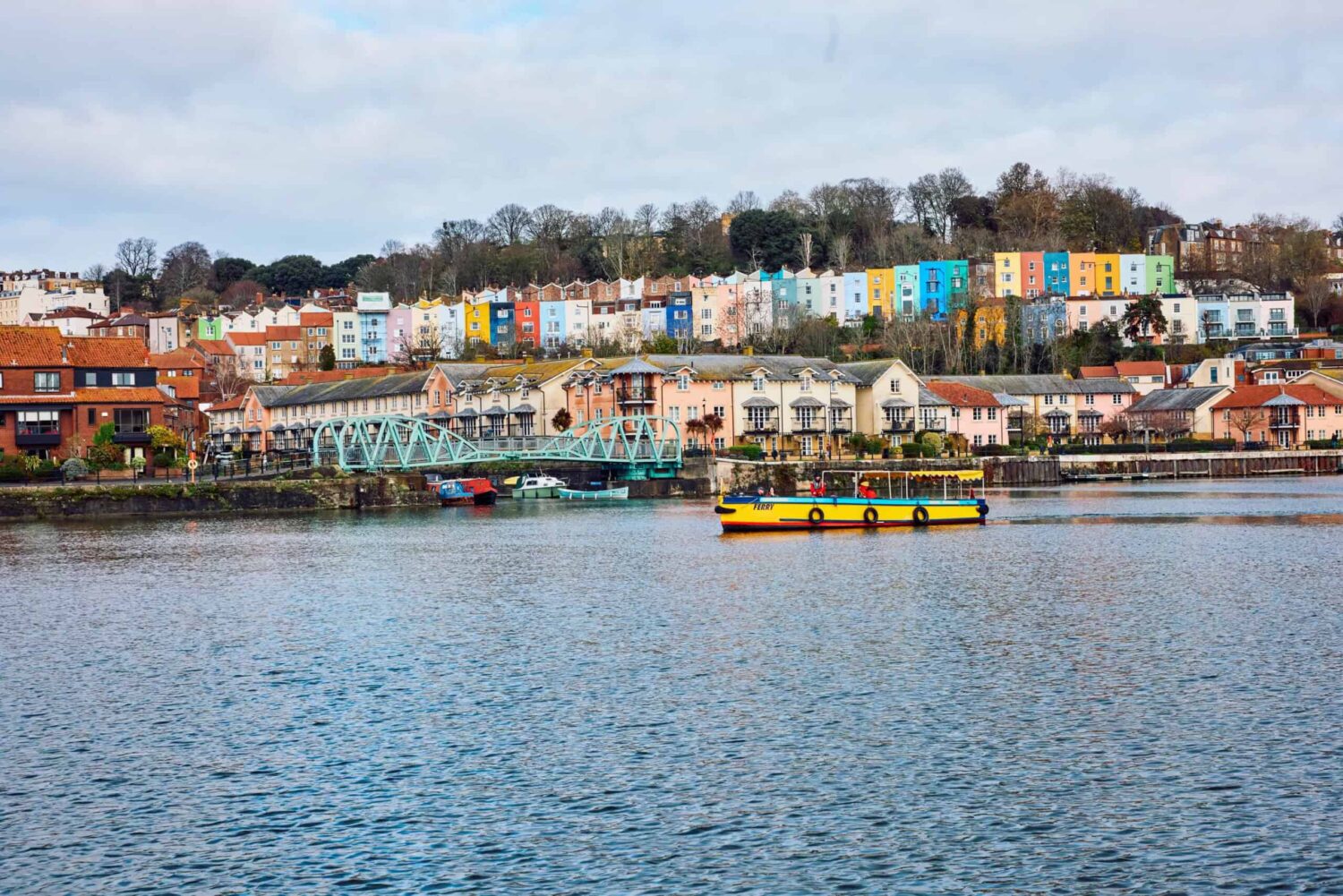
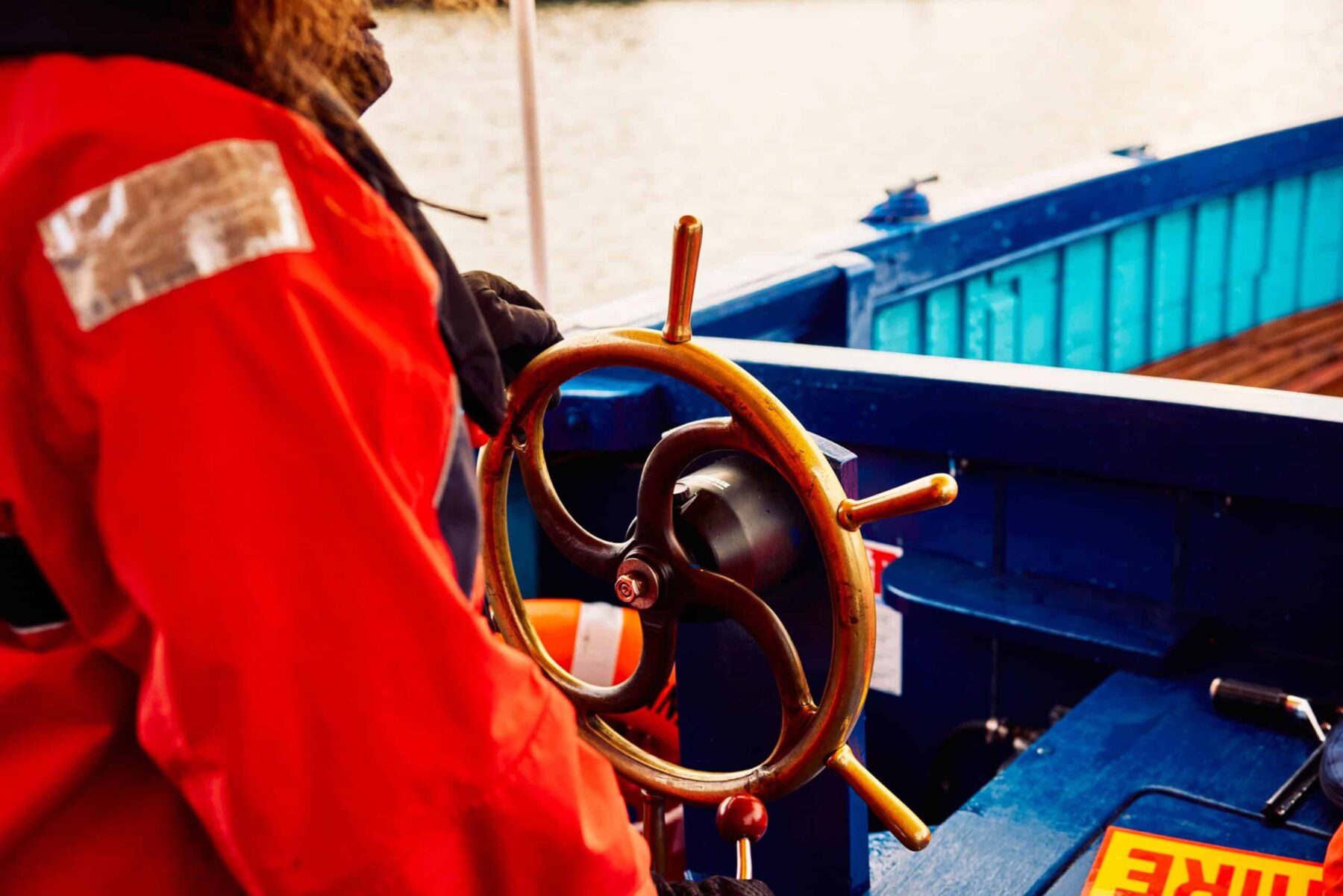
Bristol’s people-powered ferry service carries 50,000 passengers a year. Image: Emli Bendixen
A campaign to revive the service and bring it into community ownership was floated. Almost 900 people bought into a subsequent share offer in 2013, enabling Bristol Community Ferry Boats to acquire the vessels and get them ship shape.
The company is growing. This year marked the first full season for its commuter service between Bristol Temple Meads train station and the city centre, which is helping to reduce road congestion. The boats, though, are mostly ridden for pleasure, shuttling locals and tourists between attractions like the M-Shed museum and SS Great Britain, as well as harbourside pubs and restaurants.
“We bring around 50,000 people to the harbour every year,” says Tobin-Brooke, adding that some passengers pay nothing. “We run up to 20 free tours a year for people facing financial barriers to accessing the harbour.”
Commuters actually talk to each other. They strike up friendships. You don’t get that on buses or trains
With six boats and 40 employees – including teachers, tattoo artists and carpenters – on its books, Bristol Community Ferry Boats has created a wave that others are riding. The maintenance of the vessels alone provides regular work for Bristol’s wooden boat builders, whose trade is on the UK red list of endangered crafts.
“It’s great to be able to support them,” says Tobin-Brooke, adding that a third of revenue is spent on boat maintenance.
Despite its impact, many passengers are unaware that the ferry service is community owned. “We’re working on our marketing,” says Tobin-Brooke.
In some ways it’s fitting. The role that communities play in shaping our urban realms is often overlooked. While buildings physically dominate spaces, it’s harder to spot community spirit and quiet acts of civic pride: the volunteer hours spent maintaining community gardens, the neighbourhood litter-picking events, the street WhatsApp groups where recipes, news and unwanted items are shared.
But as the state retreats amid diminishing budgets, many communities across the UK are stepping up, becoming more visible as they revitalise public realms.
In south-east London, for instance, residents transformed a litter-strewn strip of land near a train line into Crofton Park Railway Garden, “a green pocket in the middle of the asphalt jungle”. Where fly-tippers once dumped, schoolchildren now roam, learning about nature while their parents sit amid bulging planters on street furniture.
Where fly-tippers once dumped, schoolchildren now roam, while their parents sit amid bulging planters
Community-run businesses are also flourishing. According to Power to Change, a think tank, their numbers doubled in England between 2015 and 2022 – up from 5,650 to 11,000.
A good chunk of them are pubs. The Campaign for Real Ale estimates that more than 217 public houses in the UK have been taken over by communities. Most would have closed had locals not stepped up.
It’s not just about pints. Community pubs stray beyond the remit of traditional boozers, and are known to host events such as mother and baby groups, book clubs and refugee support programmes, as well as live music. However, it’s along the UK’s faded high streets, in its ghostly town centres, where communities are having perhaps the biggest impact.
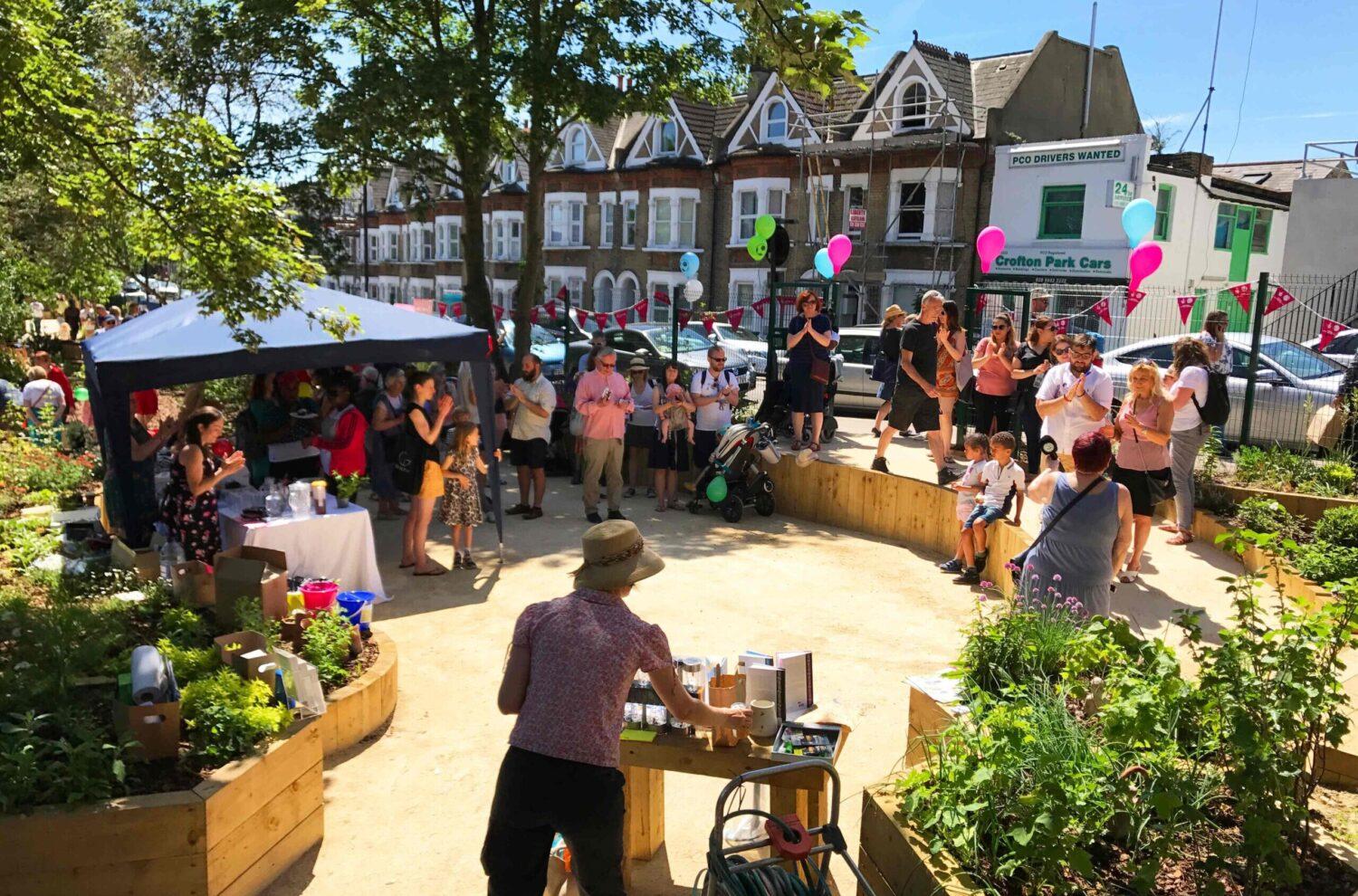
What was a litter-strewn strip of land in south London is now Crofton Park Railway Garden. Credit: Kay Pallaris
“We’ve seen community businesses really regenerate some of those places,” says Jessica Craig, policy manager at Power to Change. “They’ve taken former retail spaces and repurposed them for a wide range of things, which is helping shape a more resilient, more diverse, mixed-use high street.”
One such space is Haven Community Hub, which occupies a former department store in Southend, Essex. The building hosts a range of community-focused services, including a dementia day care centre, a foot clinic and a programme helping people get back into work. There’s also a cafe, a charity shop, art workshops, choirs, “knit and natter” groups, and spaces where people can get checked for diabetes and other conditions.
“It’s much nicer to come to a community hub like ours than a clinic,” says Sarah Wilson, general manager of Age Concern Southend, which took the deeds to the building in November. “If the appointments are running behind, people can sit and have a coffee, or look around the charity shop. It’s a lovely environment, very intergenerational.”
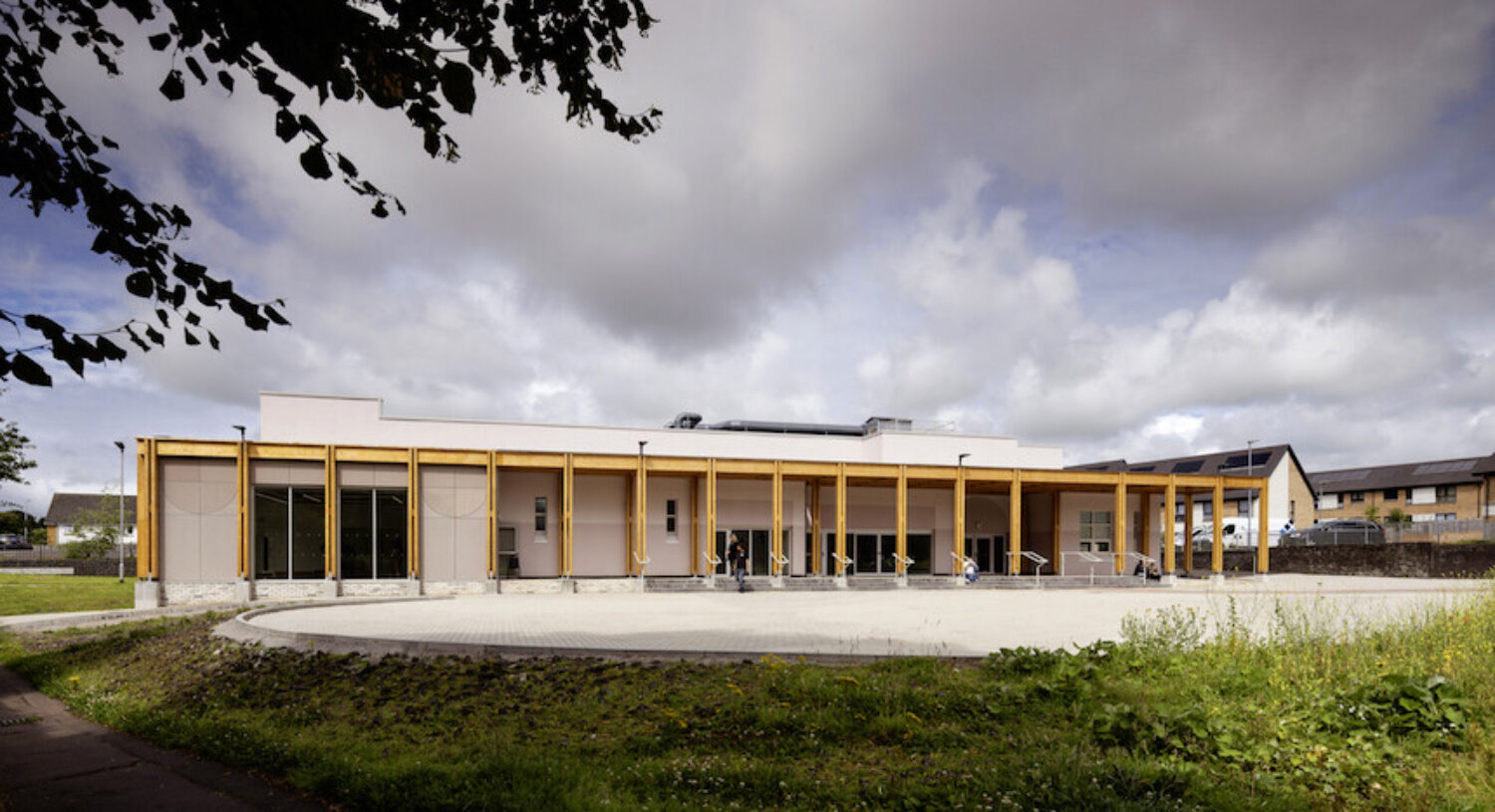
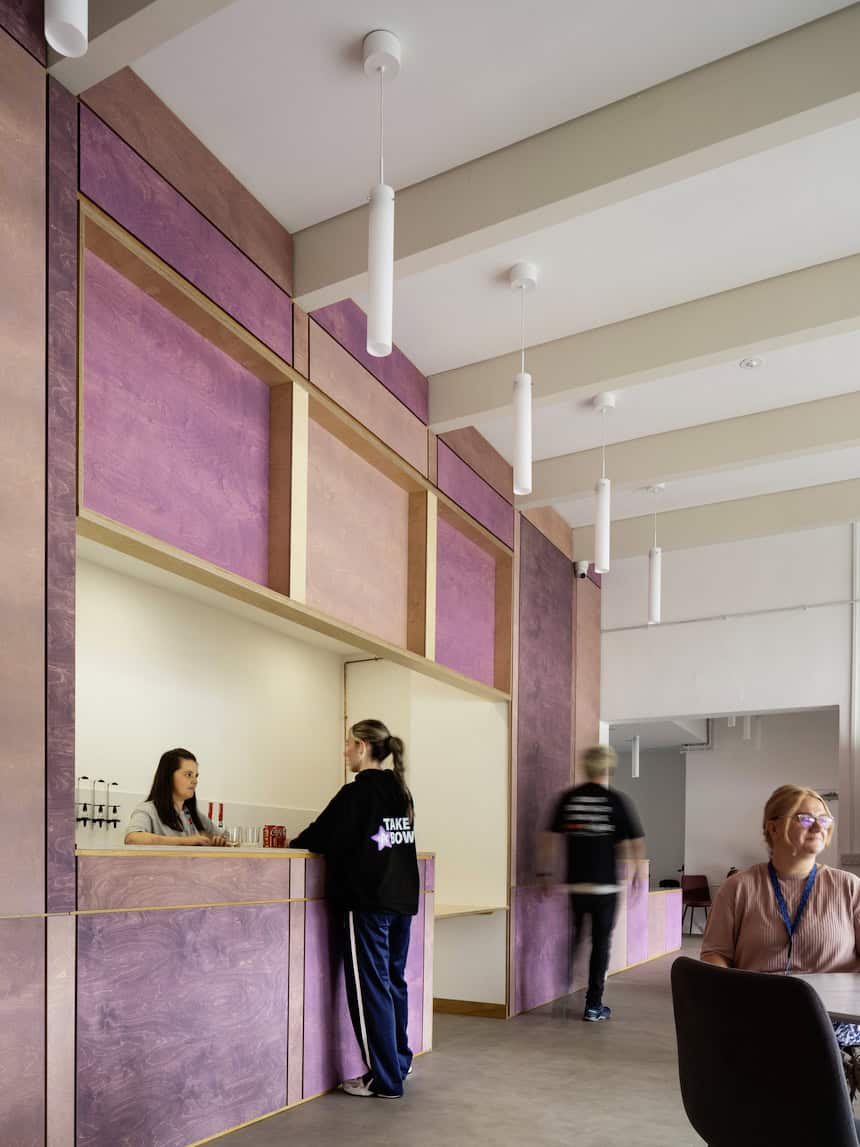
Take A Bow, a performing arts charity based south of Glasgow, refurbished their disused community centre. Image: David Barbour
Access to finance is often the main challenge to acquiring local assets (some of which have opaque ownership structures). The Scottish government has tried to address this with the Scottish Land Fund. It offers grants of up to £1m to help communities buy assets that matter to them.
One beneficiary is Take A Bow, a performing arts and youth development charity in Kilmarnock, south of Glasgow. With a little help from the fund (and other schemes), it bought and refurbished the New Farm Loch Community Centre, which opened in November 2025.
“It’s the only community centre in the area, but the local authority couldn’t afford the upkeep,” says Take A Bow’s chair, John McManus. “We have breathed new life into it. It’s started to thrive again. Saving it has been really vital to our community.”
A similar grant scheme, the Community Ownership Fund, was available across the UK for a while. The £150m pot was launched by the Conservative government in 2019, and helped to secure – among other things – the future of an empty Victorian shopping arcade in Dewsbury, West Yorkshire, a town that “even McDonald’s abandoned”.
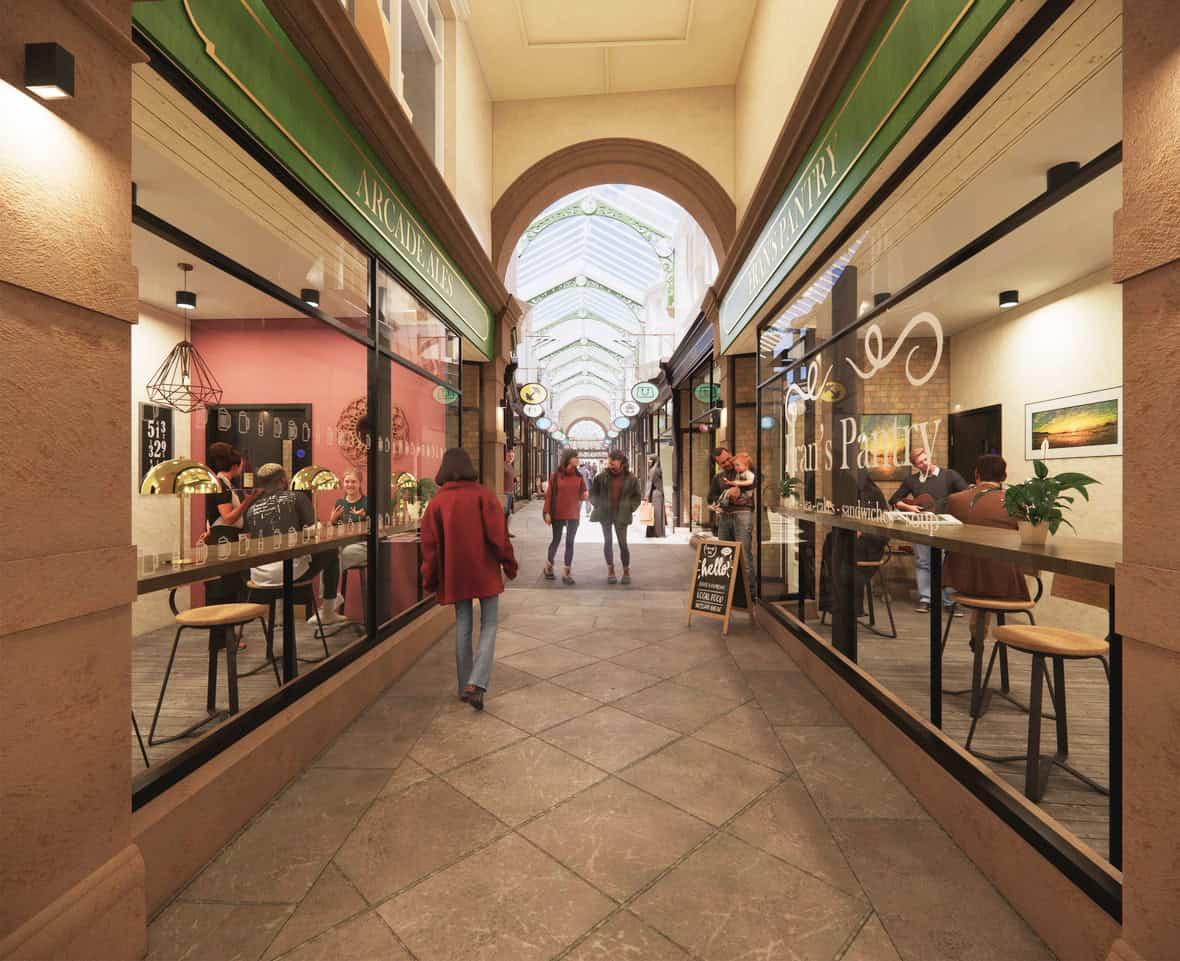
“Dewsbury was on its knees,” says Chris Hill, co-founder of the community-run Arcade Group, which has a 10-year lease on the Grade-II listed arcade. The site is currently being transformed into “an events-driven” community space, with low-rent units available for local businesses.
The Community Ownership Fund closed in 2024. “It was a hell of a loss,” says Hill. And while there’s no direct replacement, the Labour government’s Pride in Place scheme – launched in 2025 – has given communities a say in where money is invested in their neighbourhoods.
This week, that scheme was expanded. On Thursday, at a press conference in Hastings, Sir Keir Starmer announced that people in 40 new areas across England would be able to decide where up to £20m is invested in their neighbourhood – whether that’s revamping high streets or saving community spaces.
“Although it’s not the first time anyone’s put money into local places, it is more money and more control for those communities,” Sir Keir told Positive News. “I have this very strong sense that wherever you go, people have real pride in their own place and ambition,” he said. “And actually they want to do more for their community, or the vast majority do, and so that formed the basis of the idea of Pride in Place.”
There is also the English devolution and community empowerment bill. The legislation, which is going through parliament, will give communities first refusal on local assets when they go up for sale, plus 12 months to raise the capital to buy them.
It’s the only community centre in the area – we have breathed new life into it. It’s started to thrive again
“This is the first time in a long time that we’ve had community mentioned in a government bill,” says Craig. “It feels like a helpful shift in terms of how the government is thinking about doing policy.”
The bill could empower communities in other ways, too. “There’s a provision in there that would see the government introduce a layer of neighbourhood-level governance, so communities and authorities can collaborate more on decisions about places. That’s really exciting.”
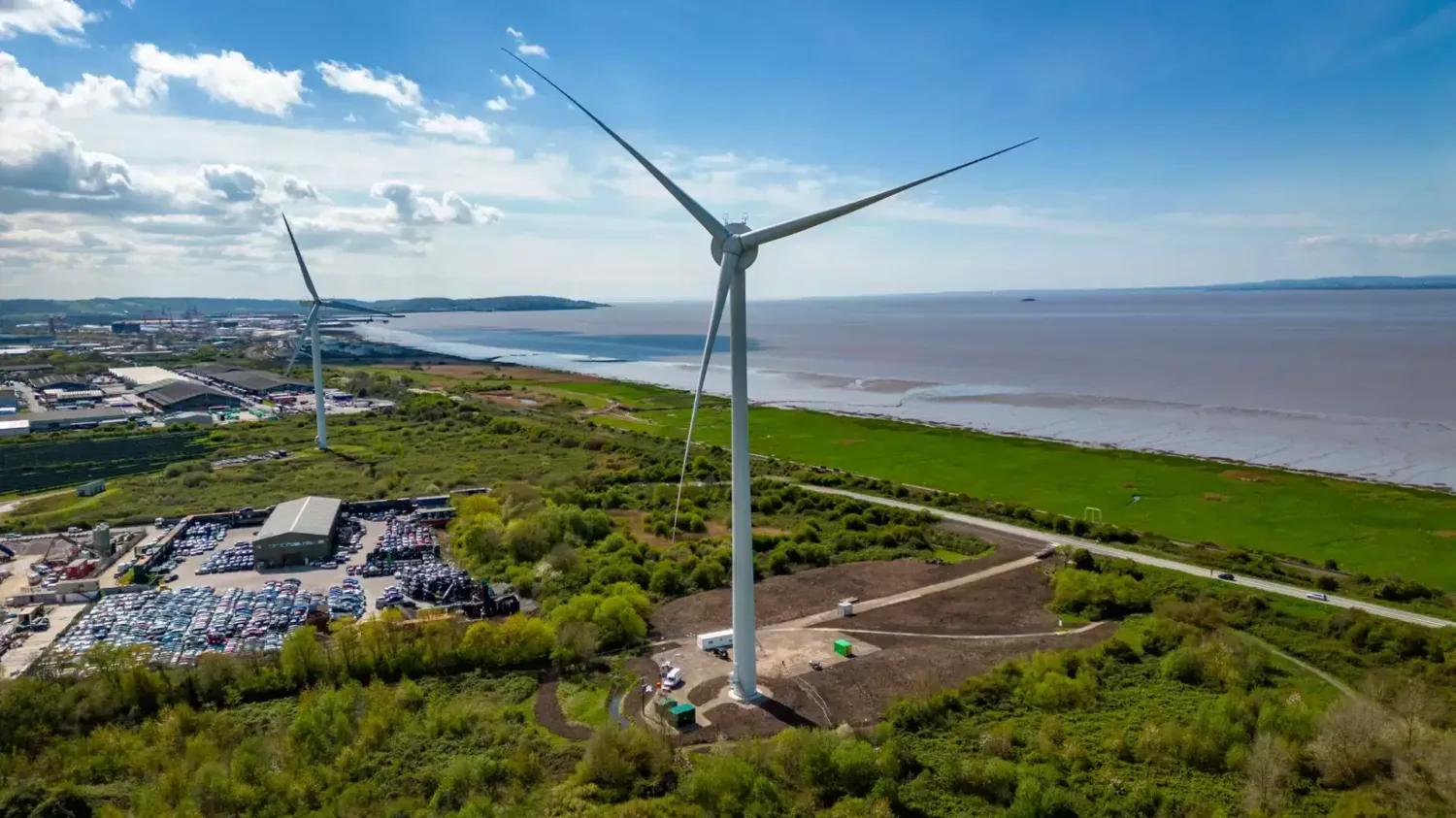
England’s largest onshore turbine is community owned and funds poverty alleviation. Credit: Ambition Community Energy
Back in Bristol, the rain has set in and the wind has picked up, which is good news for Ambition Community Energy.
Based in Lawrence Weston, a deprived neighbourhood in the city’s northwest, the community group owns England’s largest onshore wind turbine, which generates up to £300,000 of electricity per month, helping to fund poverty alleviation efforts.
“It has a positive effect on the environment and helps to address social injustice,” says Mark Pepper, director of residents’ group Ambition Lawrence Weston. “It’s win-win.”
Funded by a loan, the turbine is a literal example of community power – a physical manifestation of how, with the right support, community spirit can shape the future of urban living.
Main image: Skipper Steve Pope with Roisin Tobin-Brooke, co-director of Bristol Community Ferry Boat. Credit: Emli Bendixen
Support solutions in 2026
At Positive News, we’re not chasing clicks or profits for media moguls – we’re here to serve you and have a positive social impact. We can’t do this unless enough people like you choose to support our journalism.
Give once from just £1, or join 1,800+ others who contribute an average of £3 or more per month. Together, we can build a healthier form of media – one that focuses on solutions, progress and possibilities, and empowers people to create positive change.