Advances in forensic science are disrupting the illegal wildlife trade – and are documented in a new photo series
At first glance, Britta Jaschinski’s award-winning photo below looks like an otherworldly portrait of a green turtle drifting through luminous water.
Look closer, however, and the human trace appears: a handprint, revealed by forensic powder under ultraviolet light.
The technique, developed by wildlife crime specialists from the UK’s Wildlife Crime and Forensics Unit, can expose fingerprints, blood, bodily fluids and gunpowder residue, helping investigators track poachers and disrupt illegal wildlife trade networks.
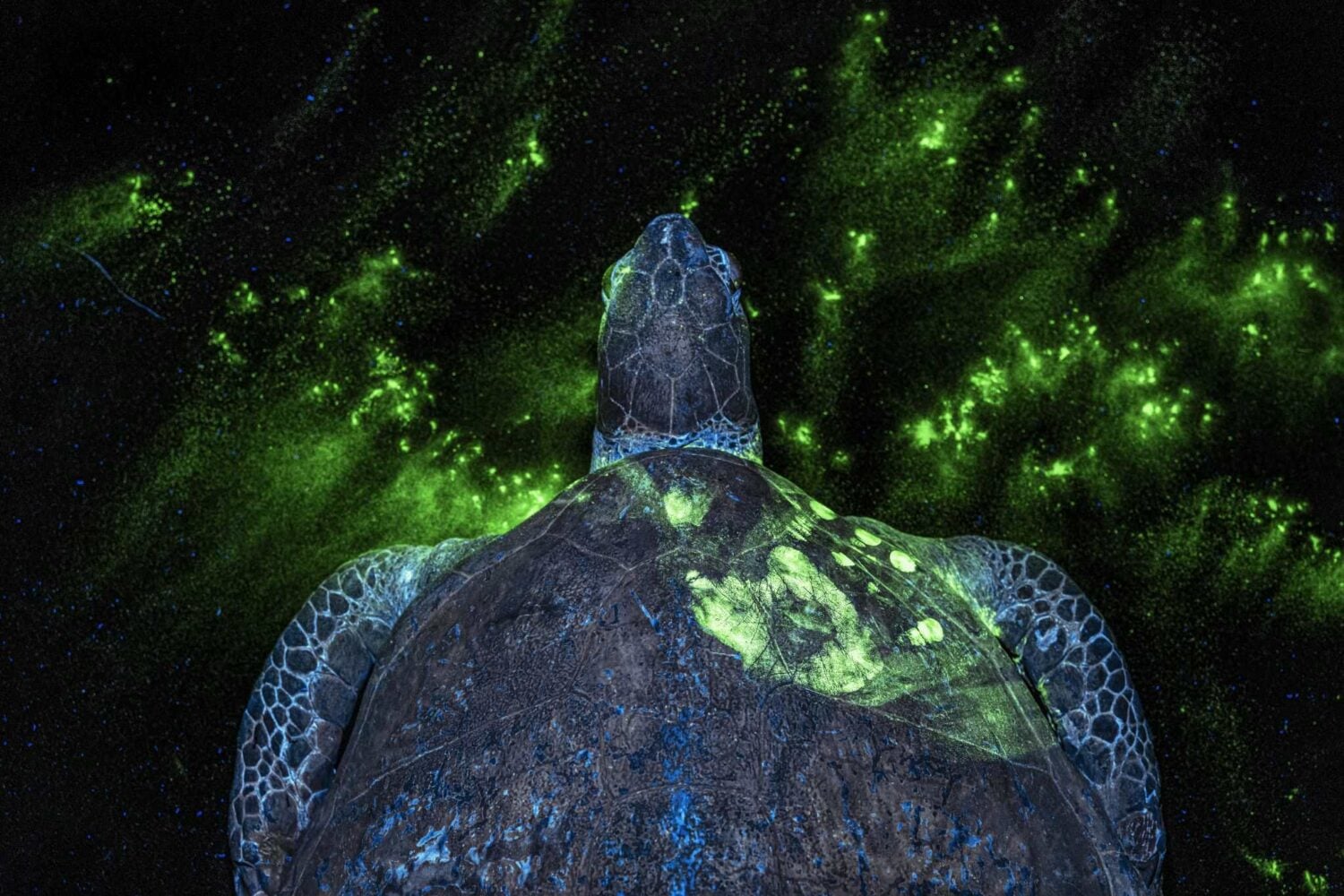
Poachers are caught green handed as forensic science disrupts the illegal wildlife trade. Image: Britta Jachinski
“I created this image to expose the traces we leave behind and to demonstrate how science is becoming a vital tool in protecting wildlife from exploitation,” Jaschinski tells Positive News.
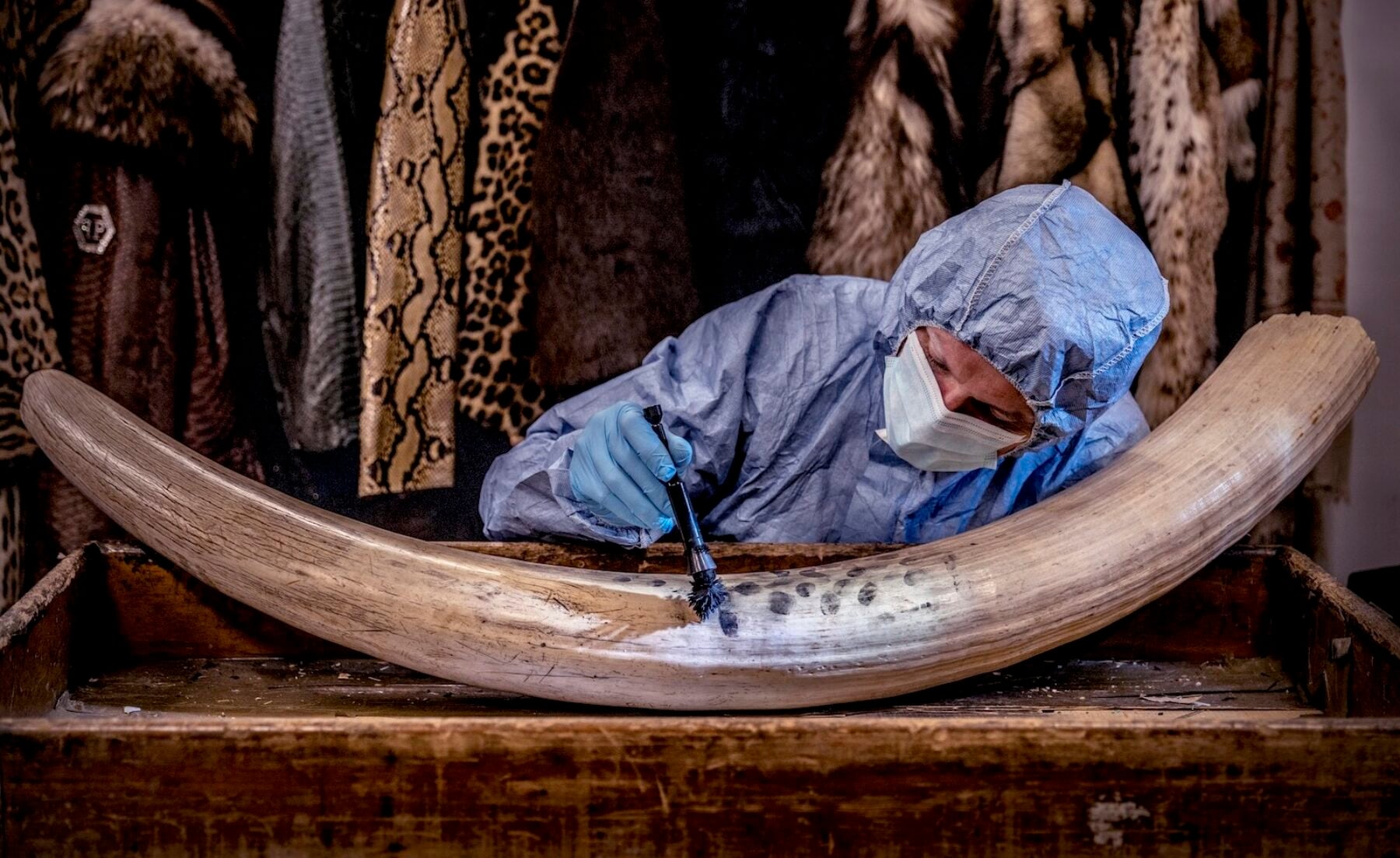
A similar technique has been used to disrupt the ivory trade. Using a newly developed magnetic powder, Mark Moseley (main picture), a forensic investigator at London’s Metropolitan police, dusts for and detects human fingerprints on an elephant tusk confiscated at Heathrow Airport.
More than 200 fingerprinting kits based on this technology have been distributed to border forces across 40 countries in Africa and Asia. The results have been immediate. In Kenya, evidence recovered using one kit led to 15 arrests, including five police officers, and the seizure of 11 elephant tusks. For the first time, ivory was not just proof of a crime; it was evidence of who committed it.
Science is becoming a vital tool in protecting wildlife from exploitation
A white variant of the powder is now being used to recover prints from rhino horn and pangolin scales. The powders are low-cost, field-deployable, and can be used in locations where DNA testing isn’t feasible.
Jaschinski’s winning image, from the Royal Geographical Society’s Earth Photo 2026 competition, is among selected works on show in London until 24 July, before touring the UK.
Photograph: Britta Jachinski