New regulations promise zero-carbon-ready homes, but the real work lies in retrofitting Britain’s ageing and inefficient properties
The UK’s housing problem is in no small part due to the age of the housing stock. The vast majority of homes are old, inefficient and leaking heat. Even newer homes were frequently built without the most efficient and modern technologies embedded, as they followed outdated regulations, meaning homeowners are still paying hundreds of pounds more per year in utility bills than they would if developers had used the best systems.
But regulations for newbuilds are finally shifting with the Future Homes Standard being rolled out over the next two years. The new standards require modern homes to be highly energy-efficient and built with low-carbon heating systems, making them ‘zero-carbon-ready’. It will require new homes to produce 75–80% fewer emissions than those built to the old 2013 rules.
Heat pumps or heat networks will become the default form of heating as gas boilers are designed out. Better insulation, high-performance glazing and tighter air tightness will become standard. And for the first time, newbuild homes will be required to generate renewable electricity on site. The UK government has already confirmed that solar panels will be included on the vast majority of new homes across the country, and planning rules have also shifted to speed up heat pump installation.
These are necessary steps, but they still only affect homes yet to be built. The real challenge is the country’s legacy stock. Britain has around 29m existing homes that need some level of retrofit, from basic draught proofing to complete mechanical overhauls. Many date back to the 19th and early-20th centuries. They leak heat, suffer from condensation and are often expensive to run. New regulation does nothing for them unless owners and landlords take the initiative.
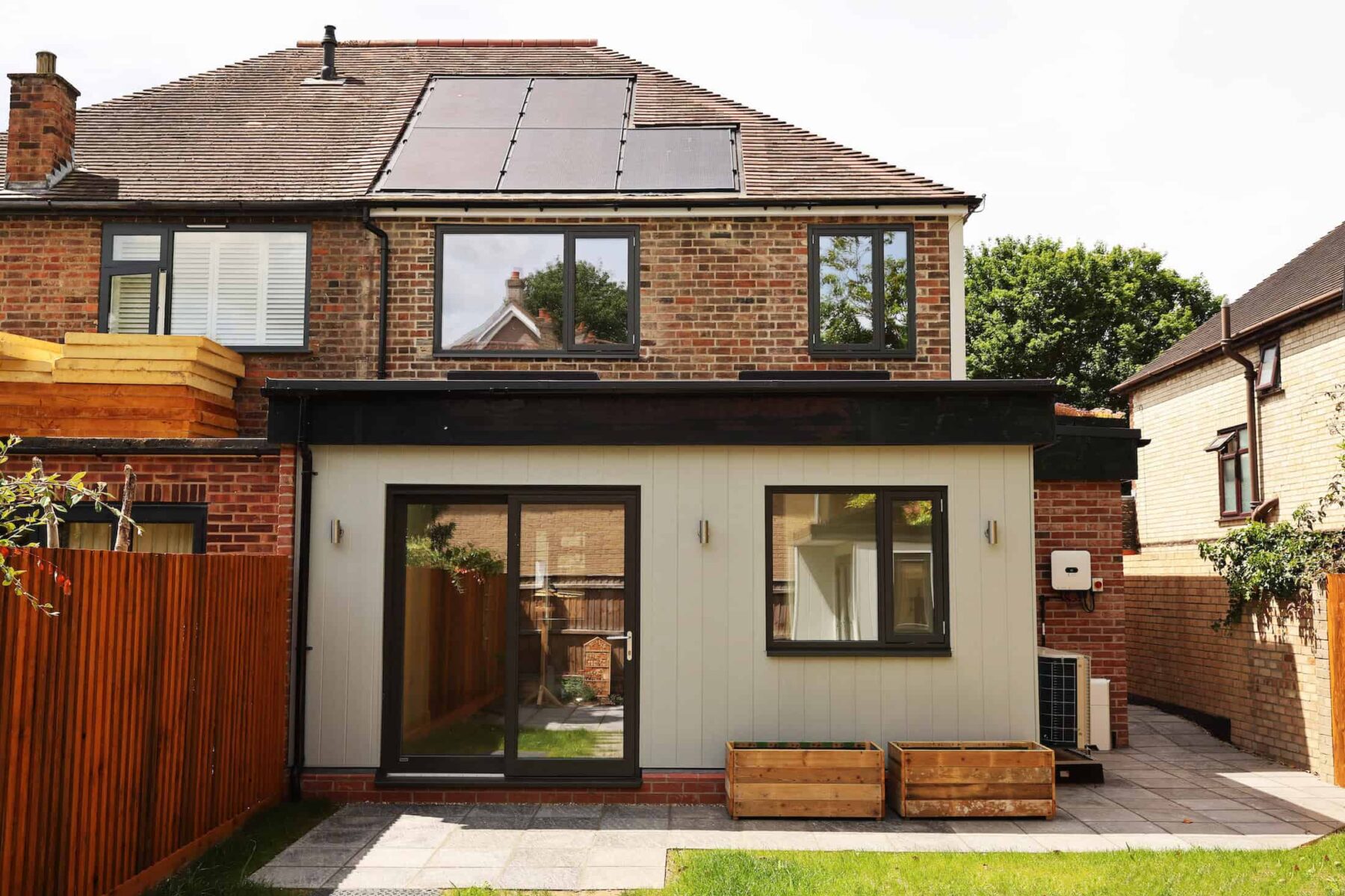
Ferndale Rise in Cambridge shows what that initiative can look like. The Cambridge Building Society bought a standard 1930s semi-detached home and turned it into an A-rated, carbon-negative property.
“There’s a lot out there for newbuilds, but there’s not a lot out there in the retrofit spaces,” explains project manager Duncan Turner. The society wanted to demonstrate that an ageing home can be pushed far beyond minimum requirements, and that the route to net zero is just as much about upgrading what we have as building new.

The Cambridge Building Society bought a standard 1930s semi-detached home and turned it into an A-rated, carbon-negative property
The upgrade list is exhaustive (and expensive) because the house was used as a full working test bed rather than a more realistic or practical update. Every type of insulation was applied: internal, external, cavity, roof and floor. Air tightness was improved with an intelligent liquid membrane across every surface. A full mechanical ventilation with heat recovery (MVHR) system keeps the interior stable and avoids condensation. “Everything is about maintaining your atmosphere internally,” Turner explains.
Heating and hot water come from a single air source heat pump which feeds underfloor heating on both floors. Solar panels provide much of the electricity, and a modular battery system stores excess power. And beneath the lawn sits a 3,000-litre tank collecting rain water from downpipes and pumped back into the house to supply toilets, the washing machine and the garden.
The upfront costs of retrofitting might be high but over time they will see the benefits
For newbuild developers, incentives to incur the higher costs of building zero-carbon-ready homes are low, as they don’t reap the long-term cost benefits. For home owners, the opposite is true. Yes, the upfront costs of retrofitting and installation may be high, but over time they will see significantly reduced utility bills, and may even generate revenue from selling power back to the grid.
Crucially, these technologies are no longer specialist or unaffordable. They are much cheaper than a decade ago and well understood by installers. As Turner says, “If you understand how your house is failing, you can fix it.”
Main image: A 1930s property in Cambridge has been retrofitted to become carbon positive. Photography: Cambridge Building Society
Be part of the solution
At Positive News, we’re not chasing clicks or profits for media moguls – we’re here to serve you and have a positive social impact. We can’t do this unless enough people like you choose to support our journalism.
Give once from just £1, or join 1,800+ others who contribute an average of £3 or more per month. Together, we can build a healthier form of media – one that focuses on solutions, progress and possibilities, and empowers people to create positive change.