
The UK government announced a new law to protect survivors of online image-based abuse, two rare birds made a resurgence, and a psychedelic drug was shown to improve depression, plus more
This week’s good news roundup

The UK government this week revealed a new law that would require tech companies to remove intimate images that have been shared without consent, within 48 hours. Currently making its way through the House of Lords, the proposed amendment to the crime and policing bill would mean that a survivor only needs to flag an offensive image once, instead of contacting different platforms separately.
Keir Starmer, the UK prime minister, told BBC Breakfast on Thursday that this law would mean a survivor “doesn’t have to do a sort of whack-a-mole chasing wherever this image is next going up”. The law would be enforced by fines and other as-yet-undetermined measures.
Janaya Walker, interim director of the End Violence Against Women Coalition, told Positive News that the proposed law “sends a powerful message that women and girls’ rights and freedoms matter, and should not be threatened by image-based abuse.
“This announcement rightly places the responsibility on tech companies to act, because it is they who can stop images from spreading, and that have profited from hosting this harm. We need to see government build on this work by giving survivors more options to take action, and ultimately to prevent this abuse from happening in the first place.”
Image: Christina Morillo
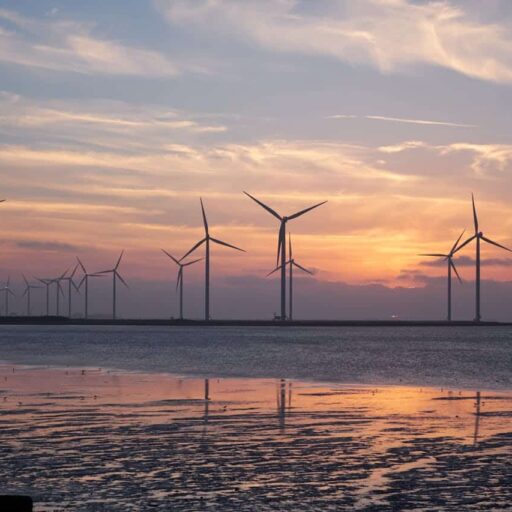
New analysis by the Renewable Energy Association, a non-profit trade association, has found that electricity powered by renewables will be the clear economic winner over gas. The findings came out of a new report by the organisation, which compares the long-term value of scaling up renewables under the government’s Clean Power 2030 Action Plan vs no new investment in renewables.
The report finds that even once grid upgrades, transmission, storage and other associated costs are factored in, renewables will still be cheaper than gas by 2028-2029. Additionally, the analysis found that following the Clean Power pathway will create nearly 145,000 new jobs.
Matt Parry, head of power and energy demand at the REA, told Positive News: “2028/29 is the pivotal moment in our analysis, when renewables move decisively ahead of natural gas on a full system-cost basis… From that point onwards, the economics flip: investment in domestic clean power begins delivering net gains to the UK economy, with job creation and reduced exposure to volatile gas imports accelerating the advantage year by year.”
Image: Pixabay

The tireless efforts of human rights campaigners in Bangladesh have finally paid off: children born in the brothels and streets there are now able to hold a birth certificate. Undocumented children, many born in the sprawling Daulatdia brothel, had previously been denied a birth certificate, and all the rights that come with it. Without official documentation, children cannot attend school and are vulnerable to trafficking.
This week it was revealed that more than 700 children have now received a birth certificate, thanks to organisations such as anti-slavery organisation Freedom Fund, which identified an ‘overlooked stipulation in the law’. Since 2018, it has in fact been permitted for a birth to be registered, even in the absence of information on the parents. Government officials, however, were not recognising this.
“When I first came to know about [this stipulation], we massively disseminated this information with our partners,” Khaleda Akhter, Bangladesh programme manager for Freedom Fund, told the Guardian. Akhter has seen firsthand how a birth certificate can be life-changing for children there. “These documents are not just a tool,” she said, “it’s about survival.”
Image: Shafin Ashraf

We are living in an information age. From the files on our phones to the digitisation of historic records, the level of data being amassed by modern society is gargantuan and ever-growing. So how and where to preserve it? The cloud is the go-to solution, but there’s an issue: storage of digital media requires magnetic tape and hard disks, both of which have a shelf life.
Now, scientists based in Cambridge, UK, may have found a solution: storing data in glass. Their system works by turning data into groups of symbols called voxels, and then using a laser to encode them into glass.
The team said they could store 4.84TB of data in a 12 sq cm piece of silica glass. 2m printed books would reportedly hold about the same amount of information.
The research was welcomed by those working in digital heritage, but some cautioned that significant investment would be required to source adequate volumes of silica glass.
Image: Arthur Lambilotte

With just one breeding pair left in 2017, it was reported this week that the eastern imperial eagle is making a remarkable comeback in Serbia. The raptors have faced incredible odds, from the widespread loss of their habitat due to agricultural intensification, to state-run poisoning campaigns aimed at large carnivores. Eagles feast on the carcasses, and succumb to the poison.
Now, thanks to the relentless work of conservationists in Serbia, the population of the majestic raptor is on the up. The Bird Protection and Study Society of Serbia (BPSSS) has recorded 19 breeding pairs. Through monitoring, rehabilitation and spreading awareness among communities, the organisation now believes that populations of the birds will continue to rise. “Unless something dramatic happens,” said Milan Ružić, executive director of BPSSS, “they will keep coming back.”
Image: Marton Horvath
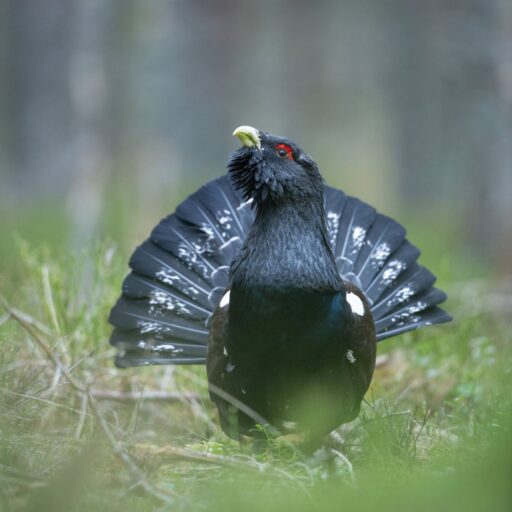
The capercaillie, known for its jaunty black and red feathers and entertaining mating displays, is one of Britain’s most endangered birds. More than 20,000 of the birds could be found in the wild in the 1970s, but numbers have dropped to just 532 in the Caledonian pine forests of the Scottish Highlands, where they are exclusively found in the UK.
This week, a glimmer of hope emerged for the charismatic fowl: numbers have grown by 50% at RSPB Abernethy, which has been trialling methods to improve habitat quality for ‘leking males’. “Lek” is Old Norse for play, and refers to when the birds perform “flutter jumps” and make popping and clicking sounds to attract females. Although the number of males at Abernethy has grown from a modest 20 in 2020 to 30 in 2025, conservationists are pleased. “By enhancing these native pinewood forests, we can collectively work towards the recovery of this incredible bird,” Richard Mason, conservation manager at RSPB Abernethy, told The Guardian.
To hear more about the conservation and rewilding work going on in the Scottish Highlands, check out Positive News’ new podcast The Purpose Pioneers. Episode 3 features Steve Micklewright, the CEO of Trees for Life, which works exclusively in the Caledonian pine forest.
Image: Ben Andrew (rspb-images.com)

Researchers from Imperial College London this week revealed that a small clinical trial involving the psychedelic drug dimethyltryptamine (DMT), had returned positive results. When a single dose of the drug – an active ingredient of the ayahuasca drink used in shamanistic rituals in South America – is combined with psychotherapy, symptoms of depression ease.
The trial involved just 34 people, but supports a growing body of evidence that suggests that, when combined with psychotherapy, depression can be alleviated for those with treatment-resistant depression. For some in the trial, symptoms remained at bay for six months.
Approximately 100m people worldwide have treatment-resistant depression. For half, this means they cannot do routine daily tasks.
It is thought that psychedelics help break entrenched thought patterns. Dr David Erritzoe, who led the trial, said the drug was like shaking up the snow on a mountain and flattening it so new routes can be found. “You redistribute the snow so it’s easier to take new tracks, and at the same time it becomes easier to take new routes because the landscape has been flattened,” he said.
As of yet, psychedelics for treating depression are not approved by regulators in the UK.
Image: Artur Voznenko

There was encouraging news this week for couples who are struggling to conceive: scientists have identified a new way to retrieve eggs from a woman’s follicular fluid. In conventional methods, follicular fluid is extracted from ovaries and eggs are retrieved manually, using a microscope. In the new method, discovered by the US-based company AutoIVF, the process is automated.
The technique was tested at four different clinics in the US. Extra eggs in fluid that otherwise would have been discarded were found in more than 50% of the patients. The study was published in the journal Nature Medicine.
Dr Ravi Kapur, the chief executive officer of AutoIVF and an author of the study, told The New York Times that the company is in talks with the US’s Food and Drug Administration about approval for use of the device in clinical settings.
Researchers not involved said the results were “promising” but that larger studies would be needed to back it up.
Image: Wikimedia Commons
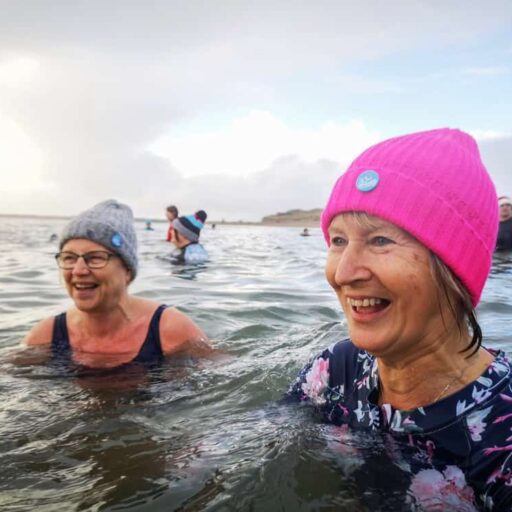
The range of bathing spots for outdoor swimmers in the UK is set to climb, with 13 new designated sites soon to be available. The public is invited to share their views on the proposals, through a six week consultation process.
One of the proposed sites is on the River Thames in London, a first for the waterway, which was declared “biologically dead” in the 1950s. If approved, the additions would bring the total number of bathing waters in England to 464.
Some outdoor swimming enthusiasts see the rising popularity of the activity as an opportunity to spread awareness about plastic pollution. “We’re turning a joyful sea dip into a powerful call to end pollution,” Surfers Against Sewage ambassador Nicky Chisholm told Positive News.
Read the full story here.
Image: jax10289
Main image: Roman Samborskyi
Get your weekly fix of good news delivered to your inbox every Saturday, by signing up to the Positive News email newsletter
Be part of the solution
At Positive News, we’re not chasing clicks or profits for media moguls – we’re here to serve you and have a positive social impact. We can’t do this unless enough people like you choose to support our journalism.
Give once from just £1, or join 1,800+ others who contribute an average of £3 or more per month. Together, we can build a healthier form of media – one that focuses on solutions, progress and possibilities, and empowers people to create positive change.