England’s murder rate plummeted, France said ‘non’ to social media for kids, and the world set a welcome nuke record, plus more good news
This week’s good news roundup

While some politicians peddle a “Britain is lawless” narrative, new crime data tells a different story.
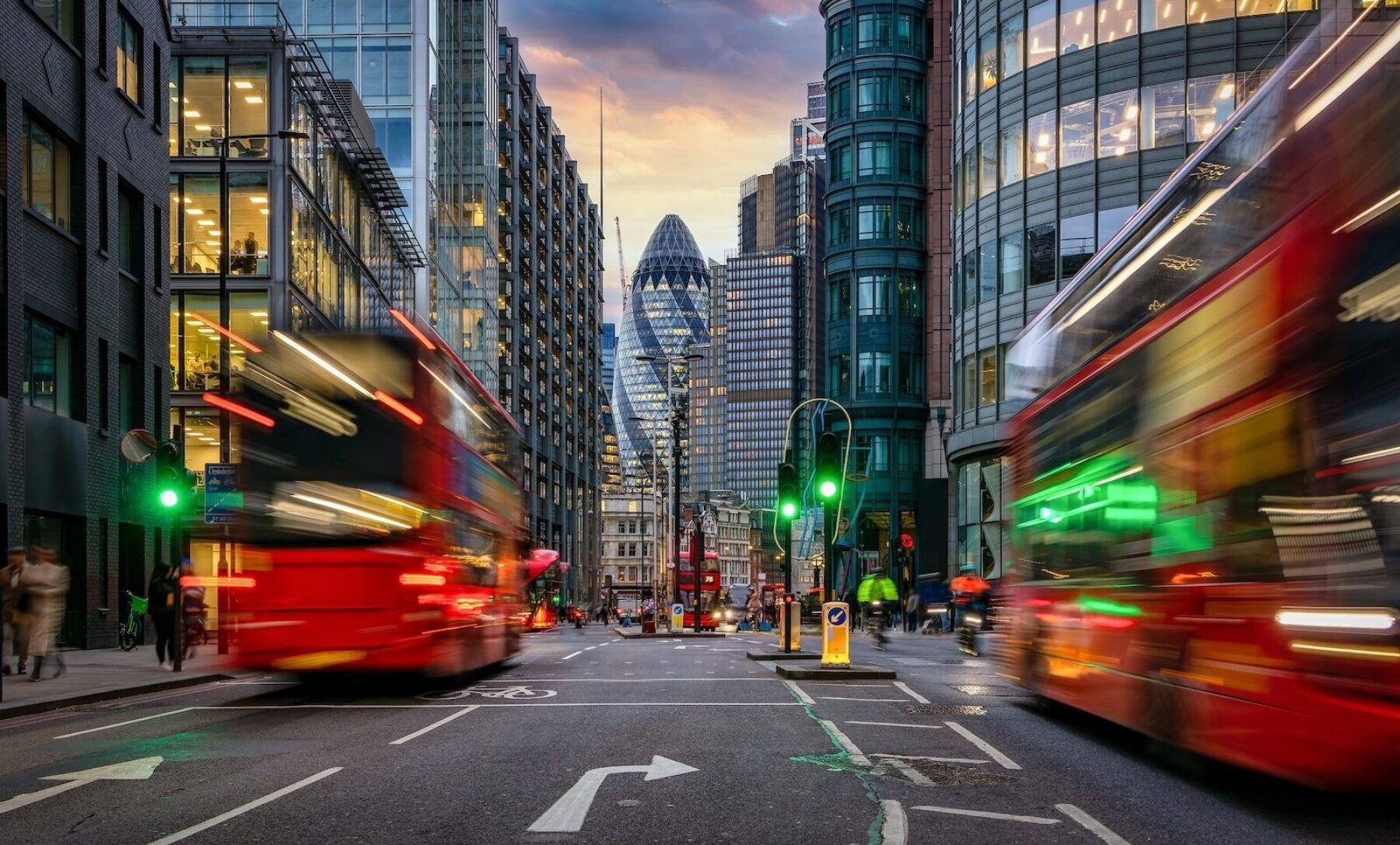
According to the Office for National Statistics’ (ONS) latest figures, the murder rate in England and Wales fell to its lowest level since 1977 in the year to September 2025.
Police reported incidents of domestic burglary and vehicle theft were also down – by 12% and 13%, respectively – while shoplifting and sexual offences rose by 5% and 8%. The latter, said the ONS, is partly due to the introduction of new sexual offences in 2024.
“Many aspects of violent crime and theft recorded by the police have fallen in the past 12 months,” said the ONS’ Billy Gazard. “Homicide and gun crime are at the lowest levels seen this century, while knife crime has also decreased.”
Police stats rarely provide a full picture as many offences go unreported. However, the data on knife crime is supported by hospital figures, which show a fall in admissions for assault by a sharp object.
The ONS’ own annual crime survey further enriches the picture. It quizzes thousands of people on their experiences of crime and the latest results point to a year-on-year decline in incidents, albeit slight.
The ONS data comes after London registered its lowest murder rate since records began last year. Meanwhile, the US also saw a record fall in its homicide rate.
Image: Sander Crombach

French lawmakers have voted in favour of legislation that will ban under-15s from social media amid growing concern that children’s attention is being hijacked by algorithms.
The draft bill would also ban smartphones in school, however it still needs senate approval to become law. That could come as early as next month.
“The emotions of our children and teenagers are not for sale or to be manipulated, either by American platforms or Chinese algorithms,” said president Emmanuel Macron, championing the bill.
Denmark, New Zealand and the UK are considering similar legislation after Australia became the first country to ban under-16s from social media in December.
Not everyone supports blanket bans. Chris Sherwood of the UK’s National Society for the Prevention of Cruelty to Children, said they “punish teenagers for tech platform’s failures”.
However, a recent study from India revealed that grades are better in classrooms with smartphone bans. Daisy Greenwell, director of the UK’s Smartphone Free Childhood movement, and former editor of Positive News, said: “Big tech’s addictive algorithms hijack attention, so banning phones is a simple, low-cost way to boost learning.”
Image: Aedrian Salazar
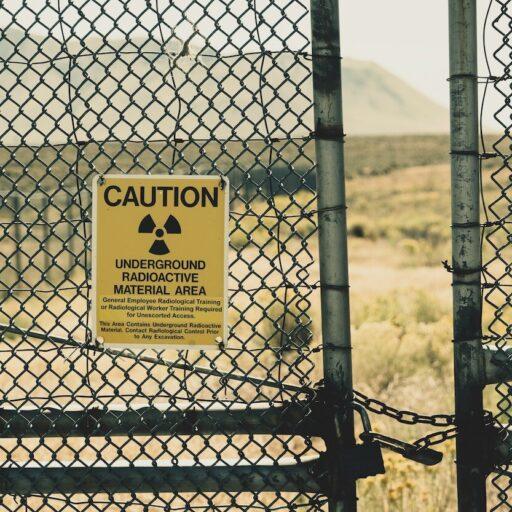
The world has gone for its longest period since 1945 without an explosive nuclear test – a record cautiously welcomed as a “milestone in world history”.
In 1996, 187 nations signed the Comprehensive Test Ban Treaty prohibiting all forms of supercritical nuclear testing. Of those, 178 ratified it. North Korea was not one of them and conducted the most recent nuke test in 2017.
“The world has quietly broken a record for the longest period of time without a nuclear test,” wrote senior scientist Dylan Spaulding, in a blog for the Union of Concerned Scientists.
However, Spaulding warned that “stability is fragile”, citing the Trump administration’s recent call to resume nuclear testing as a threat to the moratorium.
While the White House has rowed back on the idea, experts warn that its New Strategic Arms Reduction Treaty with Russia, which places legally binding limits on nuclear stockpiles, is due to expire next week with no replacement.
Image: Ilja Nedilko

Cheap electrotech is enabling India “to industrialise without the long fossil detour taken by China and the west”.
That’s according to fresh analysis by the thinktank Ember, which compared India and China’s energy pathways at equivalent points in their economic development.
It found that India’s per capita road oil demand – currently at 96 litres – is about half that of China’s in 2012, and is close to peaking. “India is not going to rescue the oil industry,” the report noted.
Ember added that India uses around 40% less coal than China did at a similar point in its economic development. The country has also got a head start on solar deployment: back in 2012, China had barely any solar, whereas in India it accounts for around 9% of electricity generation today.
“Plummeting electrotech costs have unlocked an energy path that did not exist a decade ago,” said Ember. “India is seizing the opportunity.”
However, despite the good news, India’s emissions are still rising, proving there’s a long way to go.
Image: Kolkata. Credit: Arindam Saha

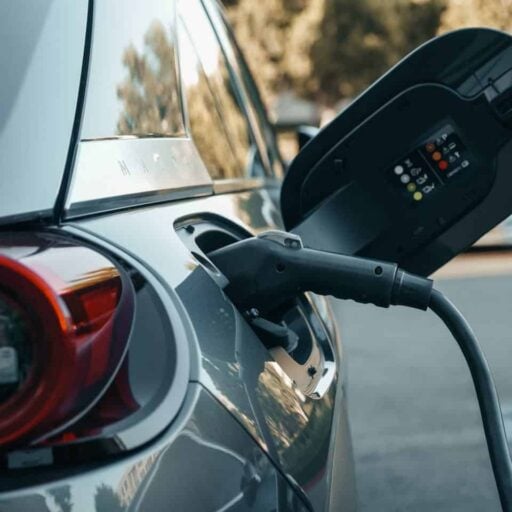
Electric cars have outsold their petrol rivals for the first time in the EU – a milestone that experts described as a “huge moment” in the race to decarbonise the roads.
Data from the European Automobile Manufacturers’ Association shows that battery-electric vehicles accounted for 22.6% of sales in the EU in December, compared to 22.5% for petrol cars. Hybrids were the top selling vehicles at 33.7%.
The data comes as the EU prepares to water down targets for phasing out internal combustion engines. Despite policy uncertainty, however, sales of battery powered vehicles are surging. “Petrol is bombing and diesels are all but dead,” commented Simon Evans, senior policy editor at Carbon Brief, the climate reporting website.
Although electric vehicles have no tailpipe emissions, the precious metals used to make their batteries have a big ecological footprint. Electric cars also contribute just as much to congestion as petrol versions. Walking, cycling and taking public transport, therefore, say environmental groups, is the greenest way to travel.
Image: Kindel Media
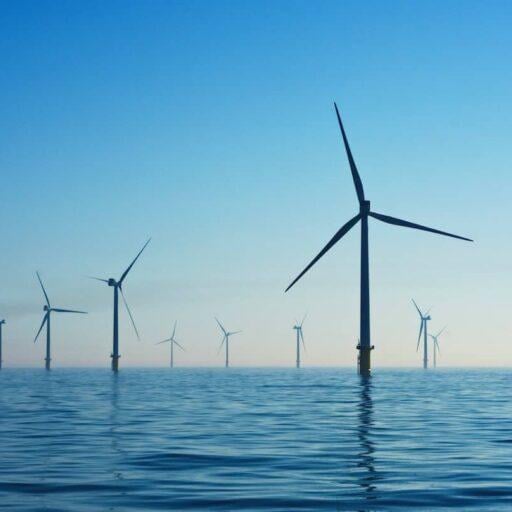
Work has resumed on three major offshore wind farms in the US after the Trump administration tried to scupper them.
In December, Ørsted, Equinor, and Dominion Energy were forced to pause work on their multibillion-dollar east coast windfarms following a suspension order issued by the US Interior Department.
Citing “reasons of national security” for the forced pause, the order was one of the more aggressive moves from the Trump administration in its campaign against green energy.
However, federal judges have now blocked the suspension order, giving energy firms the green light to complete the projects. One of them is Vineyard Wind 1, which is located off the coast of Massachusetts and was 95% complete when the suspension order was issued. It is due to come online in March.
“Again, federal judges have sided with the American people and dealt a blow to Trump’s campaign to cancel nearly complete offshore wind projects,” said Nancy Pyne, senior advisor on offshore wind for the Sierra Club, an environmental organisation.
“[These projects will] allow families across the coast to receive clean energy that doesn’t poison the air or jack up their already sky-high energy bills.”
Image: Nicholas Doherty

All new homes in Scotland must have swift bricks installed after the Scottish government approved a law aimed at helping the struggling birds.
Swift numbers have plummeted in recent years, prompting conservationists to call for swift bricks to be mandatory on all new homes. The innovation provides a hollow space for the cavity-nesting birds to breed in, while minimally impacting the aesthetics of a building.
The law, which passed following a four-year public consultation, was championed by the Scottish Green party.
“This is a cheap, simple and common sense solution,” said Green MSP Mark Ruskell. “It will make our communities into better and more welcoming places for nature by supporting these wonderful birds and helping us to reverse years of decline.”
Ruskell urged politicians in England to pass similar legislation. “It is unfortunate that the UK government has opposed similar moves in England, but that makes it all the more important that we take action in Scotland,” he said.
Image: Manthorpe Building Products

It’s an overlooked construction hero in the west, but not for much longer, perhaps. Bamboo, used to great effect in Asia and South America, has been tipped for a big role in Europe’s low-carbon buildings of tomorrow.
The UK’s Institute of Structural Engineers has just published a new manual offering guidance on how the fast-growing material can be safely used in mainstream construction. Lead author Dr David Trujillio said its publication “marks a significant milestone for the safe use of bamboo for permanent structures”.
The fast-growing material could slash the construction sector’s emissions, added Luis Felipe Lopez, a Colombian engineer who contributed to the manual.
“The construction industry contributes nearly 40% of carbon emissions globally,” he said. “Bamboo, a regenerative and durable material, is redefining how we build our structures.”
Image: Chuttersnap

Writers with lived experience of hardship have united for a groundbreaking anthology that aims to reshape perceptions of homelessness and poverty.
More Than One Story, curated by the UK arts and social justice charity Cardboard Citizens, brings together 37 emerging and established writers to share rarely-heard tales from the front line of adversity.
“When we asked for the voices of More Than One Story, we weren’t sure who would answer,” said Cardboard Citizens CEO Chris Sonnex. “What we received was a chorus – voices from every corner of the UK, carrying truths shaped by poverty and homelessness, by resilience, by love, by survival, joy, and rage.”
Read the full story here.
Image: Piers Allardyce
Main image: iStock
Get your weekly fix of good news delivered to your inbox every Saturday, by signing up to the Positive News email newsletter
Support solutions in 2026
At Positive News, we’re not chasing clicks or profits for media moguls – we’re here to serve you and have a positive social impact. We can’t do this unless enough people like you choose to support our journalism.
Give once from just £1, or join 1,800+ others who contribute an average of £3 or more per month. Together, we can build a healthier form of media – one that focuses on solutions, progress and possibilities, and empowers people to create positive change.