A roadmap for ending plastic pollution, Antarctica’s shrinking ozone hole, and London’s falling crime rate, plus more good news
This week’s good news roundup

After a global treaty to end plastic pollution was derailed by petrostates in August, scientists have published their own roadmap for tackling it.
Commissioned by the Pew Charitable Trusts, the report warns that plastic pollution will double by 2040 at the current rate. However, it says that existing solutions could “virtually eliminate” it, while supporting millions of jobs.
Refill schemes are touted as a key solution. France is among the nations to have mandated them, obliging supermarkets to have dedicated spaces where customers can bring their own containers to stock up on items.
The mass adoption of such schemes, the report says, could cut annual plastic pollution by 83%, reduce greenhouse gas emissions and lower the health impacts of plastic by more than half, all while supporting 8.6m jobs.
“This report shows a path to cut pollution by 83% by 2040. It’s ambitious, but achievable,” said Dr Costas Velis from Imperial College London, which contributed to the study.
His colleague Dr Ed Cook added: “This report is a wake-up call. Progress on plastic pollution has stalled and is worsening, but we can make a big impact by shifting investment from single-use plastics to reuse and product system redesign.”
Image: Hermes Rivera

Around 59 million young lives have been saved since 2000 thanks to the measles vaccine, a World Health Organization (WHO) report claimed this week.
It reports that measles cases plummeted by 88% over the same period, with deaths from the disease falling to their lowest level since 2000 in 2024. The total number of countries that have now eliminated measles stands at 96, it adds, after Cape Verde, Mauritius and Seychelles were verified last month.
But the report warns that cases are rising again, even in high-income countries, due to immunisation rates dropping below the 95% threshold. Most of the 95,000 people who died from measles in 2024 were under five, added the WHO, which called on nations to ramp up efforts to boost immunisations.
“When every child in every community is vaccinated against it, costly outbreaks can be avoided, lives can be saved, and this disease can be eliminated from entire nations,” said Dr Tedros Adhanom Ghebreyesus, WHO director general.
Image: Chi Lok Tsang

Scientists have confirmed that the hole in the ozone above Antarctica was the smallest and shortest-lived since 2019, describing the news as a “reassuring sign”.
The ozone is a natural layer of gas in the Earth’s stratosphere that absorbs most of the sun’s harmful ultraviolet rays. It was found to be depleting in the 1980s due to harmful gases produced by industry, prompting the Montreal Treaty, which mandated phasing them out. The treaty has been hailed as a triumph of global collaboration.
According to the Copernicus Atmosphere Monitoring Service, the Antarctic ozone hole closed on 30 November – the earliest since 2019 – having reached a maximum area of 21.08m sq km this year. That’s well below the historical maximum of 26.1m sq km recorded in 2023. A shrinking was also observed in 2024.
“The earlier closure and relatively small size of this year’s ozone hole is a reassuring sign, and reflects the steady year-on-year progress we are now observing in the recovery of the ozone layer,” said Laurence Rouil, Copernicus’ director. “This progress should be celebrated as a timely reminder of what can be achieved when the international community works together to address global environmental challenges.”
Image: Tam Minton

Some 34 million people were lifted out of poverty in Bangladesh between 2010 and 2022, according to a new report from the World Bank.
It finds that extreme poverty in the country fell from 12.2% to 5.6% during the period, while moderate poverty dropped from 37.1% to 18.7%.
Despite the good news, the World Bank said that progress has slowed since 2016, and that nearly 62 million people – about one-third of the population – remain vulnerable to falling back into poverty.
Although Bangladesh has expanded its social assistance programmes, the World Bank claims that they are inefficient and poorly targeted. Addressing that, it added, presents an opportunity to reach more people.
“Our poverty assessment shows that by adopting innovative policies, Bangladesh can restore and accelerate the pace of reducing poverty,” said Sergio Olivieri, a senior economist at the World Bank.
Image: Theodore Goutas

When it comes to climate ambition, there’s a new world leader. Step forward Denmark.
While many countries have gone cold on global heating, the Nordic nation has ramped up its ambition. Its government has just committed to cutting greenhouse gas emissions by 82% (compared to 1990 levels) over the next decade. The new target is 1% more ambitious than the UK’s, which was the global leader, having pledged an 81% reduction in 2024.
Targets are one thing, meeting them is another. On that, though, Denmark has good form. A government report released earlier this year suggested that the country is on course to meet its earlier goal of slashing emissions by 70% (compared to 1990 levels) by 2030.
The Danish Council on Climate Change described the February findings as “a success story in a world of gloomy climate news”.
Image: Robby McCullough

As some politicians bill London as an increasingly violent city, new research paints a very different picture.
According to analysis of data by the Mayor’s Office for Policing and Crime, the murder rate in the English capital is the lowest it’s been since records began in 2003. Figures also show a 50% reduction in the number of young people murdered in London compared to 2024, which itself saw the under-25 homicide rate fall to a 22-year low.
Latest data also points to a 7% fall in recorded knife crime offences in the 12 months to August 2025, and a 10% reduction in hospital admissions for under-25s with knife injuries in the 12 months to June 2025.
“There are some politicians and commentators who continue to denigrate London and talk our great city down, but the facts are showing a very different picture,” said mayor of London, Sadiq Khan. “We’re making good progress, but there’s clearly much more to do.”
London’s falling homicide rate echoes the situation in the US, where the murder rate is plummeting while the Trump administration claims violent crime is out of control in some cities.
Image: Massimo Virgilio

Fur fell further out of fashion this week as New York became the latest city to drop it from its catwalks.
Organisers of New York Fashion Week announced that animal pelts would not be permitted at the annual jamboree from next year. London and Copenhagen are among those to have already said farewell to fur at their respective fashion weeks.
Mimi Bekhechi of the campaign group People for the Ethical Treatment of Animals (PETA) welcomed the news.
“PETA’s vegan hats are being flung into the air to celebrate New York Fashion Week finally banning the horror of animal fur from the catwalk,” she said. “All eyes are now on the ugly outliers, Paris and Milan fashion weeks, which seem mean, outdated, and irrelevant.”
Image: Ken’s Vision
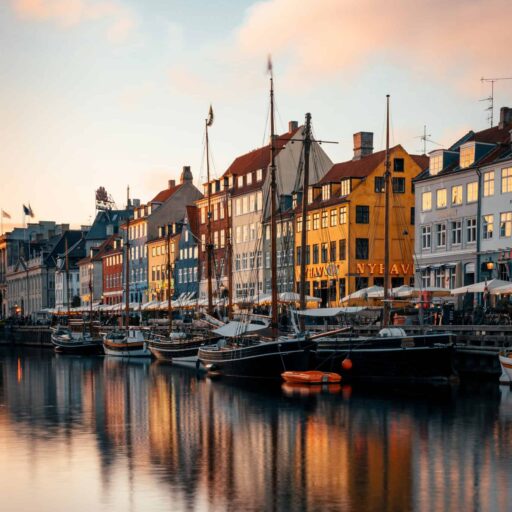
Litter-picking tourists have become a regular sight in Copenhagen (pictured), which has started giving visitors cultural rewards in exchange for “doing good”. Now the concept is catching on.
“CopenPay shows that positive change works best when people can actively experience it,” said Sabine Wendt, CEO of Visit Berlin, which is bringing the idea to German. “It’s a strong concept for improving tourism.”
The initiative comes at a time of increased tension between tourists and locals in destinations struggling to deal with their own popularity. CopenPay was a positive response to this issue and its creators are now sharing all the learnings for free with other destinations.
“We believe CopenPay is too important to keep to ourselves,” said Søren Tegen Pedersen, CEO of Wonderful Copenhagen. “We’re not just allowing others to use the model – we’re encouraging it, and we wish to share all our learnings and the challenges we’ve faced along the way.”
Image: Razvan Mirel

Looking for Christmas presents with a positive impact?
Then, you’re in luck: the Positive News gift guide launched this week. It’s packed with sustainable, ethical, impact-driven gems that support small businesses whilst caring for the planet and people.
Find out more here.
Image: Juliana Malta
Main image: iStock
Get your weekly fix of good news delivered to your inbox every Saturday, by signing up to the Positive News email newsletter
Be part of the solution
At Positive News, we’re not chasing clicks or profits for media moguls – we’re here to serve you and have a positive social impact. We can’t do this unless enough people like you choose to support our journalism.
Give once from just £1, or join 1,700+ others who contribute an average of £3 or more per month. Together, we can build a healthier form of media – one that focuses on solutions, progress and possibilities, and empowers people to create positive change.