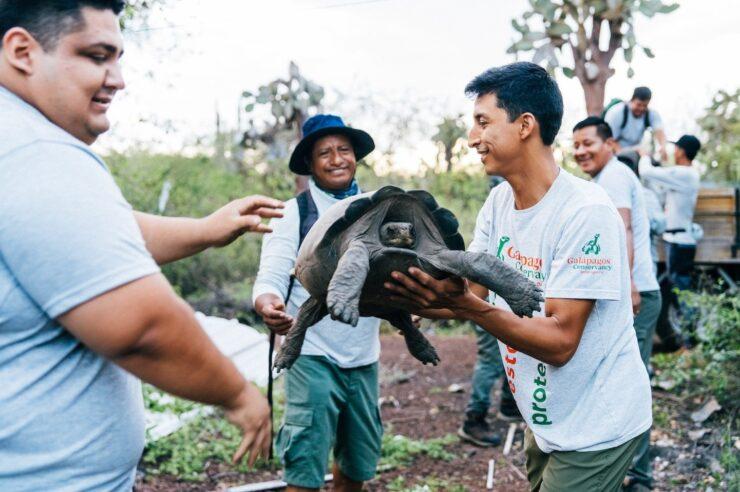
Health breakthroughs, a Ukrainian conservation success, and a win for river defenders in the Amazon, plus more good news
This week’s good news roundup

A new treatment has shown promise for treating spina bifida in the womb, after a trial showed that it improved mobility and quality of life.
Spina bifida, a condition in which a baby’s spinal cord is not properly enclosed during gestation, can lead to a range of lifelong disabilities. However, scientists claimed this week to have a promising new treatment, which involves applying stem cells from the mother’s placenta to her baby’s spine while surgeons repair it in the womb.
Diana Farmer, chair of the University of California’s Davis Department of Surgery, which led the US trial, said the procedure “paves the way for new treatment options for children with birth defects”.
Six mothers took part in the phase one trial, the results of which were published in the Lancet health journal this week. Michelle Johnson was among them.
“Our family couldn’t feel more blessed,” said Johnson, whose son Tobi (pictured) was born in 2022. “Tobi’s physical and mental abilities are nothing short of a miracle.”
While further research is needed, Aijun Wang, co-inventor of the treatment, said it was a “major step toward a new kind of fetal therapy”. Shine, a UK-based spina bifida charity, described the results as “very exciting”.
Image: University of California
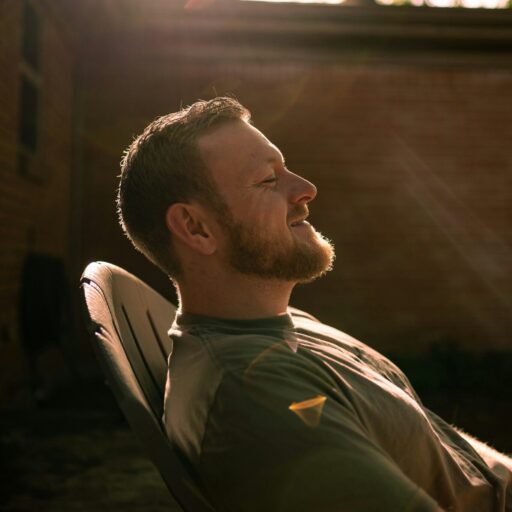
A new immunotherapy drug for treating prostate cancer has shown “remarkable” results in an early clinical trial.
The VIR-5500 drug was given to 58 patients with advanced prostate cancer that had stopped responding to other treatments. Almost half saw their tumour shrink after taking the drug, according to the UK’s Institute of Cancer Research, which led the research. Most patients had only mild side-effects.
Prostate cancer is the most common cancer among men in many countries. About 1.5 million blokes are diagnosed with it worldwide each year. Hitherto, it has proven stubbornly resistant to immunotherapy drugs, which harness the body’s immune system to fight disease. The new trial represents a breakthrough.
“Immunotherapy has transformed the outcomes for many people with cancer but for those with prostate cancer its benefits have often remained out of reach,” said Prof Kristian Helin, chief executive of the Institute of Cancer Research. “It’s encouraging to see this innovative approach showing promising effects in early clinical studies.”
Image: Susie Burleson

Chile has become the first country in the Americas, and only the second globally, to be verified as having eliminated leprosy.
Announcing the verification on Wednesday, the World Health Organization (WHO) described the milestone as a “landmark public health achievement” and “a powerful testament to what leadership, science, and solidarity can accomplish”.
Chile’s leprosy-free certification follows sustained public health efforts, including prevention strategies, early diagnosis, improved treatments, and continuous follow-ups.
“Chile’s elimination of leprosy sends a clear message to the world: with sustained commitment, inclusive health services, integrated public health strategies, early detection and universal access to care, we can consign ancient diseases to history,” said WHO director-general Dr Tedros Adhanom Ghebreyesus.
The first country to be verified as having eliminated leprosy was Jordan in September 2024.
Image: Patricio Hurtado

Indigenous river defenders are celebrating after winning a David versus Goliath battle against the Brazilian government and corporate giants over plans to industrialise an Amazonian waterway.
The Tapajós River faced the threat of being dredged and privatised to boost soy and grain shipments out of Santarém, a small city in the Brazilian state of Pará. But activists had other ideas. They occupied a local grain terminal belonging to Cargill, the biggest privately owned company in the US, forcing Brazil’s government into a policy U-turn.
“The transformation of Amazonian rivers into routes for economic exploitation directly threatens Indigenous territories, traditional ways of life, food security, biodiversity and the environmental balance of the entire region,” said the Federation of Indigenous Peoples.
Reacting to the U-turn, Maria Leusa, an Indigenous campaigner, said: “This proves that life – the river – has no price. It cannot be sold, it is not negotiable. That’s why we will never back down.”
Image: Coletivo Apoena Cultural
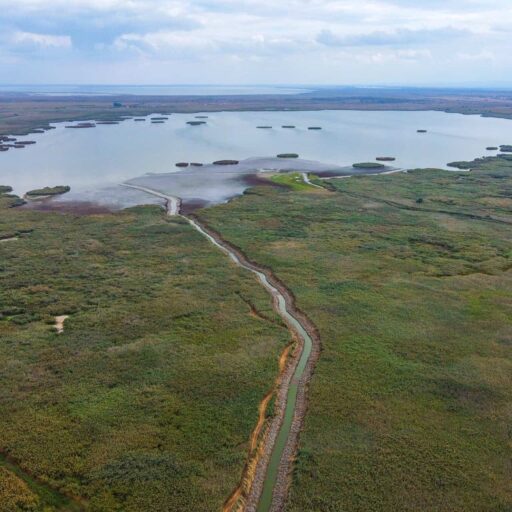
At a time when war has disrupted livelihoods and limited nature-based tourism, Ukraine’s Lake Kartal stands as “a beacon of hope”.
That’s according to Rewilding Europe, which this week hailed a wetland restoration project in Ukraine’s Danube Delta (pictured) that has persisted despite the war.
The multi-year project reconnected the River Danube with Lake Kartal. According to Rewilding Europe, “a rapid comeback” of the ecosystem has ensued.
“It has been amazing to see how quickly wetlands in the Danube Delta can become wilder,” said Oleg Dyakov of Rewilding Ukraine. “We have seen different parts of the landscape bounce back almost immediately.”
Manmade dykes and irrigation systems had disconnected the ecosystem, lowering water levels and water quality, triggering algal blooms and declining fish stocks.
“This restoration work will see water levels and water quality in Lake Kartal continue to rise, while fish populations will become richer and more abundant, birds will return to feed and nest here, and local people will be able to rely on this water for irrigation again,” said Panas Zhechkov, director of Ukraine’s Izmail Department of Water Resources.
Image: Oleksandr Kurakin/Rewilding Europe

Ageing in older life is often portrayed as a steady slide towards physical and mental decline – a new study challenges that.
Researchers at Yale University, US, followed more than 11,000 citizens aged 65 or older over 12 years, tracking changes in cognition and physical function.
In a rebuff to stereotypes, they found that 32% of participants improved cognitively, while 28% improved physically. When participants whose cognitive scores remained stable were included, more than half defied the notion of inevitable cognitive decline.
“If you average everyone together, you see decline,” explained Dr Becca Levy, professor of public health and psychology at Yale. “But when you look at individual trajectories, you uncover a very different story. A meaningful percentage of the older participants that we studied got better.”
Dr Levy’s prior studies have found that negative age beliefs are linked to poorer memory, slower walking speed, higher cardiovascular risk, and biomarkers associated with Alzheimer’s later on. It suggests that feeling positive about the advancing years could lead to better health outcomes.
Image: Tim Mossholder

Lawmakers in Vietnam have passed legislation regulating artificial intelligence, making it the first country in southeast Asia to place safeguards on the fast-moving technology.
Like the European Union’s AI Act, Vietnam’s law requires companies to clearly label AI-generated content, which is often not easy to differentiate from reality. It will also oblige them to inform customers when they are interacting with a chatbot rather than a human.
Internet safety campaigners welcomed the move, but said enforcement will be key for it to be effective.
South Korea became the first country to enact an AI law in January (the European Union’s is entering force in phases). It comes amid growing concern about AI firms’ involvement in the military, after the Trump administration demanded that AI companies give the Pentagon unrestricted access to their technology – including for mass surveillance and autonomous weapons.
Open AI, the company behind ChatGPT, obliged, signing a deal with the Pentagon this week that will allow its systems to be used by the US military. It sparked a fierce backlash, with millions pledging to quit ChatGPT.
Image: Leino194
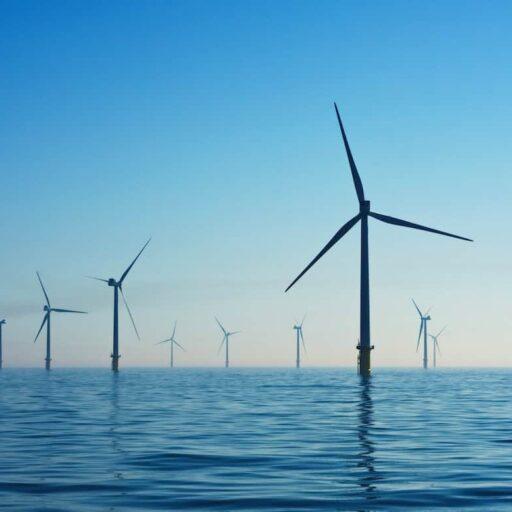
The UK’s green economy grew by 10.2% in the last year, outpacing the nation’s broader economy, which grew by just 1.3% in 2025.
That’s according to research from the Confederation of British Industry (CBI), which comes amid increasing hostility to green industries from opposition political parties.
The CBI’s research shows the green economy to be in rude health, generating around £83.1bn in gross added value. Every £1 it generates, it added, creates an additional £1.89 in the wider economy.
“It is clear, you can’t have growth without green,” said Louise Hellem, CBI’s chief economist. “At a time when the cost of doing business has squeezed appetite for capital investments, and high energy prices are being cited as a drag factor across the economy, investments in clean technologies can significantly bolster competitiveness and productivity.”
The report follows separate research from Carbon Brief, which found that clean energy drove more than a third of China’s GDP growth in 2025. It comes as the war in the Middle East sends oil and gas prices soaring.
“Long-term sustainable growth is unattainable without a future powered by clean, affordable, and secure energy,” said Hellem.
Image: Nicholas Doherty

A striking image capturing the Milky Way in unprecedented detail has been taken by astronomers in Chile.
The shot was captured in the Atacama Desert, where a planned industrial complex was recently canned following a people-powered campaign. The development had threatened what are considered to be the darkest skies in the world.
The image (pictured), taken with a telescope dubbed the Atacama Large Millimeter/submillimeter Array (ALMA), will allow astronomers to probe the lives of stars in the most extreme region of our galaxy, next to the supermassive black hole at its centre.
“It’s a place of extremes, invisible to our eyes, but now revealed in extraordinary detail,” said Ashley Barnes, an astronomer at the European Southern Observatory in Germany, who helped capture the image.
Image: ALMA

Europe’s night train network is set to expand after the community owned rail firm European Sleeper announced a new route between Brussels and Milan.
Launching in September, the service will call at Cologne and Zürich, providing an important north–south connection on the continent.
European Sleeper has been a driving force behind Europe’s unexpected night train renaissance, which comes amid growing demand for low-carbon travel. In 2023, the Dutch-Belgian company launched a Brussels to Berlin service, which has since been extended in both directions to include Amsterdam and Prague.
European Sleeper is part of Europe’s burgeoning community ownership movement, which has seen regular folk take ownership of everything from pubs and shopping centres to a ferry service. Owned by its readers, Positive News is part of that movement. Read more about that here.
Image: iStock
Main image: Shutterstock
Get your weekly fix of good news delivered to your inbox every Saturday, by signing up to the Positive News email newsletter
Be part of the solution
At Positive News, we’re not chasing clicks or profits for media moguls – we’re here to serve you and have a positive social impact. We can’t do this unless enough people like you choose to support our journalism.
Give once from just £1, or join 1,800+ others who contribute an average of £3 or more per month. Together, we can build a healthier form of media – one that focuses on solutions, progress and possibilities, and empowers people to create positive change.