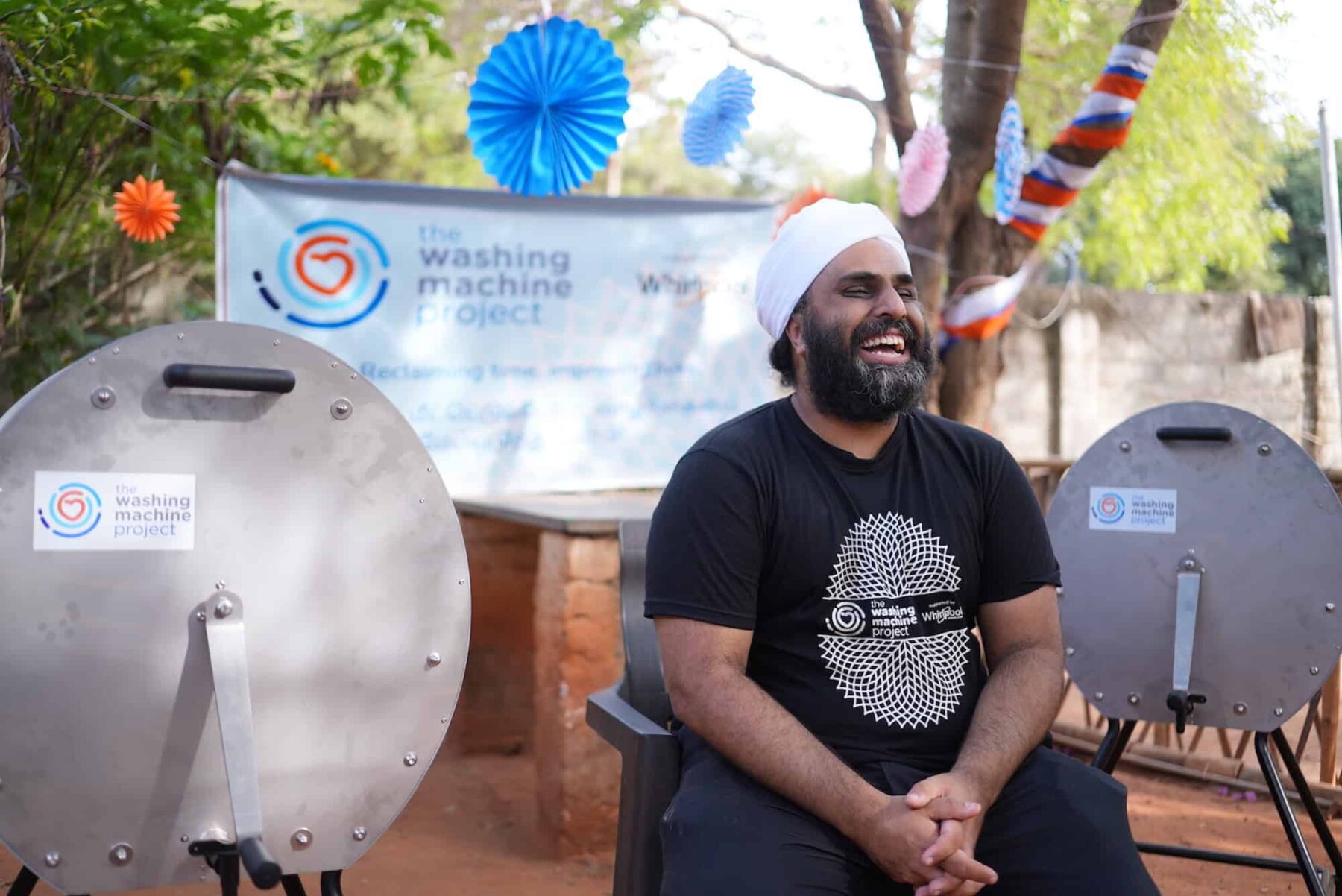
A former Dyson engineer is rolling out a revolution for household chores in deprived communities after inventing an off-grid, flat-packable washing machine
Some five billion people in remote and developing regions still wash their clothes by hand. It’s a task that unfairly burdens women and young girls, who can spend up to 20 hours a week on the chore.
Enter Navjot Sawhney, who founded the UK-based social enterprise The Washing Machine Project (TWMP) to tackle this, and has now shipped almost 500 of his hand-crank Divya machines to 13 countries, including Mexico, Ghana, Iraq and the US.
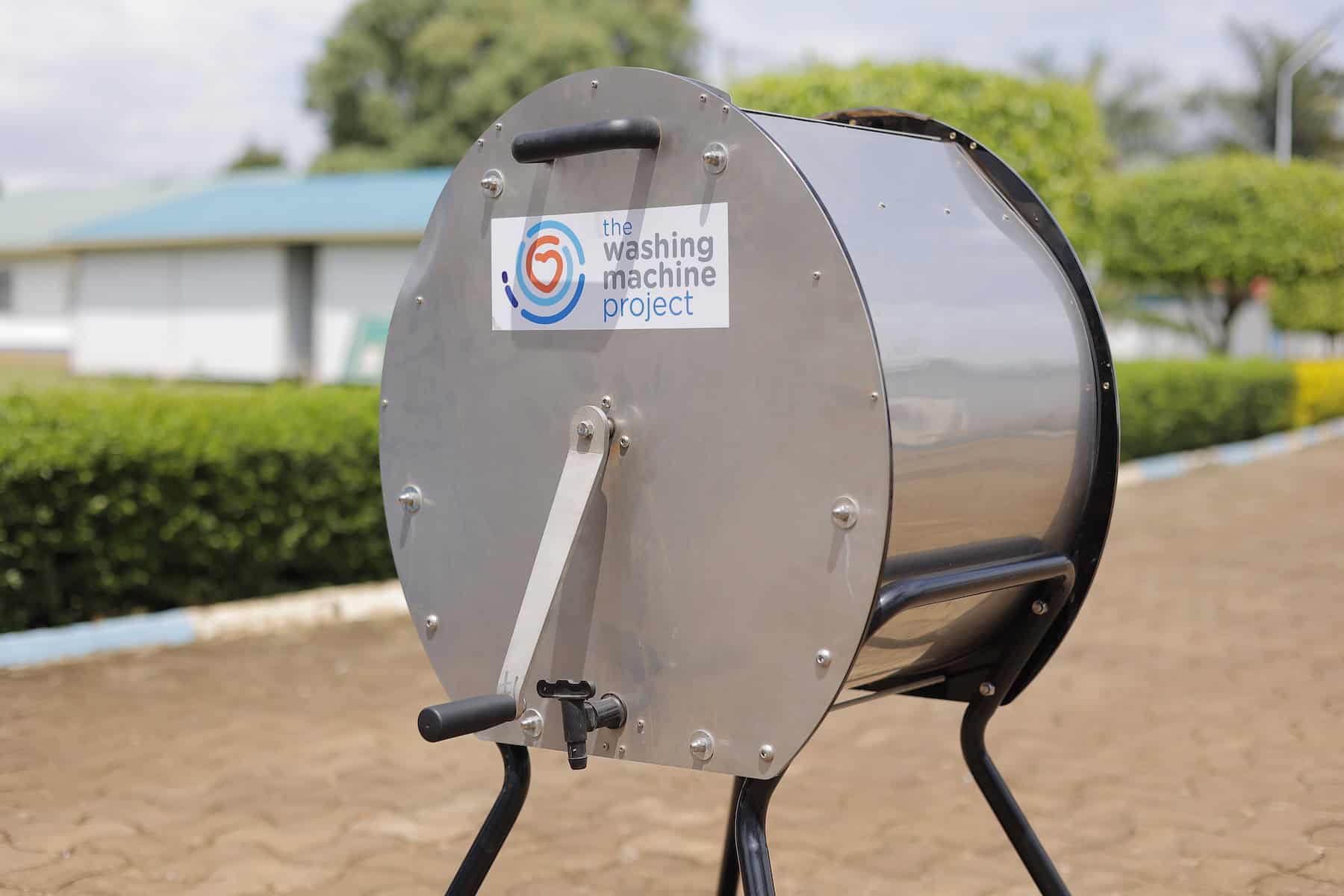
The Divya washing machine, made up of an outer drum and an inner one which rotates, operates a 30-minute wash cycle where it completes a 5kg load needing only a few minutes of manual turning.

It works like this: after loading the clothes, detergent and water, and letting it sit for 10-15 minutes, users can close the lid and turn the handle for two minutes, repeating this twice more after ten minutes of letting the clothes sit in between spins. And voila — the machine can then be drained using the tap at the front.
This saves up to 75% of time for its user, and halves water consumption. “The machine takes a task that is exhausting and time-consuming and transforms it into something simple, easier to manage, and time saving,” said Sawhney.
The Divya project’s development didn’t end with its invention. “We went back to the drawing board and really listened to the people we were designing for, for the context in which they lived. That research changed everything,” said Laura Tuck, the organisation’s R&D Lead.
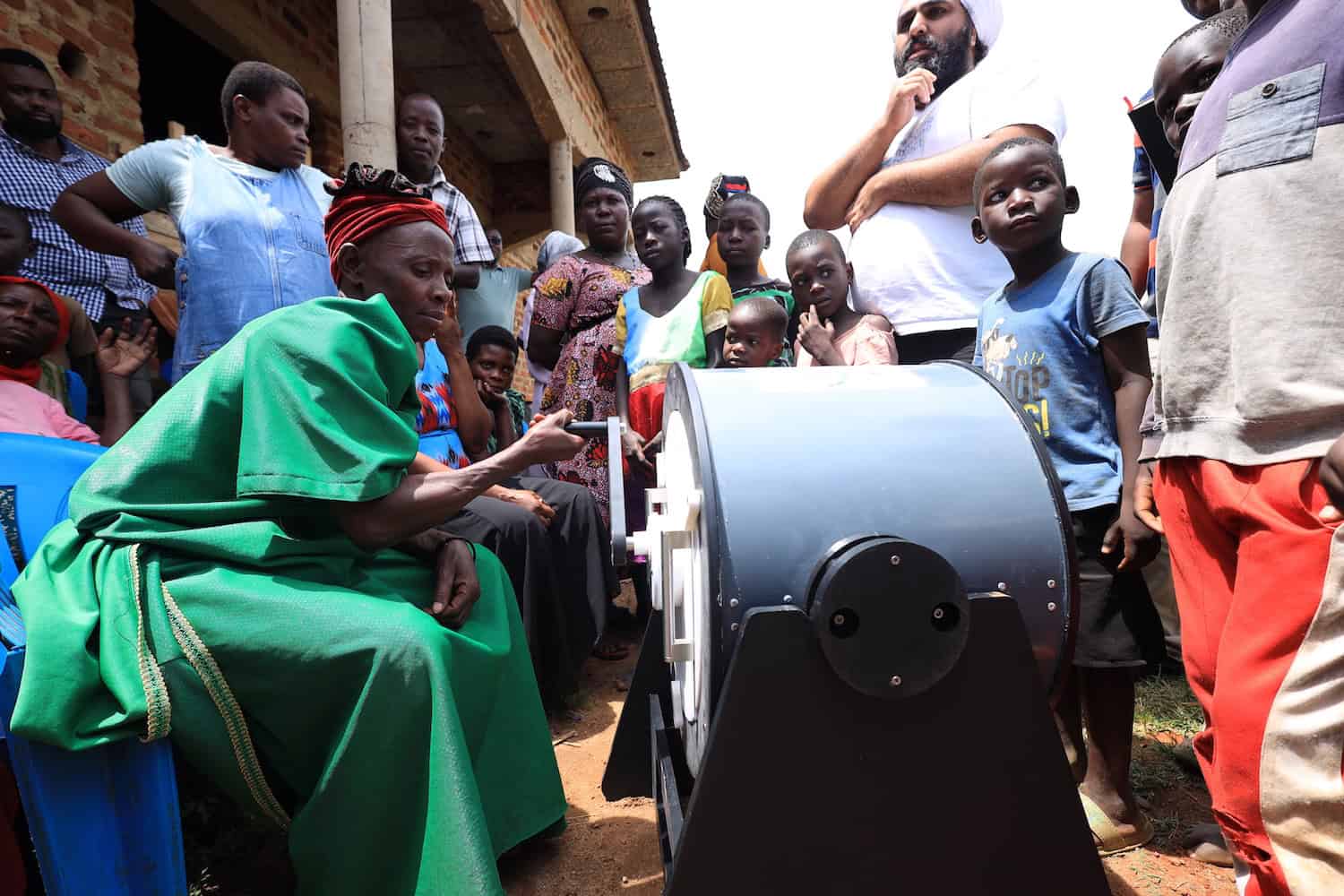
One crucial consideration was making sure Divyas were fit for the locations where they would be used. For example, in Uganda, machines were delivered to a small island on Lake Victoria using a fishing boat. Repairs or replacements could not get there easily, so the TWMP team needed to rethink how the originally complex gear-system machine could work in these conditions. The solution? Designing a product that was simpler, more intuitive, and repairable locally using the skills and infrastructure available.
Guided by feedback from real users during workshops and focus groups, TWMP improved the machine’s durability, physical strain, and usability, with the team introducing robust metal frames, simplified workflows, and improved seals and taps.
The innovation has already impacted the lives of almost 50,000 people – and Sawhney is just getting started.
TWMP hopes to reach 1,000,000 people by 2030, but says it cannot do this alone; it is building a network of partners including NGOs, UN agencies, and local communities, including the Whirlpool Foundation, the charity wing of the US-based home appliance firm.
Localised production will begin in early 2026, manufacturing a new generation of machines in India, closer to those who use them. The project is also piloting ‘Hubs’, where machines can be assembled and distributed, but also offering training, workshops, and educational activities, extending the impact of the time saved by Divya machines.
It is also seeking policy engagement to embed laundry access in wider strategies around water, sanitation, hygiene, and gender equality.
Images: The Washing Machine Project
Be part of the solution
At Positive News, we’re not chasing clicks or profits for media moguls – we’re here to serve you and have a positive social impact. We can’t do this unless enough people like you choose to support our journalism.
Give once from just £1, or join 1,700+ others who contribute an average of £3 or more per month. Together, we can build a healthier form of media – one that focuses on solutions, progress and possibilities, and empowers people to create positive change.