
Driven by ingenuity, vision and grit, forward-thinking clean-tech leaders are giving yesterday’s hardware a second life – turning it into tomorrow’s power

Reimagining second-life EV batteries as grid-scale storage
Tania Saxby, head of sustainability at Connected Energy
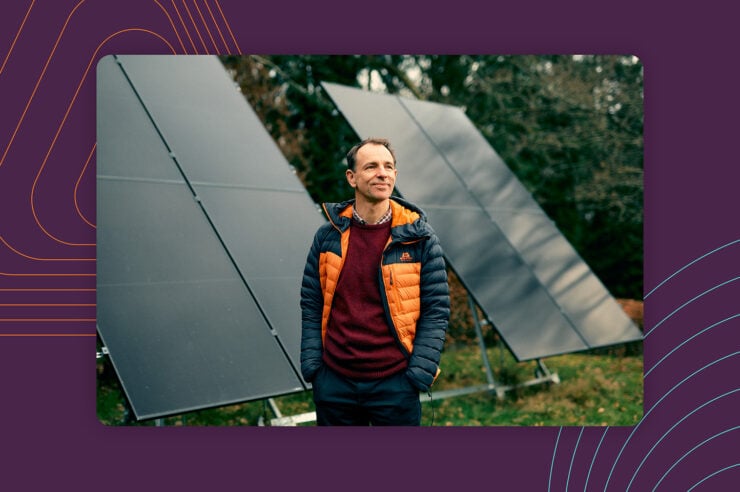
When Tania Saxby, fresh out of university, first joined Connected Energy (CE) back in 2019, she was the only woman in the company. It was quite a blokey environment, she recalls. Based in Norfolk, home to legendary sports car maker Lotus, CE specialises in repurposing electric vehicle batteries to store energy. “It was all ex-Lotus and software engineers, keen on motor sports, tinkering with their cars at weekends,” Saxby (pictured below) recalls with a smile. She’s quick to add that she was made very welcome in the team, but being a woman in such a sector was still something of a novelty.
That said, CE’s core business is pretty novel too. They combine ‘second life’ EV batteries – ones that no longer have sufficient capacity to power vehicles, but that can still store plenty of energy – into giant power packs. These can provide a reliable supply of onsite electricity to sectors such as data centres, with the watts supplied from a local source like solar PV. Increasingly, they also have a role in energy trading: buying surplus power from the grid when it’s cheap, storing it and selling it back when it’s more expensive. It has obvious sustainability advantages: taking a potential waste problem, a hefty spent battery, and turning it into a key component of the fast-growing renewable energy system.

'A big part of my remit is to quantify the carbon savings in using second-life batteries compared to new ones,' says Saxby, head of sustainability at Connected Energy. Image: Sam Bush
Still in her 20s, Saxby has a quiet confidence beyond her years, and as CE has grown, so have her responsibilities. Now head of sustainability, she’s in charge of ensuring its green credentials stack up. “A big part of my remit is to quantify the carbon savings in using second-life batteries compared to new ones.” Then there are the usual wider issues – environmental impacts, health and safety – and now she’s embarking on a thorough life cycle assessment process too: making sure CE’s offering really ticks the right boxes from cradle to grave. “All that’s pretty crucial,” she says, “because you would soon catch the flak if you were selling something on the basis of sustainability and then found wanting.”
There’s a virtuous spiral at work: as a greater proportion of electricity is produced by renewables like solar and wind, so the need for energy storage increases. Meanwhile, “more sectors electrifying, especially transport, means more batteries,” says Saxby. “Even some mining operations are shifting to EVs,” she points out. “Their trucks are huge –the tyres alone are the height of a person.”
Even some mining operations are shifting to EVs. Their trucks are huge – the tyres alone are the height of a person
No longer the only woman in CE, she credits the arrival of more female staff with the dawn of “a more open atmosphere in the office, and that means more engagement between teams”. In the outside world too, the gender barriers are breaking down, and fast. Saxby has been speaking about her work at universities since 2021 and has seen a significant increase in the number of women who turn up. “I say to them every year: ‘If you want to secure a job, specialise in electrical engineering.’
“When I tell people what I do, and sometimes I have to explain it, because they often don’t know about energy storage, they ask: ‘So you’re actually doing something about all these used EV batteries we keep hearing about?’
“‘Yeah, we are.’ ‘Wow – that’s cool!’”
Repurposing wind turbine parts to keep energy spinning
James Barry, CEO of Renewable Parts
When you’re an engineer who’s worked at Rolls-Royce for 25 years, rising through the ranks to be head of marketing at the civil aerospace division, it’s hard to imagine being tempted to jump ship. Harder still when your new berth is a virtual startup with just four employees, one “barely able to pay their salaries”.
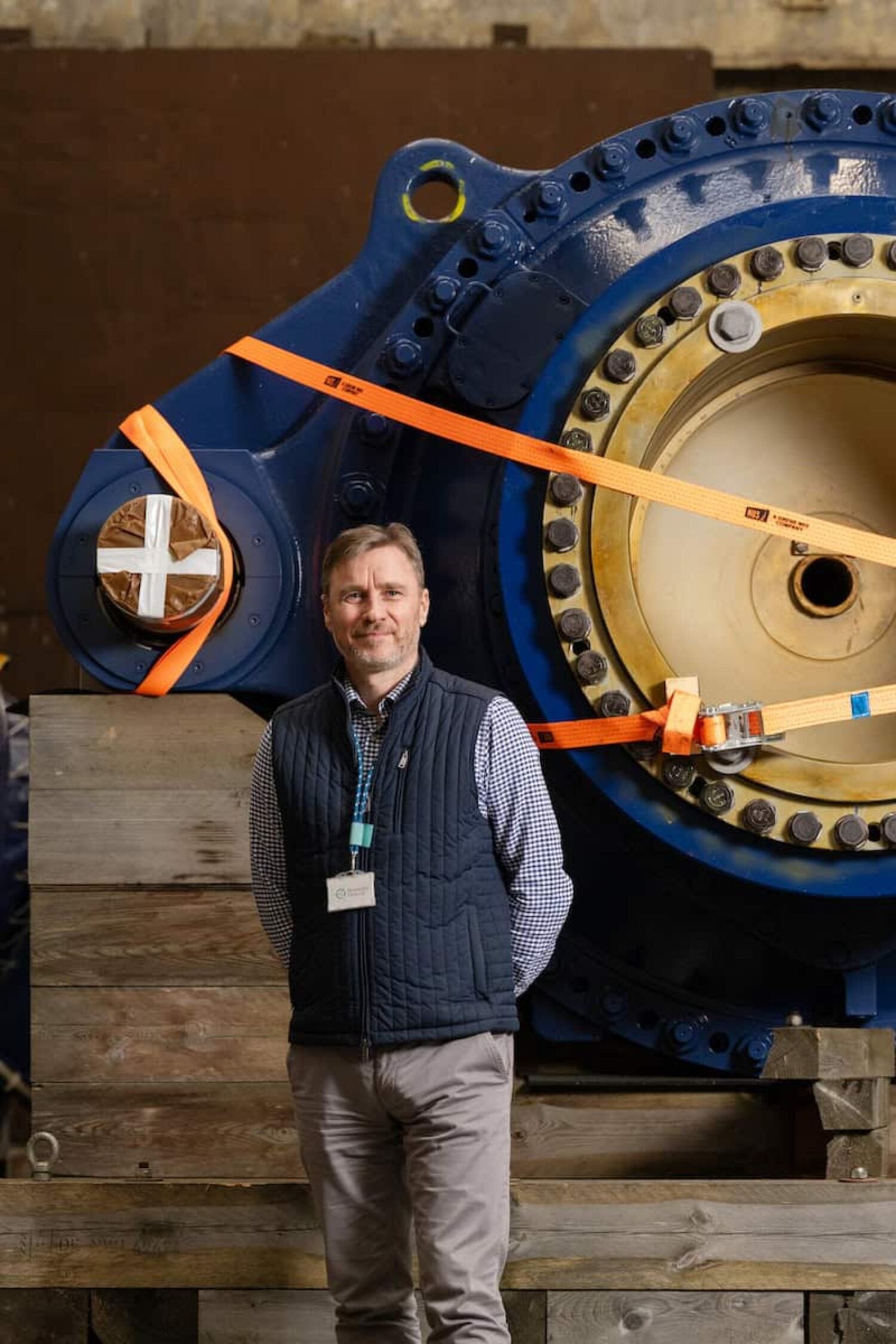
'I liked the chance to be entrepreneurial, to build a business. And I saw renewables as a young industry,' says James Barry. Image: Gordon Burniston
But for James Barry (pictured above), Renewable Parts (RP) was nevertheless a tempting prospect, and in 2015, he took up the role of CEO. Why? “I liked the chance to be entrepreneurial, to build a business. And I saw renewables as a young industry. Young industries are, by their nature, quite fluid. They throw up all sorts of opportunities. Things haven’t been sorted out.” He was also convinced that wind power had a promising future as a key part of Britain’s energy mix. “And so it’s proven to be, and then some.”
There’s no shortage of engineering going on in a wind turbine. Inside those vast towers there is a host of parts, some of which I’d barely heard of, nor you, I suspect, unless you’re an engineer. Barry reels them off: “thyristors, actuating rams, gearboxes of course, pumps and motors, all the circuit boards …”
A wide range indeed, but all sharing one attribute that has become crucial to the success of Barry’s company: they can all be remanufactured when worn out. And therein lies its USP: like Connected Energy, Renewable Parts specialises in circularity. Under Barry, that element has been built up, and the company is now a world leader in taking used parts and remaking them. This accounts for over 40%, and growing, of RP’s business. It’s opened a new hub in Houston, Texas, which is dedicated exclusively to remanufacturing. The distinctly red state might seem a surprising location for such a green initiative – until you remember that, if Texas were a country, it would rank fifth in terms of installed wind capacity.
Young industries are, by their nature, quite fluid. They throw up all sorts of opportunities. Things haven’t been sorted out
There’s always work to be done to persuade customers that repurposed is as good as new, of course, Barry concedes. But there are three key advantages, he says. First, cost. On average, remade parts are 30 to 40% cheaper than their new equivalents. Then there’s carbon. “There’s a huge sustainability argument to this in a world of limited resources,” he says. “For every tonne of steel you [don’t have to] manufacture, you save about three tonnes of carbon.” Finally, and less obviously, there’s innovation. “If you’re receiving enough failed parts over a period of time, you can identify weaknesses in the design, and you can improve that with modern technology. So we can actually improve the performance.”
In the decade since Barry took over, this threefold logic has seen it grow its workforce to nearly 60, and his enthusiasm for managing the mix of folk it attracts shines through. “I like to think of it as 60 families, not just 60 people … all of us creating something really worthwhile that has real purpose.”
RP has a thriving apprenticeship scheme, taking some 16-year-olds straight from school, and Barry regularly speaks at universities, too. New recruits might not have much experience, “but if they have the right attitude, you can do a huge amount with them.”
So, does the UK government’s well-worn mantra about there being lots of potential for green jobs ring true? “100%. There’s a huge potential in renewable energy for a fulfilling, long career.
Main image: Tania Saxby, photographed by Sam Bush