Ten million people stand to benefit from a cooler and more biodiverse capital, say the organisers of an ambitious project to reconnect its wilder spaces
“An M25 for nature”: that’s how the brains behind the London Tree Ring describe their plan to encircle the capital with a 200km (124 mile) green corridor weaving along the boundaries of its outer boroughs.
The project, from the charity, CPRE London, is designed to safeguard greenbelt, boost biodiversity in neglected pockets of woodland, and return all-but vanished species to London’s treescapes.
And people are at the heart of the plan, they say. Over the next 25 years, community groups, schools, skills providers and landowners are being invited to find new sites, plant trees and care for green spaces.

“It’s that community buy-in: working with local people with a vested interest, who get to follow the trees from seed to maturity,” said London Tree Ring director Phil Paulo. “In return, there’s a whole range of benefits that trees will bring, from urban cooling to fixing carbon to community orchards.”
The idea has been gathering momentum since 2023, but gets an official launch on 15 October following years of research and a handful of test runs at showcase sites.
In one example, on London’s south-west border, the project worked with a countryside skills provider to revive hedgerows by planting 1,500 trees, including disease-resistant elm. The species was almost wiped out in the 60s and 70s, but is the sole food source for caterpillars of the white-letter hairstreak butterfly, whose populations have since fallen by 80%.
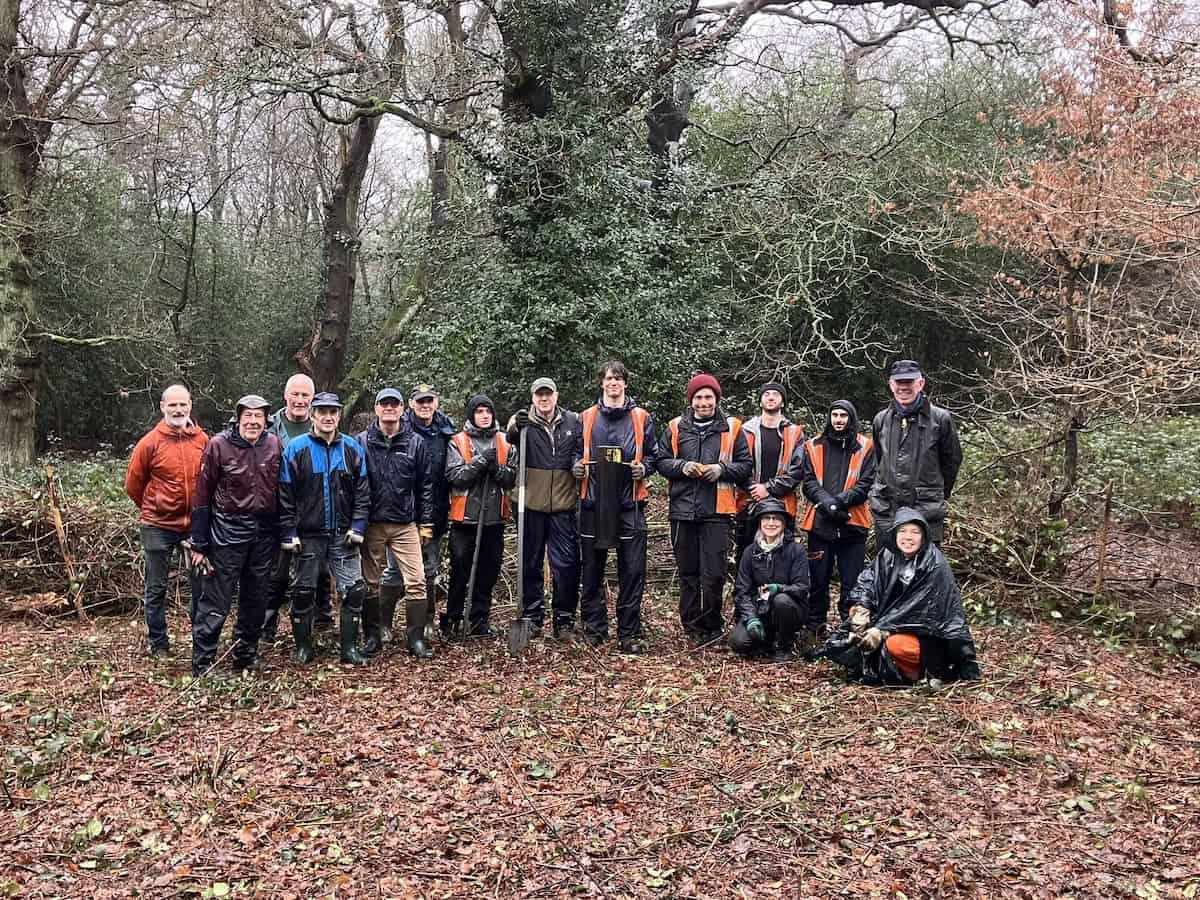
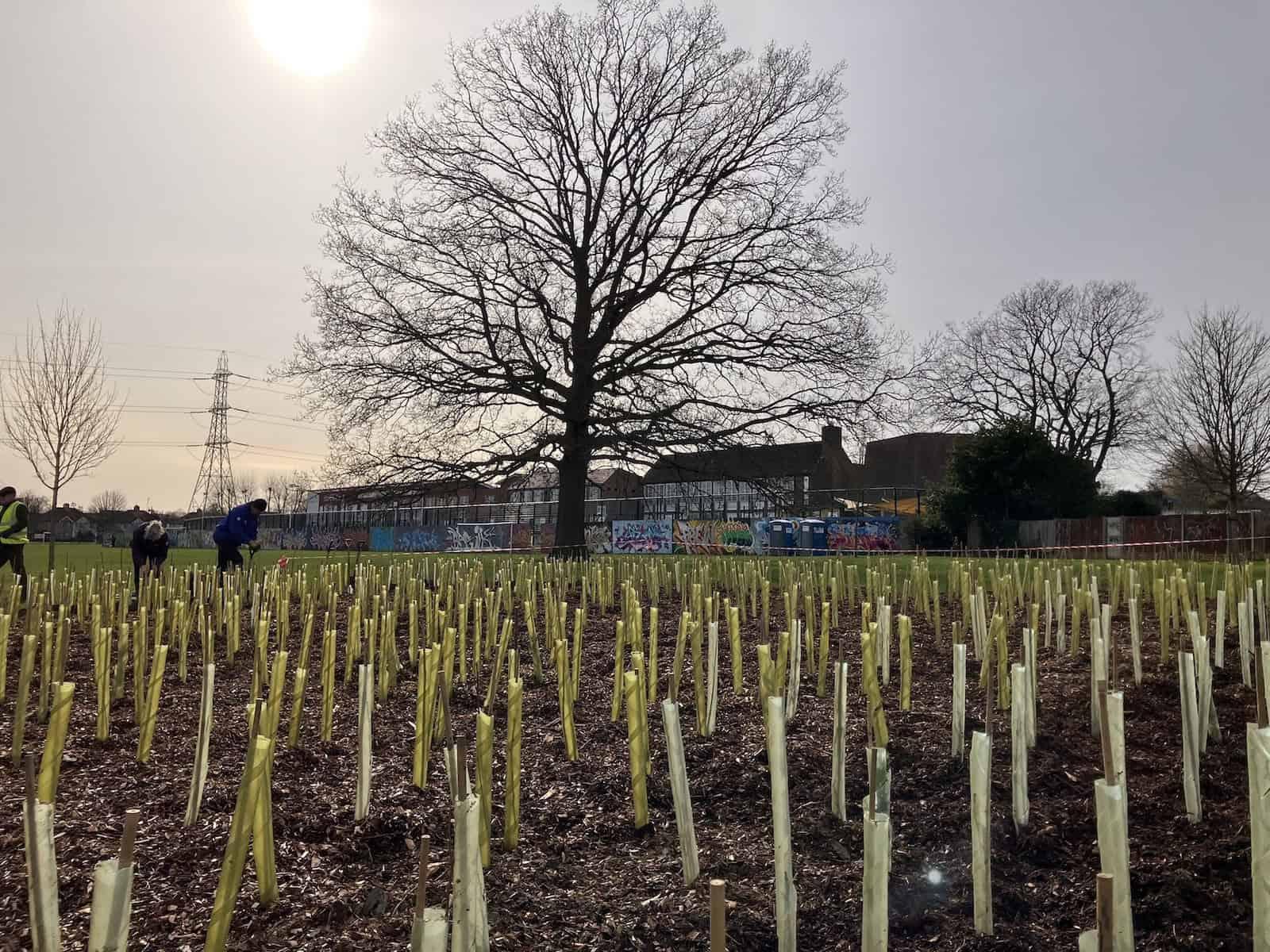
“We’re bringing back a tree lost from our landscape due to Dutch elm disease,” said Paulo, “and we’re looking at where else we can use trees to address species and habitat loss.”
Meanwhile in Sutton, CPRE London teamed up with council tree wardens and children from Glenthorne high school, to create a ‘Miyawake’ microforest at Reigate Avenue recreation ground. The Japanese method involves densely planting native trees into fungi-enriched soil to boost nutrient uptake.
“Despite these dry conditions, it’s established really well with limited irrigation,” Paulo explained. “Everyone’s aware of the issues we’ve had this summer with drought, water availability and fire, so it’s thinking about what species will be adaptable … trees that can provide us with shade.”
It’s that community buy-in: working with local people with a vested interest, who get to follow the trees from seed to maturity
CPRE London is already working with partners including the Forestry Commission, Woodland Trust and Trees for Cities. In time, Paulo believes the project can grow into a city-wide movement, inspiring hundreds more community groups and volunteers to help restore London’s green edge.“
And this isn’t just about London,” he added. “As a national charity, we’ll be sharing what we learn across the CPRE family, so it can be replicated in other cities, towns and green belt areas across the UK.
The launch event on 15 October can also be attended online. To find out more, visit www.cprelondon.org.uk or email [email protected]
Main image: mammuth
-
25
year-long project to create -
200 km+
ring of trees and connected habitat around London -
10
demonstrator sites were planted during the 2025/26 season -
10 m
people live and/or work in London on average on any given day
Because the world needs it
Positive News reports on the people and ideas driving progress. We believe that giving attention to solutions helps them spread.
Our journalism is independent and powered by our readers. There are no media moguls or shareholders extracting profits: your contribution funds our work to investigate what’s working, understand why, and bring those stories to a wider audience.
If you value a fuller picture of what’s happening in the world, please become a Positive News supporter today.