
The ‘alternative Nobel prize’, global progress against ageism, and a boost for gorillas, plus more good news
This week’s good news roundup

Four individuals and organisations challenging authoritarian rule, patriarchal violence, and unchecked AI development have been awarded an ‘alternative Nobel prize’.
Better known as the Right Livelihood Award, the prize champions those offering “resistance to systems that push people to the margins”. All this year’s recipients are women or female-led organisations.
Eritrean computer scientist Timnit Gebru (main image) was one of them. Founder of the Distributed Artificial Intelligence Research Institute, she was praised “for challenging concentrated power in artificial intelligence, and pioneering digital technology rooted in justice, lived experience and human agency”.
Lawyer Jalila Haider from Pakistan was another recipient. She was commended for challenging “ethnic, state and patriarchal persecution” in her community, a Persian-speaking ethnic group called Hazara.
The two winning organisations were the Rural Women’s Assembly and the Georgian Young Lawyers’ Association. The former empowers women in Africa to defend land, seed and bodily autonomy against corporate dispossession. The latter works to safeguard Georgian democracy “in the face of an autocratic crackdown”.
Announcing the recipients, Ole von Uexkull, executive director of Right Livelihood, said the winners were “rewriting the rules that autocrats, patriarchs, and Silicon Valley’s most powerful men assumed were theirs to write alone”.
Image: Zakithi Sibandze from the Rural Women’s Assembly. Credit: Right Livelihood

Low-lying nations vulnerable to rising seas will continue to exist as sovereign states even if their land disappears, world leaders have agreed for the first time.
In a welcome victory for multinationalism, UN member states unanimously agreed to protect the sovereignty of climate-vulnerable island nations should they be inundated. Despite having aggressively undermined climate science under the Trump presidency, the US did not oppose the declaration.
It means that states would retain control over their old maritime borders, even if their land disappears. Until now, it has been unclear what would happen in such an event.
The UN declaration echoes a recent ruling by the International Court of Justice, which affirmed low-lying nations’ sovereign rights. Until now, world leaders had not endorsed the ruling.
Surangel Whipps Jr, President of the Republic of Palau, welcomed the declaration. “Sea level rise threatens our coasts, our homes and our ways of life,” he said. “[But] it does not threaten our legal rights or our standing as states.”
Image: Shalamov

More countries than ever before are legislating against ageism, strengthening care for the elderly, and creating age-friendly environments.
So finds a new UN report, which said that “real progress” has been made globally to ensure elderly people are healthier, more comfortable and more visible in society.
The report highlights a sharp rise in the number of countries with legislation against age-based discrimination – up from 44.5% in 2018 to 57.7% today. The number of countries with national long-term care policies has also risen, it said, from 49% in 2023 to 56.7% today.
“More countries are legislating against ageism, providing integrated care, strengthening long-term care systems, and creating age-friendly environments than ever before, in all regions and income levels,” said the World Health Organization’s Dr Ritu Sadana.
However, she warned that “progress is uneven”, and called on nations to step up their commitments to elderly citizens.
Image: Halfpoint

The Norwegian government has unveiled the country’s largest ever marine reserve and promised robust protection of the new site.
Equivalent in size to 260,000 football pitches, the Andfjorden marine protected area (pictured) is renowned for its cold water coral reefs and kelp forests, which support myriad types of fish, sperm whales and many other species. Conservationists have long been fighting to keep it that way.
“Andfjorden is home to rich and varied nature, both above and below the surface,” said Sigrun Aasland, Norway’s minister of climate and environment. “The protection will help ensure that future generations can enjoy the natural values of Andfjorden.”
Norway’s new marine reserve comes at a critical time for ocean protection. Last week, a report found that the global goal to protect 30% of land and sea by 2030 is “within reach”, but that progress on the ocean has been slow. Meanwhile, many so-called protected areas are still being plundered.
Norwegian politicians promised robust protection of the new area, claiming it will be managed by a dedicated board, including representatives from the Sámi Indigenous community.
Image: Jan Harald Tomassen

One of the first eastern lowland gorillas to be returned to the wild has given birth in the Democratic Republic of the Congo (DRC), conservationists have announced.
As well as proving that gorilla rehabilitation can work, the birth has helped reinforce a small, isolated population of the critically endangered primate in Virunga National Park.
The mother gorilla, Lulingu (pictured with baby), was rescued from the illegal wildlife trade at 18 months old and raised in a sanctuary. She was reintroduced to the jungle in 2024, along with three others, and gave birth in May this year, it was revealed this week.
“This is a milestone for the gorillas,” said Katie Fawcett, executive director of GRACE Gorillas, the charity leading the rehabilitation project. “We’re cautiously optimistic that Lulingu will navigate motherhood well and that the baby will continue to survive. No matter what happens, this is another historic first for eastern lowland gorilla conservation.”
Eastern lowland gorillas are endemic to the DRC’s tropical forests, but their habitat is shrinking due to armed conflict, deforestation and mining. An estimated 77% of the population has disappeared since 1994, falling from around 16,900 to 3,800 in 2015. Every birth, therefore, matters.
Image: GRACE Gorillas

The UK has avoided the need for gas imports worth £5.9bn since the start of the Hormuz crisis, thanks to record power output from wind and solar.
That’s according to analysis from Carbon Brief, a climate reporting site. In the latest sign that nations are turning to renewables amid gas volatility, wind and solar provided a record 41% of the UK’s electricity this year, Carbon Brief said, compared to 25% for gas.
“While gas prices are surging to levels not seen since the 2022 energy crisis, the UK has been generating record amounts of power from wind and solar, up 14% year-on-year,” said Carbon Brief.
“This unprecedented clean-power generation is directly cutting the need for gas-fired electricity, which is down by nearly 10% year-on-year in 2026 to date.”
Meanwhile, in continental Europe, heat pump sales have climbed 11% in 12 European Union nations since the Hormuz crisis, figures from the European Heat Pump Association (EHPA) show. Around 1.16m were sold in the first six months of the year – up from 1m during the same period of 2025.
“Europe is ending its addiction to a toxic, costly drug from dodgy suppliers – gas,” said Paul Kenny, EHPA director general.
Image: Dmitry Tkachuk

They’re cheaper to run, have no tailpipe emissions and, according to a new study, are more reliable – no wonder electric car sales are surging.
A review of MOT tests (road worthiness checks conducted annually on cars in the UK) has found that high-mileage electric vehicles are more reliable than their petrol rivals, despite a widespread belief that the opposite is true.
The study looked at 47.4m MOT results over 12 months. It found little difference in failure rates between electric and petrol cars up to 60,000 miles (12% versus 11.7%). But between 90,000-120,000 miles, all-battery versions were found to be 25% less likely to fail an MOT than petrol cars of the same age and mileage.
“What we can now challenge is the idea that an electric car with 80,000 or 100,000 miles on the clock should automatically be regarded as worn out,” said Toby Poston, chief executive of the British Vehicle Rental and Leasing Association, which conducted the research. “The evidence simply doesn’t support that assumption.”
Image: Ogulcan Aksoy
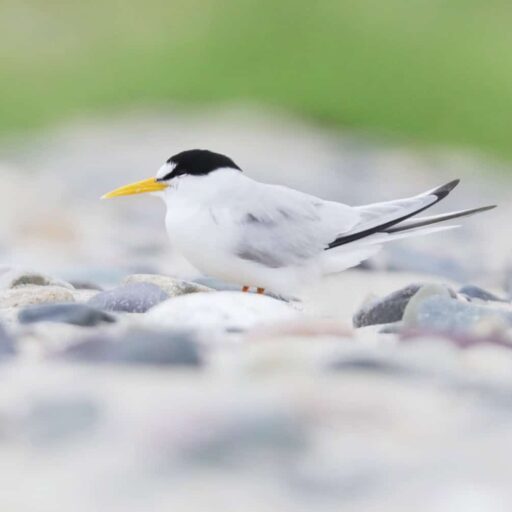
Some of England’s most important tern colonies are showing signs of recovery after avian flu and unpredictable weather hammered populations.
According to new figures from the National Trust, little terns had a record-breaking breeding season this summer at Long Nanny wildlife reserve in Northumberland, where some 126 pairs nested – smashing the previous record of 57 in 1994.
The charity also recorded more than 1,100 pairs of sandwich terns at Blakeney Point in Norfolk following a two-year absence, while Arctic tern numbers “held steady”.
“After several years dominated by bird flu outbreaks, flooded nests and concerns about declining numbers, it’s incredibly encouraging to see the little tern colony responding so positively this year,” said James Porteus, a National Trust ranger.
However, the charity warned against complacency, pointing out that the Arctic tern, which migrates all the way from Antarctica every year, was recently added to the UK’s red list of imperilled birds.
Image: Wirestock
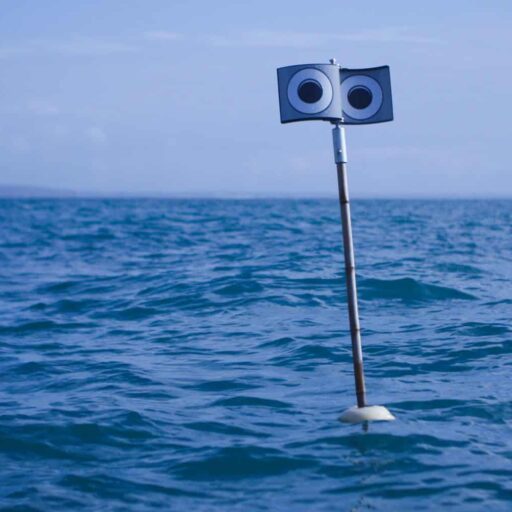
A floating scarecrow developed by UK scientists could help save thousands of seabirds from getting caught in fishing nets, a study has found.
Every year around 95,000 diving seabirds, including guillemots and razorbills, are accidentally caught and drowned in gillnets around the coast of Europe.
This startling figure prompted scientists to develop floating scarecrows, which were trialled over two years off the coast of Cornwall, England, alongside a commercially available kite shaped like a bird of prey.
The trial’s results were published this week, and suggest that scarecrows and kites reduced the chances of birds being caught in nets by 59% and 71%, respectively.
“This study provides some of the strongest evidence to date that simple, practical deterrents can substantially reduce seabird bycatch in gillnet fisheries,” said study lead Tom Horton, from the University of Exeter, England.
The Royal Society for the Protection of Birds welcomed the research. It said that while technologies have been developed to reduce seabird bycatch in trawl and longline nets, preventing seabird deaths in gillnets has proven harder. Until now.
Image: University of Exeter
Main image: Timnit Gebru. Credit: Right Livelihood
Because the world needs it
Positive News reports on the people and ideas driving progress. We believe that giving attention to solutions helps them spread.
Our journalism is independent and powered by our readers. There are no media moguls or shareholders extracting profits: your contribution funds our work to investigate what’s working, understand why, and bring those stories to a wider audience.
If you value a fuller picture of what’s happening in the world, please become a Positive News supporter today.