
Scientists flew into the heart of 'fire clouds', Finland slashed emissions with an innovative sand battery, and food banks turned waste into millions of meals, plus more
This week’s good news roundup

Flying scientists into the heart of fire-generated thunderstorms might sound like the plot of a disaster movie – but this daring mission is happening in real life.
It’s part of NASA’s INSPYRE project, which aims to unravel the mysteries of pyrocumulonimbus (pyroCbs), or ‘fire clouds’.
The barely studied phenomenon has been seen this summer in wildfires raging in the US, and for the first time ever in France.
PyroCbs spew volcanic-scale plumes of smoke and particles 50,000 feet into the air. They hamper firefighting and are so powerful that they can cook up their own thunderstorms – including lightning strikes that spark new blazes.
They also loft smoke high into the stratosphere where it can linger for upwards of a year, impacting weather, climate and the Earth’s protective ozone layer.
For the next six weeks, NASA pilots will chase wildfires from airbases in Colorado and Montana.
Scientists on board the planes will gather data which they hope will help predict where and how pyroCbs form, as well as measure their effect on climate. Findings are expected within a year.
Image: NASA

Food banks saved a whopping half a million tonnes of food from going to waste in 2025, as partnerships with farmers and retailers spared wonky fruit and vegetables from landfill.
The Global FoodBanking Network (GFN) says the saving stopped around two million tonnes of CO2 from entering the atmosphere, equivalent to taking 473,000 cars off the road for a year.
However, the news might be seen as a double-edged sword, as GFN food banks fed 2.5 million more people last year than in 2024. That amounts to two billion meals served to 40.5 million people and, the organisation suggests, is an indicator of increasing hunger amid aid cuts, rising prices and geopolitical crises.
“Food banks – ever agile, responsive and resilient – continued to serve as safety nets around the world, connecting local communities to nutritious food, despite the challenges,” said GFN president Lisa Moon.
Images: Sameoldsmith

The EU has greenlit a breakthrough eye implant that can help restore vision for those suffering from one of the most common age-related causes of vision loss.
The PRIMA implant employs hundreds of pixels which stimulate retinal cells by converting light signals beamed from a special pair of glasses. The gizmo even has a zoom-in feature to magnify tiny text.
The innovation comes from US-based Science Corporation and aims to manage the effects of age-related macular degeneration (AMD).
The condition, which primarily impacts people aged over 50, causes blurry or missing central vision, impacting daily tasks like reading, driving and recognising faces.
In clinical trials, PRIMA improved vision for 80% of patients. The device has now gained CE (Conformité Européenne) certification under EU medical device regulations, making it potentially available across 30 European countries.
Mahi Muqit, a vitreoretinal consultant at London’s Moorfields Eye Hospital, which led the UK arm of the trial, commented: “Blind patients are actually able to have meaningful central vision restoration, which has never been done before.”
Image: PRIMA

Endangered Nubian giraffes are settling into their new home in Uganda this week, following a translocation initiative aimed at keeping the species a step ahead of oil drilling. Twelve of the animals were moved 106km (65 miles) from their home in Murchison Falls National Park to Ajai Wildlife Reserve.
It’s hoped the ‘seed population’ will stave off pressures on the species from habitat degradation – a possible impact of oil exploration in the Murchison Falls area.
The region contains an estimated 40% of Uganda’s oil deposits and drilling has been ramping up in recent months, despite opposition from environmentalists.
In other conservation news, six orphaned rhinos which were returned to the wild in the KwaZulu-Natal coastal province of South Africa have all given birth to their own calves. They were rescued around nine years ago from reserves run by Ezemvelo KZN Wildlife after losing their mothers to poachers.
“With the right intervention, orphaned rhinos can return to the wild after time spent in captivity, breed naturally, and contribute to South Africa’s wild rhino population,” the organisation said.
Meanwhile, over in east Africa, Maasai warriors are redefining what it means to be brave by helping people and lions co-exist. Read the full story here.
Image: Ivan Sabayuki

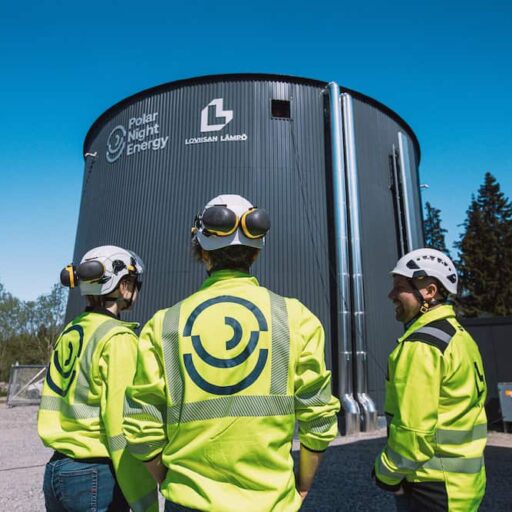
A Finnish town has slashed emissions from its district heating system by 70% with the help of the world’s largest sand battery.
The 13-metre-tall silo – in the town of Pornainen – contains 2,000 tonnes of crushed soapstone, which is heated using renewable electricity, often at cheap, off peak rates.
It can store heat for days or weeks at a time before it is used to warm water for the town’s district heating system, which is otherwise fuelled by burning oil or woodchip.
The battery, built by developers Polar Night Energy, can meet the heating needs of Pornainen’s 5,000 residents for a month in the summer, and keep them toasty for a week through the winter.
Crucially, it resolves one of green energy’s most persistent challenges: intermittency in the face of changing weather conditions. Woodchip burning fell 60% as a result, and oil consumption was eradicated entirely.
“I am more convinced than ever that thermal energy storage technologies can play a very important role in helping municipalities reduce emissions,” said Pornainen mayor Antti Kuusela.
Image: Polar Night Energy
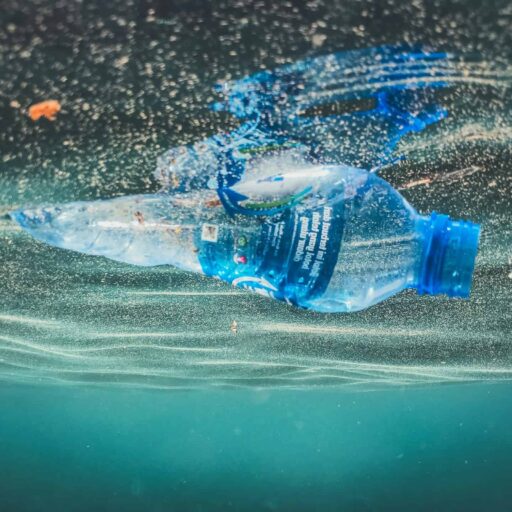
They’re found in everything from cookware to cosmetics and can linger in waterways and human bodies for years but now they’re facing a ban in Sweden.
We’re talking PFAS – or per- and polyfluoroalkyl substances – which the Nordic nation is planning to outlaw from a range of consumer products from January 2028. PFAS are widely used thanks to their durability and resistance to water, oil and heat, but those same properties mean they take years to break down.
Exposure to high levels of the synthetic chemicals has been linked to an increased risk of some cancers in humans, and poses a threat to the health of wildlife.
Sweden’s move would put the country a step ahead of most of its EU neighbours – bloc-wide legislation is currently under development through the European Commission, and would ultimately supersede Sweden’s national law.
Image: Naja Bertolt Jensen

London’s mayor Sadiq Khan has launched an ambitious ten-year mission to revive the capital’s blue spaces.
His Clean Rivers and Waterways plan pledges to stop pollution while ensuring nature can thrive. It’s good news for wild swimmers, too: the plan aims to make waterways more accessible for sports.
“I firmly believe access to nature is an issue of social justice,” said Khan. “Through this ambitious plan we will work with partners to tackle pollution, restore nature and open up new swimming and recreation opportunities, improving access to help Londoners enjoy and reconnect with their waterways.”
The initiative will focus on 10 key locations stretching from Croydon to Waltham Forest, creating and restoring 550 hectares (1,359 acres) of waterway habitat and 80km (50 miles) of rivers.
It has the backing of over 50 partners, including boroughs, community groups and water companies. The mayor’s office has set aside £16m for the project and a further £1.8bn will come from partners over the next five years.
“We will clean up London’s rivers in the same way we cleaned up our toxic air, bringing about lasting change as we work to build a greener, fairer city for everyone,” Khan added.
Here’s hoping the plan puts London on a par with these swimmable European cities.
Image: Stephen McKay

Bad news for sweet-toothed toddlers, good news for brain health: scientists say sugar rationing for under-twos – and even unborn babies – may ward off cognitive decline in old age.
Researchers from The Hong Kong University of Science and Technology in Guangzhou analysed data from almost 65,000 people taking part in the UK Biobank.
Their study used the end of the post-second world war sugar rationing as a ‘natural experiment’ to test whether exposure to sugar in the first 1,000 days from conception might be linked to dementia or Alzheimer’s.
They suggest that rationing sugar in utero and before two years of age could lead to a 23% lower risk of dementia and delay the onset by 2.6 years.
Meanwhile, a substudy showed that early-life sugar rationing was associated with more grey matter in the brain – the part that processes information and manages memory – as well as speedier reasoning.
“These results support early-life sugar reduction as a potential strategy for dementia prevention,” the authors noted.
Image: Pranav Kumar Jain
Conservationists in Australia have taken on the country’s largest gas producer in a landmark court battle that will decide the fate of a giant fossil fuel project.
The Australian Conservation Foundation (ACF) and Friends of Australian Rock Art (FARA) challenged the government’s approval of plans to extend the Woodside North West Shelf gas export project.
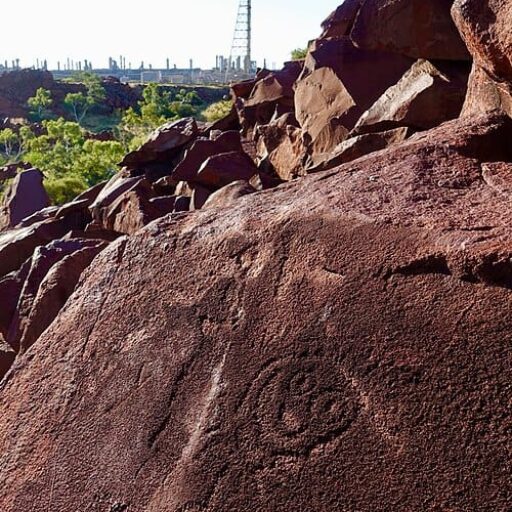
The permit allows Woodside to operate its Karratha gas plant, on the Burrup Peninsula, 1,260km (783 miles) north of Perth, until 2070. The plant sits next to the sprawling Murujuga Indigenous rock art complex, a World Heritage site which is home to around two million rock engravings dating back 50,000 years.
FARA claims emissions are degrading the ancient artworks while ACF says
environment minister Murray Watt failed to consider “devastating climate change impacts” when he approved the scheme.
ACF estimates the extension will spew 4bn tonnes of CO2 into the atmosphere, and both groups also accuse Watt of being biased towards Woodside, a relationship described in court as ‘chumminess or cosiness’ between his department and the fossil fuel giant.
Justice Catherine Button will decide the outcome at a later date. “Depending on what the Court says, this could involve reassessment of impacts on a huge range of protected parts of nature across Australia,” said the ACF.
Image: The ‘Future Man’ rock carving at the Murujuga Indigenous rock art complex. Credit: Marius Fenger
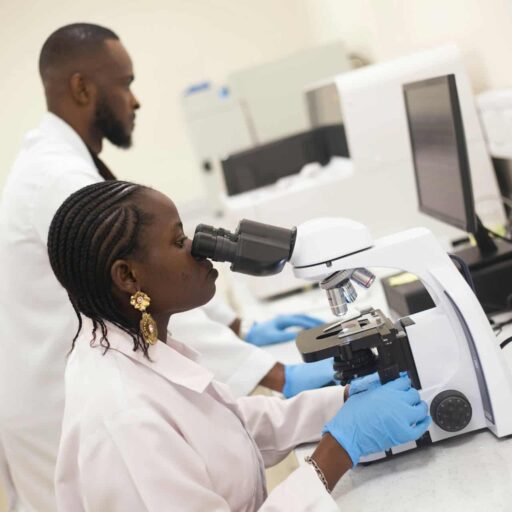
Scientists have turned a molecular tool usually used for gene editing into a rampaging killer that slashes cancer cells to pieces.
CRISPR enzymes work like molecular scissors, making targeted cuts to RNA which allow scientists to edit genomes. But one rogue enzyme – Cas12a2 – is known to act more like a paper shredder, and now two teams of researchers have discovered a way to let it loose on cancer DNA.
One team programmed the enzyme to home in on cells with a specific genetic mutation found in up to half of all cancers, while the other focused on a mutant protein that causes cells to grow out of control. In both cases, lab tests showed how Cas12a2 selectively killed mutated cancer cells, shrinking tumours in mice.
For now, the work is at the proof-of-concept stage but Yang Liu – author of one of the papers and a molecular biologist at the University of Utah School of Medicine in Salt Lake City – described the innovation as a “molecular kill switch”.
“This is basically programmable chemotherapy,” he told the science journal Nature.
Image: Ezebunwo Omachi
Main image: Tony Yao
Get your weekly fix of good news delivered to your inbox every Saturday, by signing up to the Positive News email newsletter
Be part of the solution
At Positive News, we’re not chasing clicks or profits for media moguls – we’re here to serve you and have a positive social impact. We can’t do this unless enough people like you choose to support our journalism.
Give once from just £1, or join 1,800+ others who contribute an average of £3 or more per month. Together, we can build a healthier form of media – one that focuses on solutions, progress and possibilities, and empowers people to create positive change.