The environment usually takes a backseat in times of conflict. But in Ukraine a rewilding project is sowing seeds for a greener, more peaceful future
Vesela Dolyna translates from Ukrainian as ‘happy valley’. In the heart of the semi-arid Pontic-Caspian steppe system in southwestern Odesa Oblast, this village of 1,206 souls has, sadly, seen happier eras than today. Today, Vesela Dolyna’s residents are as likely to hear the violent cracks of exploding mines, or the high-pitched screams of the Russian missile strikes targeting the nearby Black Sea coast, as the bucolic rhythms of harvesting, or the craw of the native Eurasian magpie circling the village’s thatched, brightly painted homes.
Take a walk into the grasslands of the Tarutino Steppe with local resident Petro Hramatik, however, and you might yet hear another, strange and ancient, sound: a high, keening bray which, to locals like Hramatik, is a sign of hope amid the misery of war.
A former Vesela Dolyna village head, Hramatik is a local volunteer for Rewilding Ukraine, a conservation organization that is restoring 600 hectares of formerly ploughed grassland in the Tarutino Steppe through the reintroduction of native species.

Donkeys trampling fireproof landscapes
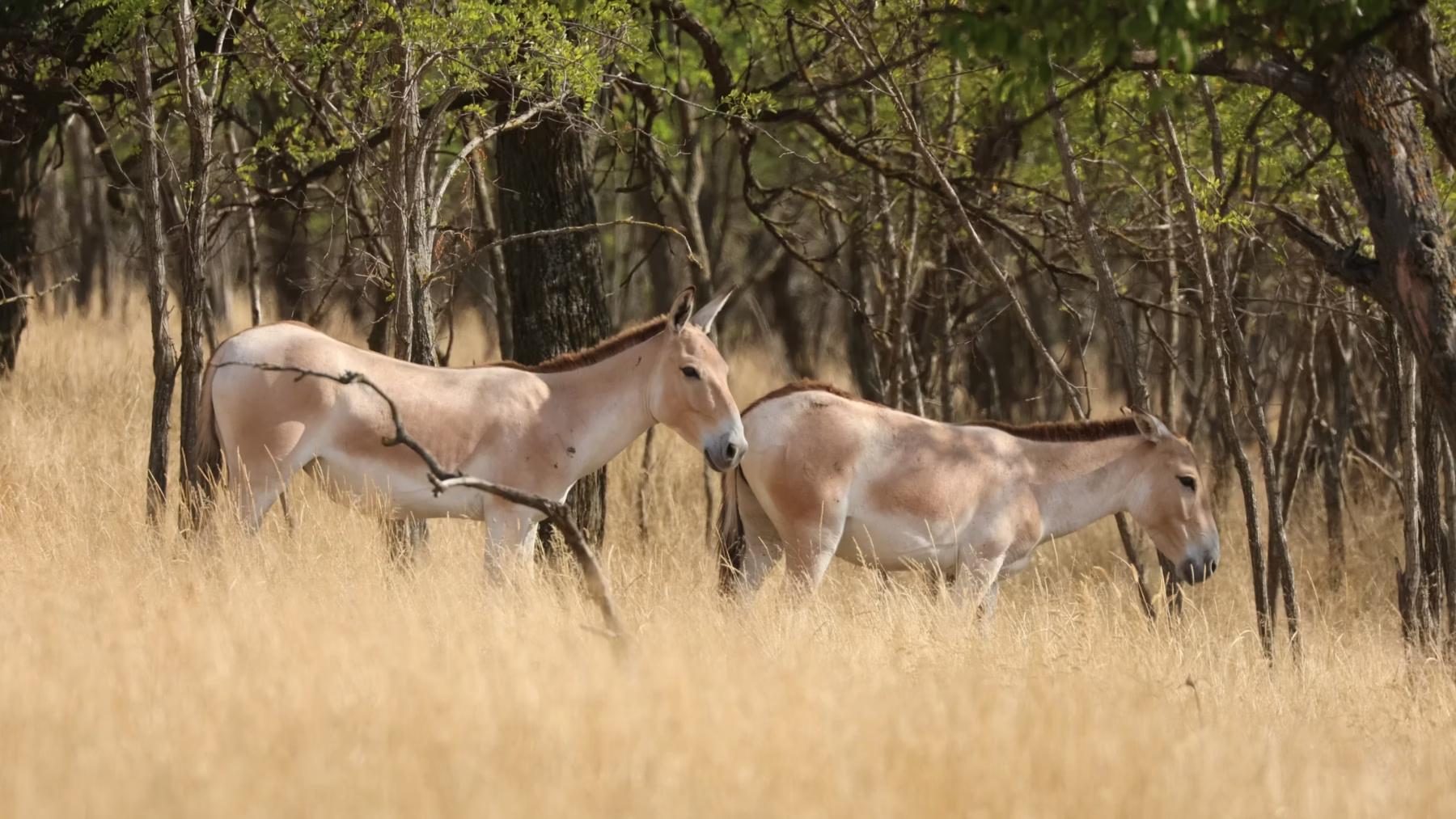
The project began in 2017 and has led to the release of 63 Konik horses; 20 red deer; 30 fallow deer; 20 water buffalo; and ten Hucul horses, the latter a native breed from the Carpathian mountains, back into the wild. Their star reintroduction however is a that Hramatik monitors on his frequent visits into the steppe: 35 characterful and voluble kulan, or wild donkeys. With their stout legs and high-pitched bray, these wild equines once ranged across a great swathe of central Europe from Ukraine and Russia in the west to Mongolia and China in the east.
“I genuinely love nature and I feel deeply connected to this landscape,” Hramatik told Perspective Daily. Hramatik took part in some of the animal releases to the steppe and now visits the territory to monitor plant and animal health, most frequently in the summer and spring when the Steppe is accessible due to better weather. “The natural grazing of kulan is having very positive effects on the steppe,” he said, “They reduce excessive dry vegetation, create more diverse plant structures and open up space for different species to return.”
Before human settlement, the Tarutino Steppe was an ecosystem of dry temperate grassland on fertile soils called ‘chernozem’ (black earth). These steppes supported diverse, drought tolerant grasses and flowering plants and were ranged over by large grazers such as the kulan and abundant small mammals and rodents. From the 19th century, and later Soviet factory-scale farming, the Steppe was converted to cereal and sunflower farming, sheep grazing and vineyards. Abandoned by the Soviet tractors after 1990, and with an ageing local population unable to tend the land, the Tarutino Steppe deteriorated into an unloved landscape that was dangerously prone to wildfires.
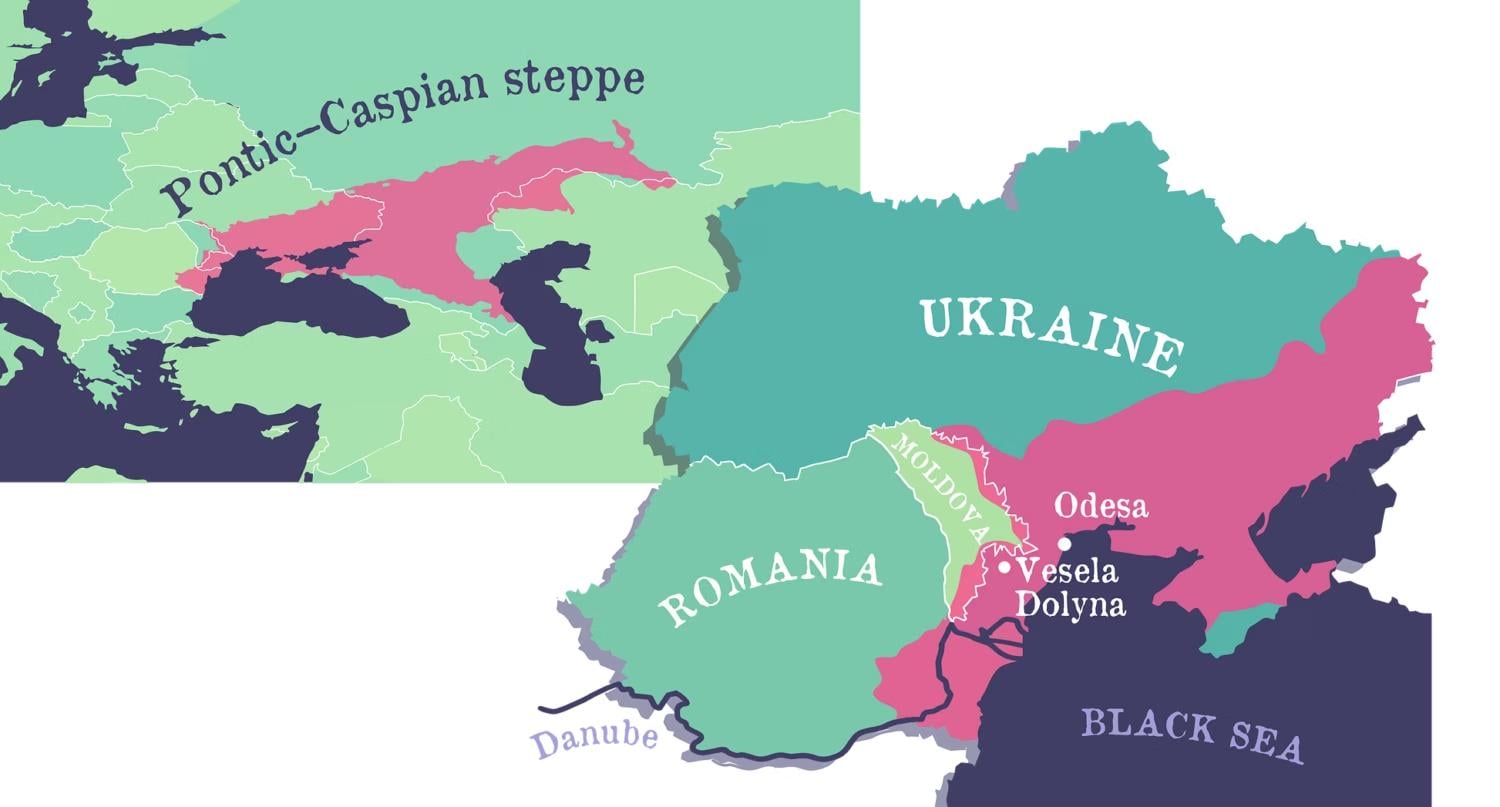
Image: Wikimedia Commons
With climate change and now the scourge of exploding mines (planted by both Ukrainian and Russian forces), wildfires can ignite daily in the heat of summer, Hramatik says. “That’s why the kulan are so important,” Hramatik adds, “they manage vegetation and reduce fire risk.” Kulan help to manage fire risk through natural grazing and movement, which reduces the amount and continuity of flammable vegetation. Their droppings also add organic matter to the soil, which improves soil structure over time: healthier soils hold water better, resist compaction, and absorb rainfall more efficiently rather than shedding it as run-off, also lowering fire risk.
Preparing for the tourism of tomorrow
The reintroduction of ancient grazers, as well as rodents such as marmots and the black-bellied European hamster, has also improved the Steppe’s soil fertility and, in turn, its carbon sequestration, says Mykhailo Nesterenko, who heads Rewilding Ukraine. Nesterenko and his family initially fled Ukraine for Romania on the outbreak of war, before moving to the Netherlands, though he returned to resume work on the projects in 2023.
“Nature restoration is important for communities too,” he adds. “Wetlands help communities adapt to climate and a healthy ecosystem also opens up the possibility of nature-based businesses, such as tourism.”
Rewilding Ukraine’s umbrella organization Rewilding Europe works on rewilding projects downstream at the Danube Delta, a connected habitat 50 km southeast at the mouth of the Black Sea that is partly in Ukraine and partly in Romania and is part of the Danube Delta Biosphere. Here it is restoring waterways from a ‘managed’ Soviet-style hydraulic system back into a self-sustaining, wild wetland, by removing 10 obsolete dams and re-establishing fish spawning grounds. Designated a UNESCO World Heritage Site (1991) and Biosphere Reserve, the 4000 km² Delta hosts over 5,500 plant and animal species, and is so dense and varied that locals and biologists call it ‘Europe’s Amazon’.
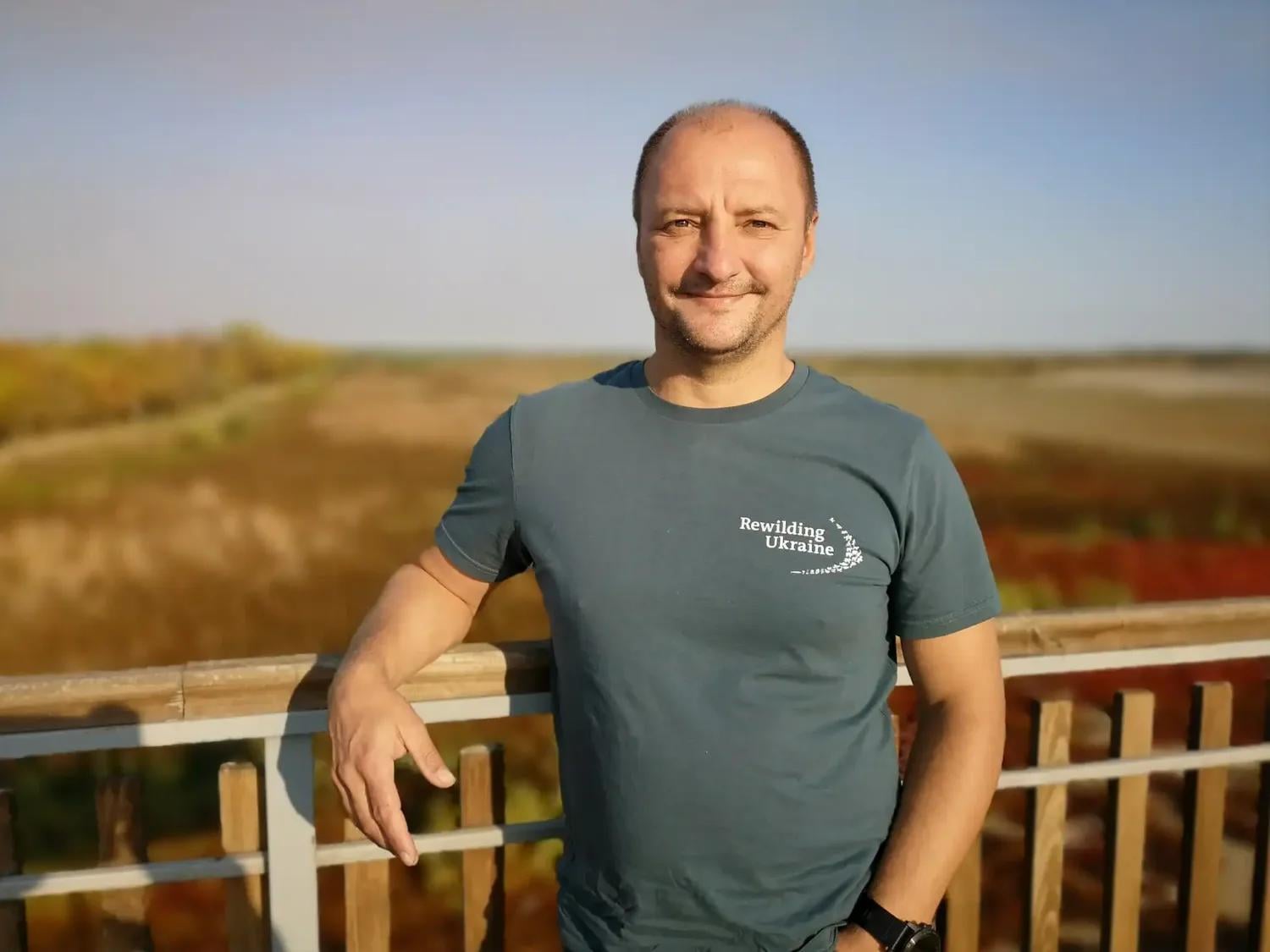
Mykhailo Nesterenko, head of Rewilding Ukraine. Credit: Privat
Loss of tourist income is one of the social and financial tolls on rural Ukrainian communities from Russia’s war. Average monthly wages in Bolhrad Raion, of which Vesela Dolyna is a part, are 7,000–9,000 UAH a month (€ 190–230) compared to the national average wage (2023): 15,000–16,000 UAH a month (€ 400–450). Regional ethno tourism attractions such as Vynohradivka (Kurçu), a traditional wine-growing village, were shuttered with the outbreak of hostilities and UNESCO and the World Bank estimate that Ukraine’s culture and tourism sectors have accumulated over $ 19.6 billion in lost revenue since February 2022.
Now Rewilding Ukraine is establishing the infrastructure to be able to »press go« when tourists return, Nesterenko explains. They include Eco-park Tarutino: a dedicated area featuring excursion routes and guided tours to see the reintroduced animals with wildlife watching towers and observation hides.
Ukraine’s nature is as resilient as the Ukrainian people
Rewilding Europe and Rewilding Ukraine are supported by the Endangered Landscapes & Seascapes Programme (ELSP) at the Cambridge Conservation Initiative, part of the University of Cambridge. Its Director, David Thomas, told Perspective Daily that although monitoring of impacts of the Delta projects is hampered by the war, ELSP is seeing ‘ from the reintroduction of large herbivores, such as increased fish populations and diverse bird communities.
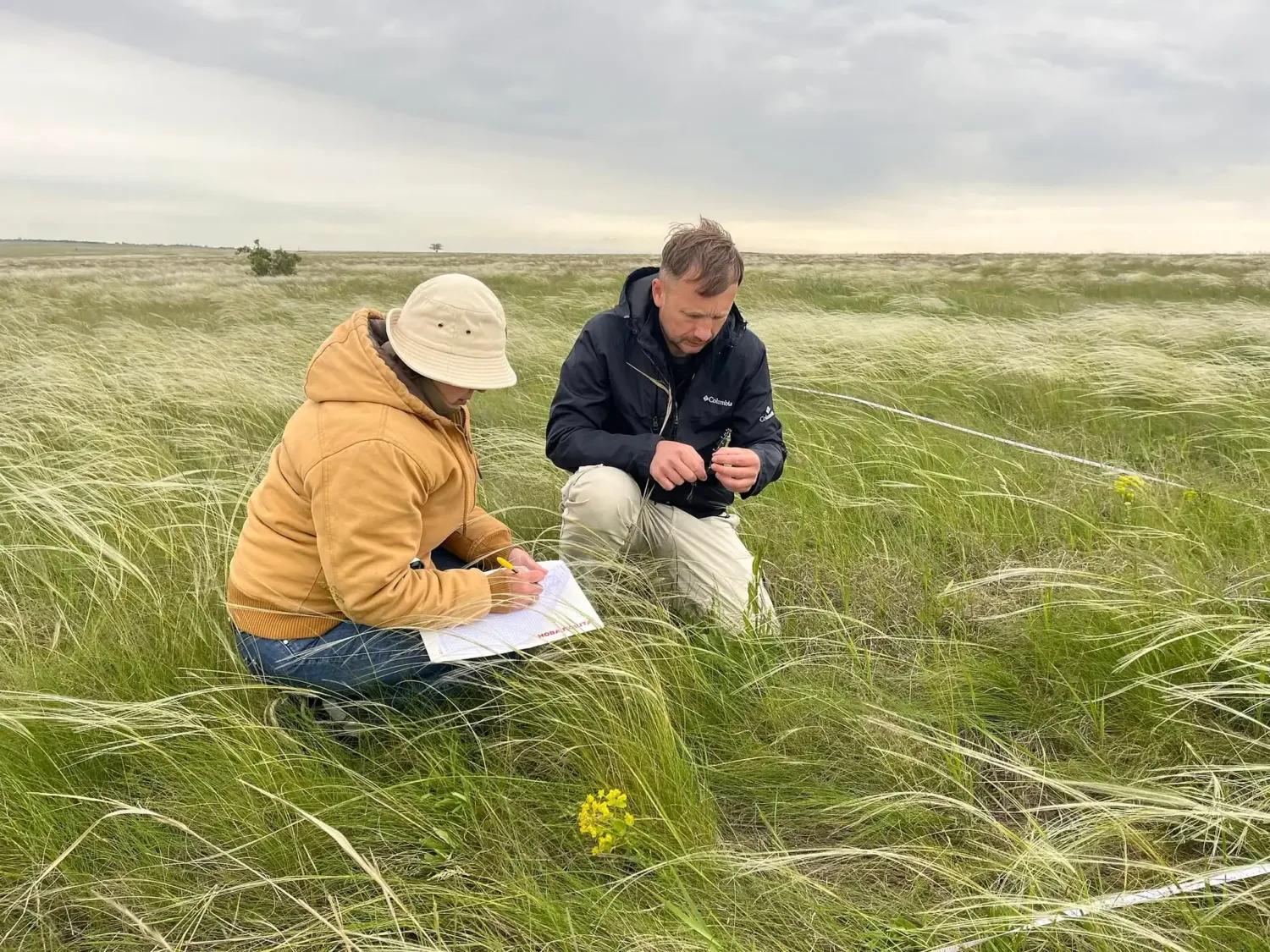
Researchers in the steppe. Image: Victor Shapoval
ELSP’s satellite images show that reintroducing water buffalo and Konik horses across the outer Delta has reduced dense vegetation as it has boosted plant diversity. They have also found that grasslands with large and diverse grazing species like donkeys, horses, and buffalo deposit twice as much carbon compared to areas where no large grazers are present.
“I think the hope and expectation is that [Rewilding Europe’s work] will provide a road map, a blueprint for restoration of the area and development of the local economy,” Thomas says of his hopes for Ukraine when peace comes. “There are great prospects for a nature-based economy around the Danube.”
Tourists aside, Rewilding Ukraine’s work is as much about the people who call the Delta habitats home. Rewilding Ukraine runs initiatives through which war veterans and their families are brought into rewilding landscapes as part of PTSD recovery; and in July 2025, a five day Junior Rewilders Camp brought together around 30 secondary school students from Ukraine and Romania to the Romanian Delta for birdwatching, teamwork sessions and creative activities designed to deepen children’s connection with the delta and rewilding concepts.
Our rewilding efforts in the Danube Delta show that Ukraine’s nature is as resilient as the Ukrainian people, and the two depend on each other. I am confident that both will recover when the war ends
Nature refuses to stand still
Outcomes in the long road to peace in Ukraine in 2026 depend on Russia’s willingness to negotiate with the frameworks toward ending the war that were established at Paris »Coalition of the Willing« summit on January 6. There are risks for the Delta and its peoples that the war will grind on, and the hoped-for tourism revenue will not come.
For all their efforts, Nesterenko admits that war hinders work on the rewilding projects. Some project sites are cut off, which means that the project’s rangers cannot monitor their rewilded herds or release more as planned, as civilian travel into the Delta is severely restricted. In the meantime, however, nature itself refuses to stand still.
In the spring of 2022, a tiny kulan foal was born on the Tarutino Steppe after a punishingly cold winter. With his gangly legs, large eyes and downy coat, he was the first kulan to be born in the wild in 200 years, making history as he stumbled to his feet. He’s a sign the Steppe, and the happy valley, will see happier days.
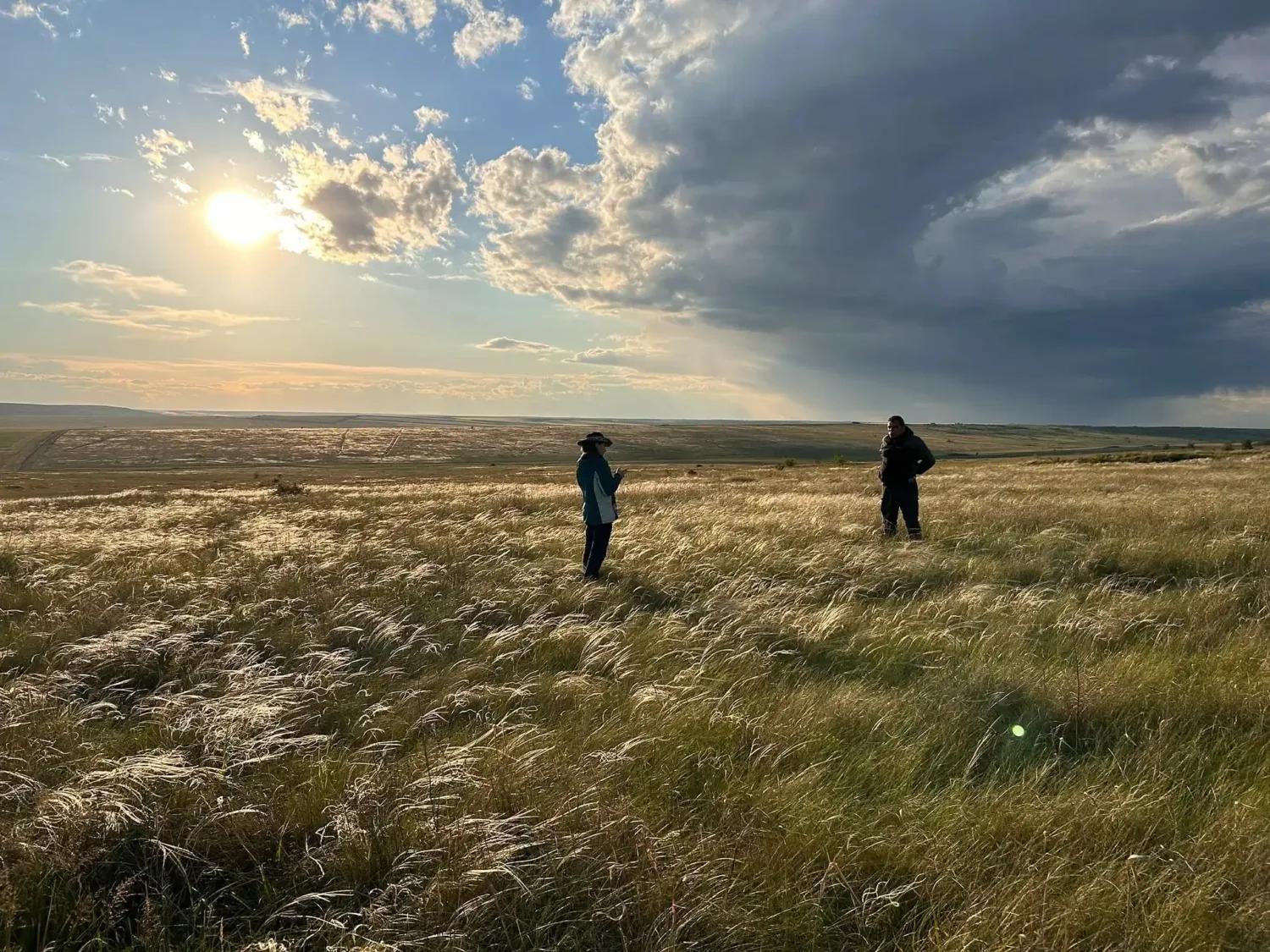
The steppe ecosystem is home to a variety of drought-resistant grasses and flowering plants. Image: Victor Shapoval
A blueprint: bringing back bison in Romania
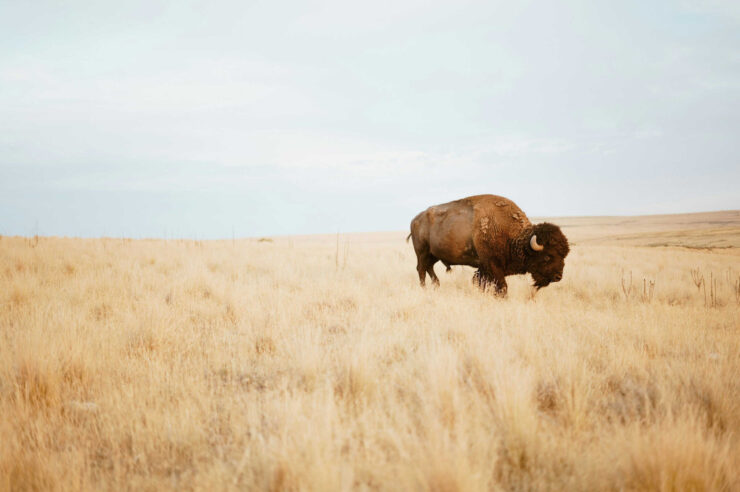
Across the border in Romania, successes with bison rewilding offer a blueprint for the future of nature-based livelihoods in Ukraine. Here, bison were not dropped into an empty wilderness but carefully reintroduced into a working landscape, with locals involved from day one: building enclosures, managing encounters, and learning how to live alongside a species that hadn’t roamed these mountains for centuries. The animals, in turn, are quietly doing what they do best: grazing young trees to keep meadows open, trampling fire corridors through forests, dispersing seeds and nutrients, and helping soils store more carbon.
Rewilding Romania supports conservation through ‘bison-smart’ communities of locals who actively accept and promote rewilding in their midst. Hotlines to report animal encounters, ranger patrols with trained dogs, and small economic incentives – from bison tracking experiences for tourists, to products made from ‘co-existence’ orchards – now support dozens of local businesses.
Mihai Miculescu, who owns the bustling Dospita bakery in Armenis, is one of them. In 2012, when the first herd of bison was reintroduced in the mountains behind his home, his son and he helped build the enclosure for the relocated animals. Today, the freshly baked malai, a Romanian cornbread made with his family’s secret recipe, seems to be selling faster than he can bake it, and he credits the success of his business to the increased business from the increase in tourist arrivals thanks to the bison rewilding project.
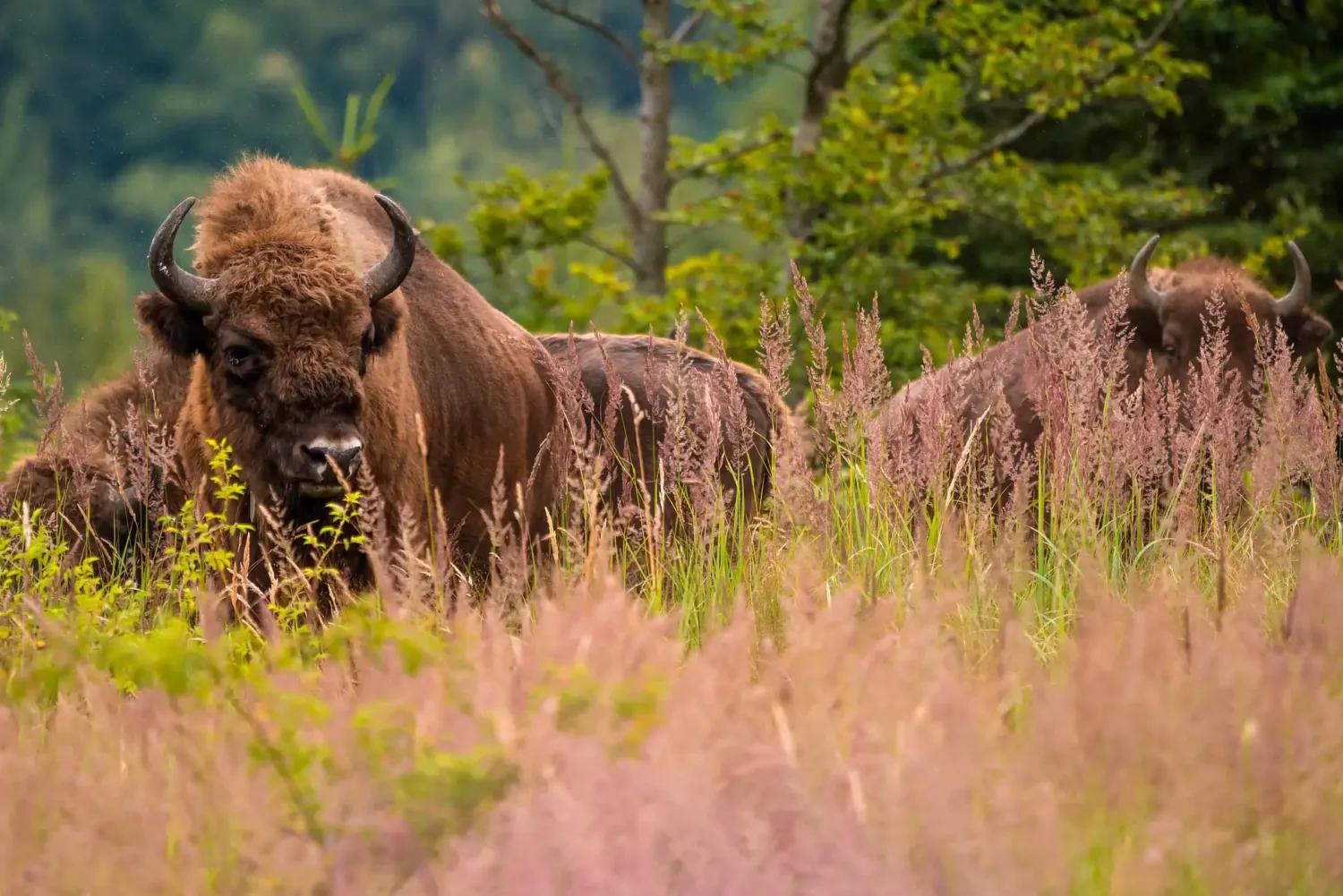
Bison have been successfully reintroduced into the wild in the Southern Carpathians in Romania. Image: Daniel Mirlea/Rewilding Europe
In 2025, Rewilding Romania trained 96 residents to run restaurants that offer homestyle food, and helped another resident to access loans to start a guesthouse in the Southern Carpathians. They have also trained several locals to offer services as wildlife guides and rangers (four of whom are employed full-time by the project).
Today, the local bison population stands at over 250, of which 105 were reintroduced and the remaining have been born in the wild. “We are living in times when it is no longer enough to protect what is left of nature; it is also necessary to help nature regain the power to heal,” says Marina Druga, Executive Director Rewilding Romania. And by surviving, thriving and reproducing after being rewilded in the Southern Carpathians, the bison are functioning as natural architects that will help improve the health of their ecosystem.
Main image: A herd of kulans in an enclosure where they are being prepared for being released into the wild. Credit: Oleksandr Gaidash
This article was originally published by Perspective Daily
Be part of the solution
At Positive News, we’re not chasing clicks or profits for media moguls – we’re here to serve you and have a positive social impact. We can’t do this unless enough people like you choose to support our journalism.
Give once from just £1, or join 1,800+ others who contribute an average of £3 or more per month. Together, we can build a healthier form of media – one that focuses on solutions, progress and possibilities, and empowers people to create positive change.